The podcast series Two Parkies in a Pod offers advice and tips on how to cope with chronic illness, and the specific challenges of Parkinson’s: https://www.2parkiesinapod.com/
The Haiku Foundation year-long (2024-2025) series ‘Haiku for Parkinson’s’ features #haiku as a tool that may help calm, reframe problem(s), and generally improve the quality of life for those living with disease and the psychosocial entanglements it involves:
What do I find helpful in my own journey of the disease? My family and friends; the ‘Betreutes Laufen‘ walking for Parkinson’s group in Augsburg, the Ping Pong Parkinson (PPP) group in Augsburg and the dedicated PPPCourse in Koenigsbrunn (see also the nationwide PPP Association https://www.pingpongparkinson.de/); being part of the international online community, writing and reading haiku; felting, gardening…
In this special video episode by Two Parkies in a Pod, Dave and Kuhan chat to the world-leading Parkinson’s expert, Bas Bloem, about living well with the condition. Informative and fun!
If you ever had any doubts about the value of exercise for Parkinson’s, you must watch this episode. Bas Bloem points out that the only treatment proven to help with symptom reduction and delay the progression of this disease is exercise, not drugs! This prompts Kuhan to ask: If you don’t miss a dose of your drugs, why would you miss a dose of exercise?
Happy to see the feature “Haiku for Parkinson’s,” on the blog of The Haiku Foundation, flourishing!
Blog posts offered recently: “On the importance of connection in haiku” by Philomene Kocher; Through the lens of Positive Psychology” by Scott Mason; An update on the free course introducing Haiku to those living with Parkinson’s, their family and friends, taught by Sonam Chhoki. Poems by the participants painted a picture of where they are on their haiku journey.
Informative, comforting, healing reading. I copy it from the THF site below.
If you or a loved one live with Parkinson’s Disease, visit the site and see!
May 12: Haiku for Parkinson’s: Inviting Connection—Philomene Kocher
July 7: Haiku For Parkinson’s: July 2024 Course Update—Sonam Chhoki
This is the blog post:
Haiku for Parkinson’s is a feature of The Haiku Foundation (THF): introducing haiku to those of us living with Parkinson’s Disease (PD), as well as introducing PD to those ‘living with haiku.’ You will find previous posts from this series here.
As part of this feature, renowned poet and editor Sonam Chhoki is teaching a free course introducing haiku as a tool in the Parkinson’s toolbox, helping face and negotiate the challenges of the disease and improve quality of life. In this post, Sonam, and the course participants, update us on the progress of their haiku journey.
Sonam writes:
Arguing against the pejorative associations of “parochial” with narrowness, insularity and sectarianism, the Irish poet, Patrick Kavanagh (1904 – 67) said, “The parochial mentality … is never in any doubt about the social and artistic validity of his parish.” For Kavanagh, the “parish” or the “parochial” was not a boundary but an opening. An aperture through which the world could be experienced. It was based on the idea that we learn by scrutiny at close-hand. For the poet, it is the depth of experience rather than the width, that counts. He concluded, “Parochialism is universal; it deals with the fundamentals.”
Inspired by Kavanagh’s insight, I would say that the poets in this update are “parochial” in the most wide-ranging sense. Each poet deals with the “fundamentals” of what it is to live with Parkinson’s either personally or through a close family member. Here are their unique and precious experiences and insights, through the lens of haiku.
1. Why haiku? How did your interest in haiku start?
Simon Duncan: As a means of matching emotion and landscape while on mountain walks and later summarising a day’s cross-country skiing as I was losing my ability.
Tania Haberland: That’s what was offered as a service for people going through Parkinson’s personally /in family. But in reality, I love haiku, wrote my first one at 8 at school.
Margaret Ponting: I have always been interested in writing poetry. I wrote longer prose during an extended lockdown of the coronavirus pandemic. I joined a writing group at this time and was impressed how haiku writing was therapeutic for Parkinson’s sufferers. My brother and sister encourage me to write and are enthusiastic in their support.
Haiku appeals to me because I have family connections to Japan and the history and cultural aspects are intriguing. I feel closer to my Japanese daughter-in-law and grandsons as it gives us something to share, discussing the history and philosophical aspects. I like the way haiku has evolved with a variety of styles and topics and how a few simple words can create an emotional impact on the reader.
Jen Pacini: I started writing poetry after receiving my Parkinson’s diagnosis is 2018. Playing around with different kinds of poetry has been a wonderful creative outlet ever since. In 2021, Stella Pierides offered a haiku class through a Parkinson’s site. At first my interest in haiku was to help refine my poetry. Along the way, I fell in love with the style and the way haiku’s simplicity of form conveys meaning in complex ways and on multiple levels. Reading haiku makes me smile
2. Which of your own recent haiku are your favourites? Please share some of your poems.
Simon Duncan:
Cold sun, coarse gritstone Thin moves As my bouldering mat shrinks
Botox cackles Drag Queens strut Emptiness
A window opens Ladybirds cascade Hard red confetti
Cold canal-side fishing “Hello, have you caught anything?” Deep silence
this morning’s delivery truckload of firewood and a tiny green frog
king parrots gorging on rose hips a palette of green and orange
giant red gums mirrored in the river as we reflect
mismatched, shiny, bright we put the pieces together a mosaic of love
threading daisy chains of memories sepia photos
a present arrives a silk scarf from my sister
the night leaves a pale parting gift translucent crescent
along the river bank djiti-djiti, willy wagtail cries for her drowned mother
Jen Pacini:
at the back of the drawer a letter, folded in three the life she never shared
sunrise yoga the taste of sweet candy
midday heat the hum precedes the hive
summer solstice there’s no going back
3. What do you enjoy about haiku writing?
Simon Duncan: Concise emotional imagery.
Tania Haberland: The focus and stillness haiku creates and the way it declutters my mind, also the challenge is fun.
Margaret Ponting: I enjoy the immediacy of haiku writing and the mindfulness aspect. It makes me more aware of my magnificent natural environment and I feel enriched through expressing my feelings. I appreciate sharing my thoughts with loved ones through this medium and enjoy reading haiku contributions from other people.
Jen Pacini: I enjoy it when I surprise myself after reading a haiku I’ve constructed.
4. What is the most challenging aspect of haiku writing?
Simon Duncan: Writing about Q3 activities is important to me but others know little about – e.g.- climbing.
Tania Haberland: Editing out what is not necessary..
Margaret Ponting: Initially, I thought there were few rules, but found haiku to be very complex, much like all aspects of Japanese culture. I sometimes find it difficult to pare back my writing. I have been encouraged by the support given to me through this program and appreciate the feedback. Looking back, I think I have grown in confidence and am trying to challenge myself more..
Jen Pacini: I find keeping the meaning of the haiku from becoming too identified with my own story or adding too many details challenging at times. Sonam Chhoki, is very helpful, providing useful feedback that helps me continue to learn the craft.
5. Do you make notes or do you write directly?
Simon Duncan: Write directly.
Tania Haberland: Directly and then keep changing..
Margaret Ponting: I write directly and that is another thing I like about haiku. It doesn’t take too much time. I usually refer back and add or change the structure or flip the lines to create a different effect.
Jen Pacini: I play around with ideas, lines, wording in a notebook. Then set it aside. Later, I return to the process with fresh eyes to create a digital version. Sometimes I merge and edit two original haiku drafts to create a fresh haiku.
This one-to-one course by email is free and available for a year. The main purpose is to work with the participants at a pace suitable to their particular circumstances and needs. We welcome people from all backgrounds and levels of knowledge, and respect their wish to participate anonymously..
Notes:
Patrick Kavanagh: ‘The Parish and the Universe’, in Collected Pruse, MacGibbon & Kee, London, 1967.
Biography
Sonam Chhoki finds the Japanese short form poetry resonates with her Tibetan Buddhist upbringing. She is inspired by her father, Sonam Gyamtsho, the architect of Bhutan’s non-monastic modern education, and by her mother, Chhoden Jangmu, who taught her: “Being a girl doesn’t mean you can’t do anything.” She is the principal editor, and editor of haibun for the online journal of Japanese short forms, cattails. Her chapbook of haibun, The Lure of the Threshold was published in May 2021. Mapping Absences, a collaboration of haibun, tan bun and tanka prose with Mike Montreuil was published in 2019. Another collaboration with Geetanjali Rajan: Unexpected Gift was published in November 2021. An ebook of a second collaboration with Geethanjali Rajan, “Fragments of Conversation” is in the process of being published.
My four-year-old grandson, sitting at the table facing me, starts moving his head and trunk in the same, writhing way I move mine. Dyskinesia, a side effect of the medication I take, comes and goes. The only way of stopping these movements is to sit back and keep silent.
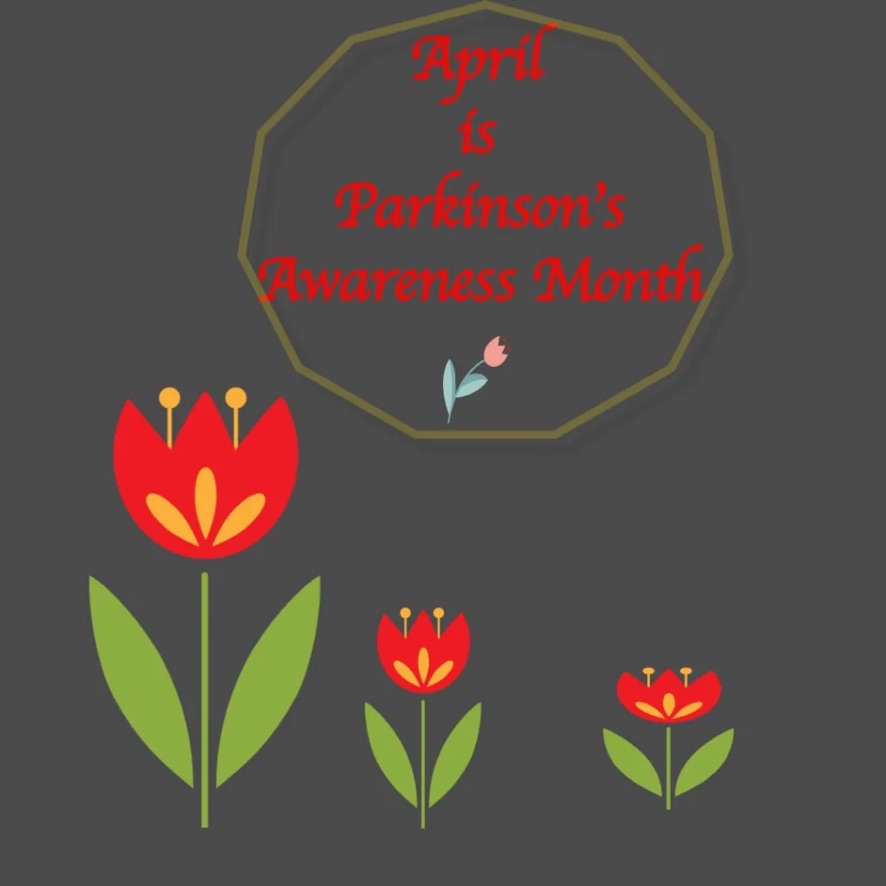
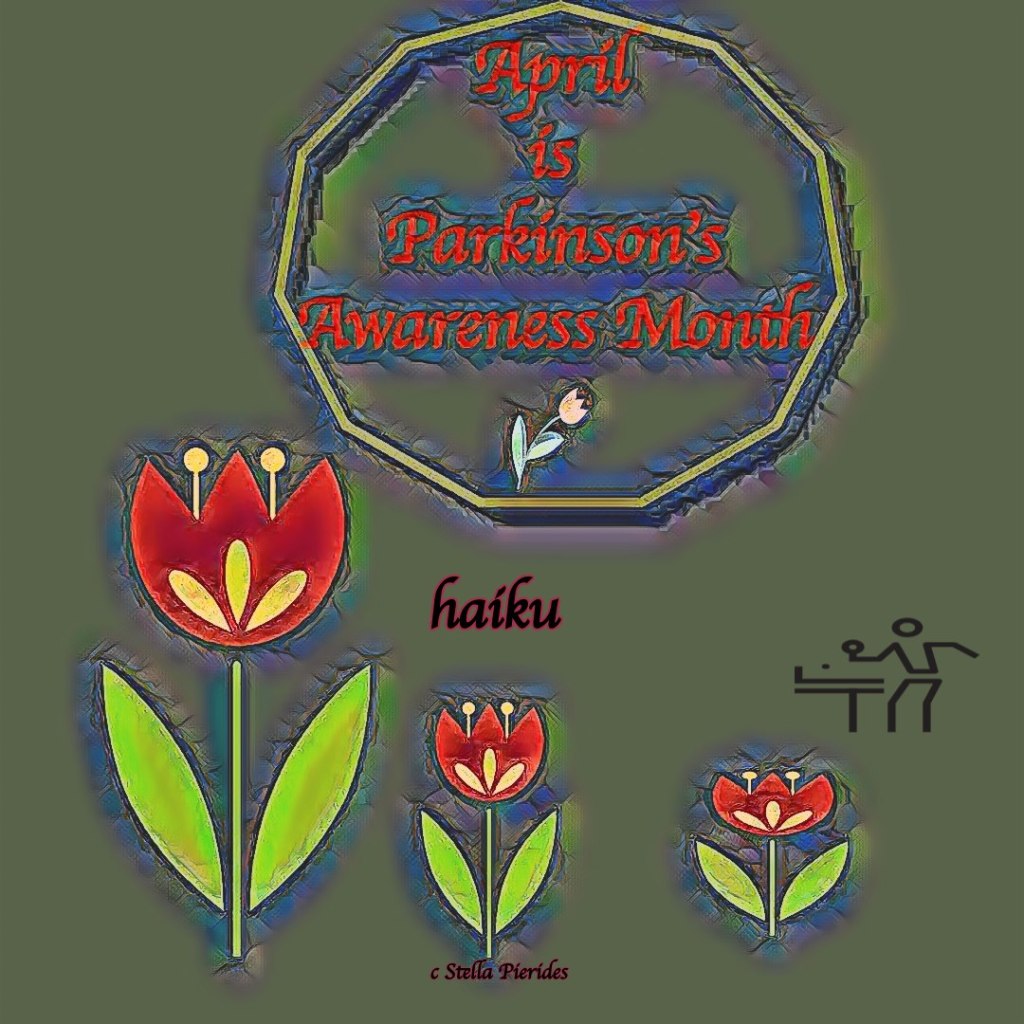
Did you know that April is Parkinson’s Awareness Month?
A month to raise awareness of this disease and share information about it with the public. The aim is to highlight the urgency of finding a cure, but also matters in need of attention while waiting for a cure. To remind ourselves too, about the different experiences, approaches and treatments available to help manage the condition. What will you be doing during the month? Sign a petition? Make a pledge to exercise more?
Whatever you do, choose an activity that engages you, inspires you, makes you smile! Play table tennis! Read a haiku! Keep talking, keep thinking, keep learning!
The Haiku Foundation is offering a new, free, email course “Introduction to Haiku” for people impacted by Parkinson’s Disease, including friends and family.
The course is being taught by Sonam Chhoki, editor of the online journal cattails. For more information about the course see here
The second installment of Haiku for Parkinson’s is the interview of a British poet, now living in New Zealand, Tim Roberts.
Tim describes his haiku practice and the ways it helps him with his Parkinson’s symptoms. It has not been an easy ride. He says:
I had to stop work shortly after being diagnosed. I was adrift. I didn’t have any real hobbies and lost my identity. I felt rudderless and scared. I didn’t know who I was anymore – perhaps that means I never had. I had confused who I was with what I did. Now, having developed such a rooted haiku practice, I have a solid sense of who I am and an exciting sense of purpose. I love poetry and I like to use it to connect to others. I see it as my vocation – and a part of my spiritual practice. Now, thanks to the challenges of PD, I am much more me than the person who was a leadership coach, or any of my previous personas, the university teacher and the detective.
Take a look here for Tim’s informative, inspiring, and from-the-heart account of his journey with Parkinson’s Disease.
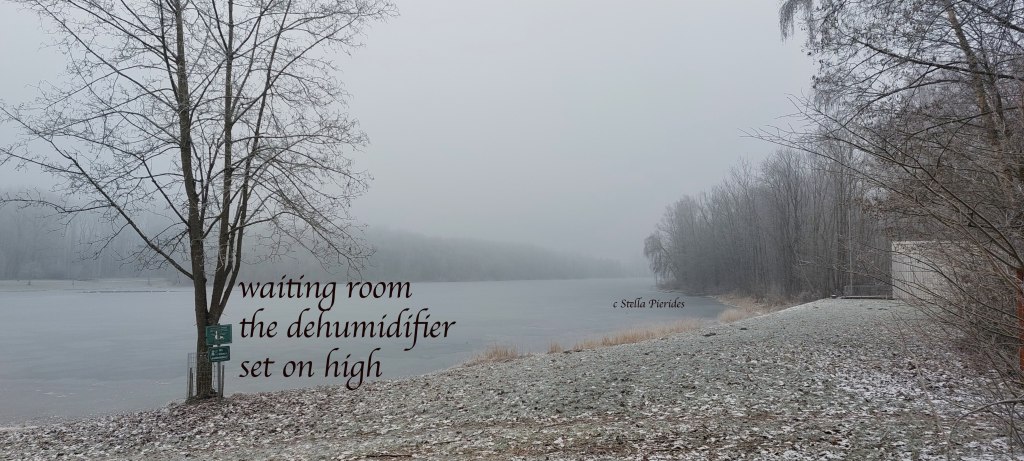
A poem about one of Parkinson’s symptoms: extreme sweating! Not every person living with this disease has this symptom, but if you have it, you will understand…
The new project of The Haiku Foundation, Haiku for Parkinson’s was launched on the 17th of December 2023! I very much look forward to seeing it develop along the various themes and issues arising from Parkinson’s. The Introduction to the feature can be read by clicking here
I have copied it on this site too, see below.
Haiku for Parkinson’s is a feature of The Haiku Foundation, introducing haiku as a tool in the Parkinson’s toolbox, helping negotiate the challenges of the disease and improve quality of life. And, introducing Parkinson’s Disease (PD) to people living with haiku.
What is Parkinson’s Disease?
Parkinson’s Disease has mainly been attributed to the deterioration and eventual death of brain cells producing dopamine, important for organizing movement. This has been addressed by dopamine replacement therapy. Over the last few years, the role of dopamine and its involvement in the production of other brain chemicals has come to be understood better, leading to improved treatment of the many symptoms increasingly recognized to be part of the disease – over 40 and counting. Besides shaking, stiffness, difficulties with swallowing, problems with walking, balance, and coordination, there are also many ‘non-motor’ symptoms, including anxiety, depression, fatigue, apathy, insomnia, visual hallucinations. Moreover, several of the body’s autonomic functions, such as heart rate, blood pressure, temperature, breathing, and digestion become compromised.
thud! a bird flies into a closed window
— Catherine Mair
While this is a formidable list, and at present there is no cure, several programs have been developed amounting to what is often referred to as the Parkinson’s toolbox. Creative therapies are becoming available, offering considerable benefits, including lifting mood, increasing energy and motivation, as well as adding to the paradoxical phenomenon of increased creativity reported by (some) people living with the disease (see Parkinson’s Europe, Parkinson’s Creativity).
Haiku for Parkinson’s (H4P)
Haiku poetry is being used by some people living with PD to support life with this condition. Its qualities include:
Brevity: Haiku can be written or read in a single sitting, enabling feelings of completeness and accomplishment.
Concentration: Concentrating on the moment and our embodied being, haiku anchors us in the world, providing a counterweight to ‘Parkinson’s moments’ – when one feels stuck or caught in acts such as buttoning a shirt or trying to turn over in bed.
Exercise of the mind: Crafting a haiku, in the effort of finding the images and rendering them in words that best convey the experience, exercises brain and mind.
dreaming of birdsong I wake to a wolf shaking me— tremors again!
— Tim Roberts
Connectedness: Writing and reading haiku involves attending to the relationship or interaction between writer and reader, and nature – restoring our connection to the world and so becoming a healing force.
Identity: haiku helps enable exploration of the self by overcoming the embarrassment and stigma of the disease, and coming to terms with the constant challenges faced …
Parkinson’s losing the power to be myself
— Catherine Mair
while making the various symptoms and the uncertain future manageable.
the last page missing from the library book— late autumn evening
— Stella Pierides
In the coming posts, we will hear more about the qualities, and practice, of haiku in supporting people living with PD. And we will be venturing into the realm of haiku’s partner, haibun: the marriage of haiku with prose.
Coming up next: British poet Tim Roberts, living in New Zealand, will be telling us about his haiku practice and how it helps him manage the condition.
References and Bios
“Thud!” and “Parkinson’s” in Catherine Mair, keeping my head above water, 2015. This chapbook is available from The Haiku Foundation Digital Library.
Catherine Mair was born on a winter’s night in the family’s farmhouse in 1938. She has been published widely locally and internationally. In later years she has gravitated to the Japanese forms of Haiku, Tanka, etc. She has grandchildren and great-grandchildren, and the family has grown.
Tim Roberts was diagnosed with Parkinson’s Disease at 49 and has found freedom and joy in writing haiku and other Japanese-style short-form poems. He enjoys foraging for experiences and inspiration with his dog and lives a life that, he hopes, makes poetry inevitable. His book Busted! (Red Moon Press, 2023) is haiku and micro-poetry about his experience as a British police officer. Tim lives in New Zealand and is in awe of the scenery, wildlife, and southern stars. His favorite Maori phrase is ‘Kia kaha’, which means ‘stay strong’.
“the last page missing” in Stella Pierides, Frogpond 41.2 Spring/Summer 2018, p. 27
Parkinson’s Toolbox in Stella Pierides, Parkinson’s Toolbox: The Case for Haiku, 2022. Available from The Haiku Foundation Digital Library
Stella Pierides, who lives with Parkinson’s herself, is a writer and poet. Her books include Of This World (2017) and In the Garden of Absence (2012), both HSA Merit Book Award recipients. Her article “Parkinson’s Toolbox: The Case for Haiku” appeared in Juxtapositions: A Journal of Research and Scholarship in Haiku, issue 8, 2022.
How to live well with Parkinson’s Disease? What helps me: Haiku for #Parkinsons and #tabletennis!
I have haiku in my Parkinson’s toolbox! Poetry, exercise grounding the senses, living in the moment. And I am sharpening my table tennis skills, as it has been found to help with the disease.
For all things haiku, including advice for absolute beginners, check out The Haiku Foundation https://thehaikufoundation.org/
A time will come in your life when you too will feel like a prisoner. It may be love keeping you boxed in or hate sucking out the air around you. It may be illness clipping your wings, or simply the weight of years … no matter.
Bach cantatas...
unpicking stitches from
the kneeler
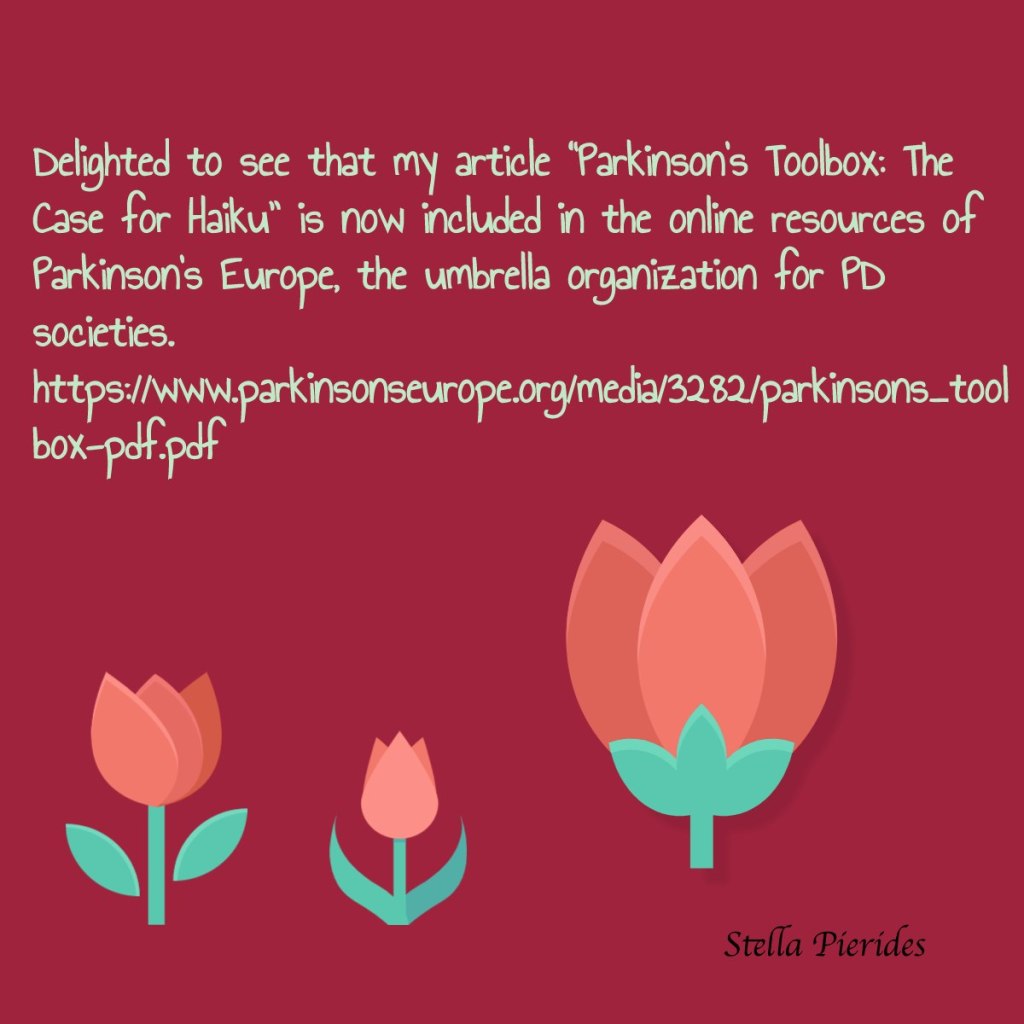
Delighted to see that my article “Parkinson’s Toolbox: The Case for Haiku” is now included in the online resources of Parkinson’s Europe, the umbrella organization for PD societies.
The project titled “Parkinson’s and Creativity” aims “to create an online library of scientific papers, relevant articles, and videos with the aim of sharing knowledge of the latest scientific discoveries and mysteries of Parkinson’s creativity.” Check it out here
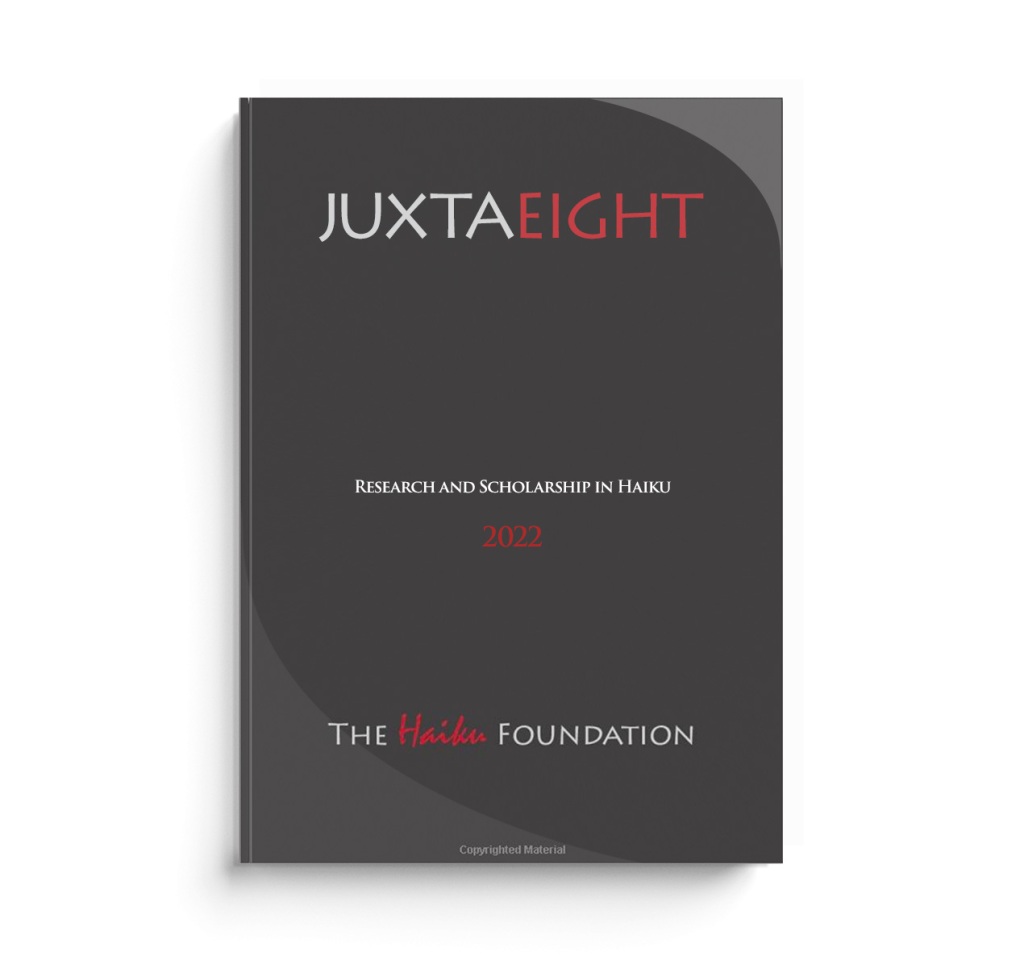
The eighth issue of Juxtapositions: Research and Scholarship in Haiku is out. JuxtaEIGHT is a themed issue on “haiku and wellness,” with several articles, interviews, and resources addressing this theme. And it includes two contributions by yours truly: the article “Parkinson’s Toolbox: The Case for Haiku” is now available to download (pp 37-61), as well as a description of Haikupedia from the Resources section of Juxtapositions: Check them out here https://thehaikufoundation.org/wp-content/uploads/juxtaeight.pdf
I copy below the Abstract of the Parkinson’s article:
Parkinson’s Disease (PD)—the fastest growing neurodegenerative condition worldwide—affects a wide range of motor and nonmotor functions. At present, there is no cure. Only symptomatic treatment is available, aiming to improve quality of life and slow progression. The aim of this paper is to recommend haiku as a therapeutic tool helping with symptoms and, potentially, rate of progression. To this end, following a brief description of PD, and its symptoms grouped under two areas of loss resulting in life diminishment, I touch upon the general role of art and literature in augmenting pharmacological treatment of the disease, before focusing on some of the qualities of haiku (in the process of writing as well as the created poem) that collectively make haiku a containing vessel that can hold and transform the distress associated with the disease into a more bearable experience.
Starting to prepare the garden and plants for winter. Several plants will be taking refuge in the greenhouse, where a heater will be protecting them from the frost’s cruel bites. Others will be toughening it out in the beds, with only a thick cover of straw.
For the first time, I will be planting garlic. I got the reading done, added a bed just in front of the greenhouse, and in a week or two, I will be planting. In the greenhouse, there will be potatoes growing in pots, salads, and herbs. Oh, the excitement! The excitement!
Having written an article on Parkinson’s and Haiku (Parkinson’s Toolbox: The Case for Haiku), I am playing with the idea of sequels. Such as? Well, Parkinson’s Toolbox: The Case for Gardening; Parkinson’s Toolbox: The Case for Table Tennis; Parkinson’s Toolbox: The Case for Felting! You get my gist. Between planting garlic, practicing serves, writing, and soaping wool there’s no time for apathy. Right? For now, at least…
Happy to see my course on haiku for Parkinson’s Art aiming at people living with #Parkinson‘s, their families, and friends, being included in HAIKU BRIDGES, the new feature of The Haiku Foundation!
HAIKU BRIDGES is a new periodic feature from The Haiku Foundation designed to encourage and communicate significant haiku outreach initiatives to new audiences.
Scott Mason, running the feature, invites suggestions of such initiatives for possible inclusion in a future post.
I copy the post below:
Regular readers and writers of haiku recognize that their haiku practice confers personal benefits beyond the literary—it offers the therapeutic values that come with mindful awareness plus a felt connection with their surroundings. The nonprofit organization Parkinson’s Art, through its Parkinson’s Art Academy, will be offering those with Parkinson’s Disease and their families, friends and care partners a free eight-session course on haiku and haiku-related forms starting on September 18th. The online course was designed and will be conducted by Stella Pierides, a Member at Large of The Haiku Foundation board.
The mission of Parkinson’s Art is “to inspire and develop creativity across the Parkinson’s community.” Through its Academy the organization currently offers courses ranging from the visual arts (“Drawing & Painting Portraits”) to the literary arts (“Poetry Without Fear”).
Jan Sargeant, Director of Literature in the Arts at Parkinson’s Arts, states: “We are delighted to provide our audience with the opportunity to experience the power and beauty of this deceptively complex form of poetry. And we’re just thrilled to have someone as accomplished and committed as Stella to teach it.”
Trevor Woollard, who set up the organisation noted that a lot of the major charities in the sector focus – rightly so – on exercise. But there are huge numbers of people who are less mobile or not sport-orientated or don’t have that kind of ability. And they’re often forgotten.
Exercise is important – but so is exercising the mind and soul.
I am looking forward to the course. Haiku, the shortest of poems, packs quite a punch!
I am thrilled to be teaching a brand newcourse on haiku for people affected by Parkinson’s, their families, and friends, for the Parkinson’s Art Academy. Starting 18 September 2021 it runs for 8 weeks.
Parkinson’s Art is a non-profit organisation run by artists and writers living with Parkinson’s disease.
Its mission is to:
Promote the benefits of art to those affected by Parkinson’s Disease
Provide a platform to collaborate and share artwork
Showcase Parkinson’s art and raise awareness through exhibitions and events
At the centre of this effort, stands the Parkinson’s Art Academy, offering a variety of free courses on literature and the fine arts. It taps into the wealth of experience existing in the community of people with Parkinson’s.