
Welcome to Tulips for Breakfast!
Here you will find all posts from Haiku for Parkinson’s, Haibun, Exercising Mind and Body, Table Tennis for Parkinson’s, Ping Pong for Parkinson’s, Health, Nutrition, and much more…

Welcome to Tulips for Breakfast!
Here you will find all posts from Haiku for Parkinson’s, Haibun, Exercising Mind and Body, Table Tennis for Parkinson’s, Ping Pong for Parkinson’s, Health, Nutrition, and much more…

healing…
the frenzied dance
of the Maenads
herb garden
the bench by the rosemary
occupied

On the fascinating question about the role rosemary plays in memory.
Sunday afternoon walk: Deuringer Heath, Western Forests Nature Park at the gates of Augsburg. A serene, peaceful area with numerous paths through lush growth, water-filled pits, oaks of legendary proportions. Filling my lungs with the clean air, taking in nature’s medicine.

At the same time, scattered structures serve as clues to the earlier history of this place: military training ground initially of the German army, then the US (NATO) forces stationed in nearby Augsburg (until the end of the Cold War). Gunfire, tank training, choppers hovering. Echoes of the sounds of the tank training ground it once was, of the thick smoke-filled air.

In the last quarter century, nature started a new life cycle here. ‘Fox holes,’ from where soldiers fired, became swamp holes, an ideal habitat for rare flora and fauna species. The over thirty types of dragonflies are the ones doing the flying now. Families, walkers, school classes come for fitness training and hiking the adventure trails.
A living monument to the history of place.
Past and present. And future…
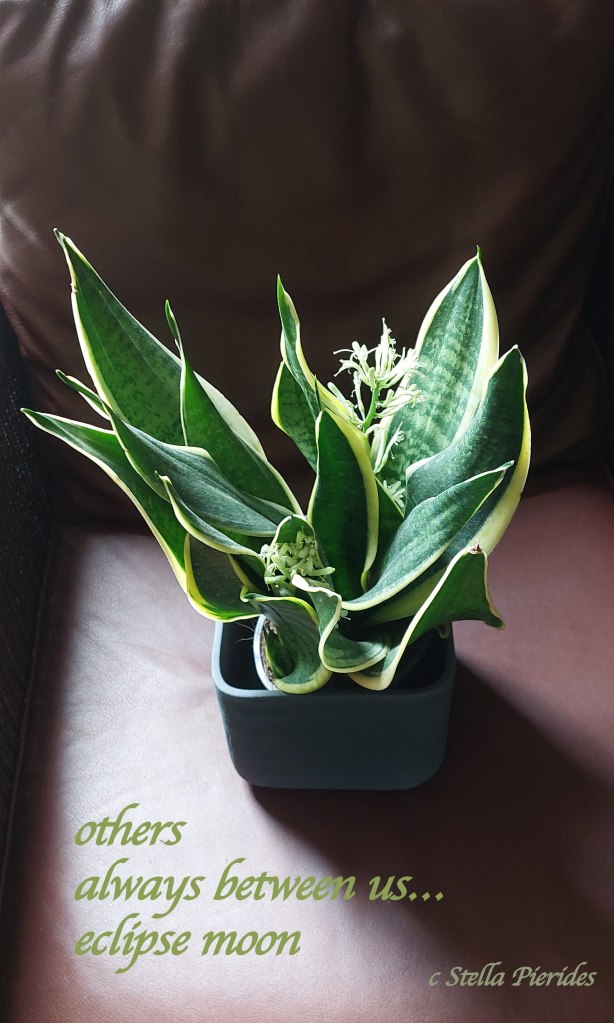
others
always between us…
eclipse moon
.
Happy to see the new “Haiku for Parkinson’s” blog post on The Haiku Foundation site: using haiku to reflect on, and gain a sense of control over, the ups and downs of mood in Parkinson’s. Read it here: https://thehaikufoundation.org/haiku-for-parkinsons-mood…/
#haiku4parkinsons#h4p#Parkinsons#ParkinsonsDisease#haikufound#livingwithparkinsons#MovementDisorder#Parkinson’s

April 11 is World Parkinson's Day!
.
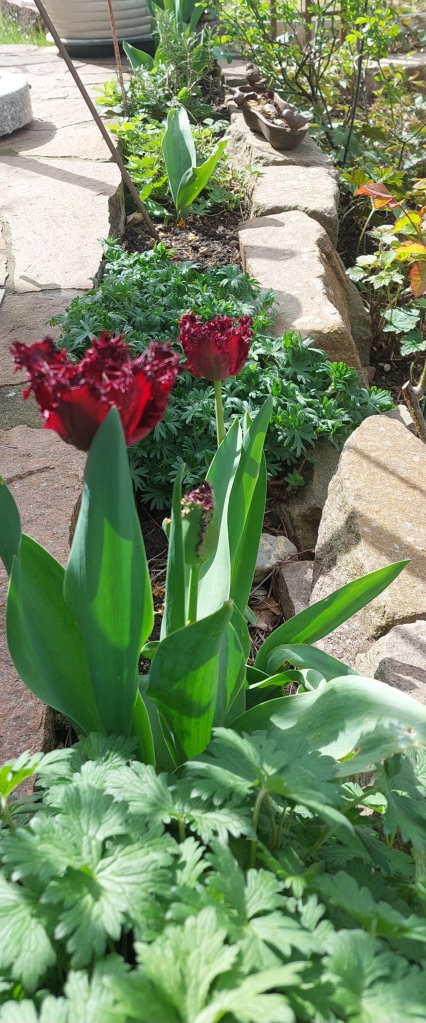
sunlight on tulips…
the long wait may soon
be over
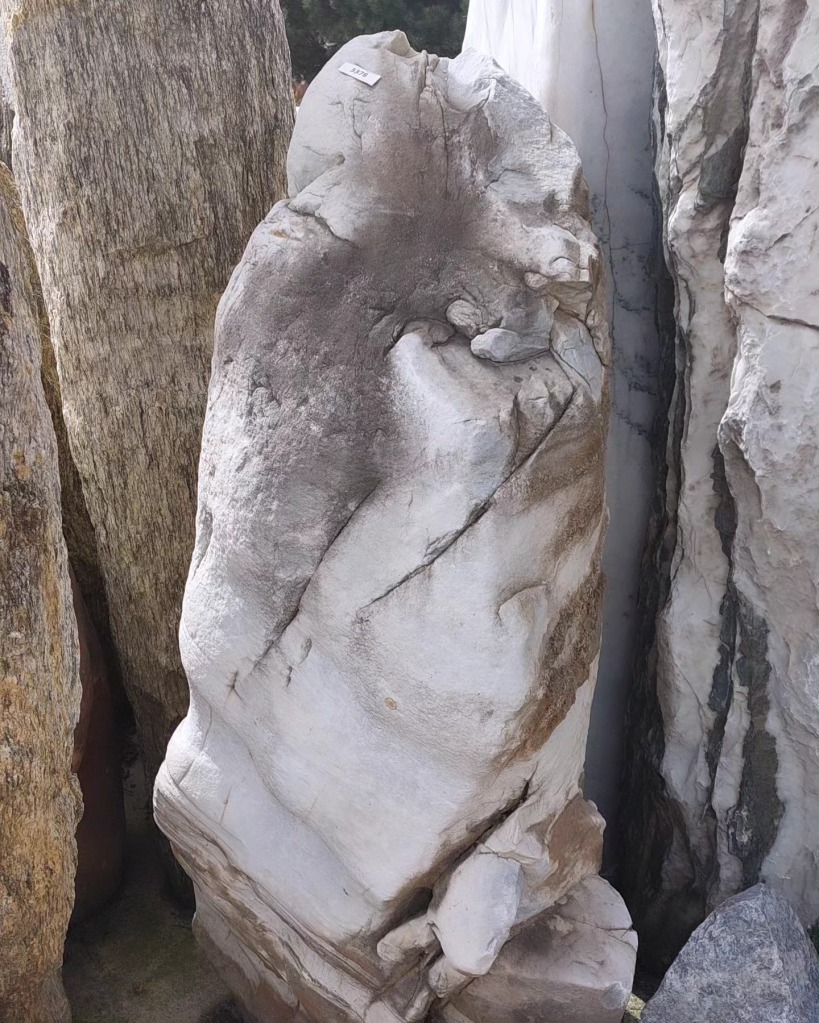
stone quarry...
yet another form waiting
to be freed
.

Did you know that April is Parkinson’s Awareness Month?
A month to raise awareness of this disease and share information about it with the public. The aim is to highlight the urgency of finding a cure, but also matters in need of attention while waiting for a cure. To remind ourselves too, about the different experiences, approaches and treatments available to help manage the condition. What will you be doing during the month? Sign a petition? Make a pledge to exercise more?
Whatever you do, choose an activity that engages you, inspires you, makes you smile! Play table tennis! Read a haiku! Keep talking, keep thinking, keep learning!

What is Dyskinesia? What does it feel like? How can haiku help? Reflecting on my attempts at using haiku to work through the ever-shifting challenges of Parkinson’s Disease.
“My Dyskinesia” is now part of the Haiku Foundation feature Haiku for Parkinson’s. Available to read here.

Remember the snow? The white stuff? Well, here it is in my photo from last December included in MacQueen’s Quinterly So happy to see it in this wonderful journal together with two of my haiku. Thank you to editor Clare MacQueen!
.winter wonderland
how many snowflakes
to magic

new snow...
the sound only silence
makes

What a nice surprise! My poem in The Mainichi was included in Haiku in English the Best of 2023! Many thanks to the Mainichi Team!

The Haiku Foundation is offering a new, free, email course “Introduction to Haiku” for people impacted by Parkinson’s Disease, including friends and family.
The course is being taught by Sonam Chhoki, editor of the online journal cattails. For more information about the course see here
Happy to see my four senryu make it to MacQueen’s Quinterly! Many thanks to the editor Clare MacQueen!

[Four Senryu]

January storm
my neighbor’s greenhouse
flying past


:::


Monday blues...
last week’s special offer
no longer special


:::


overcast day
the muted colors
of hope


:::


when the going gets tough
the feel of your hand
in mine
*


January floods
rattling of the bronchial tubes
all night

The second installment of Haiku for Parkinson’s is the interview of a British poet, now living in New Zealand, Tim Roberts.

Tim describes his haiku practice and the ways it helps him with his Parkinson’s symptoms. It has not been an easy ride. He says:
I had to stop work shortly after being diagnosed. I was adrift. I didn’t have any real hobbies and lost my identity. I felt rudderless and scared. I didn’t know who I was anymore – perhaps that means I never had. I had confused who I was with what I did. Now, having developed such a rooted haiku practice, I have a solid sense of who I am and an exciting sense of purpose. I love poetry and I like to use it to connect to others. I see it as my vocation – and a part of my spiritual practice. Now, thanks to the challenges of PD, I am much more me than the person who was a leadership coach, or any of my previous personas, the university teacher and the detective.
Take a look here for Tim’s informative, inspiring, and from-the-heart account of his journey with Parkinson’s Disease.
waiting room
the dehumidifier
set on high
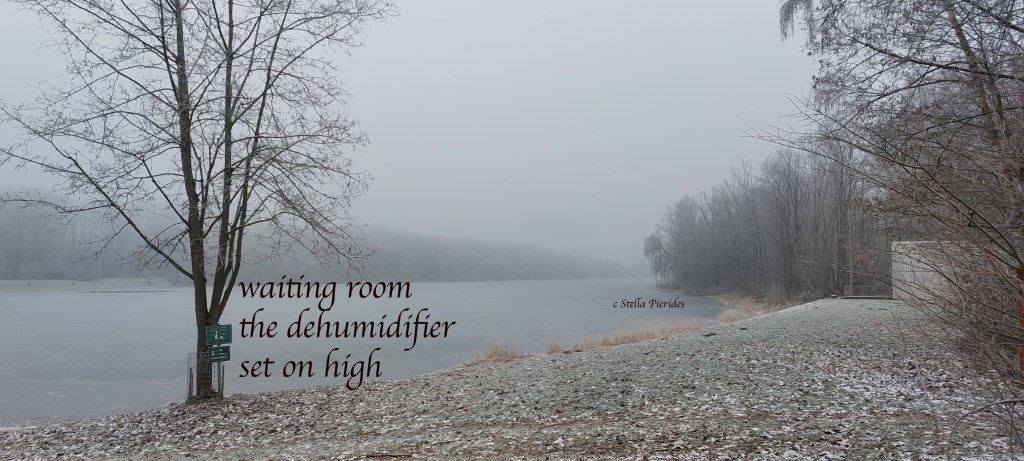
A poem about one of Parkinson’s symptoms: extreme sweating! Not every person living with this disease has this symptom, but if you have it, you will understand…
Happy to see two of my haiku appear in The Pan Haiku Review, issue 2, Winter 2023, Kigo edition, p.98. Editor: Alan Summers.


just as
the snowdrops wither
cherry blossom


snowdrops...
breaking through
this sadness

My haibun “Full Disclosure” appears in Drifting Sands issue 24, 2023, p. 91. This fictional account of an encounter between two people in a highly embarrassing situation, and their ways of coping with it, can be accessed by clicking here.
Alternatively, “Full Disclosure” may be enjoyed below.
Full Disclosure
It’s getting dark early. The yellow light seeping from the lamp on the mantelpiece dissolves before reaching the corners of the room. He is sitting opposite me, tall and dark-haired, an air of confident irony hanging from his lips. Leaning forward, and looking straight into my eyes,
he asks:
“Are you incontinent?”
I shift in my chair and, clearing my throat, I reply. He jots down something in his notebook.
“Do you wear these things that women . . .” his voice trails off.
“Eh, you see . . .” I cough and cough.
While he records my answer, I manage to find my bearings. I know he does this all day, every day, it’s his job. He visits people with disabilities to assess
the level of care they need. Can you cook, can you dress unaided. Can you leave the house on your own. All the practical details that together amount to an identity that is meant to be you.
He is staring at the darkness spreading outside. It must be getting to him. Rumor has it that after work, he leaps into his red Boxster and drives on the autobahn for hours at high speed.
hovering
the kestrel observes
its prey
carving a lamp
out of olive wood…
longest night

The new project of The Haiku Foundation, Haiku for Parkinson’s was launched on the 17th of December 2023! I very much look forward to seeing it develop along the various themes and issues arising from Parkinson’s. The Introduction to the feature can be read by clicking here
I have copied it on this site too, see below.
Haiku for Parkinson’s is a feature of The Haiku Foundation, introducing haiku as a tool in the Parkinson’s toolbox, helping negotiate the challenges of the disease and improve quality of life. And, introducing Parkinson’s Disease (PD) to people living with haiku.
What is Parkinson’s Disease?
Parkinson’s Disease has mainly been attributed to the deterioration and eventual death of brain cells producing dopamine, important for organizing movement. This has been addressed by dopamine replacement therapy. Over the last few years, the role of dopamine and its involvement in the production of other brain chemicals has come to be understood better, leading to improved treatment of the many symptoms increasingly recognized to be part of the disease – over 40 and counting. Besides shaking, stiffness, difficulties with swallowing, problems with walking, balance, and coordination, there are also many ‘non-motor’ symptoms, including anxiety, depression, fatigue, apathy, insomnia, visual hallucinations. Moreover, several of the body’s autonomic functions, such as heart rate, blood pressure, temperature, breathing, and digestion become compromised.
thud!
a bird flies into
a closed window
— Catherine Mair
While this is a formidable list, and at present there is no cure, several programs have been developed amounting to what is often referred to as the Parkinson’s toolbox. Creative therapies are becoming available, offering considerable benefits, including lifting mood, increasing energy and motivation, as well as adding to the paradoxical phenomenon of increased creativity reported by (some) people living with the disease (see Parkinson’s Europe, Parkinson’s Creativity).
Haiku for Parkinson’s (H4P)
Haiku poetry is being used by some people living with PD to support life with this condition. Its qualities include:
Brevity: Haiku can be written or read in a single sitting, enabling feelings of completeness and accomplishment.
Concentration: Concentrating on the moment and our embodied being, haiku anchors us in the world, providing a counterweight to ‘Parkinson’s moments’ – when one feels stuck or caught in acts such as buttoning a shirt or trying to turn over in bed.
Exercise of the mind: Crafting a haiku, in the effort of finding the images and rendering them in words that best convey the experience, exercises brain and mind.
dreaming of birdsong
I wake to a wolf shaking me—
tremors again!
— Tim Roberts
Connectedness: Writing and reading haiku involves attending to the relationship or interaction between writer and reader, and nature – restoring our connection to the world and so becoming a healing force.
Identity: haiku helps enable exploration of the self by overcoming the embarrassment and stigma of the disease, and coming to terms with the constant challenges faced …
Parkinson’s
losing the power
to be myself
— Catherine Mair
while making the various symptoms and the uncertain future manageable.
the last page missing
from the library book—
late autumn evening
— Stella Pierides
In the coming posts, we will hear more about the qualities, and practice, of haiku in supporting people living with PD. And we will be venturing into the realm of haiku’s partner, haibun: the marriage of haiku with prose.
Coming up next: British poet Tim Roberts, living in New Zealand, will be telling us about his haiku practice and how it helps him manage the condition.
References and Bios
“Thud!” and “Parkinson’s” in Catherine Mair, keeping my head above water, 2015. This chapbook is available from The Haiku Foundation Digital Library.
Catherine Mair was born on a winter’s night in the family’s farmhouse in 1938. She has been published widely locally and internationally. In later years she has gravitated to the Japanese forms of Haiku, Tanka, etc. She has grandchildren and great-grandchildren, and the family has grown.
“dreaming of birdsong” in Tim Roberts, Haiku and Parkinson’s Disease: A Practice, in New Zealand Poetry Society Archives, 2020.
Tim Roberts was diagnosed with Parkinson’s Disease at 49 and has found freedom and joy in writing haiku and other Japanese-style short-form poems. He enjoys foraging for experiences and inspiration with his dog and lives a life that, he hopes, makes poetry inevitable. His book Busted! (Red Moon Press, 2023) is haiku and micro-poetry about his experience as a British police officer. Tim lives in New Zealand and is in awe of the scenery, wildlife, and southern stars. His favorite Maori phrase is ‘Kia kaha’, which means ‘stay strong’.
“the last page missing” in Stella Pierides, Frogpond 41.2 Spring/Summer 2018, p. 27
Parkinson’s Toolbox in Stella Pierides, Parkinson’s Toolbox: The Case for Haiku, 2022. Available from The Haiku Foundation Digital Library
Stella Pierides, who lives with Parkinson’s herself, is a writer and poet. Her books include Of This World (2017) and In the Garden of Absence (2012), both HSA Merit Book Award recipients. Her article “Parkinson’s Toolbox: The Case for Haiku” appeared in Juxtapositions: A Journal of Research and Scholarship in Haiku, issue 8, 2022.
tips and tricks

for shredding stiffness…

melting snow


A new feature of The Haiku Foundation coming soon: Haiku for Parkinson’s!
Haiku for Parkinson’s is a feature of The Haiku Foundation, introducing haiku as a tool in the Parkinson’s toolbox, helping negotiate the challenges of the disease and improve quality of life. And, introducing Parkinson’s Disease (PD) to people living with haiku.
The first post will appear on Sunday 12/17/2023 and every few weeks thereafter.
lazy Sunday
waiting for the wind
to die down

soothing vista...
how to be together
how to be apart
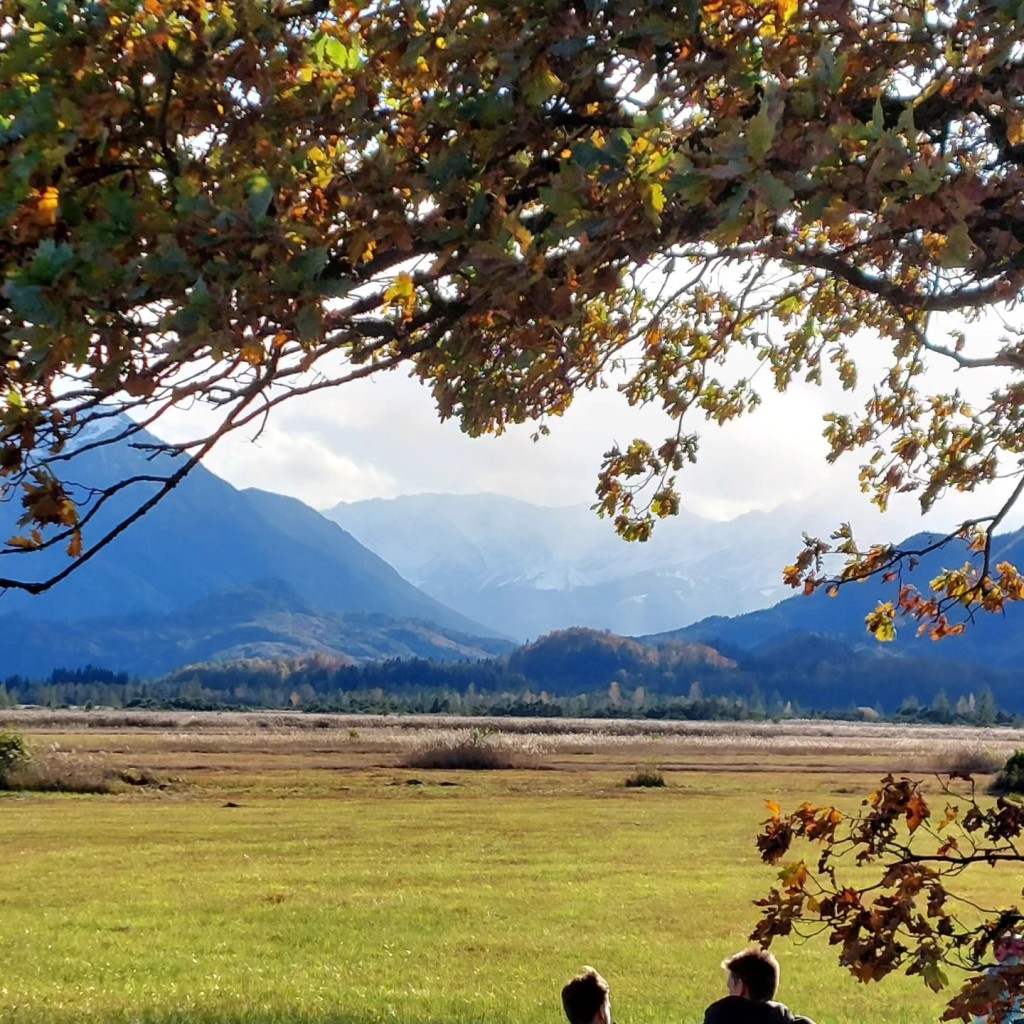

In Frogpond 46.3, Autumn 2023
 Stella Pierides