Category Archives: Other Writers

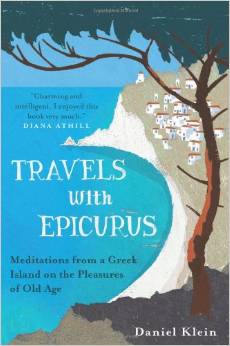
Daniel Klein’s ‘Travels with Epicurus’

Travels with Epicurus,Daniel Klein,Greece,Hydra,I’ve been reading Daniel Klein’s ‘Travels with Epicurus, and reflecting on the concept of play in relation to the life stages we all go through.

Epicurus was an ancient Greek philosopher and the founder of the school of philosophy called Epicureanism. Born on Samos, he lived in Athens and Asia-Minor. Epicurus is known for teaching that the purpose of philosophy is to attain a happy, tranquil life.

Answering the question “How does one make the most of one’s life?” Epicurus’s answer, according to Klein, was that

the best possible life one could live is a happy one, a life filled with pleasure. At first look, this conclusion seems like a no-brainer, the sort of wisdom found in a horoscope. But Epicurus knew this was only a starting point because it raised the more troublesome and perplexing questions of what constitutes a happy life, which pleasures are truly gratifying and enduring, and which are fleeting and lead to pain, plus the monumental questions of why and how we often thwart ourselves from attaining happiness.

I have to admit that I experienced a pang of disillusionment when I first realized that Epicurus was not an epicurean… i.e. a sensualist with gourmet appetites. Let me put it this way: Epicurus preferred a bowl of plain boiled lentils to a plate of roasted pheasant infused with mastiha (a reduction painstakingly made from the sap of a nut tree), a delicacy slaves prepared for noblemen in ancient Greece. This was … Epicurus’s hankering for personal comfort, which clearly included comfort foods. The pheasant dish titillated the taste buds, but Epicurus was not a sensualist in that sense: he was not looking for dazzling sensory excitement. No, bring on those boiled lentils! For one thing, he took great pleasure in food he had grown himself—that was part of the gratification of eating the lentils. For another, he had a Zen-like attitude about his senses: if he fully engaged in tasting the lentils, he would experience all the subtle delights of their flavor, delights that rival those of more extravagantly spiced fare. And another of this dish’s virtues was that it was a snap to prepare.

(From Waterstones, Non-Fiction Book of the Month)

The defining concepts of such a happy life, according to Epicurus, are ataraxia — i.e. peace and freedom from the disturbances of anxiety and greed — and aponia — the absence of pain — achieved through living a non-demanding, humble life surrounded by friends.

Klein’s book, taking its cue from this philosophy, is asking how best to think about growing into old age, and how best to live through this stage of life. The tendency nowadays, Klein points out, is to escape ageing, by spending our lives trying to remain forever young: sport, transplants and implants, botox, diets, all means to prolong and promote youthful looks. But are we missing out on an important stage of our lives, Klein asks.

Hydra, Greece


To look into this question, the author packed a number of books, and staying on Hydra, Greece — where travel is restricted to going on foot, cycling, or riding a donkey — meditated on the issue. The answer he came up with in this book is playful, but I have no intention of reproducing it here. Suffice to say that with all the turmoil of this week’s Greek elections and heated debates, a calm book on growing older, set on a Greek island, juxtaposing the old with the new, matching island life with world-renowned philosophers, provides a much needed good, as well as romantic, counter-balance.

In his unhurried pace, watching a group of friends playing a game of cards, walking the hilly paths of the island, discussing beauty and youth, Klein takes us on his Epicurean journey, savouring the moments of insight, the juxtapositions of beautiful descriptions of nature and human nature with philosophical descriptions of ‘lived time’.

I enjoyed this quirky book, slowed down, looked up references to this and that… thought of acquaintances in Greece who, troubled by their country’s misfortunes, contrary to the Hydriotes observed by Klein, have all but forgotten their ‘ataraxia’; have meditated on the notions of austerity vs growth, and their effects on the mind, long enough.

A timely reminder of Epicurean notions then, a needed breath of fresh air? A New Year’s resolution? Even for those who may not be lacking in material resources, but may be short of (perceived) time?

The language in the book is simple, the images memorable, the light clear… So, keep calm, keep thinking, experiencing… it’s not that difficult to be authentically old… one day… eventually! Alternatively, one can always become a Stoic!

full snow moon
the tightrope bathed
in light

.

You can read the first chapter of this book here

Greek Dinner Around the World, 2015

#GreekDinner, Stella Pierides,The pre-Socratic Greek philosopher Thales of Miletus (624 – 546 BC), is credited with the saying,

A sound mind in a sound body,’

pointing to the close relationship between physical exercise, mental equilibrium and the ability to enjoy life. It seems a good incentive to incorporate in the New Year’s resolution to improve our health, whatever the state we are in.

So, partly in the spirit of this, on the 15th of January each year, a global event takes place: Greek Dinner Around the World. The main goal is to celebrate Greek culinary culture, Greek cuisine as it is known in every part of the globe, and promote the people, authors, chefs, businesses who are connected to Greece. Everyone is invited for a Greek dinner with friends and family. Partners to this initiative host a dinner using Greek products and Greek dishes. Afterwards, they share a photo of their endeavors and experiences, and tweet using the hashtags #GreekDinner and #EatGreek.

This year, for the second time, I took part in the global celebration of Greek culinary culture, by sharing a delicious Greek meal with friends and family. And books, of course. We met at Lemonia, the old favourite in Primrose Hill. The food was good – especially the fish, which was a ‘miracle,’ to use a Greek expression – the company excellent, and well, the evening a treat. Only problem: we all ate a little too much. We discovered the limits to Thales’ saying. After a point, the amount of food, and drink, interfere with both mind and body! Which led us to resolve next year to follow another Greek saying: the Aristotelian

Παν μέτρον άριστον, i.e., Everything in moderation

Many thanks to Keri Douglas for her tireless efforts in promoting this event.

There was also food for thought. I brought two of my books –collections of short stories on Greek themes — to the table: Feeding the Doves, and The Heart and Its Reasons

και του χρονου

Per Diem: Daily Haiku for December 2014

Great news! The Haiku Foundation’s Per Diem: Daily Haiku feature for December 2014 is on the theme of “Light and Dark,” and the shades in between. I had the pleasure of assembling this collection, drawing on haiku across the range from dark to light.

A seasonal topic. By way of an introduction, I quote from The Haiku Foundation blog post:

“Winter is the par excellence season where this duality comes to a head. For some, the long nights come with festivals of light, religious or secular holidays. For others, winter is a season of slowing down, of depression, loneliness, low spirits, spirits… For some poets, light is the source of inspiration; for others, darkness, against light, the essential element spicing their writing. Either way, wherever poets are, whatever their experience, tradition, or culture, poetry of light flows from their pen.This month’s Per Diem draws on haiku exploring this dichotomy of light and dark, and reflects on our dependence on and appreciation of this duality.“

I am really grateful to the poets who kindly gave permission to include their work in this project.

Do you have a poem on this theme? Please share it in the comment box here

And don’t forget to check out the Per Diem: Daily Haiku here

Murder at the Buecherschau!

Gasteig,Muenchner Buecherschau,More photos from the Buecherschau, as promised. The event has been well attended, with visitors browsing the book stalls, relaxing in the chairs provided, and reading into the late hours! It looks like everyone feels at home here, eager to get to know books and authors, touch and feel the texture of book covers and pages.

One of the free events I attended was a daily half-hour interview (part of series) for a radio book magazine, the Bayern 2 Diwan. The interviewee, French author Hélène Grémillon, spoke about her new book, In the Time of Love and Lies (German distributors’ title; in French the title is La Garçonnière), set in Buenos Aires in the late 1980s. Very interesting book, with a thrilling plot (a love/crime thriller) and characters (such as a psychoanalyst, and his wife, a tango teacher and murder victim), in addition to the wonderful setting…

Grémillon claimed that in Buenos Aires, there are, and have been, great numbers of psychoanalysts per capita. Imagine that! Even at the time of the Junta, she pointed out! While I am aware of the important connection between Argentina and psychoanalysis, I have not thought of it in terms of numbers. You can understand that, though it is a few years since I last worked as a psychotherapist, my curiosity peaked. So, addicted as I am to checking, I looked it up.

An article on CNN said so too. Indeed, the country has the unusual distinction of being home to more psychologists (i.e. when we include psychanalysts and psychiatrists) per capita than anywhere else in the world. While there are no WHO statistics for 2011, psychologist Modesto Alonso and colleagues estimated 202 psychologists per 100,000 for Argentina in a 2012 study. Compare that with WHO’s 2011 numbers for Austria being 80 per 100,000! And, as it happens, almost half the country’s psychologists are concentrated in the capital city of Buenos Aires.

Bayern 2 Diwan,But why this interest in the vicissitudess of the psyche? Theories abound. From the influence of the European immigrants, bringing with them the particular culture and society values of twentieth century Europe, through the interest in exploring the psyche of suffering, to the interest in the expression of the self – after all the tango is seen in these terms too – it seems that psychoanalysis not only flourishes in Argentina, but the country is a torchbearer for it. Particularly surprising that this continues to be the case, at a time when most of the other countries fall for the lures of the short and quick approaches to psychological healing.

I read in The New York Times:

“And in a sign of its wide acceptance, President Cristina Fernández de Kirchner and her cabinet chief took time out in April to meet with leaders of the World Psychoanalysis Association, which was convening then in Buenos Aires.” (2012).

In this context, Grémillon might be taking too bold a step in her novel: the main character, the psychoanalyst Vittorio, is also the main suspect in the murder of his wife…

I am reminded of a description of magical realism I found on Wikipedia relating to the Colombian writer Gabriel García Márquez’s style, by literary critic Michael Bell, as involving:

“a psychological suppleness which is able to inhabit unsentimentally the daytime world while remaining open to the promptings of those domains which modern culture has, by its own inner logic, necessarily marginalised or repressed.”

Holding in mind and in the text both, the rational and the shadows… Might this acceptance and celebration of reality and (i)magi(c)nation as parts of one and the same world, be at the root of this society’s welcoming attitude toward the psychological exploration of the human mind?

In any case, I am looking forward to reading this book.

Poetry and Bacteria

I recently came upon the remarkable work of Christian Boek, who boldly took poetry into areas of science and technology and even created a ‘living poem.’ Although this is ongoing work, it already is accomplishing astonishing results in its encouraging poetry, and poets, to boldly go where no poet has gone before…

Boek inserted a line of poetry coded in a DNA sequence, into a bacterium. The bacterium then ‘responded’ by creating a new protein which, translated back into Boek’s letter coding scheme, turned out to be a new poem in ‘response.’ This xenotext experiment is described in James Wilkes’ article, March 2013, on “Bracketing the world: Reading Poetry through Neuroscience.” There was a blog post on Harriet, the Poetry Foundation blog, by Boek himself, and a very good exposition of the whole experiment on Triple Helix Online.

But I mustn’t keep you waiting. Here are the lines of poetry exchanged:

Boek: ANY STYLE OF LIFE IS PRIM
Bacterium: THE FAERY IS ROSY OF GLOW

Read about it on Triple Helix Online. It will make perfect sense.

Results! BIG POETRY GIVEAWAY Winners!

So that was it! Inter-/National April Poetry Month 2014 is now over and done with! I hope you all had a great month of reading and writing poetry! I did, and I am particularly pleased to have completed the Writer’s Digest PAD Challenge. I wrote a poem a day (and more)! Now time to wind down (by writing a poem a day, of course!).

I am also pleased to have taken part in the BIG POETRY GIVEAWAY. This was the fifth year it was organized, but the first one in which I participated.
Four people’s names were taken out of my hat – and here they are:

24: Lissa Clouser won Parallels
14: Margo Roby won In the Garden of Absence
20: Linda won The Haiku Apprentice: Memoirs of Writing Poetry in Japan
13: Jennifer won Feeding the Doves

Congratulations to the winners.
Please email me giving your postal address, and full name at: stella(at)stellapierides(dot)com
and I will be posting the books to you in a few days.

A big thank you to all those who entered the draw.

A happy and productive, poetry-filled new month!

PAD Day #29 prompt: Magical realism

PAD Day #29 prompt: Magical realism

summer reading
the book of sand slips
through my fingers
.
The Book of Sand, by Jorge Luis Borges, is one of my all time favourite short stories!
This poem was written in honour of Gabriel García Márquez who was both influenced by and extended/added colour to Borges’ magical realist worlds.

National Poetry Month 2014 Book Giveaway!

My Giveaway: 4 Free Books for National Poetry Month! (Free postage included! Leave a comment to be included in the draw!)


I’m very happy to be participating in this year’s poetry event, which involves sending out poetry books into the hands of people around the world. Organized by Kelli Russell Agodon, of Book of Kells, this year’s Big Poetry Giveaway includes a number of poets giving away their and others’ poetry collections through their blogs. For a list of participating blogs visit Kelli here

This is how it works: Participants give away two or more books of poetry, one or more of which must be by another poet. To win a free copy (free postage too), all you have to do is leave a comment in the comment box at the end of this post saying you would like to take part in the draw. Please include your contact information (if you are concerned about giving your email address in the comment box, please leave your comment and then mail an email address to: stella@stellapierides.com). Beginning of May, I will draw the winners, and email them to arrange posting the books.

The Books:

1: Parallels, by Johannes S. H. Bjerg
“The publication of Johannes S. H. Bjerg Paralles marks a watershed in the history of the development of haiku related arts…The book contains some of the most moving poems I have read…” Comment by Jack Galmitz, poet and writer.

2: In the Garden of Absence, by Stella Pierides
“A charming collection… This intersection of the past and present is within all of us, and Pierides mines it well. A very satisfying read.” Judges’ comment in Frogpond, Kanterman Merit Book Award for books published in 2012 (third place).

3: Memoirs of Writing Poetry in Japan, by Abigail Friedman
“For its honesty, accuracy, and the pure pleasure of reading, Abigail Friedman’s book joins that small collection within easy reach of my desk for …continuous enjoyment.” Comment by William J. Higginson, poet and author.

4: Feeding the Doves, by Stella Pierides
A book of short stories and haibun
“They (the stories) simultaneously enchant and provoke, lure and unsettle. Some guide the reader to dream lands… Other short pieces come to life through the compelling characters that populate them: homeless men, writers, travelers, immigrants, wives, monks from Mount Athos. Scintillating moments of their existence dilate, to define and symbolize entire journeys…” Comment by Mia Avramut, poet and writer.

___________________

A few things about me– in case you are interested!

I like film, books, haiku, haiku, haiku, did I say haiku? The Haiku Foundation, haiku, tanka, stories, water in all its forms, North Norfolk, quark with honey and nuts, walking, playing with ideas, my cat and tortoises, plants, mountains, marshes and open skies, and many other things.

In 2013 I published “Feeding the Doves” through my very own Fruit Dove Press and I am working on the final draft of my next poetry collection… about angels.

Happiest poetry moment: my book In the Garden of Absence winning the HSA Kanterman Memorial Merit Award for books published in 2012.

I participate in a number of FB writing communities such as NaHaiWriMo, and I will also be writing a Poem-A-Day for the WD challenge.

______________________________________________

So, here you have it! 4 books: a wonderful collection of avant-garde poetry (by Johannes S. H. Bjerg), an award-winning poetry collection (mine), a delightful memoir of writing poetry in Japan (by Abigail Friedman), and a book of short stories and haibun (by Stella Pierides).

This draw is open from now through END OF APRIL 2014, National Poetry Month!

If you’d like to be entered in the draw, please leave your name and contact info by midnight (Berlin time), APRIL 30th, 2014 below in the comment section of this post and I’ll be randomly picking the lucky winners during the week of May 1st, 2014.

Good luck!

The THF’s new offerings

What an exciting month December has been! And it is only the 4th of the month!

The Haiku Foundation’s Per Diem: Daily Haiku, a feature I project manage, is scaling new heights this month. Michael McClintock, in his collection “31 Ways of Looking at a Mountain” is taking us for a mountain hike. Each day a new view here

BeFunky_pomegranate.jpgThe Haiku Foundation Fundraising campaign is continuing up to the 6th of December with a number of releases of new material and features. On the 3rd, the new social media account on Pinterest was rolled out. I am pleased to have played a part in this one.

Then there is a new haiga by Jim Kacian, a new digital library interface… there is an endless stream of enthusiasm and creativity coming out of the The Haiku Foundation. And the fundraiser releases continue for three more days!

Are you missing out? Register for blog post notifications via email (see the THF contact page), follow the THF on Twitter: https://twitter.com/haikufound

Pinterest: https://www.pinterest.com/haikufound/boards/‚ and like it on

FaceBook:  https://www.facebook.com/pages/The-Haiku-Foundation/346457215437?ref=ts  

And above all, have fun with haiku!


Happy Thanksgiving!

Happy Thanksgiving, and Happy Chanukah to friends who celebrate it. And to the rest of my friends, wherever they happen to be in the world, who would be happy for the opportunity to give thanks for blessings received any time of the year, Happy Thanksgiving too!

I am giving thanks for my family and friends, the creative, nourishing and supportive haiku communities and writers’ groups I am involved with around the world, and the gift of every day on this Earth I continue to receive.

deerweb.jpgA special note of thanks to the The Haiku Foundation for its breathtaking work on the many and varied haiku projects it sustains and furthers. It too is giving thanks and fundraising for its work during the period from Thanksgiving through St. Nicholas Day. Please take a look to see what they’ve been up to this year, as well as the exciting program they have planned for the coming days here.

While you are visiting their site, I encourage you to sign up for their email notifications, follow them on Twitter and like them on Facebook: this way you will be kept up to date with all their offerings.

Wishing you a happy and healthy holiday season.


The Living Haiku Anthology

A new, exciting Project in the Haiku world!

The Living Haiku Anthology aims to bring “a multicultural voice of haiku to the general public,” its mission being “to provide numerous and varied haiku, free of charge, to readers from all over the world including schools of education at all levels.” The Anthology team is collecting and documenting many of the finest haiku (and living poets) today. So what an honour and pleasure to be included in it. Please visit and browse the poets and poetry in it. You will find an index of poets here 
And while you are visiting, don’t forget to take a look at my haiku too. They can be found by clicking here

Surrealism and Haiku?

Over at the The Haiku Foundation blog, TroutswirlGene Myers asked “What do surrealists and haiku poets have in common?” A number of haiku poets contributed very interesting and varied responses. Spurned into action myself, I responded with the following comment:

Hochablass, Lech dam, Augsburg

“Thank you for sharing this, Gene. I have been thinking about connections between the arts and haiku poetry and so find it interesting to read people’s thoughts here.Re. your question: I understand (most) surrealists to have tried to bypass conscious mind and to make contact with the unconscious through dreams, word association, automatic writing, hypnosis, mind-altering substances… This aim to go beyond and beneath the conscious/reasoning mind and pull out a fresh, writhing, alive experience may be one of the things that surrealists and haiku poets share (though not all the means!).

Regarding two-part haiku, I like to see the juxtaposition of the two elements as displaying side by side, literally, unconsciously associated content. In a successful juxtaposition, a sense of strangeness, an uncanny feeling is being set up. Isn’t this central to the attraction for both reader and writer: looking at the seemingly disparate elements/parts of the poem, experiencing the tensions generated and their resolution in a moment of recognition in which the unseen / unconscious connections emerge?

In this sense, surrealists (at least those of the more constructive strand) and haiku poets may be said to use juxtaposition of the seemingly disparate as a means to reach underneath and beyond the well-trodden tracks of our conscious landscape; to (to use your words) ‘jar’ and encourage filling in the gaps/holes between the elements through reconnecting with deeper/hidden levels of the mind. Of course, this is only one of several commonalities; there’s also choice of words, images, form of presentation, and so on.

Happily, we have this month’s Per Diem, Kirsten Cliff’s collection “Dream Speak,” to help us explore this matter further.”

Noticed the last sentence? Why not keep me company, visit the THF Per Diem site, and pull out of the Per Diem box the daily poem; fresh, and only for a day, the daily poem can be found by clicking here


Fate and Destiny

“Fate” and “destiny” are often used interchangeably to refer to the notion of predetermination; of future events following a predetermined plan or path.

Paths Yet, implicitly, we also make a distinction between the two in terms of the    degree to which each is allowing for alterations in the course of events to  which it is applied. Fate is usually associated with unalterable events; we are  in the hands of the ancient Fates, Gods, or cosmic forces; our lives, and  actions, are out of our control. There is a belief in a prescribed future: a  higher/supernatural authority (or authorities) has the future laid out for us.

Destiny, on the other hand, involves a course of events where we have a say,  or a hand, in preparing or making our future. We may be destined in one  sense to higher or lower things, but we can underachieve or push ourselves  hard to achieve better than expected.

This month’s The Haiku Foundation Per Diem: Daily Haiku reflects on both of these concepts. Deb Baker, this month’s guest editor, using “Kismet” as the title of her splendid collection, invites us to reflect on the “hinge” moments” or forked paths we encounter and the outcomes that result when we follow one or the other road, believing in fate, in destiny, or a choice we made. She writes,

Poems like these can make a reader feel a sense of momentum, a possible turning or smoothing path. Perhaps such a poem helps a reader discern something happening in the present moment in his or her own life. Or to see a new possibility, a different way forward, through someone else’s hinge moment.

.I’ll be reading with an extra eye for the different ways Kismet appears in the poems. I’ll be having fun too! Join me? You can find the daily poem here

.

The photo is of a path taken, crossing the river Schmutter, near Neusaess, Germany.

On the Road

The new THF Per Diem collection, Songs of the Open Road, is up and running over at the Haiku Foundation site. Guest-edited by Tom Painting, it takes us on 31 exciting, meditative, and always inspirational journeys. Highways and motorways, straight paths and winding lanes are there for us to explore all through July. In his introduction to the collection, Tom Painting quotes from Walt Whitman’s poem, Song of the Open Road:

“ Afoot and light-hearted I take to the open road,
Healthy, free, the world before me…”

I very much look forward to these journeys. Join me on board the THF Per Diem for the ride. Each day a new haiku here


FLASH MOB 2013

I am taking part in the flash story event, FLASH MOB 2013, celebrating International Flash fiction Day. A sort of literary carnival and international competition in one, with over a hundred writers of flash from around the world taking part by posting short stories in their blogs.

 If you love flash fiction, then this is the best place to browse for stories – and if you don’t know anything about flash, this is the place to start! Click here
My own story is in the European writers section here 

Uncanny Attractions (Posted in Haiku Matters 28 May 2013)

Uncanny Attractions

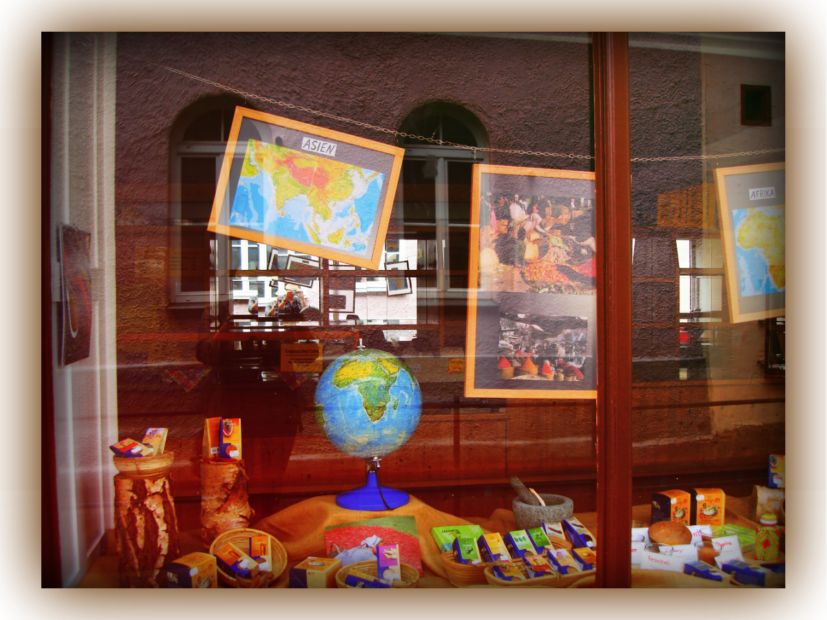
Photo of shopfront in Augsburg, Germany (by Stella Pierides)
Photo of shopfront in Augsburg, Germany
(by Stella Pierides)

I’ve always been fascinated by the concept of the Uncanny. Freud, the writer often associated with this concept, described the following uncanny experience when he came face to face with his own double. While travelling by train, Freud saw an elderly gentleman enter his sleeping compartment by mistake. Jumping up to let him know of his error, Freud realized it was his own image reflected in the mirror on the connecting door. He had found the appearance of what he thought was another man ‘thoroughly unpleasant.’ Without being frightened, he failed to recognise his ‘double.’ Or was the displeasure he felt, Freud wondered in the last note of his last chapter on “The Uncanny,” “perhaps a vestige of the archaic reaction to the ‘double’ as something uncanny?” He leaves us with a question, perhaps an encouragement to take this further ourselves.

Freud was not the first of course to link the concept of the ‘double’ with mirroring, the image in the mirror as well as the ‘other.’ Ever since Plato conceived of material reality as a poor representation of the true Forms, others have found man’s double in several contexts. In literature, for instance, Mary Shelley made the monster his creator’s ‘double’ and leaving him unnamed, led subsequent generations of readers to refer to him with the name of his creator: “Frankenstein.” Conrad, too, wrote the ‘double’ in his stories (e.g., in “The Secret Sharer”).

So what has this ‘uncanny’ and ‘double’ to do with haiku, and my theme of reader-oriented matters? If you read my previous posts, you may have noticed I like playing with ideas; though more thought games than thought experiments.

Let me throw this thought in the pot: Isn’t there in haiku a situation in which, when you come to the poem, you become slightly disoriented by the presentation of the two separate, juxtaposed ideas? (Remember the field of energy, in the previous post?) I think there is. The ‘cut’ and the pause in the juxtaposition of two ideas/images are device(s) which open up the extra perspective(s), depth, for the reader; they also create a sense of strangeness, a momentary, uncanny disorientation… until there is the spark of realization that transforms what was strange and uncanny into familiar and understood. Once resolved, the two initially puzzling parts of the poem appear to us the way Freud, relating that vignette, stood in front of his earlier self and its reflection; the way we stand in front of a Moore, a Hepworth, a Lucian Freud, or the narrator in Conrad’s novel and his secret sharer.

Are you with me? What do you make of the thought that the moment of insight or realization is preceded by the uncanny? That the uncanny in haiku involves being confronted by the juxtaposition of two on the surface unrelated – but on a deeper level related – ideas within a limited space? That the haiku moment does itself involve overcoming this sensation of the uncanny?

Finally, before I go, and in case you are interested, I’d like to mention a couple of places, amongst others, I like to visit for reading poetry, essays, information, learning, fun (in addition to “Haiku Matters, haiku journals and the homepages of haiku societies!). Do let me know your favorites.

The The Haiku Foundation’s homepage and blog “Troutswirl.” On the same site, among many brilliant features, the THF “Haiku Registry,” the place to get a flavor of the work of haiku poets writing in various forms, from all over the world; the “Montage Archive,” the “Book of the Week,” the “Per Diem: Daily Haiku” panel, and “Per Diem Archive,” are my favorites (esp. since I help out with Per Diem!).

Also, World Kigo Database (whether you appreciate kigo or not), Graceguts, Issa’s Untidy Hut (esp. Small Press Friday and Wednesday Haiku), Shiki Kukai Temporary Archives, are full of essays, criticism, food for thought, poetry, poetry and poetry.

On this note, hopefully leaving you with more questions than answers, having raised smiles as well as eyebrows, I’d like to say a big thank you to Colin Stewart Jones, and goodbye to folks who found their way here, from both the writer and reader in me.

*

The Wikipedia on the Uncanny here
Sigmund Freud, ‘The Uncanny’ in The Uncanny, ed. by Adam Phillips (London: Penguin Classics, 2003) p. 121-161.
Conrad, Joseph, The Secret Sharer can be read here

.

Photo and image manipulation: Stella Pierides

Where the Light Gets in (Posted in Haiku Matters 22 May 2013)

Barbara Hepworth, sculptor, created her first pierced form in 1931, the year she gave birth to her child.

Barbara Hepworth – Oval Sculpture

Jeanette Winterson, appraising Hepworth’s creation in her essay “The Hole of Life,” sees this as a breakthrough not only in art, but also in the understanding of human existence. Pointing to the advances in science – in which, far from a universe of oppositions (like mind and matter, space and form), Einstein, Planck, and others conceived of a universe in constant play, forever involved in creative tension – Winterson shows Hepworth’s sculpture to be a timely response to them.

“The atom itself, the supposed building-block of matter, was no longer an object, but an energy – points of light surrounded by empty space.”

and:

“If the scientists were right, and space is as much a part of form as mass, then it is the space we need to see – but how? Hepworth made an astonishing discovery the day she pierced one of her sculptures. She allowed us to see nothing – a privilege previously enjoyed only by God.”

Nothing and everything! Winterson understands Hepworth to have mirrored the new developments in theorizing about the cosmos in her hole forms as the (w)hole of life, expanding space to include the invisible, and connecting to both time (in terms of the past) and timelessness in her sculptures

Henry Moore, who had studied art at the same time as Hepworth, grappled with spatial form and in his attempts to give it an extra perspective, cut holes through his sculptures soon after her. Of the various interpretations this act has received, I prefer the one which conceives of it as offering a 3-D perspective (literally and metaphorically) to the viewer.

What if we were to play with Winterson’s take on the holes in Hepworth’s sculptures, along with Moore’s contribution, and relate them to ‘the cut’ in haiku? What if we ‘saw’ the space between the two juxtaposed ideas, between the two parts (not only the pause created by the punctuation) as being more than an empty hole to be filled-in, or a gap to be crossed, but as an energy field being fueled by and fueling meaning? We wouldn’t be the first of course*, but the thought experiment is exciting… Do you resonate with this idea?

And, even though I am oversimplifying, isn’t there a paradox here: cutting away in order to create extra depth (which is where Hepworth and Moore come in)?

DSC03538

One might see a similar paradox in the writings of Winnicott, the English pediatrician and psychoanalyst. For instance, in “The Capacity to be Alone,” he argues that one achieves creative aloneness if, as a child, one had the experience of being in the presence of a watchful, but non-intrusive parent. The capacity for attachment is required before one can deal with loss; the capacity to foresee and accept loss, before love can be truly there, and so on. – I see the opening or cutting away in order to increase the perceived depth and space to be similar to this approach.

Interestingly, there is another paradox giving rise to a ‘hole,’ if we look at the opposite case scenario – where it seems that everything is being said, without any ‘holes.’ Lucian Freud, the painter, painted men and women in their naked, real, and true form. He studied his sitters over months or years, revealing in the portrait the person they happened to be (as he saw them) through paying particular attention to their skin.

In a perceptive essay, Dodds,** points out:

“there is an evocation of abjection, of the corporeal mother who must be symbolically expelled in order for the subject to come into being. And yet rather than staging a ‘rite of defilement’, there is a fascination, we are drawn in. The ‘glare’ of the portraits refers both to the external sources of light reflected on bodily surfaces, and also glare as in look, the stare… We are caught in the gaze of bodies. After first looking away… there is a return, to the folds, the textures, the touch and smell, the loving portrait of every bump of skin, to a fascination with Freud’s cartography of flesh.”

Even when everything is said and done, the people portrayed by Lucian Freud are there and not there. The person is present and absent at the same time: present in their corporeality, yet – like a psychoanalysis which is never finished – their portrait does not say it all. What it says is what has been rejected by social and cultural values, yet by saying so, by bringing in the abject, it rejects socio-cultural values, thus creating a ‘hole.’ The viewer has work to do.

The haiku reader too. From the monumental portrait to the miniscule text: it is not the physical size or amount of detail that matter when it comes to the energy available and the meaning(s) generated – especially through the cut – in haiku. In the haiku moment that the opening of the ‘hole’ creates, a space is entered that is a whole world.

An essay by Jeanette Winterson on Barbara Hepworth and her response to the concept of ‘hole’, originally published in Tate Magazine, can be found here

*For the cut: “like a spark plug that enables a spark to leap the gap” by Michael Dylan Welch in his essay “Haiku . . . Under the Bedsheets: Juxtaposition and Seasonal Reference” in Graceguts

For “The Capacity to be Alone,” an entry point might be here. The paper itself, can be found here

If you are interested in the angle of Lucian Freud and the ‘abject’ you can find a short essay here, together with paintings!

** Based on a paper read to the Czech Psychoanalysis Society on 28 May 2011, “Confronting the Abject: Reflections on Rotraut De Clerck’s (2011) ‘How deep is the skin? Surface and Depth in Lucian Freud´s Female Nudes’” (Dodds 2011b).

On the wider issues relating to space in haiku: “Haiku and its Relationship to Space” by Tracy Koretsky, in the homepage of the New Zealand Poetry Society here

.

Posted in Haiku Matters, the blog of Gean Tree Press

Blind Spots (Posted in Haiku Matters 18 May 2013)

This post is about blind spots, shadows, and the darkness in our minds as readers (and writers). It appeared on Haiku Matters, the blog of Gean Tree Press, and can be read here

Blind Spots
Blind Spots

There are corners and alleys in texts into which we, as readers, may be sidetracked, trapped, and lose our way. The best illustration of this affliction I came across is from another genre, Conrad’s novel “Heart of Darkness” – which I very much like – and Achebe’s criticism of it. I will assume that you have either read this novel or a synopsis of it.

There had been huge praise for this novel over the years. Critics had written about aspects of imperialism, hair, clothes, rivers, language in it – yet, one aspect had gone unnoticed in so many readers’ and critics’ reading. I hadn’t noticed it myself either. Achebe, in his reading of the novel, saw a text underpinned by racism, and pointed to a need in Western psychology

“to set up Africa as a foil in Europe, a place of negations at once remote and vaguely familiar in comparison with which Europe’s own state of spiritual grace will be manifest”

The novel presented Africa as ‘the other world’, a chaotic, corrupting continent, sharing with the West only ancient roots of kinship which were, however, long ago overcome. Such an image of Africa, Achebe pointed out, satisfied a psychological need to get rid of, to disavow what had been repressed and disowned; and it was a dangerous image to be challenged. Instead, it had to be reinforced. Achebe’s criticism – that Conrad’s masterpiece, attempting to examine the European psyche, compromised African humanity by this juxtaposition – illustrates a defamiliarization process, in which the familiar common humanity is denied and the ‘other’ is created.

While at first, years ago, I felt shocked by Achebe’s reading of Heart of Darkness (was Achebe being oversensitive, misreading Conrad’s intention of exposing undercurrents in Western culture?), I came to agree with it; it opened my eyes to the blind spots a whole community of writers and readers, every one of us, may be prone to. Achebe, in his interview in Paris Review, “The Art of Fiction” is quoted saying:

“… all these people who see nothing about racism in Heart of Darkness, I’m convinced that we must really be living in different worlds. … Until these two worlds come together we will have a lot of trouble.”

How could such a massive failure to ‘see’ happen? Had readers, before Achebe, been reading ‘passively,’ submitting themselves to Conrad’s words without thinking, or approaching the text indeed from another world? In such a scenario, Achebe was best placed to see, and bring to our attention, the other side.

Returning to the haiku world and its readers: this is not to imply that some haiku readers, or writers, suffer from a particularly dark streak/from prejudiced thinking, but to illustrate how we are all prone to oversights, blind spots, are subject(s) to our cultural, historical, national environments’ influences. How, like Conrad’s earlier readers, we may be led to overlook, or overreact to, certain aspects in others’ and our own work. Achebe again, when asked what pointed him in the direction of writing:

“There is that great proverb – that until the lions have their own historians, the history of the hunt will always glorify the hunter… Once I realized that, I had to be a writer.”

Novels and haiku, perhaps the longest and shortest forms, also belong to different worlds, yet I tend to think we benefit from looking at the history and critical readings of both. It may spark insights, awareness of something we might have been missing. Wouldn’t it be useful to bear the possibility of blind spots in mind when we are differentiating between the various haiku traditions, when we are thinking about the content of haiku poetry? When reflecting on the issue of our identity(ies) as readers and poets? When we ponder, or pen, poems about illness, aging, the young, minorities, disadvantaged groups? When, in other words, we are faced with the ‘other’?

Achebe is widely said to have brought to our awareness the African perspective. Might we say that by doing so, Achebe, like Freud, Jung and others, made it possible to accept that our minds, even when open, even when filled with kindness, generosity, benevolence, and respect, at the same time contain blind spots and darkness?

.

Conrad, Joseph “Heart of Darkness” see Wikipedia for some of the history of the perceptions/reader appreciation of this novel.
.
Achebe, Chinua, “An Image of Africa”, The Massachusetts Review, 18 (Winter 1977), 782-794
.
Achebe, Chinua, interview in Paris Review, “The Art of Fiction
.
Interested in following this issue in poetry in general? See Poets.org, “Open Letter: A Dialogue on Race and Poetry”, by Claudia Rankine (with Tony Hoagland’s response)
.
And something that caught my eye during my internet travels: If something isn’t there in our field of vision: “what isn’t, what can’t be” from a poem “Blind Spot” by Beth Thomas.

.

Image: Stella Pierides

With an Open Mind (/Map) (Posted in Haiku Matters 13 May 2013)

Peutinger Map (Part of)

Map-making has been traced back to the earliest of times. Maps help us orient, know our location, what other places there are, how to get there, what landmarks to look out for, depict how places are interconnected. They also help us with perspective-taking: we can picture our place as seen from someone else’s viewpoint, and vice versa. Although maps often turned out to be distorted or inadequate – the ‘flat earth’, for instance – and were replaced by improved ones, they were always part of our shared search for certainty.

Think of the time when maps had to be redrawn to incorporate scientific rather than theological notions of the earth. Reluctantly, we realized we were no longer the unique children of God, at the top of creation, living on an earth at the center of the universe, but tiny dots drifting along in a vast cosmos. The invention of the telescope allowed us to look beyond our narrow confines, revealing our common and humble origin and place in the world. Isn’t there a semblance here to what the internet and social media are doing today: making us realize that, rather than being solipsistic, only children, we are members of a large family sharing similar talents, creative ideas, concerns, ambitions?

Our need for map-making also extends to reading, as well as writing, haiku. While, as readers, we bring along our personal, familial, local, ideological baggage and while we open our hearts as well, we also need a map for finding our bearings in the haiku world, for becoming aware of the various ways this poetic form appears in; to stay with the metaphor, for knowing the position of other ‘planets’ or ‘stellar systems’ and their orbits and gravitational pulls.

Here is an instance of cartography in the haiku universe. In his essay in Frogpond, “Haiku as a Rhetorical Art. Haiku Poetics: Objective, Subjective, Transactional and Literary Theories”, Randy Brooks, following the Aristotelian tradition, considers the relationship between the basic elements of communication in writing – which he lists as reality, writer, reader, and language – and expands on a number of writing theories: the objective, subjective, transactional, and literary. If you bear with me, I’ll try to summarize them in one paragraph (the brevity here does them injustice – I urge you to follow up the link for the full map). But before I do, I’d like to quote Brooks’ caveat:

“…there is no ‘one way’ to write haiku, no single haiku poetic or haiku tradition to guide the writing and reception of haiku as a literary art. There is no final list of ‘do’s and don’ts’ that will codify the art of reading and writing haiku… On the broader level of haiku as a literary genre, we should embrace the observation that there are several ways, a multitude of traditions, a variety of haiku poetic theories. ”

For the purposes of this post, I’d emphasize that there is no ‘one way’ to read, analyze, or enjoy haiku either. There are the various ‘continents’, ‘planets’ in various orbits on the maps, and once we are aware of them, we can keep our direction or change it, if we wish to, more easily.

According to Brooks, the objective way of writing haiku involves perceiving and reporting nature in plain, objective words that convey direct sensory perception to the reader. The reader ‘steps into’ the writer’s perspective and reads the poem as intended. The subjective way emphasizes the inner, subjective world of the writer, expecting from the reader the role of a fan being interested in and understanding of the writer’s intended meaning; being inspired also to explore her own subjective experience. In transactional haiku poetics, reality is constructed and shared along a common language continuum between writer and reader. The reader is a socially aware partner in the creation of meaning. In literary poetics, writer and reader understand they inhabit a fictional world and use liberally the tools of fiction and poetry. The reader remains seated in the haiku audience, judging the literary merits of the artifact. Brooks notes a further poetical category in which some poems fit, that of disjunction, where one of the key elements of communication are intentionally omitted. For instance, the writer may be a software program, producing poems in some cases without even recording them, entirely unconcerned as to the existence of a reader.

All approaches, the latter excepted, require a certain degree of position and attitude from the reader as well as the writer. It may be that the transactional approach is the one which gives the reader the most say, the most ‘power’ vis-à-vis the writer. Through the cut, the season word, the juxtaposition of images, the disjunction, the reader, responding to the tension(s) created by the writer, contributes to the meaning of the poem, using her own experience, imagination, associations, gut response… In such a scenario, the writer may think she wrote a good enough haiku, but a reader’s reading may make it an exceptional one! Unfortunately, the reverse may be the case, too.

The Crab Nebula

Besides Brooks’ classification scheme, other haiku taxonomies have been developed. For instance, in his essay in Simply Haiku, “An Analysis of Haiku in 12-dimensional Space”, Charles Trumbull discusses a taxonomy of 12 independent dimensions, including: haiku ideology/aesthetics/poetics (Japanese vs. Western); haiku point of view (objective vs. subjective); haiku audience (to be shared vs. self-expression).

Basically, such taxonomies conceive of any haiku/poet as occupying a point in a multi-dimensional space or ‘cloud’ where the dimensions are fundamental, independent variables on which each particular haiku/poet is classified. The distribution of haiku matter in this cloud may be unequal, with sets of haiku/poets forming denser ‘galactic systems’ (FB Communities?) and with sparse matter in the inter-galactic space.

I have brought these two essays here for two reasons: first, to illustrate the importance of having a map – as a reader as well as a writer – to see where one is or where one is heading, especially if one reads poems from different traditions several times a day; and second, to remind us of the many varieties of haiku and of writers and readers.

Understanding the varieties of haiku traditions, experiences, forms, histories, and of our own assumptions only helps us be more open to them, navigate the haiku territories, and accept others’ as well as our own position in them. Also, the map-making may help us identify uncharted territories to be discovered and enjoyed in the haiku cosmos. Let’s boldly go… Or?

Let us know your take in this. How do you ‘read,’ place haiku, if at all? Your favorite maps, cool places to hang out?

*

Brooks, Randy: “Haiku as a Rhetorical Art. Haiku Poetics: Objective, Subjective, Transactional and Literary Theories” (Frogpond 34.2, 2011 on the HSA site),

Trumbull, Charles, “An Analysis of Haiku in 12-dimensional Space” in Simply Haiku: Journal of Haiku and Related Forms, September-October 2004, vol. 2, no. 5

Interested in the idea of the “haikuverse”? See Melissa Allen’s series “Across the Haikuverse” in her blog, Red Dragonfly. Here is just one of the series

*

More information about the Peutinger map here:

A copy of this map is displayed in the Augsburg Roman Museum, where about a year ago, I spent an interesting afternoon, tracing roads and countries on it (the Museum is currently closed for repairs).

The THF goes to work: Worker’s Haiku

After all this buzzing with insect haiku in January, February 2013 is a quiet, reflective month.

This month’s guest editor, Matthew Paul’s selection is on the ever-present figure of the worker in haiku. Dentist, doctor, driver, gravedigger, barber, policeman, the solitary worker seen at work, engaged or not, lively or bored, cuts an impressive figure.

Visit the The Haiku Foundation site and see the workers at work. Every day, one haiku/senryu will appear in the Per Diem: Daily Haiku panel, at the right-hand corner, lower down the home page. Let the workers speak to you:


NeverEnding Story

Chen-ou Liu (劉鎮歐), Chinese-Canadian poet, essayist, editor, translator, with numerous awards up his poetic sleeve, has started a new web-based project titled NeverEnding Story, a First English-Chinese Bilingual Haiku and Tanka Blog,  in which he aims, in his words,

“to fulfill my butterfly dream portrayed in the haibun, entitled “To Liv(e),” which was published in Frogpond, 34:3, Fall 2011. I hope it can bring the beauty of English language Japanese short form poetry to Chinese readers around the world”

His dream is  to put NeverEnding Story on the literary map of “Cultural China,” the one “that has been promoted by Tu Weiming (杜維明), Research Professor and Senior Fellow of Asia Center at Harvard University, who authored “Cultural China: The Periphery as the Center,” Daedalus, Vol. 134, No. 4,  Fall, 2005, pp. 145-167.”

Chen-ou has already collected a good number of poems and it seems to me he is well on his way to turning his dream into reality.

I am really honored to be included in this project, and for my poem to be translated into Chinese. It can be read in its English and Chinese forms here

Do visit NeverEnding Story, and if you are a haiku or tanka poet, do submit. There is an anthology on the cards, and essays, lit crit and more wonderful stuff on offer.

January 2013: A buzzing Per Diem month

This month, the The Haiku Foundation Per Diem goes entomological! Insects, bugs, arachnids… Cherie Hunter Day’s collection for the January 2013 Per Diem: Daily Haiku is full of buzz!

She says: “This Per Diem is a chance to rediscover: click of a deathwatch beetle, the taste of hive in the honey, and the architecture of a just spun web. We again visit with water striders, praying mantises, dragonflies, crickets, and maybe even a lowly flea.”

I look forward to the splendid haiku, especially since they bring back to me the insect life of my childhood.

The daily Per Diem poems (one a day, every day), can be found here

Happy New Year!

Thanking Sheila Windsor

I would like to give special thanks today to UK poet Sheila Windsor for her warm recommendation of my book! I am honored and thrilled to read her wonderful comment on “In the Garden of Absence,” as well as her permission to include it here! In case you missed it, Sheila wrote:

“I cannot recommend ‘In the Garden of Absence‘ by Stella Pierides highly enough. A great Afterword too by Michael Dylan Welch. The book is entrancing.”

Thank you so much, Sheila!

(* The highlighting of titles and names was done by me!)

“Presence in Absence” is now online!

I am very pleased to let you know that the afterword to my book, written by poet and writer Michael Dylan Welch, titled “Presence in Absence,” is now online on Graceguts: Something authentic and delirious. It is a wonderful essay on haiku and the experience of appreciating and sharing the haiku moment by both writer and reader. I am honored that Michael contributed this  generous essay to my book “In the Garden of Absence.” Michael’s essay “Presence in Absence” can be read by clicking here

And while you are visiting Michael’s site, Graceguts, take a look around this amazing resource: essays, books, book reviews, fun, haiku, haibun, photo-haiga, poetry, thinking, photography, micropoetry — an Aladdin’s cave!


Small Kindnesses #27 November 2012

First a confession! I haven’t read Fiona Robyn’s book “Small Kindnesses” yet! I am grateful to her, though, for inviting me to her blogsplash to write a blog post about small kindnesses.

When I look back I feel gratitude for many things towards many people, though their acts of kindness feel huge to me. Are we, perhaps, belittling an act of kindness by calling it small? On the other hand, wasn’t the offer of a lift a small kindness? Carrying a heavy shopping bag for someone? The present of a smile?

Trying to choose one such act to write about, I went through various options, letting my thoughts run this way and that, but they always led me to my childhood home and to my grandparents. Finally, I settled on the following:

My grandparents, originally refugees from Izmir (the earlier Smyrni), in Asia Minor, lived in one of the refugee quarters of Athens, in a house with an inner courtyard full of plants, fruit, and flowers. They never wasted an olive oil tin – they used these tins as pots for basil, hydrangeas, carnations, geraniums… Crammed in a small space, they had rooms for renting out, a stable with a couple of horses, and hens – all in what was then just outskirts of Athens, but is now very near its center. Though the set-up sounds idyllic, they had a hard time making ends meet, finding the resources to make a living in a city and country that had not been welcoming to the refugees from Asia Minor.

Small Kindnesses The eggs they had were produced by their hens, the grapes by their vines, the figs came from a huge fig tree. Everything they ate, drank, wore had to be looked after, grown or mended, cost them energy and all of the hours of their day. They wanted me to have a better life. Even though my granny couldn’t read, she wanted me to be able to read and write. She encouraged me and gave me the space to do my own thing – even when I went round the house pulling out her precious plants to ‘make’ my own garden, took the eggs for my dolls; or spent hours under the vines reading my books and daydreaming instead of helping out with the chores.

Was this kindness? It was love, for sure. Kindness too. She could have demanded my help in the household. Each single time she didn’t, each time she didn’t complain, but let me be, let me do my own thing without pressure, or guilt, she acted with kindness towards me. All these ‘small’ gestures, moments, day in, day out, amount to a huge act of kindness and generosity on her part.

An act of kindness doesn’t have to come from a stranger. We tend to forget the acts of kindness we receive and offer in our everyday lives and relationships, as if love allows us to take those we love for granted.

So there you have it. I spoke about my grandparents’ garden and their kind presence in my post about small kindnesses, the title of Fiona Robyn’s book, “Small Kindnesses,” which is also the background to my own book, “In the Garden of Absence.”  I hope Fiona will take kindly to this dual path. I know I will be reading her book “’Small Kindnesses‘ – a gentle mystery story with gardener Leonard, dog Pickles & a dash of Johnny Cash” over Christmas.

You can read it too! In fact, it is free to download from Kindle UK and US all day today. See Fiona’s blog with more information about it here

Small kindnesses Blogsplash on the 27th of November 2012

On Tuesday the 27th of November I’m joining the Small Kindnesses Blogsplash, writing and posting about small kindnesses.

In connection with the reissue of Fiona Robyn’s eponymous novel, writers and poets are teaming up to think about the “small kindnesses” of everyday life. Are you taking part? Join me, Fiona Robyn, and many, many others around the world on November 27th to share and celebrate the small kindnesses in our lives!

Fiona says, “All you have to do is write something about being kind – a memory of someone who was kind to you, a list of kindnesses over the past week, or something kind you did for someone else. It’ll be a celebration of kindness in all its forms, especially those little kind acts that make all the difference”

Interested? join the Facebook event here

More information here

First Ever Mindful Writing Day

  This coming Thursday, the 1st of November, is the first ever Mindful Writing Day, organised by Kaspa & Fiona at their blog ‘Writing Our Way Home.’

To join-in, simply slow down, pay attention to one thing and write down a few words from this experience (thus producing what is called a ‘small stone’).

Fiona and Kaspa claim that ‘small stones’ are easy to write, and that they will help you connect to the world. Once you’ve started, you might not want to stop… I concur! You might want to polish your little ones too, expand them into a longer poem, or shrink them, prune them and polish them into a micropoem or haiku. It is up to you!

As an additional bonus, if you visit ‘Writing Our Way Home’ on Thursday you’ll find out how to download your free kindle copy of the new anthology, ‘A Blackbird Sings: a book of short poems‘. This is a lovely, richly-textured book of poetry and prose by several contributors who have been writing small stones this year. Two of my own poems are included in this book.

If you do write, you can submit your small stone and see it published on the blog, and be entered into a competition to win one of five paperback copies of the book.

I will be taking part. In fact, taking part in the Facebook community NaHaiWriMo (National Haiku Writing Month) which is on-going all through the year, I have been writing ‘smalls stones’ every day, several of them haiku, and have been posting at least one a day every day. For me to do something different on this Mindful Writing Day, may amount to not writing at all! Just joking, I couldn’t stop, if I tried!

But if, say if, you do not feel like putting pen to paper, or fingertips to laptop keys, you might visit the blog anyway, and read what the others have written; or start visiting the site of the The Haiku Foundation, in order to read one haiku a day, every day, expertly chosen for you by monthly poetry editors.  You will find this feature in the Per Diem: Daily Haiku panel, at the right hand lower corner of the Foundation Homepage. For the link click here

Whatever you decide to do, don’t forget to look at the sky. It is always there…


“A Blackbird Sings: a book of short poems”

Thrilling news: A new book brimming with wonderful poetry is out this month. The even more thrilling news: it includes two of my own short poems!

A Blackbird Sings: a book of short poems” edited by Kaspalita and Fiona Robyn, is now available on Kindle and will be available in print from the 1st of November 2012.

This book is the second anthology of  ‘small stones.’ What is a small stone?  “A small stone is a short piece of writing that precisely captures a fully-engaged moment.” It may or may not be a haiku, tanka, or other form.

The editors say:

“This is a book you can dip into and be nourished by again and again. It will surprise you, shock you, move you and delight you. It’ll remind you of the important sparkling details in your own life, and inspire you to pay more attention to what’s around you.”

Well, I can only say I am very excited to be part of this project! Buy the book! You will find yourself coming back to it again and again!