Tag Archives: Greece

Article about “Feeding the Doves” in Neos Kosmos

An article about my book of short stories “Feeding the Doves“ appeared today in the Australian newspaper “Neos Kosmos,” Australia’s leading Greek community news source. I am thrilled, as many of its readers are of Greek descent, and know, remember, or wish to know about the themes of this book.

Helen Velissaris writes: “These stories manage to show universal themes entwined with the Greek psyche to give a new perspective on the Greece in the media’s headlines.

Above all, these stories show Greece isn’t defined by its current bank account, but rather the people that inhabit it.”

Read the whole article here. A very interesting take on my book.

.

Human Rights and Wrongs (Blog Action Day 2013)

Every year, thousands of people try to enter Europe without permission. The last two years the numbers have increased. War, civil war, terrorism, famine, drought make their livelihoods untenable, their lives precarious. One of the major routes to the continent used to be via Evros, the river boundary between Greece and Turkey. Since 2012, however, when a fence was erected to block this entry point and after Frontex police increased their presence, new routes were followed: sea routes to Italy and Spain that are even more dangerous and deadly.
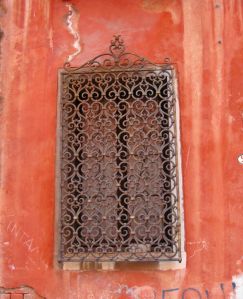
BeFunky_keeping out.jpgThe rickety boats these refugees use to come in often sink; the borders they try to cross get more hazardous than the journeys. The European countries they enter, ignore or criminalize them, and often send them to holding centers where they are subjected to demeaning, abusive situations, torture, or worse; or sent back to the countries they fled from. And yet, they keep coming.

I saw some of those who made it. In Venice, Italy, without support, they bend down hiding their faces, and beg.

city of masks
the beggar hides
her face
.
They hide and live in fear, yet they find this preferable to staying in countries where torture or death awaits them. Unlike those chosen to enter in one of the rare legal, though miniscule, programs of some European countries, these people exist in dire and life-threatening circumstances.

promising the earth
lone star
.
This odyssey is acted out all over the world, sometimes by people seeking work to improve their situation in places where they would not normally be entitled to work; most often by people fleeing conflict and persecution. In the Mediterranean countries, the recent conflicts have multiplied the magnitude of this problem.

Lately, hundreds of people arrived in Lampedusa and the Italian shores:* alive or dead, they reached this other country where those who survived the journey would have at least the opportunity to fight for a chance of a better life. Wouldn’t you too, in their position?
BeFunky_Ve Chains.jpg
Wouldn’t you? If chance or circumstance placed you in such a predicament? The European Union, though, would not look favorably on your efforts to enter its borders with need and despair as the only passport. For instance, while the talk of new urgent measures is all about increasing funding towards detection of people in flight, as well as (allegedly) improved rescue at sea,* there is also the urge to repatriate and keep the refugees in the place they come from. An out of sight out of mind approach. Except that the situation in their home countries is so desperate that repatriated people try crossing the sea again, and again.
.

.
promising sign?
clouds part
for hunter’s moon
.

A lot more is needed for the nations that make up Europe to acknowledge and accept the plight of the people affected by extreme poverty and poverty-driven wars, often the result of our aggressive policies, economic exploitation, and environmental abuse.

Out of this awareness, the Europeans themselves would be able to develop better policies than this drive to isolate, separate, and remove the perceived problem: a concerted European asylum seeker and immigration policy, grounded on the Universal Declaration of Human Rights (and the full United Nations Charter), with a budget and facilities for care and integration (rather than just border control) to back it up.

BeFunky_flower colours.jpgThe first models to help us think and plan are already here: A tiny Italian village opened its doors to migrants who braved the sea offering them jobs and homes, creating in the process jobs for the entire village. Even though there is no ideal solution, and new problems arise in new situations, the will, the means, the examples, the aspiration are already here.

……………………………………………………………………………………………

– This post is written for Blog Action Day, 2013 on 16 October 2013. Bloggers from different countries, languages, and interests will have a global conversation about Human Rights. I have published elsewhere a number of stories featuring refugees and their plight – including stories from refugees crossing the Aegean in 1922 – some of which are included in my short story collection: Feeding the Doves, Neusaess, Fruit Dove Press, 2013.

.
*Gazmend Kapplani, Albanian-born journalist, poet, and writer, in one of his FB posts suggests the least the EU could do would be to erect a Monument of the Unknown Refugee. Kapplani’s excellent book, A Short Border Handbook, relates the experiences of Albanian people crossing the border to Greece.

.
**Frontex, the European Agency for external border control, according to a statement of its site, “promotes, coordinates and develops European border management in line with the EU fundamental rights charter applying the concept of Integrated Border Management.” Unfortunately, what this comes down to is that the management of borders takes precedence over human rights.

Frontex has expanded the number of countries where it can send the people it ‘rescues’. “Nobody, however, is monitoring what exactly Frontex is doing in these countries of transit and origin with the goal of “stemming migration”. There is a serious risk of human rights simply being breached or refugees dying in places that are farther away from our attention.”

.

See also Spiegel online
.

Feeding the Doves: First Goodreads reviews!

Good news first: Three reviews of my “Feeding the Doves” are now up on Goodreads! They can be viewed by clicking and scrolling down here (though you need to sign in to see them all).  A big thank you to the readers who took the time to read and comment.

Pigeons on the bridgesmall


The bad news? I tried configuring the Goodreads Reviews button for my website and failed! The button would show the latest reviews as they appear on the right of this page. Instead, in that space, I only managed to include the Goodreads URL!

GoodReads winners!

The GoodReads giveaway has ended. I’m delighted that 608 readers entered to win a copy of my short story book “Feeding the Doves”! Thank you so much to everyone who entered!

My heartfelt congratulations to the 12 winners! You can see the winners here. I will be posting copies of the book on the 26th of September.

And to everyone else: Thank you so much for participating in the giveaway. If you did not win this time, please know there will be another giveaway in a couple of months’ time. I hope you will try again.

I will keep you posted on other giveaways, discounts, and fun stuff. Meanwhile, if you are interested in Greece, its people and history, the economic and existential crisis it is going through, my Pinterest board “Feeding the Doves” is updated regularly with news, articles, photos, and other related material: click here

Human Rights: Blog Action Day 2013

October 16th is Blog Action Day, an annual online day of action when bloggers (actually anyone with a public platform) from all over the world blog on one particular theme: This year, on Human Rights

Human Rights Day, commemorating the day in 1948 the United Nations General Assembly adopted the Universal Declaration of Human Rights, is observed by the international community every year on 10 December. This year, the blogging lot contributes from its own unique angle, its multitude of voices, and perspectives, an additional opportunity for observance of this most sacred of human achievements on the 16th of October.


Thanks to the adoption of the Declaration of Human Rights, whatever our nationality, place of residence, gender, origin, colour, religion, language, or other status, we can ‘rely’ on the international community to uphold dignity and justice for us.

Despite many accomplishments in the field of human rights, sadly, there are still huge challenges lying ahead. In the words of the UN,

“The world is still plagued with incidents of ethnic hatred and acts of genocide. People are still victims of xenophobic attitudes, are subjected to discrimination because of religion or gender and suffer from exclusion. Around the world, millions of people are still denied food, shelter, access to medical care, education and work, and too many live in extreme poverty. Their inherent humanity and dignity are not recognized.”

The way forward: “The future of human rights lies in our hands.”

I committed to posting a blog post on the day. It may or may not be a short story on one of the articles of the Declaration of Human Rights. We’ll see.

Starting to think about what my post/story could be about, I asked myself, and Google, my constant companion, the obvious question: How many articles does the The Universal Declaration of Human Rights contain?

How many do I actually know of? Here is the Declaration if you are interested in checking this out yourself. It includes a simplified, plain English version. See how many you know, and weep!

There is a video about the Blog Action Day theme

as well as a Home page 

a Facebook page https://www.facebook.com/blogactionday

and a Twitter account @blogactionday12

The United Nations Home Page for Human Rights here

“Feeding the Doves” is now a Goodreads Giveaway!

Dear Friends,

I’ve listed my book “Feeding the Doves” in Goodreads Book Giveaways! There are 12 free copies (print) available to win. Giveaway dates for entering: Aug 25-Sep 25, 2013.

This is how it works:
1: The easy way: See the Goodreads badge on the right side of this Homepage, click to enter!
2: The slightly less convenient way: Find the book in Goodreads (here) and click the enter to win button there.

Either way, Goodreads will do the rest! After the 25th of September they will notify me the list of winners and I will post the books to them!

Good luck to all who enter!

Feeding the Doves: 31 Short and Very Short Stories, and Haibun

Feeding the Doves  Now available to order from amazon.co.uk, amazon.de and Kindle

FeedingtheDoves.jpg

“Unique and surprising, tight and passionate language”

“Every once in a while, I get a book in the mail that is unique from anything else I’ve ever read. As a collection of short stories, Stella Pieride’s Feeding the Doves has given me a new definition of what short means, not to mention how quickly a story can be told… ”

“… I found her writing a refreshing and unique collection.”

Read Daniel Burton’s review here: Attack of the Books!

The review is also available on Amazon.com

***

Extract from Mia Avramut’s review on Amazon.co.uk:

“From a symbol of the divine (“A Life-Changing Story), to an object of meditation and near-worship in Syntagma Square (as in the title story), to their possible end in a soup kitchen destined to feed hungry children (“Pigeons”), doves’ journey functions as a counterpoint to the human sacrifice and quest for nourishing truths. Several glimpses into silent, sometimes tortured lives, end in haiku. It serves to deepen the reader’s understanding, and add new dimensions to the prose. And it’s a treat, as Pierides is both an archeologist of experiences, and a mistress of haibun.
Since Yourcenar and Kazantzakis, nobody has illuminated with such wisdom and compassion the often unseen lives that make the humanity what it is: a traveling, travailing organism with feet of myth.”

Mia Avramut is a Romanian- born writer, physician, researcher, and poetry editor at Connotation Press.

***

Having left Greece in her youth, the author of “Feeding the Doves” returns to the country of her birth through a collection of stories that lie at the heart of Greek identity.

About the Book: Greece has been in the headlines for a very long time. Recently, the headlines have been gloomy and negative, the country facing some of its most difficult years. Against this background, “Feeding the Doves” explores recurrent elements of the Greek psyche, tracing them back to challenges posed by the country’s history, culture, and environment.

The widow, the old loner, the refugee, the immigrant, the young, the writer, the expatriate, tell us their stories, touching upon themes at the heart of Greek being: Love and loss, civil war, immigration and diaspora, emigration, poverty, religion, history and catastrophe, and above all, the will to survive.

 “What I admire here are the shining moments of revelation, of truths large and small bursting through the lives and memories of these characters. So many characters, and so rich!”

—John Wentworth Chapin
Founding Editor, 52|250 and A Baker’s Dozen

“Stories to surprise and entertain, to wake and calm, to wrench and elate, to tell the Greek story, past and present, and everyone’s story.”

-—Michael Dylan Welch, poet, writer,
and editor/publisher of Press Here books

Fruit Dove Press

Email: admin@fruitdovepress.com
http://www.fruitdovepress.com
Perfect softbound
87 pages, 90gm cream interior paper
Full-color laminated cover
129 mm x 198 mm trim size

ISBN: 978-3-944155-03-6

Price: £8.00 UK

Available from August 2013 through Amazon.co.uk and Amazon.de.

.

Feeding the Doves

Forthcoming

Feeding the Doves
31 Short and Very Short Stories, and Haibun

Greece has been in the headlines for a very long time. Since ancient times, her  philosophers, historians, mathematicians, shipbuilders, traders, and artisans have been making the news – and, indeed, history. So, amidst the country’s most difficult  years in recent times, many people believe that they know Greece and the Greeks.

.
Against this backdrop, the stories – short and very short – collected in “Feeding the  Doves” explore recurrent elements of the Greek psyche, tracing them back to challenges posed by the country’s history and environment. The widow, the old loner,  the refugee, the immigrant, the writer, the expatriate tell us their stories, touching  upon themes at the heart of Greek being, as well as our common humanity: love and l  loss, war, civil war, immigration and diaspora, emigration, poverty, religion, history,  and above all, the will to survive.


Cover Design:
Rob Ward, Freelance Animator

Fruit Dove Press
Email: admin@fruitdovepress.com
.
[The title story “Feeding the Doves” and the cover image were inspired by a photo taken by Robert Geiss, titled “Feeding Doves” and posted on his (sadly, no longer active) blog “Daily Athens Photo.”]

FLASH MOB 2013

I am taking part in the flash story event, FLASH MOB 2013, celebrating International Flash fiction Day. A sort of literary carnival and international competition in one, with over a hundred writers of flash from around the world taking part by posting short stories in their blogs.

 If you love flash fiction, then this is the best place to browse for stories – and if you don’t know anything about flash, this is the place to start! Click here
My own story is in the European writers section here 

Home Truths (Flash Mob 2013)

Home Truths

“Spoon sweets are the best. Have you ever had spoon sweets?” She looks at her customer with such intensity from behind the counter that I am surprised to hear the woman find the strength to answer.

“Pardon, spoon sweets?” she replies in her phrasebook Greek.

The shop owner reaches for a jar from a bulging shelf – the cherries preserved in syrup clearly visible.

“Here, this is it; this is a cherry spoon sweet. Here, present for you,” she says, sliding the jar across the counter.

The woman receives it with both hands and a big smile.

I try to decipher the patisserie owner’s expression. She is not smiling, her face pulled into what I read as contempt. I could be wrong, of course. So many years away from this country, I can no longer claim insider knowledge. Still, witnessing the scene the day after my return home, I shudder from shame and envy, in equal measure. The directness of the shop owner embarrasses me; she shows the worst of herself to a stranger: the impetuousness, the loud, gestural arrogance that goes with this kind of self-assurance. I blush on her behalf. At the same time, I envy her unselfconscious manner of being. She’ll never know how she comes across, while I am forever stepping back for fear of appearing wrong, or appearing confident about the wrong things. Something inside me snaps,

“I hate spoon sweets!” I say, “hate them!” Both women turn, their eyes wide.

“Mind your business, Kyria,” the proprietor says. “I’ll be with you in a minute.”

I know she will. But I have made up my mind, and turning swiftly, I walk out. In my head, the lines of a haiku appear:
……………………………spoon sweets / tangy taste of a song / long forgotten

‘Syntagma Square’ #14 November 2012

Syntagma Square
a marble head rolls
off its plinth
.
NaHaiWriMo prompt: landmark
.
For Syntagma Square see here
.
This poem alludes to G. Seferis’ lines (see below) about the ‘Greek problem’ of ‘having’ to live up to their
ancient ancestors…and not knowing how to, of course.

I woke with this marble head in my hands;
It exhausts my elbows and I don’t know where to put it down.
It was falling into the dream as I was coming out of the dream.
So our life became one and it will be very difficult for it to separate again

.
From Mythistorema, copied from wiki
The link here

“Feeding the Doves” and “The Haircut”

I am very pleased to report that two of my haibun set in Athens, Greece, have been published by Contemporary Haibun Online: Feeding the Doves, a story inspired by a photograph on Robert Geiss’ wonderful blog “daily Athens photo”; and “The Haircut”, exploring the hardships Greek people are facing in the current economic crisis.

The actual photograph of the man feeding the doves that inspired this story can be seen hereIn fact, visiting the site to look for the link, I realise that a version I’d sent Robert thanking him for the photograph, had been posted on his blog! So, let us keep feeding the doves!


The Tree (Haibun)

The Tree

Sitting under a mulberry tree by the sea, in Alexandroupolis, Greece, near the border with Turkey, I stare across the sparkling water. A melancholy mood is sapping my energy. The ferry to Samothraki makes me wish to travel further on, but I know I’ve come far enough. This place, at the intersection of continents, symbolizes the crossroads in my own life, leaving behind my youth and entering middle age. I need a push, something to give me strength to take the next step.

I must have fallen asleep because when I come to dusk is falling like rain. I rub my eyes. The town lights flicker simultaneously with their reflections on the water. The notes of a flute pierce the air.

I muse about the times this town has passed between the Bulgarians, the Greeks, the Turks, the Russians; shudder at the thought of how much blood has been spilled. And yet humanity continues, the spirit survives whoever the ruler, whatever the belief. I realize the smallness of my own problem, the disease of vanity and self-preoccupation.

A crow lands next to me. We eye each other for a minute or two, then he flies away. Feeling a sense of acceptance wash over me, I walk to my Pension. The hostess noticing the lifting of my mood offers me a theory about what happened.

“It must have been the dervish, the Holy man of the fifteenth century,” she says. “He spent his days under a tree… he is buried there…”

“They buried him under his tree?”

“They say he still heals those who go to sit under it.”

“Is that the Mulberry tree…?” I start, trying to locate ‘my’ tree for her.

She shrugs, and then I know it does not matter.

.

in the salty air

a single leaf from his book –

dove with crow

In Contemporary Haibun Online, January 2012

Seferis’ Houses

.

Seferis’ Houses

.

The houses he had owned

they took away from him..

.

Seferis carried his home

on his back like a tortoise.

Iron beds in empty hotel rooms

rang through his lines,

and the sounds of loneliness–

the silent screams of souls

left to themselves

in the dark.

.

The houses he had owned they

took away from him.

.

He used his poetry,

he strung words from the stars

stared at them from afar.

Flowers of Agapanthus

he nailed on his lines,

and crickets, beating time

for the machine.

.

Only briefly did he go back to Smyrni.

.

For he knew. Seferis knew. He knew

you have to talk to the dead.

Hades is full of whispers–

the house is always watching.

And waiting.

.

A version of this poem appeared in the “Word for Word” anthology Gathering Diamonds from the Well, London: New Gallery Books, 2007.

George Seferis (1900-1971), Greek poet, originally from Smyrni (now Izmir) in western Turkey, winner of the Nobel Prize for literature 1963.

20 October 2010

Ithaca

The poet Constantine P. Cavafy, or Konstantinos Petrou Kavafis, one of my favorite poets, wrote the following about his origins:

.

I am from Constantinople by descent, but I was born in Alexandria—at a house on Seriph Street; I left very young, and spent much of my childhood in England. Subsequently I visited this country as an adult, but for a short period of time. I have also lived in France. During my adolescence I lived over two years in Constantinople. It has been many years since I last visited Greece. My last employment was as a clerk at a government office under the Ministry of Public Works of Egypt.

.

I have pasted his poem Ithaca below – he knew what he was talking about. For more of his poetry and resources on the web, see the Cavafy Archive

The poem, quotation, and Wikipedia url can be found here

Ithaca

English Translation

When you set sail for Ithaca,
wish for the road to be long,
full of adventures, full of knowledge.
The Lestrygonians and the Cyclops,
an angry Poseidon — do not fear.
You will never find such on your path,
if your thoughts remain lofty, and your spirit
and body are touched by a fine emotion.
The Lestrygonians and the Cyclops,
a savage Poseidon you will not encounter,
if you do not carry them within your spirit,
if your spirit does not place them before you.

.

Wish for the road to be long.
Many the summer mornings to be which with
pleasure, with joy
you will enter ports seen for the first time;
stop at Phoenician markets,
and purchase the fine goods,
nacre and coral, amber and ebony,
and exquisite perfumes of all sorts,
the most delicate fragances you can find,
to many Egyptian cities you must go,
to learn and learn from the cultivated.

.

Always keep Ithaca in your mind.
To arrive there is your final destination.
But do not hurry the voyage at all.
It is better for it to last many years,
and when old to rest in the island,
rich with all you have gained on the way,
not expecting Ithaca to offer you wealth.

.

Ithaca has given you the beautiful journey.
Without her you would not have set out on the road.
Nothing more has she got to give you.

.

And if you find her threadbare, Ithaca has not deceived you.
Wise as you have become, with so much experience,
you must already have understood what Ithacas mean.

.

For more of his work see the Cavafy Archive and here

After Anatolia: Memory and Identity

Memories of home, of childhood, of life events and life losses are human universals. They belong to the scenario beautifully described in the myth of the Garden of Eden, the Fall, and the expulsion from Eden – as well as rendered in the rich, painterly iconography of this story. One might say that this story serves as one of the archetypal scenarios framing our thinking.

With this in mind, how are we to conceive of experiences and memories of losing a home, family, country, culture through war and forced displacement? A pressing question, for there are so many groups in this predicament all over the world now. Arguably, the real losses and trauma suffered by those forcibly and traumatically expelled fracture the symbolizing processes, reducing the facility to employ them in creating meaning in everyday life. As a result, these experiences may acquire a different mental status, require different resources and be put to different uses by our conscious and unconscious minds.

Frequently, memories of such losses remain hidden, out of reach of linguistic elaboration for years – or even generations, as seen in families of holocaust survivors.

Sometimes, memories of the home lost, as well as of the traumatic circumstances of the expulsion, have been used as building blocks to construct or reinforce a sense of identity and community. This is illustrated in Alice James’ perceptive article, Memories of Anatolia: generating Greek refugee identity.”

James studied the construction of the refugee identity of the Greeks of Anatolia who fled Mikra Asia, the western part of Anatolia in 1922. Up to that time, more than a million, perhaps a million and a half of Christian Ottoman Greeks had lived there, in Greek settlements going back millennia. However, after a disastrous series of wars in the Balkans and between Ottoman Turkey and Greece in particular which resulted in the catastrophic defeat of the Greeks, the surviving Christians of Anatolia were forced to flee from their homes. Many perished. Most of the survivors fled to Greece where they settled – though a significant number went to other countries and even other continents.

For those who settled in Greece, the country became their new home, even if they spoke little or no Greek. They encountered acts of kindness and generosity as well as negligence, and animosity. As a result, many of those who had survived the war and persecution in Anatolia, died. James refers to a League of Nations source that quotes mortality rates among the new arrivals reaching 45% at one point. Survivors grouped together and developed ways of coping with the losses they had suffered and the difficulties they encountered in their new country.

Concentrating on the refugees of Chios, the largest island closest to Smyrna, James quotes a refugee describing their situation, “like the leaves from the trees when the wind takes them away and they blow right and left without knowing where they are going.”

James notes that “The refugees were no longer attached to their land, and only by producing a group identity could they feel grounded.” This identity was produced through processes that helped translate the experiences and generate a distinct identity as Mikrasiates; all these processes helped recall and often show concretely the difference between the earlier wealth of the life in Anatolia that was lost, and the deprivation that followed the expulsion and refugeedom.

Efforts concentrated on continuing or preserving traditions and customs. Chief amongst these were those associated with the Greek Christian-Orthodox religion, which had been a pillar of their identity under the Ottoman rule. Christian Orthodoxy, with its emphasis on ritual and custom (such as celebrating Saints’ days, associated with the name days of those sharing Saint’s name), provided a continuity between the past, present and future generations.

Referring to Hirschon’s study of a refugee community in the Kokkinia district of Athens, near Piraeus, James points out the importance of memory for identity formation. Museums and collections or archives of memorabilia, photographs, and film were used by the Greeks from Anatolia to generate an image of themselves in Greece, as a distinct group, the Mikrasiates. By holding on to personal and cultural belongings and heritage, such as the Byzantine heritage, photographs, song, music and other memory devices, the story of the refugees’ lives, traditions as well as their loss is not forgotten, but incorporated in the process of identity formation, and bestowed upon future generations.

Beyond the communities studied by James and Hirschon, it would be interesting to think about how identity formation works in situations in which such uses of memory are discouraged, or non-existent: for example, the situation of those Greeks who fled, in the aftermath of the Civil War, to communist countries vis-à-vis those who managed to stay behind; the situation of the Muslims of Crete who went to nation-building Turkey after the treaty of Lausanne as compared to those Muslims who stayed on in Northern Greece, and others. It would also be of interest to think about other factors and processes involved in generating refugee identity, and their interaction with memory.

Please feel free to add your comments, impressions, views on these themes in the comments box below.

PS Some of these themes of loss, strategies of survival, and the vicissitudes of identity formation, I touch upon in my forthcoming novel “Alexandrias 40: Under the Lemon Tree.”

Who are the real Greeks? in The Guardian

Reading Room Blog

Reading Room Blog

To suggest something for my Reading Room Blog, please email me and I will try my best to follow it up. Otherwise, pick an entry, sit back, and read!

Matina Stevis, in The Guardian, asks: Who are the real Greeks? Sparking a thought provoking debate, she discusses the proposed legislation offering citizenship to the children of immigrants:  http://www.guardian.co.uk/commentisfree/2010/jan/20/greece-citizenship-immigrants-debate

I copy below my comment on Matina’s article from the Guardian website:

20 Jan 2010, 9:14PM

Greece is not an island. Unlike the UK, it is a country at the crossroads of the East with the West, at the intersection of three continents. It has a long history of wars of occupation and independence; of expansion, contraction, populations mixing, fleeing, persecution and exchange. In such an environment, the question ‘Who are the real Greeks?’ becomes either irrelevant or plays into the hands of those who try to manipulate history and race.

History helps us understand, though by no means justify or excuse, the state of a country and its people. Today, history is alive in Greece, and knowledge of the country’s past – the four hundred year Ottoman occupation, the Balkan wars, two World Wars, the war with Turkey and the resulting ‘Catastrophe’ of 1922, the treaty of Lausanne, the Civil War, the Junta –  helps us trace the roots of the divisions in modern Greek society. Unfortunately, large chunks of this history are kept in different places because they are being disputed, not accepted as true by the still warring parties in this country, as well as Greece’s neighbours. A quick read through the responses to this blog will illustrate the diversity of histories, ethnic woes and, really, the whole problem.

The Greek fault line may nowadays be seen in the reactions of some Greeks to foreign workers; in a feature shown on Greek TV some time ago, one could see footage of Greek migrants to America in the early twentieth century and the negative reactions to them by Americans that paralleled Greeks’ reactions to Albanian immigrants. The schism is also expressed in Greece’s policies towards some neighbouring countries  and now in the opposition of Greeks, thankfully not a majority, to the legislative proposal to allow citizenship to children born to immigrants.

Let us hope that those interested in Greece will feel encouraged by Matina’s article to trace the threads of this regrettable reaction to Greece’s history and the countless conflicts and migrations that made it a country and constructed its identity, and its fears of losing its recognizable format. At the same time, let us applaud the Greeks who, by proposing and supporting this progressive law, demonstrate their affinity with ideas of shared humanity and acceptance of the other.