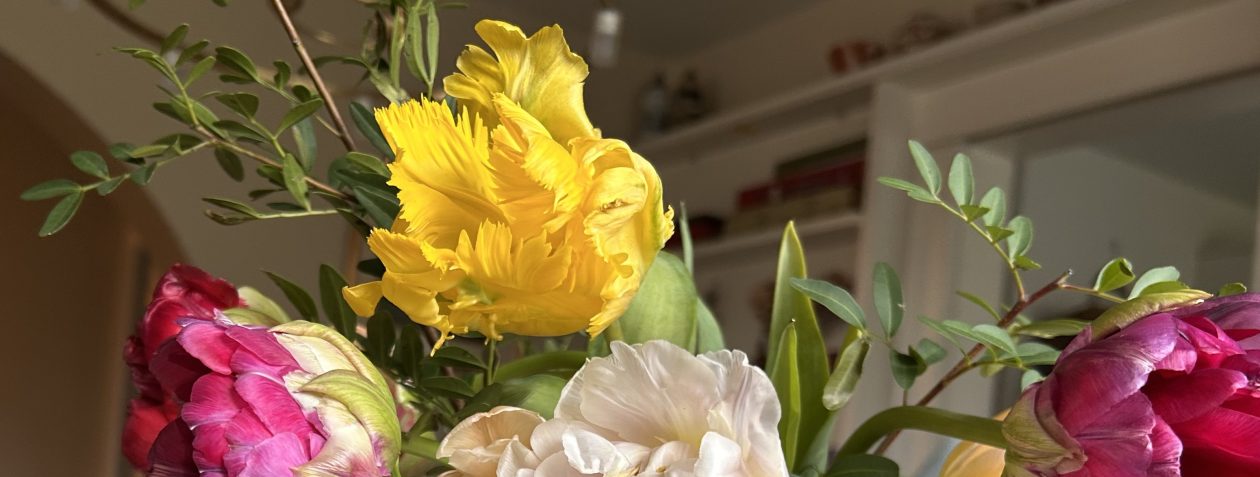
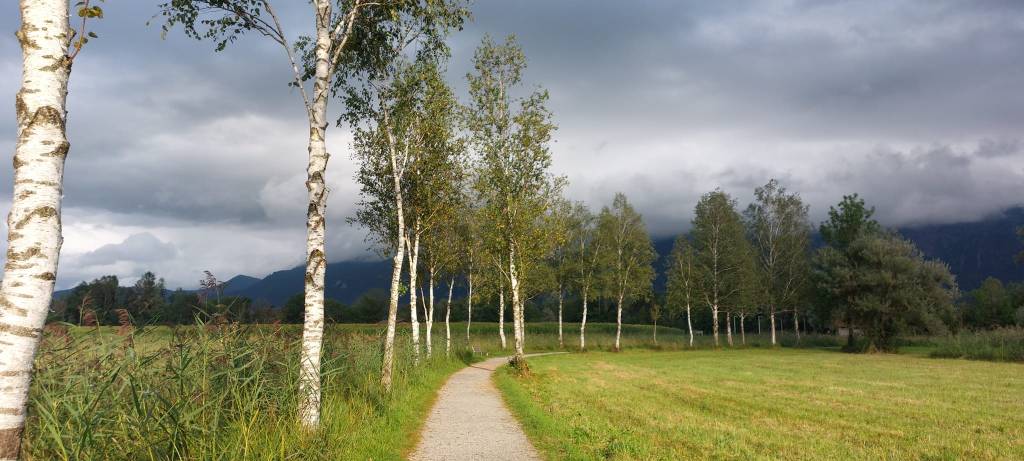
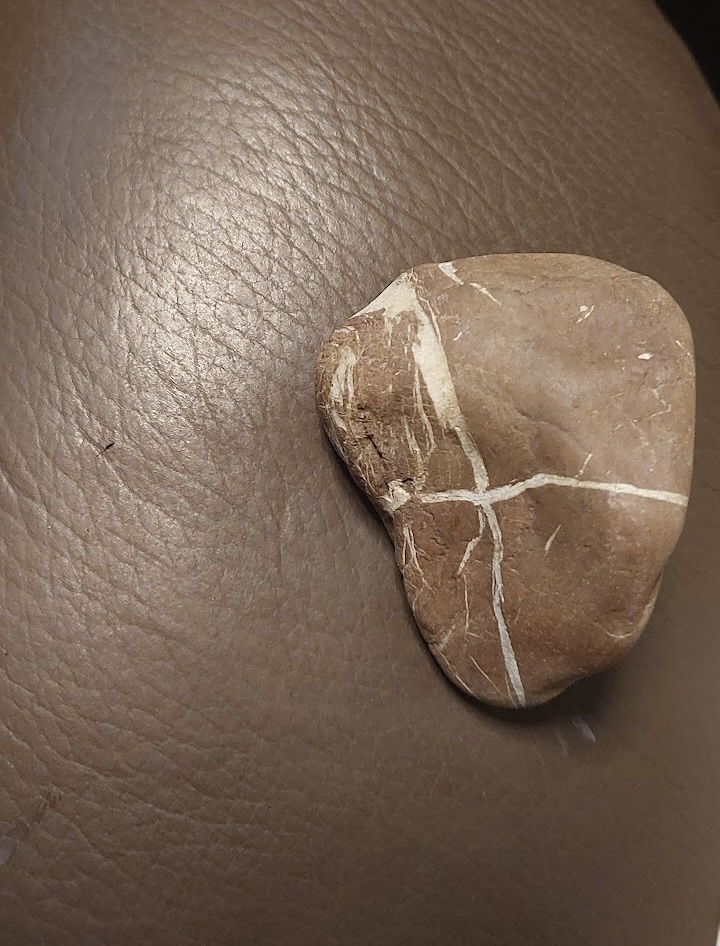
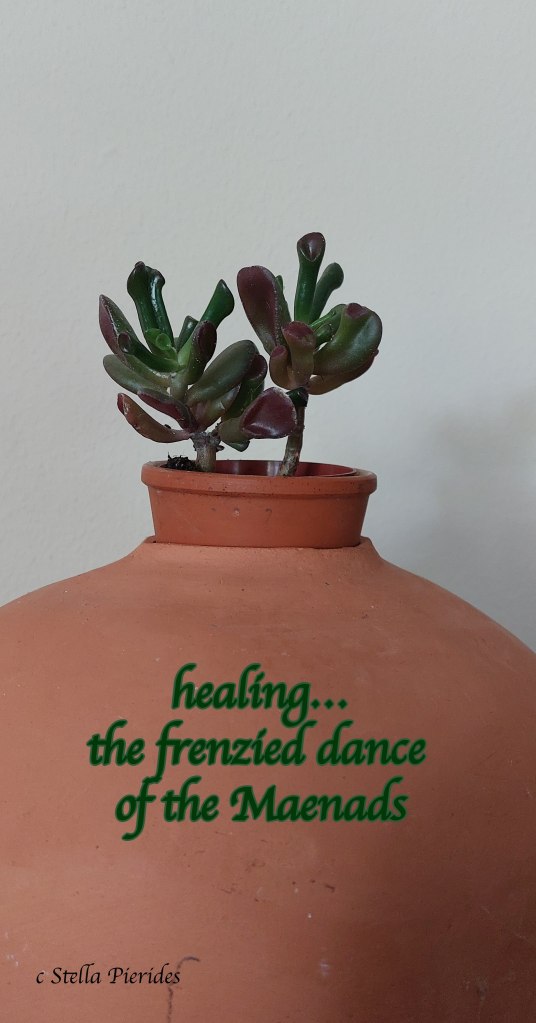
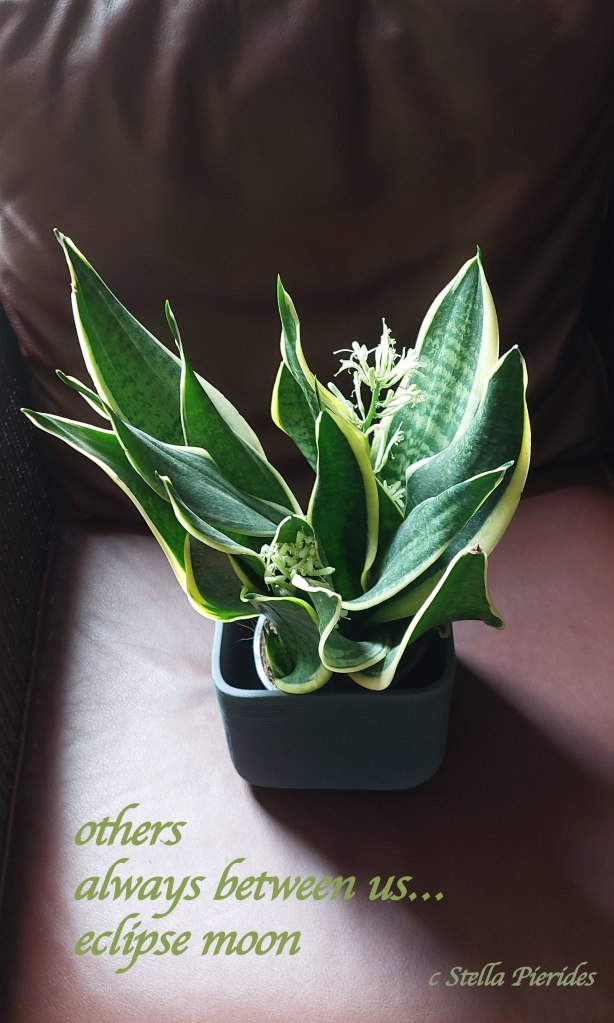
creeping sepia
even my iPhone stopped
recognizing me
Creeping sepia: is a relatively new kigo. Alan Summers, winner of the first modern kigo contest, writes:
“A combination of the transition into Autumn (Fall) as Summer fades, and a mixture of climate change effects bringing out an urge for a nostalgia of historically fixed and clearly defined seasonal shifts of the past. This might also include childhood/family photographs that might have been in colour but now have a creeping sepia effect.”
Happy to see the feature “Haiku for Parkinson’s,” on the blog of The Haiku Foundation, flourishing!
Blog posts offered recently: “On the importance of connection in haiku” by Philomene Kocher; Through the lens of Positive Psychology” by Scott Mason; An update on the free course introducing Haiku to those living with Parkinson’s, their family and friends, taught by Sonam Chhoki. Poems by the participants painted a picture of where they are on their haiku journey.
Informative, comforting, healing reading. I copy it from the THF site below.
If you or a loved one live with Parkinson’s Disease, visit the site and see!
May 12: Haiku for Parkinson’s: Inviting Connection—Philomene Kocher
July 7: Haiku For Parkinson’s: July 2024 Course Update—Sonam Chhoki
This is the blog post:
Haiku for Parkinson’s is a feature of The Haiku Foundation (THF): introducing haiku to those of us living with Parkinson’s Disease (PD), as well as introducing PD to those ‘living with haiku.’ You will find previous posts from this series here.
As part of this feature, renowned poet and editor Sonam Chhoki is teaching a free course introducing haiku as a tool in the Parkinson’s toolbox, helping face and negotiate the challenges of the disease and improve quality of life. In this post, Sonam, and the course participants, update us on the progress of their haiku journey.
Sonam writes:
Arguing against the pejorative associations of “parochial” with narrowness, insularity and sectarianism, the Irish poet, Patrick Kavanagh (1904 – 67) said, “The parochial mentality … is never in any doubt about the social and artistic validity of his parish.” For Kavanagh, the “parish” or the “parochial” was not a boundary but an opening. An aperture through which the world could be experienced. It was based on the idea that we learn by scrutiny at close-hand. For the poet, it is the depth of experience rather than the width, that counts. He concluded, “Parochialism is universal; it deals with the fundamentals.”
Inspired by Kavanagh’s insight, I would say that the poets in this update are “parochial” in the most wide-ranging sense. Each poet deals with the “fundamentals” of what it is to live with Parkinson’s either personally or through a close family member. Here are their unique and precious experiences and insights, through the lens of haiku.
1. Why haiku? How did your interest in haiku start?
Simon Duncan: As a means of matching emotion and landscape while on mountain walks and later summarising a day’s cross-country skiing as I was losing my ability.
Tania Haberland: That’s what was offered as a service for people going through Parkinson’s personally /in family. But in reality, I love haiku, wrote my first one at 8 at school.
Margaret Ponting: I have always been interested in writing poetry. I wrote longer prose during an extended lockdown of the coronavirus pandemic. I joined a writing group at this time and was impressed how haiku writing was therapeutic for Parkinson’s sufferers. My brother and sister encourage me to write and are enthusiastic in their support.
Haiku appeals to me because I have family connections to Japan and the history and cultural aspects are intriguing. I feel closer to my Japanese daughter-in-law and grandsons as it gives us something to share, discussing the history and philosophical aspects. I like the way haiku has evolved with a variety of styles and topics and how a few simple words can create an emotional impact on the reader.
Jen Pacini: I started writing poetry after receiving my Parkinson’s diagnosis is 2018. Playing around with different kinds of poetry has been a wonderful creative outlet ever since. In 2021, Stella Pierides offered a haiku class through a Parkinson’s site. At first my interest in haiku was to help refine my poetry. Along the way, I fell in love with the style and the way haiku’s simplicity of form conveys meaning in complex ways and on multiple levels. Reading haiku makes me smile
2. Which of your own recent haiku are your favourites? Please share some of your poems.
Simon Duncan:
Cold sun, coarse gritstone Thin moves As my bouldering mat shrinks
Botox cackles Drag Queens strut Emptiness
A window opens Ladybirds cascade Hard red confetti
Cold canal-side fishing “Hello, have you caught anything?” Deep silence
this morning’s delivery truckload of firewood and a tiny green frog
king parrots gorging on rose hips a palette of green and orange
giant red gums mirrored in the river as we reflect
mismatched, shiny, bright we put the pieces together a mosaic of love
threading daisy chains of memories sepia photos
a present arrives a silk scarf from my sister
the night leaves a pale parting gift translucent crescent
along the river bank djiti-djiti, willy wagtail cries for her drowned mother
Jen Pacini:
at the back of the drawer a letter, folded in three the life she never shared
sunrise yoga the taste of sweet candy
midday heat the hum precedes the hive
summer solstice there’s no going back
3. What do you enjoy about haiku writing?
Simon Duncan: Concise emotional imagery.
Tania Haberland: The focus and stillness haiku creates and the way it declutters my mind, also the challenge is fun.
Margaret Ponting: I enjoy the immediacy of haiku writing and the mindfulness aspect. It makes me more aware of my magnificent natural environment and I feel enriched through expressing my feelings. I appreciate sharing my thoughts with loved ones through this medium and enjoy reading haiku contributions from other people.
Jen Pacini: I enjoy it when I surprise myself after reading a haiku I’ve constructed.
4. What is the most challenging aspect of haiku writing?
Simon Duncan: Writing about Q3 activities is important to me but others know little about – e.g.- climbing.
Tania Haberland: Editing out what is not necessary..
Margaret Ponting: Initially, I thought there were few rules, but found haiku to be very complex, much like all aspects of Japanese culture. I sometimes find it difficult to pare back my writing. I have been encouraged by the support given to me through this program and appreciate the feedback. Looking back, I think I have grown in confidence and am trying to challenge myself more..
Jen Pacini: I find keeping the meaning of the haiku from becoming too identified with my own story or adding too many details challenging at times. Sonam Chhoki, is very helpful, providing useful feedback that helps me continue to learn the craft.
5. Do you make notes or do you write directly?
Simon Duncan: Write directly.
Tania Haberland: Directly and then keep changing..
Margaret Ponting: I write directly and that is another thing I like about haiku. It doesn’t take too much time. I usually refer back and add or change the structure or flip the lines to create a different effect.
Jen Pacini: I play around with ideas, lines, wording in a notebook. Then set it aside. Later, I return to the process with fresh eyes to create a digital version. Sometimes I merge and edit two original haiku drafts to create a fresh haiku.
This one-to-one course by email is free and available for a year. The main purpose is to work with the participants at a pace suitable to their particular circumstances and needs. We welcome people from all backgrounds and levels of knowledge, and respect their wish to participate anonymously..
Notes:
Patrick Kavanagh: ‘The Parish and the Universe’, in Collected Pruse, MacGibbon & Kee, London, 1967.
Biography
Sonam Chhoki finds the Japanese short form poetry resonates with her Tibetan Buddhist upbringing. She is inspired by her father, Sonam Gyamtsho, the architect of Bhutan’s non-monastic modern education, and by her mother, Chhoden Jangmu, who taught her: “Being a girl doesn’t mean you can’t do anything.” She is the principal editor, and editor of haibun for the online journal of Japanese short forms, cattails. Her chapbook of haibun, The Lure of the Threshold was published in May 2021. Mapping Absences, a collaboration of haibun, tan bun and tanka prose with Mike Montreuil was published in 2019. Another collaboration with Geetanjali Rajan: Unexpected Gift was published in November 2021. An ebook of a second collaboration with Geethanjali Rajan, “Fragments of Conversation” is in the process of being published.
My four-year-old grandson, sitting at the table facing me, starts moving his head and trunk in the same, writhing way I move mine. Dyskinesia, a side effect of the medication I take, comes and goes. The only way of stopping these movements is to sit back and keep silent.
Happy to see the new “Haiku for Parkinson’s” blog post on The Haiku Foundation site: using haiku to reflect on, and gain a sense of control over, the ups and downs of mood in Parkinson’s. Read it here: https://thehaikufoundation.org/haiku-for-parkinsons-mood…/
Did you know that April is Parkinson’s Awareness Month?
A month to raise awareness of this disease and share information about it with the public. The aim is to highlight the urgency of finding a cure, but also matters in need of attention while waiting for a cure. To remind ourselves too, about the different experiences, approaches and treatments available to help manage the condition. What will you be doing during the month? Sign a petition? Make a pledge to exercise more?
Whatever you do, choose an activity that engages you, inspires you, makes you smile! Play table tennis! Read a haiku! Keep talking, keep thinking, keep learning!
What is Dyskinesia? What does it feel like? How can haiku help? Reflecting on my attempts at using haiku to work through the ever-shifting challenges of Parkinson’s Disease.
“My Dyskinesia” is now part of the Haiku Foundation feature Haiku for Parkinson’s. Available to read here.
The Haiku Foundation is offering a new, free, email course “Introduction to Haiku” for people impacted by Parkinson’s Disease, including friends and family.
The course is being taught by Sonam Chhoki, editor of the online journal cattails. For more information about the course see here
I found out about the bomb craters in the Augsburg city forest during a walk with my Parkinson’s walking group. Marvelous recovery of a wounded landscape, and people. And apt for our own situation of struggling with progressive disease.
Sky Ponds—Himmelsweiher
The Siebentischwald, on the edge of Augsburg, acts as the lung of the city. Lush green vegetation crisscrossed by water channels and dotted by silent ponds makes this forest the life force of Augsburg. It turns out it is also the repository of an interesting piece of the city’s history: the forest floor bearing the scars of thousands of bombs that were dropped on it towards the end of World War II.
On my morning walk with my Parkinson’s group, in this peaceful, green oasis, pierced by high-pitched peacock cries from the adjacent Zoo, I come across oval ponds and other depressions filled with vegetation. I am told they are Bombenkrater, the remnants of craters formed by aerial bombing.
The proximity to the munitions manufacturer Messerschmitt meant that bombs often landed in the forest. However, the massive bombing raid in February 1944 literally dug up the forest floor, leaving numerous wounds on the landscape. In recent years, a public charity transformed some of these craters into ponds brimming with life.
cool forest shade. . .
lingering by the sky ponds
heat from the past
Literature, Art, and Life through the Lens of Haiku