The new project of The Haiku Foundation, Haiku for Parkinson’s was launched on the 17th of December 2023! I very much look forward to seeing it develop along the various themes and issues arising from Parkinson’s. The Introduction to the feature can be read by clicking here
I have copied it on this site too, see below.
Haiku for Parkinson’s is a feature of The Haiku Foundation, introducing haiku as a tool in the Parkinson’s toolbox, helping negotiate the challenges of the disease and improve quality of life. And, introducing Parkinson’s Disease (PD) to people living with haiku.
What is Parkinson’s Disease?
Parkinson’s Disease has mainly been attributed to the deterioration and eventual death of brain cells producing dopamine, important for organizing movement. This has been addressed by dopamine replacement therapy. Over the last few years, the role of dopamine and its involvement in the production of other brain chemicals has come to be understood better, leading to improved treatment of the many symptoms increasingly recognized to be part of the disease – over 40 and counting. Besides shaking, stiffness, difficulties with swallowing, problems with walking, balance, and coordination, there are also many ‘non-motor’ symptoms, including anxiety, depression, fatigue, apathy, insomnia, visual hallucinations. Moreover, several of the body’s autonomic functions, such as heart rate, blood pressure, temperature, breathing, and digestion become compromised.
thud!
a bird flies into
a closed window
— Catherine Mair
While this is a formidable list, and at present there is no cure, several programs have been developed amounting to what is often referred to as the Parkinson’s toolbox. Creative therapies are becoming available, offering considerable benefits, including lifting mood, increasing energy and motivation, as well as adding to the paradoxical phenomenon of increased creativity reported by (some) people living with the disease (see Parkinson’s Europe, Parkinson’s Creativity).
Haiku for Parkinson’s (H4P)
Haiku poetry is being used by some people living with PD to support life with this condition. Its qualities include:
Brevity: Haiku can be written or read in a single sitting, enabling feelings of completeness and accomplishment.
Concentration: Concentrating on the moment and our embodied being, haiku anchors us in the world, providing a counterweight to ‘Parkinson’s moments’ – when one feels stuck or caught in acts such as buttoning a shirt or trying to turn over in bed.
Exercise of the mind: Crafting a haiku, in the effort of finding the images and rendering them in words that best convey the experience, exercises brain and mind.
dreaming of birdsong
I wake to a wolf shaking me—
tremors again!
— Tim Roberts
Connectedness: Writing and reading haiku involves attending to the relationship or interaction between writer and reader, and nature – restoring our connection to the world and so becoming a healing force.
Identity: haiku helps enable exploration of the self by overcoming the embarrassment and stigma of the disease, and coming to terms with the constant challenges faced …
Parkinson’s
losing the power
to be myself
— Catherine Mair
while making the various symptoms and the uncertain future manageable.
the last page missing
from the library book—
late autumn evening
— Stella Pierides
In the coming posts, we will hear more about the qualities, and practice, of haiku in supporting people living with PD. And we will be venturing into the realm of haiku’s partner, haibun: the marriage of haiku with prose.
Coming up next: British poet Tim Roberts, living in New Zealand, will be telling us about his haiku practice and how it helps him manage the condition.
References and Bios
“Thud!” and “Parkinson’s” in Catherine Mair, keeping my head above water, 2015. This chapbook is available from The Haiku Foundation Digital Library.
Catherine Mair was born on a winter’s night in the family’s farmhouse in 1938. She has been published widely locally and internationally. In later years she has gravitated to the Japanese forms of Haiku, Tanka, etc. She has grandchildren and great-grandchildren, and the family has grown.
“dreaming of birdsong” in Tim Roberts, Haiku and Parkinson’s Disease: A Practice, in New Zealand Poetry Society Archives, 2020.
Tim Roberts was diagnosed with Parkinson’s Disease at 49 and has found freedom and joy in writing haiku and other Japanese-style short-form poems. He enjoys foraging for experiences and inspiration with his dog and lives a life that, he hopes, makes poetry inevitable. His book Busted! (Red Moon Press, 2023) is haiku and micro-poetry about his experience as a British police officer. Tim lives in New Zealand and is in awe of the scenery, wildlife, and southern stars. His favorite Maori phrase is ‘Kia kaha’, which means ‘stay strong’.
“the last page missing” in Stella Pierides, Frogpond 41.2 Spring/Summer 2018, p. 27
Parkinson’s Toolbox in Stella Pierides, Parkinson’s Toolbox: The Case for Haiku, 2022. Available from The Haiku Foundation Digital Library
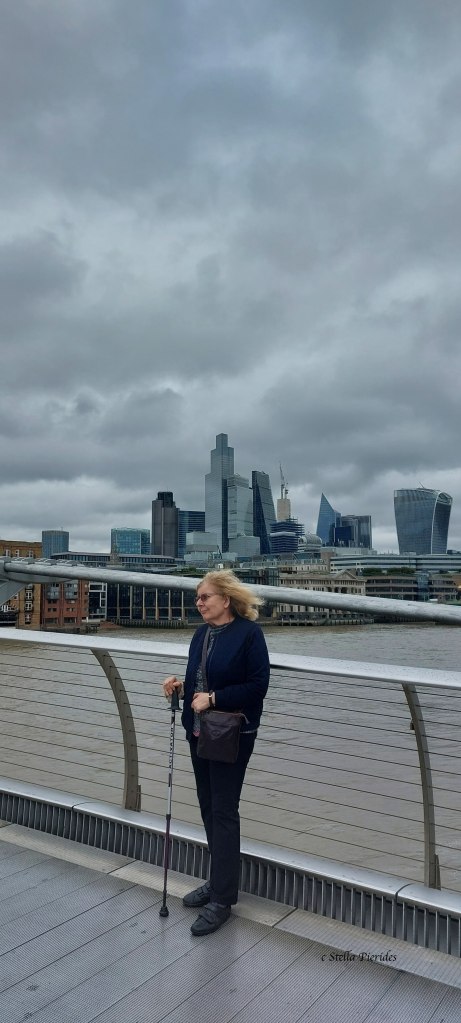
Stella Pierides, who lives with Parkinson’s herself, is a writer and poet. Her books include Of This World (2017) and In the Garden of Absence (2012), both HSA Merit Book Award recipients. Her article “Parkinson’s Toolbox: The Case for Haiku” appeared in Juxtapositions: A Journal of Research and Scholarship in Haiku, issue 8, 2022.