Pleased to have 2 #senryu appear in horror senryu journal!
sweet smell drifting out
of the hospice window…
long nights
.
And
.
still dark…
blood seeps into
the mattress
.
In horror senryu journal, 30 January 2026
Many thanks to editor Thomas Tilton

Pleased to have 2 #senryu appear in horror senryu journal!
sweet smell drifting out
of the hospice window…
long nights
.
And
.
still dark…
blood seeps into
the mattress
.
In horror senryu journal, 30 January 2026
Many thanks to editor Thomas Tilton
Delighted to appear in issue 3 of Flying Fish Haiku Journal! Many thanks to Editor Richa Sharma for including this poem:
end
of the line…
adult bib
It connects to earlier work on the same theme. In 2022, reflecting on the problems faced by persons living with PD, I wrote about the qualities of haiku that recommended it as a tool in the Parkinson’s toolbox.
Briefly, I saw haiku as a container or vessel into which one could pour “all kinds of experience—the beauty of sunsets and cherry blossoms, the exhilaration of climbing personal ‘mountains,’ but also the depth of loneliness, the pangs of pain, the embarrassment of acid reflux—and transform them, in a few words, into a manageable, livable experience”.
The three ‘adult bib’ haiku are attempting exactly that. Failing facial and throat muscles result in spilling drinks, dropping food and dribbling, becoming a daily cause of distress. The adult bib becomes an essential helpful piece of clothing, making life easy for the carers, but at the same time infantilizing the person wearing it. What does this mean? Has the person with Parkinson’s reached the end of the line?
end
of the line…
adult bib
The extent of humiliation is plain to see:
birthday present…
his adult bib embroidered
with ducks
However, the situation may be saved:
birthday meal
his Chef's Apron
sparkling white
“birthday present” and “birthday meal” both in CHO 20.2, “First-person reflections on the art of writing haibun”,
Today, the 4th of December, is Rainer Maria Rilke’s birthday. Honoring the poet, three biographies appeared in 2025, which I am about to read: Sandra Richter’s “Rilke or The Open Life”, Manfred Koch’s “Rilke – Poet of Anxiety” and Ruediger Shaper’s Rainer Maria Rilke: The Prophet of the Avant-Garde.
All three in the German Language. In the biogaphy by Manfred Koch, Rilke’s traumatic experiences are shown to be pivotal in forming his psychological make-up and artistic drive. Several reviews confirm that Koch presents Rilke’s anxieties not as much as an obstacle but as the very creative engine for his poetry.
Being interested in ways in which art and literature are utilized to cope with pain, and trauma, I will be reading eagerly…

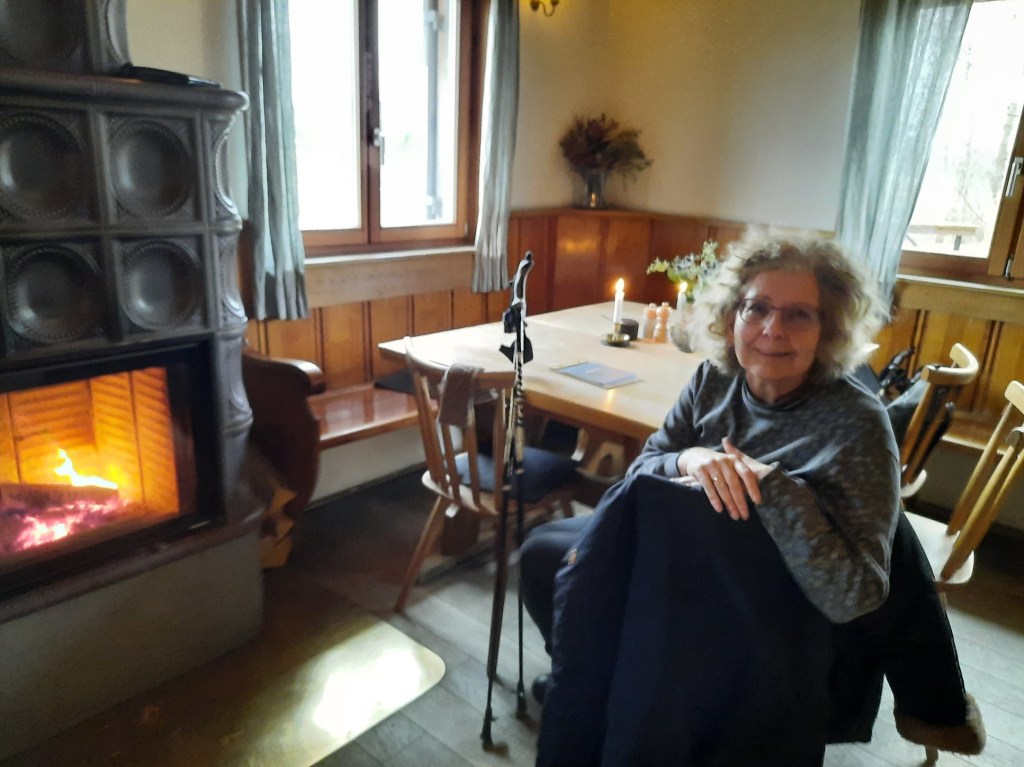
Advent…
logs becoming flame
becoming heat
.
.
breaking through the grey…
rays of hope

concrete head
my efforts to give it
a soul

Every Wednesday morning, seven of us serving the life sentence of Parkinson’s, tear through Mering Heath, in the south of Germany. Brushing against coarse grass and heather, stabbing the ground with our walking sticks, thrusting ourselves forward, we fill our lungs with the heather-scented air.
During today’s cooling-down session – swinging upper body left and right, extended arms loosely following, slowly catching our breath – the leader of our group relates the history of the place. In the 1700s, a building housing the Court of Justice stood exactly here by the Galgenbach, the Gallows stream. It was here that executions ordered by the Court were carried out. Crowds gathered, watched and cheered with the tightening of each noose, with each trap door opening. They watched the 15 minute-dance of the hanged, and then walked home.
hangman’s elm
the ancient tree creaks
and groans
.
In Blithe Spirit 35. 2 p. 70

April is World #parkinson ’s Month! A month to increase awareness about this complex neurological disease, and support those impacted by it.

While scientists race to find a cure, there is a lot that can be done to help with quality of life.
Take a look at Parkinson’s Europe, the section on Self-help and Living Well:
https://parkinsonseurope.org/…/self-help-and-living-well/
The Davis Phinney Foundation is a good resource to explore: https://davisphinneyfoundation.org/resources/
The podcast series Two Parkies in a Pod offers advice and tips on how to cope with chronic illness, and the specific challenges of Parkinson’s: https://www.2parkiesinapod.com/
The Haiku Foundation year-long (2024-2025) series ‘Haiku for Parkinson’s’ features #haiku as a tool that may help calm, reframe problem(s), and generally improve the quality of life for those living with disease and the psychosocial entanglements it involves:
See, e.g., ‘My Dyskinesia’: https://thehaikufoundation.org/haiku-for-parkinsons-my…/
Interview of ‘Tim Roberts living with PD’: https://thehaikufoundation.org/haiku-for-parkinsons…/
‘From Haiku for Parkinson’s to Haiku for Healing’: https://thehaikufoundation.org/haiku-for-parkinsons-from…/
‘Through the Lens of Positive Psychology’: https://thehaikufoundation.org/haiku-for-parkinsons…/
And a song by Birdie Belgium, tribute to her mother who lives with Parkinson’s Disease: https://www.google.com/search?q=birdie%20belgium%20song…
https://parkinsonseurope.org/2025/04/07/birdie-belgium-releases-new-song-for-parkinsons/
What do I find helpful in my own journey of the disease? My family and friends; the ‘Betreutes Laufen‘ walking for Parkinson’s group in Augsburg, the Ping Pong Parkinson (PPP) group in Augsburg and the dedicated PPP Course in Koenigsbrunn (see also the nationwide PPP Association https://www.pingpongparkinson.de/); being part of the international online community, writing and reading haiku; felting, gardening…
wildflowers
the lightness of hope
and renewal

the time it takes
to become immortal
em dash

Día de los Muertos
the ones we loved
the ones we lost
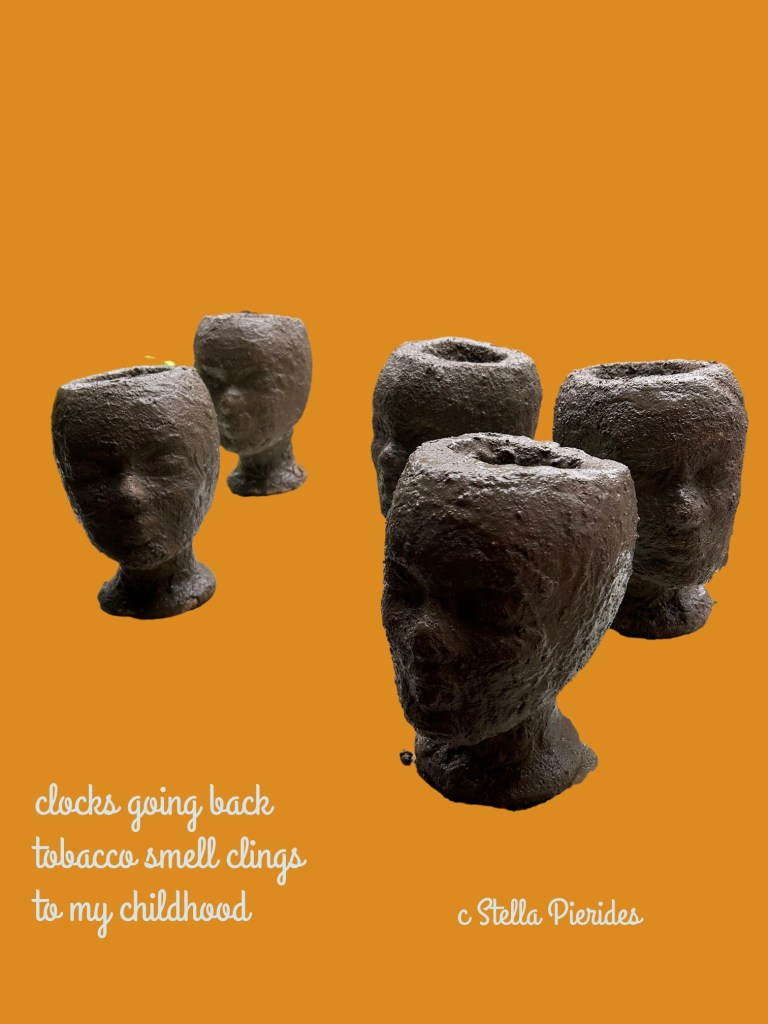
clocks going back
tobacco smell clings
to my childhood
.
In this special video episode by Two Parkies in a Pod, Dave and Kuhan chat to the world-leading Parkinson’s expert, Bas Bloem, about living well with the condition. Informative and fun!
If you ever had any doubts about the value of exercise for Parkinson’s, you must watch this episode. Bas Bloem points out that the only treatment proven to help with symptom reduction and delay the progression of this disease is exercise, not drugs! This prompts Kuhan to ask: If you don’t miss a dose of your drugs, why would you miss a dose of exercise?
Recommended dose? Daily, the more, the better…

pumpkin harvest
once upon a time
I was a kid

Succulents are great plants! I’ve been rooting them on stones, but this, this is another story! Wood decays…
sempervivum
the decaying stump’s
dream

I am greatly honored to be the Contemporary Haibun Online’s Featured Writer for August 2024. My heartfelt thanks to editor Rich Youmans and his team.

Dear Readers and Friends, I hope that you will find the time to read my ‘personal’ reflections on haibun.
And while visiting, you will see that Issue 20.2 is packed with wonderful work by exceptional writers. A writers’ and readers’ treasure trove!
camera obscura
the thoughts no one
admits to


Happy to see the feature “Haiku for Parkinson’s,” on the blog of The Haiku Foundation, flourishing!
Blog posts offered recently: “On the importance of connection in haiku” by Philomene Kocher; Through the lens of Positive Psychology” by Scott Mason; An update on the free course introducing Haiku to those living with Parkinson’s, their family and friends, taught by Sonam Chhoki. Poems by the participants painted a picture of where they are on their haiku journey.
Informative, comforting, healing reading. I copy it from the THF site below.
If you or a loved one live with Parkinson’s Disease, visit the site and see!
May 12: Haiku for Parkinson’s: Inviting Connection—Philomene Kocher
June 2: Haiku for Parkinson’s: Through the Lens of Positive Psychology—Scott Mason
July 7: Haiku For Parkinson’s: July 2024 Course Update—Sonam Chhoki
This is the blog post:
Haiku for Parkinson’s is a feature of The Haiku Foundation (THF): introducing haiku to those of us living with Parkinson’s Disease (PD), as well as introducing PD to those ‘living with haiku.’ You will find previous posts from this series here.
As part of this feature, renowned poet and editor Sonam Chhoki is teaching a free course introducing haiku as a tool in the Parkinson’s toolbox, helping face and negotiate the challenges of the disease and improve quality of life. In this post, Sonam, and the course participants, update us on the progress of their haiku journey.
Sonam writes:
Arguing against the pejorative associations of “parochial” with narrowness, insularity and sectarianism, the Irish poet, Patrick Kavanagh (1904 – 67) said, “The parochial mentality … is never in any doubt about the social and artistic validity of his parish.” For Kavanagh, the “parish” or the “parochial” was not a boundary but an opening. An aperture through which the world could be experienced. It was based on the idea that we learn by scrutiny at close-hand. For the poet, it is the depth of experience rather than the width, that counts. He concluded, “Parochialism is universal; it deals with the fundamentals.”
Inspired by Kavanagh’s insight, I would say that the poets in this update are “parochial” in the most wide-ranging sense. Each poet deals with the “fundamentals” of what it is to live with Parkinson’s either personally or through a close family member. Here are their unique and precious experiences and insights, through the lens of haiku.
1. Why haiku? How did your interest in haiku start?
Simon Duncan: As a means of matching emotion and landscape while on mountain walks and later summarising a day’s cross-country skiing as I was losing my ability.
Tania Haberland: That’s what was offered as a service for people going through Parkinson’s personally /in family. But in reality, I love haiku, wrote my first one at 8 at school.
Margaret Ponting: I have always been interested in writing poetry. I wrote longer prose during an extended lockdown of the coronavirus pandemic. I joined a writing group at this time and was impressed how haiku writing was therapeutic for Parkinson’s sufferers. My brother and sister encourage me to write and are enthusiastic in their support.
Haiku appeals to me because I have family connections to Japan and the history and cultural aspects are intriguing. I feel closer to my Japanese daughter-in-law and grandsons as it gives us something to share, discussing the history and philosophical aspects. I like the way haiku has evolved with a variety of styles and topics and how a few simple words can create an emotional impact on the reader.
Jen Pacini: I started writing poetry after receiving my Parkinson’s diagnosis is 2018. Playing around with different kinds of poetry has been a wonderful creative outlet ever since. In 2021, Stella Pierides offered a haiku class through a Parkinson’s site. At first my interest in haiku was to help refine my poetry. Along the way, I fell in love with the style and the way haiku’s simplicity of form conveys meaning in complex ways and on multiple levels. Reading haiku makes me smile
2. Which of your own recent haiku are your favourites? Please share some of your poems.
Simon Duncan:
Cold sun, coarse gritstone
Thin moves
As my bouldering mat shrinks
Botox cackles
Drag Queens strut
Emptiness
A window opens
Ladybirds cascade
Hard red confetti
Cold canal-side fishing
“Hello, have you caught anything?”
Deep silence
Frost warning, potato panic
Upturned buckets, rhubarb leaves, anything
Protect delicate shoots
Tania Haberland:
Rivers run through us
pebbles holding on
to the stillness of love
Written to accompany a video I collaborated on.
Margaret Ponting:
this morning’s delivery
truckload of firewood
and a tiny green frog
king parrots
gorging on rose hips
a palette of green and orange
giant red gums
mirrored in the river
as we reflect
mismatched, shiny, bright
we put the pieces together
a mosaic of love
threading daisy chains
of memories
sepia photos
a present arrives
a silk scarf
from my sister
the night leaves
a pale parting gift
translucent crescent
along the river bank
djiti-djiti, willy wagtail
cries for her drowned mother
Jen Pacini:
at the back of the drawer
a letter, folded in three
the life she never shared
sunrise yoga
the taste of
sweet candy
midday heat
the hum precedes
the hive
summer solstice
there’s no
going back
3. What do you enjoy about haiku writing?
Simon Duncan: Concise emotional imagery.
Tania Haberland: The focus and stillness haiku creates and the way it declutters my mind, also the challenge is fun.
Margaret Ponting: I enjoy the immediacy of haiku writing and the mindfulness aspect. It makes me more aware of my magnificent natural environment and I feel enriched through expressing my feelings. I appreciate sharing my thoughts with loved ones through this medium and enjoy reading haiku contributions from other people.
Jen Pacini: I enjoy it when I surprise myself after reading a haiku I’ve constructed.
4. What is the most challenging aspect of haiku writing?
Simon Duncan: Writing about Q3 activities is important to me but others know little about – e.g.- climbing.
Tania Haberland: Editing out what is not necessary..
Margaret Ponting: Initially, I thought there were few rules, but found haiku to be very complex, much like all aspects of Japanese culture. I sometimes find it difficult to pare back my writing. I have been encouraged by the support given to me through this program and appreciate the feedback. Looking back, I think I have grown in confidence and am trying to challenge myself more..
Jen Pacini: I find keeping the meaning of the haiku from becoming too identified with my own story or adding too many details challenging at times. Sonam Chhoki, is very helpful, providing useful feedback that helps me continue to learn the craft.
5. Do you make notes or do you write directly?
Simon Duncan: Write directly.
Tania Haberland: Directly and then keep changing..
Margaret Ponting: I write directly and that is another thing I like about haiku. It doesn’t take too much time. I usually refer back and add or change the structure or flip the lines to create a different effect.
Jen Pacini: I play around with ideas, lines, wording in a notebook. Then set it aside. Later, I return to the process with fresh eyes to create a digital version. Sometimes I merge and edit two original haiku drafts to create a fresh haiku.
This one-to-one course by email is free and available for a year. The main purpose is to work with the participants at a pace suitable to their particular circumstances and needs. We welcome people from all backgrounds and levels of knowledge, and respect their wish to participate anonymously..
Notes:
Patrick Kavanagh: ‘The Parish and the Universe’, in Collected Pruse, MacGibbon & Kee, London, 1967.
Biography
Sonam Chhoki finds the Japanese short form poetry resonates with her Tibetan Buddhist upbringing. She is inspired by her father, Sonam Gyamtsho, the architect of Bhutan’s non-monastic modern education, and by her mother, Chhoden Jangmu, who taught her: “Being a girl doesn’t mean you can’t do anything.” She is the principal editor, and editor of haibun for the online journal of Japanese short forms, cattails. Her chapbook of haibun, The Lure of the Threshold was published in May 2021. Mapping Absences, a collaboration of haibun, tan bun and tanka prose with Mike Montreuil was published in 2019. Another collaboration with Geetanjali Rajan: Unexpected Gift was published in November 2021. An ebook of a second collaboration with Geethanjali Rajan, “Fragments of Conversation” is in the process of being published.
Links to all posts can be found here:
If you are interested in this free introductory course, please email us at: haiku4parkinsonsATgmail.com We will put you in touch with Sonam.
Image Credit: Maria Pierides
My four-year-old grandson, sitting at the table facing me, starts moving his head and trunk in the same, writhing way I move mine. Dyskinesia, a side effect of the medication I take, comes and goes. The only way of stopping these movements is to sit back and keep silent.
As I stop talking and relax, he does too.
spring moon
how strongly it pulls
the ocean
In Puddock June 30th, 2024
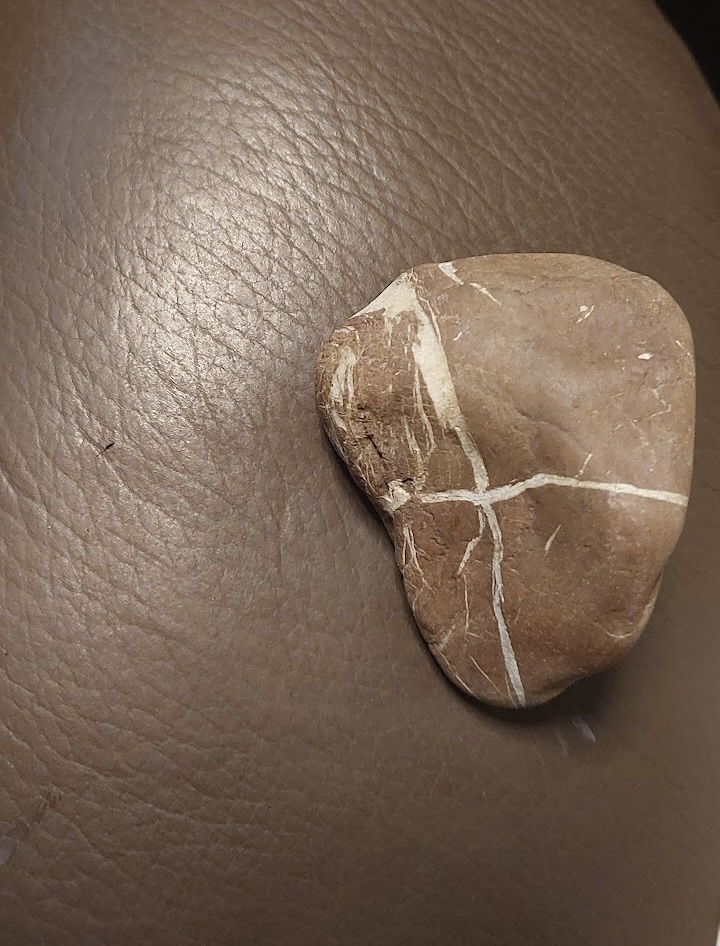
Scheherazade
and the Emperor…
where do we go
from here

studio day...
working out the limits
to my ambition

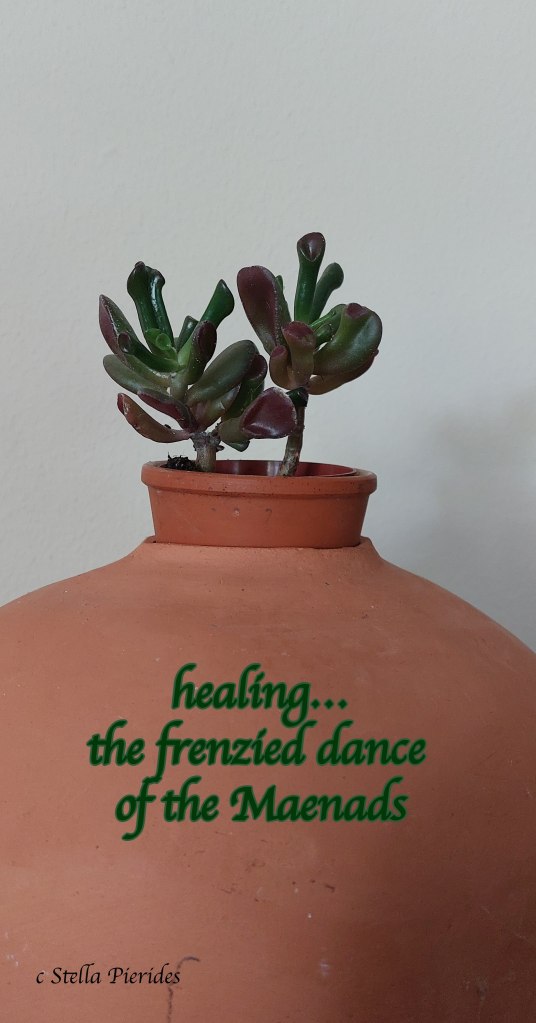
healing…
the frenzied dance
of the Maenads
herb garden
the bench by the rosemary
occupied
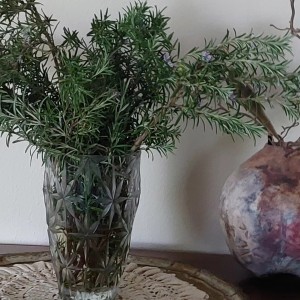
On the fascinating question about the role rosemary plays in memory.
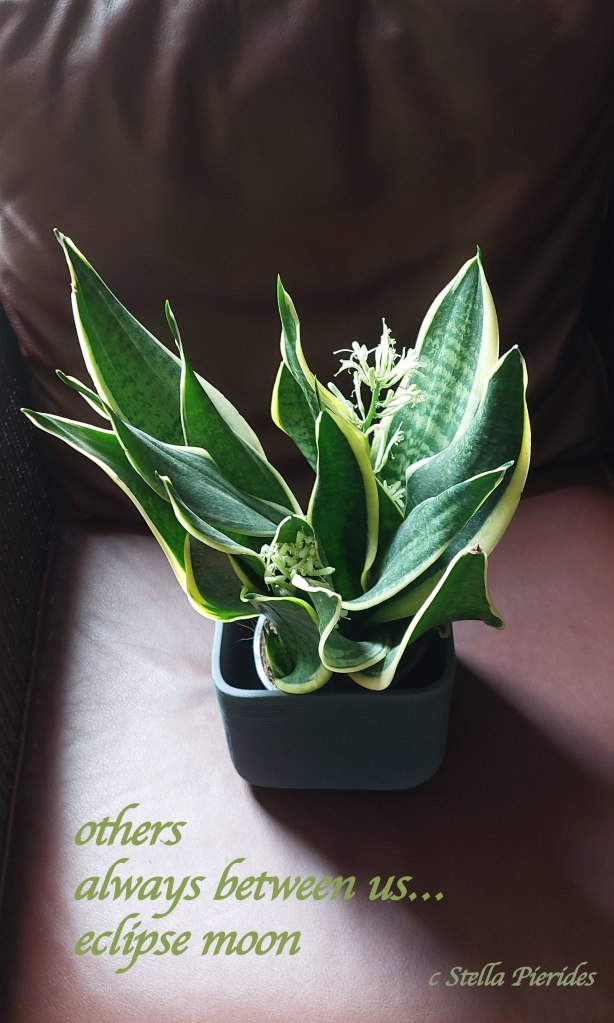
others
always between us…
eclipse moon
.
Happy to see the new “Haiku for Parkinson’s” blog post on The Haiku Foundation site: using haiku to reflect on, and gain a sense of control over, the ups and downs of mood in Parkinson’s. Read it here: https://thehaikufoundation.org/haiku-for-parkinsons-mood…/
#haiku4parkinsons#h4p#Parkinsons#ParkinsonsDisease#haikufound#livingwithparkinsons#MovementDisorder#Parkinson’s
April 11 is World Parkinson's Day!
.
sunlight on tulips…
the long wait may soon
be over

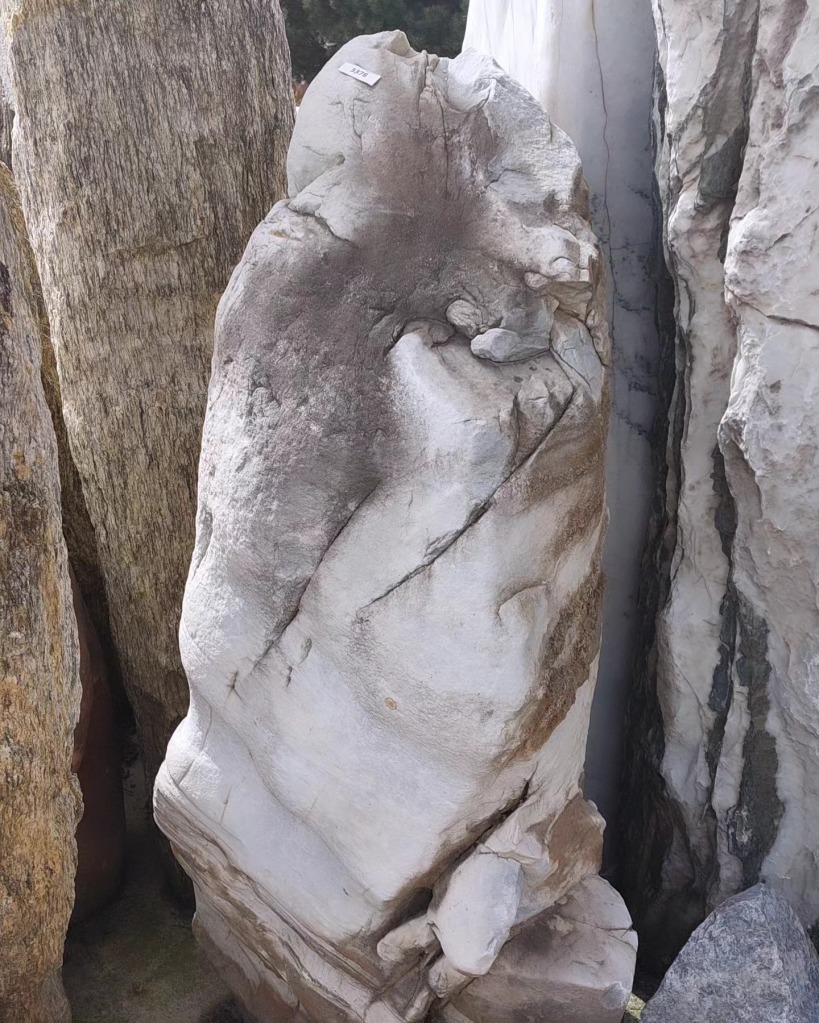
stone quarry...
yet another form waiting
to be freed
.
Did you know that April is Parkinson’s Awareness Month?
A month to raise awareness of this disease and share information about it with the public. The aim is to highlight the urgency of finding a cure, but also matters in need of attention while waiting for a cure. To remind ourselves too, about the different experiences, approaches and treatments available to help manage the condition. What will you be doing during the month? Sign a petition? Make a pledge to exercise more?
Whatever you do, choose an activity that engages you, inspires you, makes you smile! Play table tennis! Read a haiku! Keep talking, keep thinking, keep learning!
Welcome to Tulips for Breakfast!
Here you will find all posts from Haiku for Parkinson’s, Haibun, Exercising Mind and Body, Table Tennis for Parkinson’s, Ping Pong for Parkinson’s, Health, Nutrition, and much more…
