time reflections
the quiet flow
of water
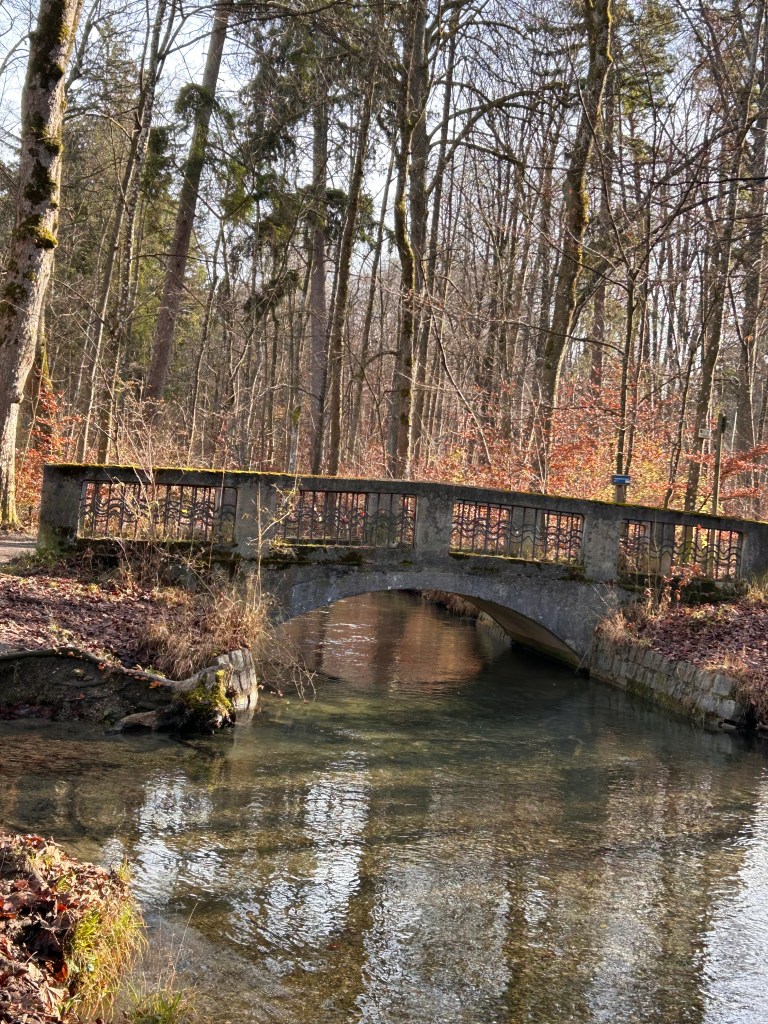

time reflections
the quiet flow
of water
Every Wednesday morning, seven of us serving the life sentence of Parkinson’s, tear through Mering Heath, in the south of Germany. Brushing against coarse grass and heather, stabbing the ground with our walking sticks, thrusting ourselves forward, we fill our lungs with the heather-scented air.
During today’s cooling-down session – swinging upper body left and right, extended arms loosely following, slowly catching our breath – the leader of our group relates the history of the place. In the 1700s, a building housing the Court of Justice stood exactly here by the Galgenbach, the Gallows stream. It was here that executions ordered by the Court were carried out. Crowds gathered, watched and cheered with the tightening of each noose, with each trap door opening. They watched the 15 minute-dance of the hanged, and then walked home.
hangman’s elm
the ancient tree creaks
and groans
.
In Blithe Spirit 35. 2 p. 70


What would you do if you knew this was the last night of the world? In Ray Bradbury’s short story and the recent Chamber opera inspired by it, couples, who have all dreamt the same dream about the world’s end, struggle with this question. Displaying doubt, disbelief and denial, as well as acceptance of their forthcoming demise, they argue, fight, hug, open their most expensive bottle of wine. The mundane response when facing the extraordinary. After all, the end of the world doesn’t sound as alarming as the Apocalypse!
And yet and yet. What would you do? What would I do? It is time to explore what our answer might be. Even more so than in 1951 when the short story was published, even when certain diseases propel some of us to an accelerated end. Seconds away from disaster, according to the Doomsday Clock, with wars erupting in ever more places and wildfires scorching dearly held assumptions, it comes to this: there is no time to lose.
dreaming…
sweat rolls down
midnight
*
Haibun responding to “The Last Night of the World”, a Chamber opera by Agustí Charles inspired by Ray Bradbury’s short story of the same title. The State Theater of Augsburg commissioned it, and it premiered on 24.1.2025 at the Brechtbühne im Gaswerk. I saw it a few days later.

the boats I missed…
lucky bamboo
Photo taken during my visit to
tim – Staatliches Textil- und Industriemuseum Augsburg (State Textile and Industry Museum Augsburg).
“In the exhibition LIMINAL SPACES, tim is showing works by Dorothée Aschoff (*1965)… In her works, Aschoff explores the existential conditions of being human. What does it mean to set out, to set off or even to have to flee? What boundaries stand in the way? And which landscapes – whether stormy seas or rugged mountains – must be overcome?”
See also here
Sunday afternoon walk: Deuringer Heath, Western Forests Nature Park at the gates of Augsburg. A serene, peaceful area with numerous paths through lush growth, water-filled pits, oaks of legendary proportions. Filling my lungs with the clean air, taking in nature’s medicine.

At the same time, scattered structures serve as clues to the earlier history of this place: military training ground initially of the German army, then the US (NATO) forces stationed in nearby Augsburg (until the end of the Cold War). Gunfire, tank training, choppers hovering. Echoes of the sounds of the tank training ground it once was, of the thick smoke-filled air.

In the last quarter century, nature started a new life cycle here. ‘Fox holes,’ from where soldiers fired, became swamp holes, an ideal habitat for rare flora and fauna species. The over thirty types of dragonflies are the ones doing the flying now. Families, walkers, school classes come for fitness training and hiking the adventure trails.
A living monument to the history of place.
Past and present. And future…
Happy to see my haibun “Sky Ponds-Himmelsweicher” appear in Contemporary Haibun Online 19.2
I found out about the bomb craters in the Augsburg city forest during a walk with my Parkinson’s walking group. Marvelous recovery of a wounded landscape, and people. And apt for our own situation of struggling with progressive disease.

The Siebentischwald, on the edge of Augsburg, acts as the lung of the city. Lush green vegetation crisscrossed by water channels and dotted by silent ponds makes this forest the life force of Augsburg. It turns out it is also the repository of an interesting piece of the city’s history: the forest floor bearing the scars of thousands of bombs that were dropped on it towards the end of World War II.
On my morning walk with my Parkinson’s group, in this peaceful, green oasis, pierced by high-pitched peacock cries from the adjacent Zoo, I come across oval ponds and other depressions filled with vegetation. I am told they are Bombenkrater, the remnants of craters formed by aerial bombing.
The proximity to the munitions manufacturer Messerschmitt meant that bombs often landed in the forest. However, the massive bombing raid in February 1944 literally dug up the forest floor, leaving numerous wounds on the landscape. In recent years, a public charity transformed some of these craters into ponds brimming with life.
cool forest shade. . .
lingering by the sky ponds
heat from the past
washing day
a story behind
each mark
.

What a wonderful project! The brainchild of Krzysztof Kokot, the International Picture Postcard Project “Haiku Connects Us” brings together poets and poetry from around the world. Beautiful pictures, coupled with haiku…what a treat! So pleased to see my contribution included here!Thank you, Krzysztof!


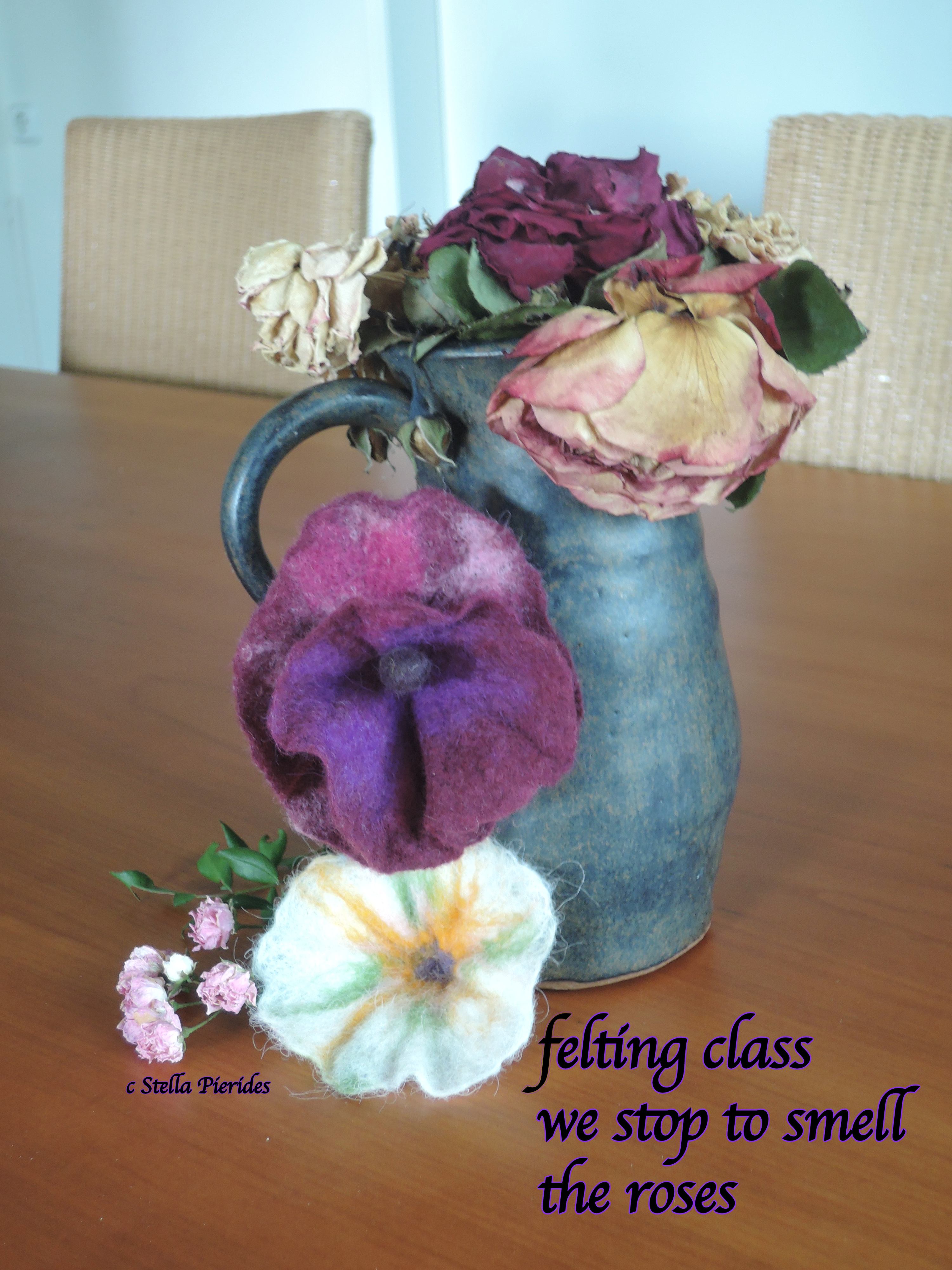
felting class
we stop to smell
the roses
.
I made the purple and white flowers during a felting class by Beate Maxzin of Wolllust, “atelier fuer filzbegeisterte,” Augsburg. I am very pleased with the purple flower in particular! Wunderbar!
Philoxenia
Yesterday I attended an event at the Elixirion Greek restaurant in Augsburg, where, in a kind of experiment, a number of strangers had been invited to sample Greek Cuisine. Extending over three hours, the meal featured an amazing array of perfectly cooked dishes, drinks, and desserts, with the invitees paying at the end whatever they thought appropriate.
Our hosts — Angelos Gkantzos and his team — opened their doors and hearts to a sizeable group of Grecophile and hungry strangers and through their friendly and generous welcome made us all feel immediately at ease.
The word Philoxenia came to mind. Love and friendship towards strangers, towards visitors, generosity combined with eagerness to show hospitality. Here, this evening, the concept became reality through the experience of togetherness and being received in a generous and good-natured spirit.
 The food was perfectly cooked and delicious, the drinks cool and flowing, and the ouzo something that Odysseus himself would have stayed for and enjoyed!
Many heartfelt thanks to the owner Angelos Gkantzos and all the staff who created this wonderful event and helped us remember the concept of Philoxenia. And to the fellow invitees who helped make the evening a most enjoyable event.
Photo altered to protect privacy.
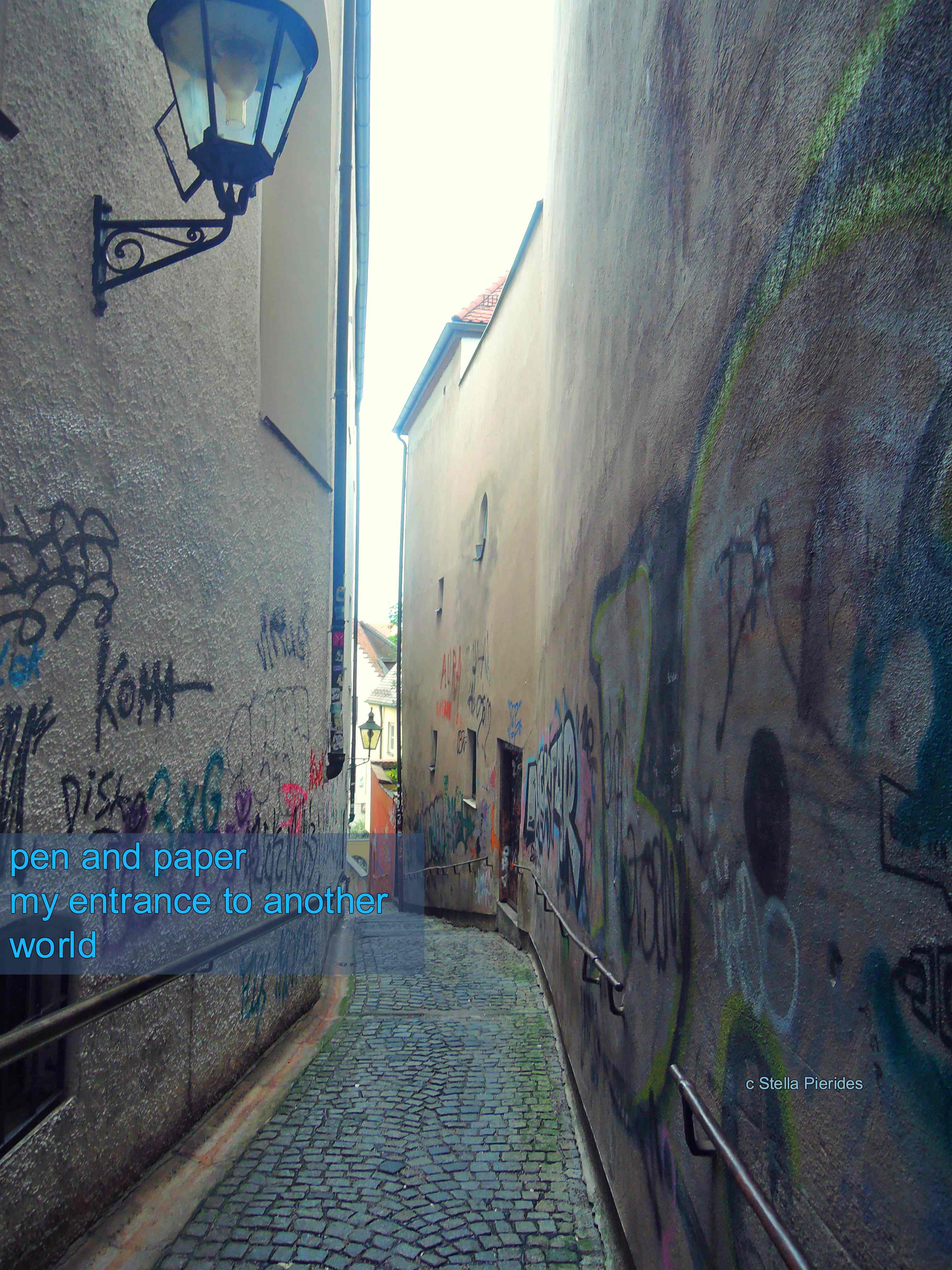
pen and paper
my entrance to another
world
86/100 #The100DayProject #100daysnewthings
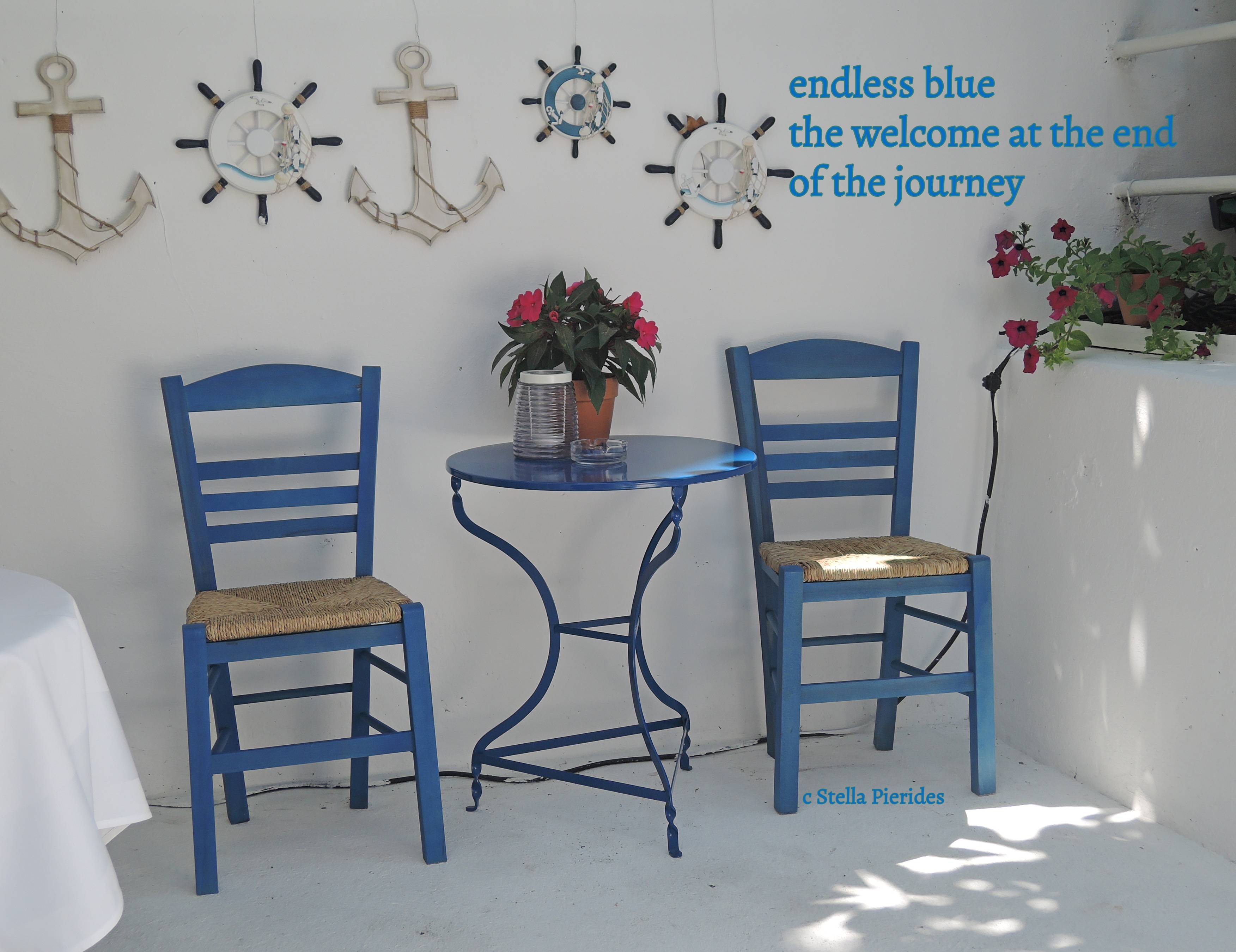
endless blue
the welcome at the end
of the journey
42/100 #The100DayProject #100daysnewthings
(photo: Elixirion restaurant, Augsburg)
slipped disc…
yet another nail
in my spine

35/100 #The100DayProject #100daysnewthings
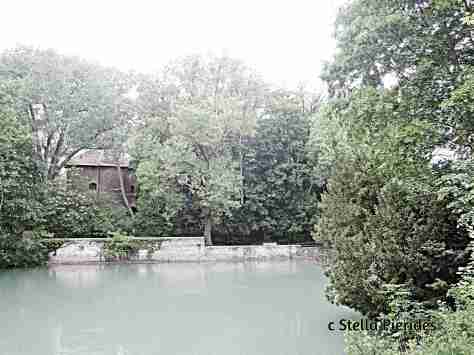
Sharing a photo from walk today along the banks of the River Lech, in Augsburg.
Today the association “Grow Up! Intercultural Garden Augsburg e.V.” opened its doors to the wider community. The association consists of:
About 65 families and individuals, people with secure residence status and refugees, rich and poor, healthy and sick, old and young, beginner and experienced gardeners, celebrate, talk, and laugh together there. 15 nations meet, organize, and form a community based on mutual help and tolerance.
 They run allotments, a communal bee-keeping project, a communal orchard; all part of the larger Cultural Park West of Augsburg. There are spaces for artists’ workshops, theatre etc. in this area, which was originally part of a US Army base.
 I visited them and marvelled at the relaxed, friendly atmosphere. I walked around the allotments, bought unusual tomato plants, ate exotic food, freshly cooked by the community members, listened to live music and felt as if I were in multicultural London.
 Unfortunately, the future of the garden is not secure, as the town plans to relocate the existing Cultural Park West facilities to the nearby old Gaswerke quarter. This leaves
 the community garden project open to an uncertain future. I hope the town planners and the intercultural authorities, especially since the society for the promotion of vocational and social integration initiated this project, realise the importance of this project and ensure its continuation and development.
 32/100 #100daysnewthings, #the100dayproject
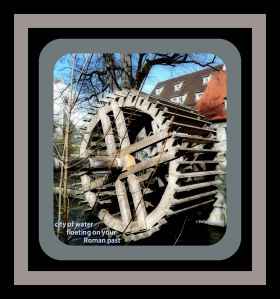 Watermill am Brunnenlech is my 1/100 #100daysnewthings
city of water
floating on your
Roman past
Augsburg is applying to be included in the UNESCO World Heritage list, aiming to secure its unique water management system for the future and make it visible to the whole world.
It says, “Canal landscapes and water towers, waterworks and water power characterize Augsburg. In the interplay of innovative spirit and technical mastery, the city had a system of water management unique in Europe for 500 years. Artistically designed magnificent wells and buildings of world renown to this day of the appreciation of Augsburg water art.”
Best wishes to #Augsburg for their application!
#the100DayProject #Unesco #water #haiku #haiga
time travel
searching for the key
to immortality

Weitmannsee, near Augsburg. Where clouds go to admire themselves
on earth as it is in heaven

Season’s Greetings and a Happy, Healthy, and Peaceful New Year!

Walking around Augsburg, I came across this intricate, mysterious scales: beautifully balanced, surrounded by watches, clocks, wall clocks, jewellery, it took me to another dimension. Waiting for my watch-strap to be changed, the words “on balance” came to mind, life as a balancing act, time weighing on all of us…
When I asked for permission to take a photo, the kind owners related the scales to the ancient Egyptian Goddess of Ma’at, responsible for weighing the souls of the departed against a feather. If the soul was found to be heavier than the feather, it was denied access to the underworld.
I left the shop lighter, and full of ideas.
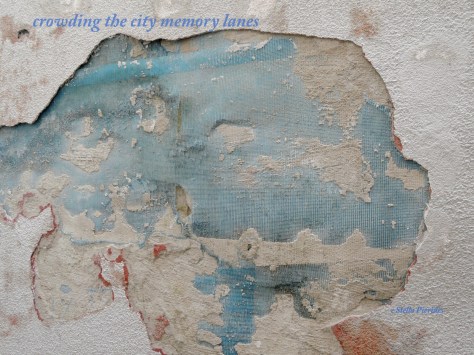
Walking around the old city in Augsburg, I came across wonderful images revealed by peeling plaster.
crowding the city memory lanes
speed of light the liquidity of our dreams
.

Prompts:
seize the poem: ripples
NaHaiWriMo: liquid
Photo: From the Augsburger Christkindlesmarkt.
head in the clouds?
still waiting for the voice
from heaven
.

Prompt: kickbacks
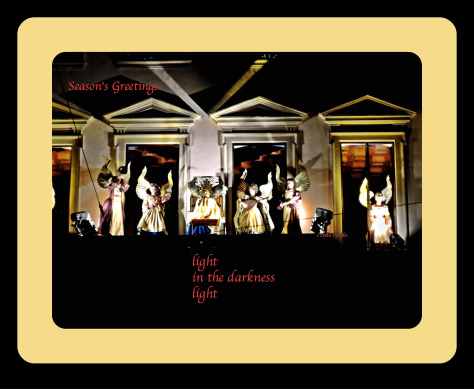
Photo: 29 November 2014 in Augsburg. First Advent, the Engelspiel, at the marketplace.
There is a video of this event (Engelspiel) from previous years here
Also a description of the Christmas market, or Christkindlesmarkt, as it is called, here
Inequality and Memory
The day before Anselm Kiefer was born, the house next door to his parents’ was completely destroyed. Only a sewing machine had remained intact. This event is linked, in several articles I came across, to his painter’s vision, his choice of subject, painting technique, and use of materials. 
It is as if he still breathes the dust he breathed in as a newborn; still lives among the rubble he creates in his painting/sculptures; still looks for the diverse, as if bomb-strewn, materials for the surfaces of his constructions. There is a correspondence, an analogy, an equivalence between his original circumstances and his continued practice and vision in his work. A way of reconstructing memory, making it tangible; of keeping alive an event by reproducing its aftermath, expanding it in time. The Guardian’s Jonathan Jones would agree to this, as in his preview of the Royal Academy exhibition, he describes Kiefer’s show as
“an astonishing look at the awful burden of history”.
From the moment in time to expanding time, Kiefer’s objects do not stop this process of ‘remembering’ even when ‘finished’: the clay he uses shrinks, crumbles, and drops off; dried bits of material disintegrate, fall down, and become litter on the gallery floor to be returned to him. Even when the works don’t disintegrate, Kiefer ‘damages’ them deliberately, as if the state of being damaged, used, wounded, is the reality of painting. Here is where Kader Attia’s concern with re-appropriation of materials comes alive. Making/finding the rubble and turning it into a work of art, then turning this/letting this grow into rubble again, only to use the bits that come off in new work. Like the particles of the cosmos, on a microscopic level, Kiefer’s materials, and creations, belong together, morph, develop, die, and are reborn to a new form.
If this sounds benign, it is because Kiefer’s work reminds us to see it this way; it is a meditation on the ongoing, day to day processes of growth, decay, and regeneration. War, though, a main concern for Kiefer, and our time, is one of the most urgent and sudden, both violently disruptive and accelerative processes there are. When we linger in front of, or indeed around, a Kiefer piece, the terror and horror of the destruction of war; the awe of the immensity of scale come to mind: the holocaust (for Kiefer, perhaps the most personal reference); Afghanistan, Iraq, Libya, Congo, Gaza, Syria, Hiroshima… The beauty of the arrangements, of the depictions, and the terror of the depicted resonate with Rilke’s terrible angel which seems to be haunting Kiefer’s work.
 So, inequality found in the polarities and the equivalences: Heaven and Earth; the moment and eternity; life and death; beauty and terror; growth and decay; memory and catastrophe. Claudia Pritchard, in The Independent, noting polarities in Kiefer’s work, quotes the claim of his being, arguably, ‘our greatest living artist’. Kiefer’s handling of the topic of memory as tangible and ever present will most probably ensure the continuing truth of this statement. Like the sunflower symbol he uses in his work, a head full of blackened seeds and beauty, Kiefer’s work contains the seeds of its own perpetuation. Pritchard quotes the exhibition curator, Kathleen Soriano,
“What I want people to take away from this show is not only the knowledge that he is a great painter, but also that he has great relevance.” Indeed Kiefer, she adds, is looking, like all of us, with great anxiety at today’s turbulent world. “He says you have to remember that history is cyclical.”
Recently, I revisited some of Anselm Kiefer’s work at the “Art Museum Walter” 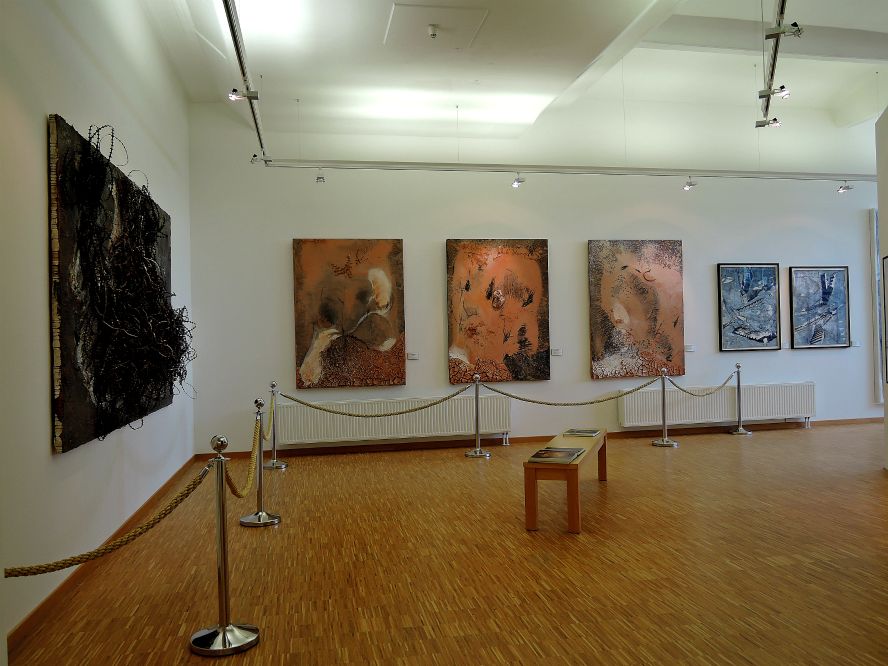 at the “Glass Palace”, an industrial monument in Augsburg: Eleven ‘paintings’ and two sculptures on show. While they are not new — forty per cent of the Royal Academy work is said to have been created for the show — the Walter collection displays excellent work firmly rooted in time and memory, while remaining open to possibilities of interpretation (the photos included here are from the Art Museum Walter) .
A privately and expertly run gallery, Kunstmuseum Walter, is housed in the Glass Palace — a monument to the past of the textile industry — which aims to show history being alive in the present,
“[involving] a continual confrontation with the present. The concept of a living museum is an essential part of the TIM [Textile Industry Museum] programme. In the textile machine section, former textile workers demonstrate the machines with an authenticity not to be found elsewhere.”
Here too is an equivalence: the metaphor of the sewing machine from Anselm Kiefer’s past finds an echo in Germany’s textile industry surviving destruction. Interesting to note that, in this context, some have referred to Augsburg as the ‘Manchester of Germany’, echoing the transition from a crafts-/guild-based industry to one of machine-based mass production, including the exploitation, poverty, and social upheaval this involved. In this juxtaposition, Kiefer’s work, in bringing together the themes of inequality and memory, continues to weave anew the fabric of history.
If you can, visit the Art Museum Walter. Information about it here.
If you are not in Augsburg, or London, you need not worry. In Kent, there is an exhibition to console your artistic longings: my daughter Maria Pierides’ solo show at Creek Creative Studios in Faversham. 23 — 28 September 2014. Rush there, the Studios are open only till 4 pm on Sunday the 28th!
This post is part of a series of articles on the theme of Inequality, written for Blog Action Day 2014:
Phylida Barlow at Tate Britain
Kader Attia, Whitechapel Gallery
Frank Auerbach at Tate Britain
*Photos: Stella Pierides, Kunstmuseum Walter
joined at the hip
the red currants I forgot
to harvest

.
Photo taken summer 2014 in a quiet corner of Augsburg.
Prompt: NaHaiWriMo, hyphenate.
golden ratio –
songs and salvia wafting
through the cool air
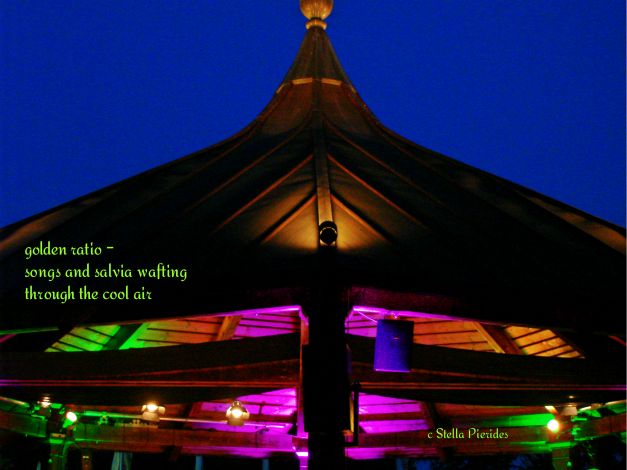
NaHaiWriMo prompt: golden
Photo: International Augsburg Jazz Summer, Botanic Gardens, Augsburg, 2014.
.
dry spell solace in your lips
.

.
Photograph: Japanese Garden, in the Botanic Gardens, Augsburg.
cracking the code
how the cosmic song
resonates


