Evening stroll

Ottmarshausen looking towards Alt Neusaess.
Trying to catch-up with #The100DayProject! Only a week to go… 77/100 #The100DayProject #100daysnewthings

Evening stroll
Ottmarshausen looking towards Alt Neusaess.
Trying to catch-up with #The100DayProject! Only a week to go… 77/100 #The100DayProject #100daysnewthings
gravity
what does it mean
to be human
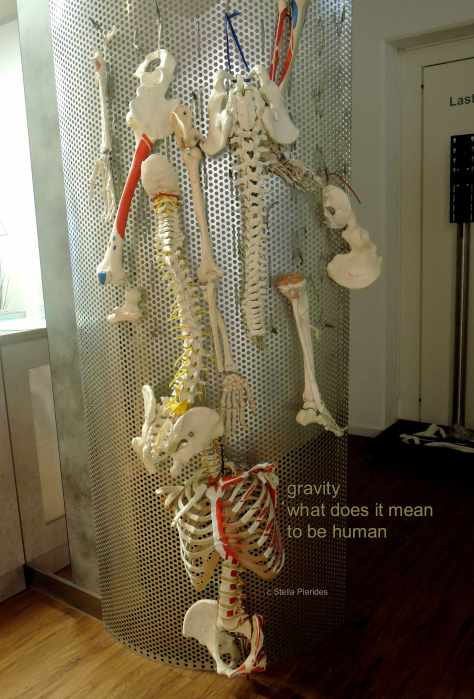 Photo of model skeletons in the Physiotherapy Practice I visit.
76/100 #The100DayProject #100daysnewthings
This is the dead / dying tree with the mark visible!
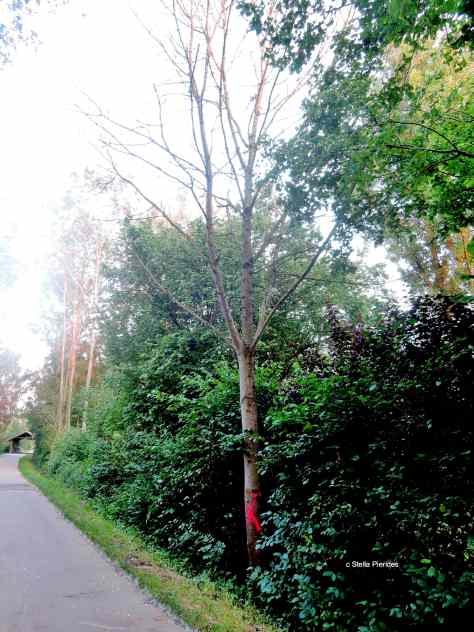
75/100 #The100DayProject #100daysnewthings
The other day, on my evening walk, I spotted this tree marked for felling.
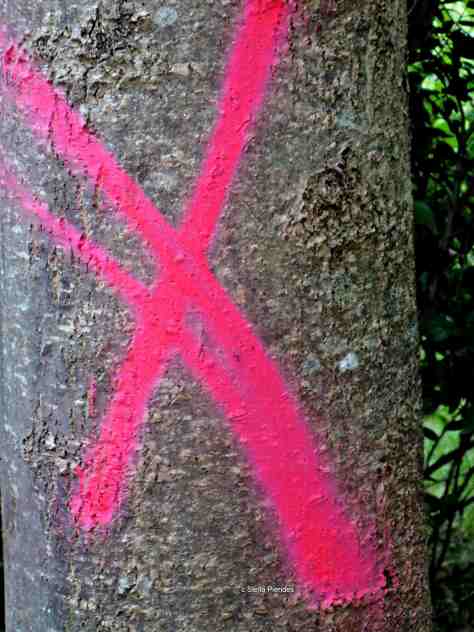
74/100 #The100DayProject #100daysnewthings
Here is book cover 7 for the book cover challenge from Shrikaanth Krishnamurthy. No explanation required, no reviews, just the covers.

Thank you, Shrikaanth, for sending the challenge my way! I enjoyed presenting the book covers in the form of an installation and I plan to continue this practice beyond the 7 covers…
73/100 #The100DayProject #100daysnewthings
the last page missing
from the library book—
late autumn evening
.
Frogpond 41.2 Spring/Summer 2018, p. 27

.
72/100 #The100DayProject #100daysnewthings
How trees talk to each other
The amazing science of the Wood Wide Web
71/100 #100daysnewthings #The100DayProject
Book Stuff: swaps, gifts, small talk is a (closed) Facebook group founded and administered by poet Gillena Cox. It is a place to highlight and share our work: whether already published or to-be-published/forthcoming.
Today, I was thrilled to see Gillena’s post, reproduced here with her permission:
❧✿❧Saturday Share # 42❧✿❧
Stella messaged me telling me she wants to send me 2 of her books, so i sent her my snail mail address. I received her gifts on 14th June 2018. Both these publications resonate well with me, since i am an ’empty-nester’. My husband left our home wanting to broaden his horizons. When they were ‘broad enough” he returned to Trinidad and opted to live in a house owned by his mother. My children left our home wanting their own space, when they thought, they were “big enough”. All of these leavings, i handled gracefully, giving each one, my blessings. What does this have to do with gifts from Stella, well…
Her haiku mirror life – the non linear journey, of evolving stations. Her themes of loneliness, absence and the capacity to be creatively alone are her flag poles. We are given insights into views from her garden, just when she opens her door, at the market place. We are treated to light bouncing off aubergines, flowers opening and coquettish butterflies. Ordinary yes. Yet peculiar to her, Stella the haiku poet. These scenes she freezes for us readers , leaving us in awe.
My favourite from the book ‘In the Garden of Absence‘
“on the clothesline
three skirts four blouses
missing you”❧✿❧
‘Ekphrasis: Between Image and Word‘ is a collaborative work of [painting], of oils and words. Stella’s daughter [Maria Pierides] uses her oil and mixed media, Stella her words. Beautiful pictures are given to us, resulting from the creativity of these two. They paint for us the pictures of nature and her fickle heart. By her colour, sound, seasons.
My favourite is #21 ‘Colours surround me, swirls. Oil and mixed media on canvas 60 x 60cm’ To which Stella replies
“blue note
the baker’s dog
howling”THANKS AGAIN STELLA for these sweet treats.
much love
gillena
❧✿❧Its Saturday Have a good one❧✿❧
Thank you, Gillena, for your generous comments.
A hot, humid day. I’m looking at cooling photos like this one from a visit to Wells-next-the Sea, North Norfolk.
There’s always a cooling breeze there. I can almost feel it. A sort of teleportation…
waiting for the tide
that’s not waiting for me—
children crabbing
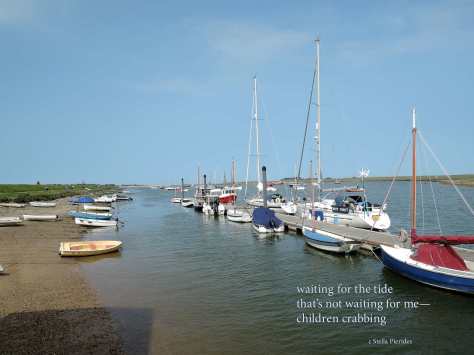
70/100 #The100DayProject #100daysnewthings
lightness
of a smile or a rose…
evening cool

69/100 #The100DayProject #100daysnewthings
Here is book cover 6 for the book cover challenge from Shrikaanth Krishnamurthy. No explanation required, no reviews, just the covers.
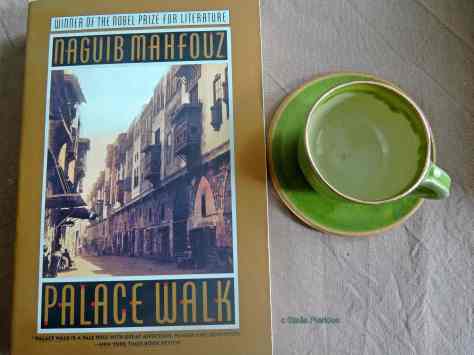
68/100 #The100DayProject #100daysnewthings
waiting room
the plastic rose blooms
and blooms
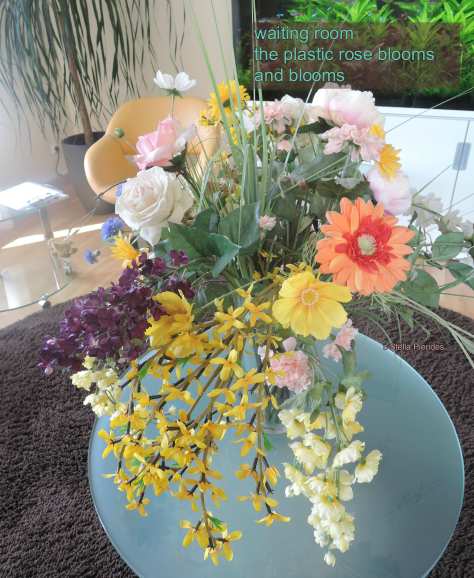
I took this photo not realising the flowers were plastic! But then I had enough time afterwards to discover the truth…
67/100 #The100DayProject #100daysnewthings
Here is book cover 5 for the book cover challenge from Shrikaanth Krishnamurthy. No explanation required, no reviews, just the covers.

As it is also a kind of an installation, it becomes
66/100 #The100DayProject #100daysnewthings #book cover
65/100 Jacobo and the laptop
The Haiku Society of America has announced the names of winners of its Merit Book Awards for books published in 2017.
I am delighted and honored to see my book Of This World (Red Moon Press) included with a honourable mention in the Haibun category! Congratulations to all winners!
And heartfelt thanks to Michelle Elvy, Jim Kacian, Clare MacQueen and Johannes S. H. Bjerg for their help and support with bringing this book to life.
*
So, excellent news! It becomes 64/100 #The100DayProject #100daysnewthings

And here is book cover 4 for the book cover challenge from Shrikaanth Krishnamurthy. No explanation required, no reviews, just the covers.

As it is also a kind of an installation, it becomes 63/100 #The100DayProject #100daysnewthings
Jacobo relaxing with his toy mouse.

I accepted the challenge from Shrikaanth Krishnamurthy to post covers of 7 books that I have read! No explanation, no reviews, just the covers (just my own photo arrangement!). This is book cover for day 3 of the challenge.
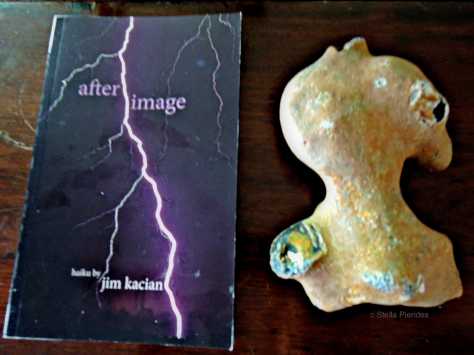
Each time I post a cover I’m expected to ask 3 of my friends to take up the challenge as well. I know that this is a difficult request, as not every friend likes challenges, and even those who do, find it difficult to finish all challenges…so to make it easier for everyone, I’m suggesting here if a friend likes the idea to take it up, and tag me, so that I follow their book covers…
This photo is also 61/100 #The100DayProject #100daysnewthings
In March 2018 I judged the British Haiku Society’s Haibun Contest (and announced it here in a brief post ). The contest was reinstated this year, and honouring two outstanding members of the Society, was named The Ken and Noragh Jones Haibun Award.
Following is the report of my choices and commentaries published in the Society’s Journal, Blithe Spirit, 28:2, May 2018.
A PDF of the British Haiku Society’s announcement of the awards (haiku, tanka, haibun sections) as well as winning entries can be found here, as well as in the Society’s Journal Blithe Spirit.
*
In reinstating the Haibun Awards, the BHS continues to encourage both, the creation of new work and the exploration of the possibilities offered by the form as it develops over time.
It was a great privilege to read the 50 haibun in a range of styles and lengths submitted to the British Haiku Society’s Ken and Noragh Jones Haibun Contest 2017. I thoroughly enjoyed reading the work, and wish to thank the poets for their submissions and the Society for entrusting me with this task.
 The BHS Ken and Noragh Jones Haibun Awards 2017
The winner is David Bingham (UK): Sleight of Mind
The runner up is Jean James (UK): The Visit
Winner: Sleight of Mind, by David Bingham, UK
Sleight of Mind refreshingly starts with placing the reader in the magician’s audience. Our minds’ eyes are glued to the shining light bulbs coming out of his mouth, his miraculously escaping from the straightjacket. The title, and the opening main clause, have warned us: this is a trick! Yet, in focusing on the ‘what,’ rather than the ‘how’ posed in the question, in a momentary suspension of disbelief, we fall for it, allowing the magic world centre stage.
How is it done? How does magic work, and how does the magic of haibun work to enable us to re-experience the writer’s epiphany and emotional truth? There is no answer here, only a question well put. Hopefully, there won’t be an answer anyway soon – though the poet, as well as we, know that there are perfectly ‘mundane explanations’ for the magician’s conjuring tricks and, to some extent, the haibuneer’s craft!
This is the haibun that kept me going back to read and re-read, finding new things as I followed its vertical axis. From the child-like awe (‘switching off the rational mind’) in the beginning of the prose, to nature brought in by the snowdrops in the haiku at the end, it leads the reader from illusion and mystery (the stage) to questioning and reflection (snowdrops and pondering what is) putting flesh on the bones of an old question about reality, perception and the mind. From associations to the Allegory of the Cave to reference (in the title) to wizardry as well as a neuroscience book on magic and perception, this brief haibun affords a variety of possible readings and stretches the reach of the form.
In having the narrator directly address the reader in short, sparse sentences the piece achieves immediacy, reinforcing the illusion of involvement. Weaving skilfully together the constituent elements of haibun (title, prose, haiku, content), it engages this reader on so many levels, and wins!
Runner up: The Visit, by Jean James, UK
The haiku at the beginning of the poem, through the ‘hare’s cry,’ warns us of painful content, getting the heart pounding. Yet in the prose the subject is handled delicately, drawing a picture of a family visiting the grandparents’ grave. The mother fetches water for the flowers she brought and is arranging in a jug, the children lark about, the father waits outside in the car. Then the children come across the grave of a baby, with violets in a jam jar under the inscription: ‘Mary Millicent, only a year in this world.’ The idyll is interrupted. Here lies the mystery of the poem. What happened, why? In the reader’s mind, the associations branch out: an unlived life, illness, suffering, poverty, the famine… From the individual to the social to the political dimension…
In the middle of what may be seen as a family idyll lies the dead baby, forever open to our interpretation. Yet life continues for the living. Hearing the crows’ caws, the children ‘come alive again’ and start cawing back. Life, learning and death in a nutshell.
I enjoyed the consistent voice of the child narrator in the prose, and the parallels in the poem: the beech and the violets, the hare’s cry and the soft murmur of voices, the bronze jug and the jam jar, the haiku in the beginning and the end – though the end haiku could have been stronger. I also liked the way the text, sandwiched between the haiku, moved the healing process between the beginning and end haiku: from the hare’s cry to the soft voices murmuring to each other, we glimpse a real family in its encounters with death as it becomes a fact of life, part of the life cycle.
*
Honourable Mentions:
1. Games People Play, Gautam Nadkarni, India
Games People Play, by Gautam Nadkami, India, describes a childhood memory of playing cricket without knowing anything about the game. The haibun works well in a light-hearted, good-humoured way, with local children attempting to make sense of unfamiliar objects, cricket stumps, by inventing a use for them based on their environment: keeping cattle from straying onto the pitch. At the same time, the choice of game in this haibun, cricket, connects to colonial themes. The title too points to layers of meaning.
2. Fake News, by Marietta McGregor, Australia
Fake News, by Marietta McGregor, Australia, inserts a surprisingly modern take into the form, whisking the reader on a whirlwind journey of tracing how it all came to pass. The haiku at the end adds an interesting change of tone that helps contain the energy and drive in the prose. I liked the contrast between the ‘mechanical’ sounds in the beginning of the prose and the ‘ethereal’ song in the haiku at the end.
3. Last Autumn Apples, by Marietta McGregor, Australia
Last Autumn Apples, by Marietta McGregor, Australia, relates the story of a lonely ten-year old’s memories of living in a house on an apple orchard where her mother worked, their moving to the city and eventually hearing about the place years later. This haibun – about place, belonging, and loss – has a sensuous, cinematic quality to it. I enjoying reading the monoku in this piece: two monoku in the middle read as if dividing the prose into ‘chapters,’ while a third, at the end, punctuates the theme of a lost childhood.
*
Flush with roses this year! I wonder whether this could be due to the fact that, following a friend’s advice, I fertilised them with chopped banana peel…

60/100 #The100DayProject #100daysnewthings
lavender and rose
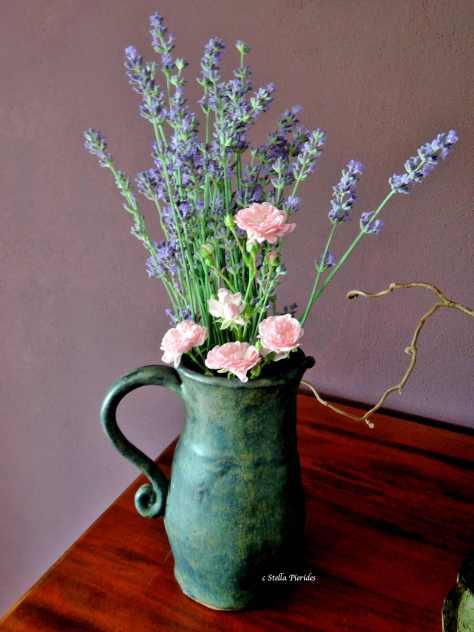
59/100 #The100DayProject #100daysnewthings
sunrise—
a measure of seeing
with the heart
.
2 challenges in one!
This is a #photo #haiga responding to the new book which includes a chapter on #haiku from the Haiku & the Brain project !
58/100 #100daysnewthings and #the100dayproject.
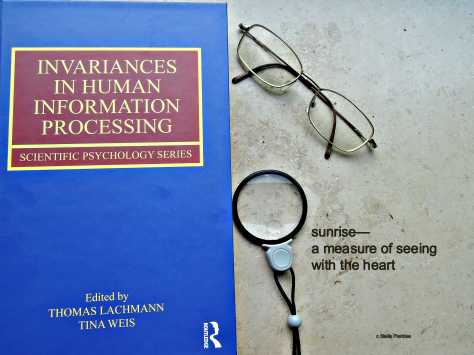
It is also my book cover for day 2 of the book cover challenge! I accepted the challenge from Shrikaanth Krishnamurthy to post covers of 7 books that I have read! No explanation, no reviews, just the covers. Each time I post a cover I’m expected to ask 3 of my friends to take up the challenge as well.
I know that this is a difficult request, as not every friend likes challenges, and even those who do, find it difficult to finish all challenges…so to make it easier for everyone, I’m suggesting here if a friend likes the idea to take it up, and tag me, so that I follow their book covers…
yellow…
where the sun
stores light

57/100 #The100DayProject #100daysnewthings
with each layer I become lighter

56/100 #The100DayProject #100daysnewthings
in search of lost socks

55/100 #The100DayProject #100daysnewthings
Bringing the garden to the table
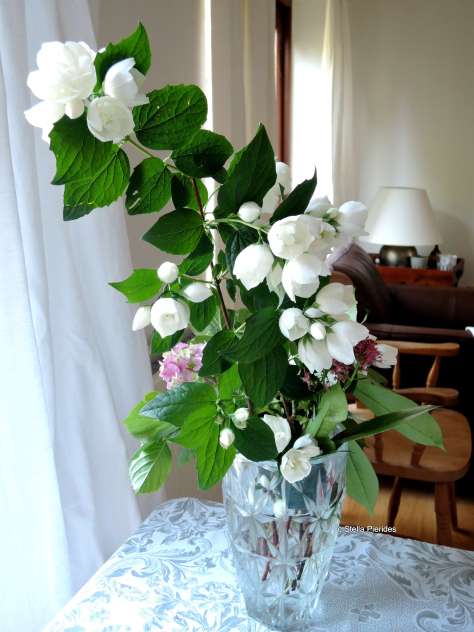
54/100 #The100DayProject #100daysnewthings
I accepted the challenge from Shrikaanth K. Murthy to post covers of 7 books that I have read on Facebook! No explanation, no reviews, just the covers. Each time I post a cover I’ll ask 3 of my friends to take up the challenge as well.
This is my book cover for day 1.
I invited Angie Werren, Pat Nelson and Marion Clarke to take up the challenge.
Thank you for nominating me Shrikaanth! I’ll be posting over the next few weeks.
And as I am still reading this book, it is also something ‘new’ to me, so: 53/100 #100daysnewthings and #the100dayproject.
#books #amreading
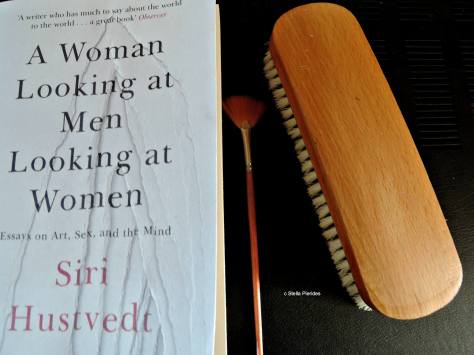
In pensive mood

52/100 #The100DayProject #100daysnewthings
carrying messages
even as we speak…
homing pigeon

51/100 #The100DayProject #100daysnewthings
For my 50/100 post for the #the100DayProject, I am sharing a photo from my walk with family along the beach at Tankerton, near Whitstable.
 #100daysnewthings #the100DayProject

