Today I came across a beautiful meditation on death and dying: Debiprasad Mukherjee & Gabriel Rosenstock’s lyrical and soulful collaboration: Last Stop Before Salvation
This is how their work is presented by the Culturium:
In this week’s guest post for The Culturium, Debiprasadoffers us a window on the private world of those in the final days of their life ensconced in a hospice on the banks of the Ganges river. Coupled with Gabriel’s beautiful haiku, their collaborative offering is a moving and deeply profound meditation on the soul’s journey from this life to the next.
Debiprasad Mukherjee, Last Stop Before Salvation – The Culturium
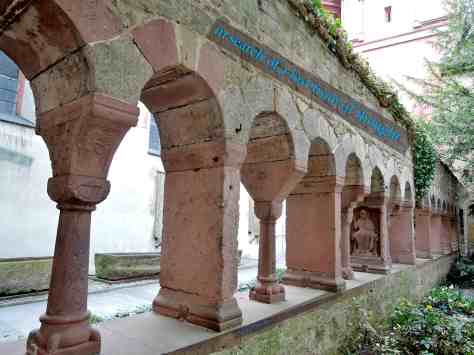
I took this photo during a recent visit to Wuerzburg. It is the Großer Sitzende (Big Seated), north side of Wuerzburg Cathedral, a work by Maria Lehnen.
My video ‘Lake Constance,’ filmed on location, with haiku by yours truly, and edited byRob Ward, is now featured as part of The Haiku Foundation HaikuLifeFilmFest 2018! (with the sound of waves and wind)
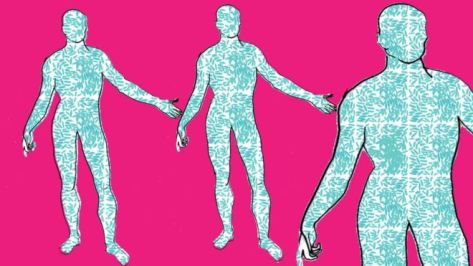
gut bacteria
the strange call
of the wild
9/100 Astonishing news from the BBC makes my #100daysnewthings!
More than half of our body is not human, claim scientists.
‘Human cells make up only 43% of the body’s total cell count.’ The rest are microscopic colonists: bacteria, viruses, fungi and other organisms. ‘The greatest concentration of this microscopic life is in the dark murky depths of our oxygen-deprived bowels.’ http://www.bbc.com/news/health-43674270
Image copied from the #BBC website #The100DayProject#100daysnewthings#poetsofinstagram #followme#poetry#poems#haiku#stories#dailycreativity
It’s at its loudest in the early morning hours. Before light dissolves darkness, before the neighbour leaves for work, before the birds start singing, his laboured breathing comes over the baby monitor whispering, gurgling, rattling, spluttering…
I lie awake listening to the crack of thunder, the roaring waterfall, the sounds of the sea emitted from his chest. A car starting, the exhaust backfiring, the train leaving station. The boat reversing in the harbour. Light rain. A soft mieow. His breathing renders a whole world. In this soundscape, I make out the stories he told me when years ago he put me to bed.
Soon, light dispels the apparitions, and his breath comes over the monitor soft, steady, regular, lulling me to sleep.
beyond Mars
all wars fought
in silence
*
alpha centauri. . .
reaching for a cup
of tea
*
no matter what
roses
on Venus
*
small wonders
the cosmic dust particles
on my roof
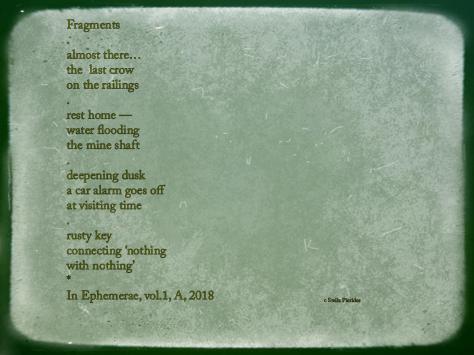
In Scifaikuest (print version only), February 2018, p.13 (ed. t.santitoro)
On its 50th anniversary, the Museum received a gift towards establishing a Collection of Lost Words. The three curators entrusted with this project, feeling an overwhelming sense of responsibility and apprehension, set about their work immediately. At their first meeting, the youngest of the three suggested they might place an ad in the national press, or even tweet about it asking for submissions. The oldest suggested they go on a retreat together with hand-picked etymologists, philosophers, and linguists, in other words experts, to brain-storm. The woman on the team suggested they search online catalogues for words no longer in use. Words written on tablets and papyri, words from extinct languages. For weeks they discussed the relationship between words and the worlds they described; words and the worlds they gave rise to. Forbidden words, or overused words that lost their meaning. As a result of intense deliberations, a special linguistic search engine was built capable of scouring for lost words. It didn’t take long for results to start coming in. The first word to be returned was ‘love’.










 On its 50th anniversary, the Museum received a gift towards establishing a Collection of Lost Words. The three curators entrusted with this project, feeling an overwhelming sense of responsibility and apprehension, set about their work immediately. At their first meeting, the youngest of the three suggested they might place an ad in the national press, or even tweet about it asking for submissions. The oldest suggested they go on a retreat together with hand-picked etymologists, philosophers, and linguists, in other words experts, to brain-storm. The woman on the team suggested they search online catalogues for words no longer in use. Words written on tablets and papyri, words from extinct languages. For weeks they discussed the relationship between words and the worlds they described; words and the worlds they gave rise to. Forbidden words, or overused words that lost their meaning. As a result of intense deliberations, a special linguistic search engine was built capable of scouring for lost words. It didn’t take long for results to start coming in. The first word to be returned was ‘love’.
