.
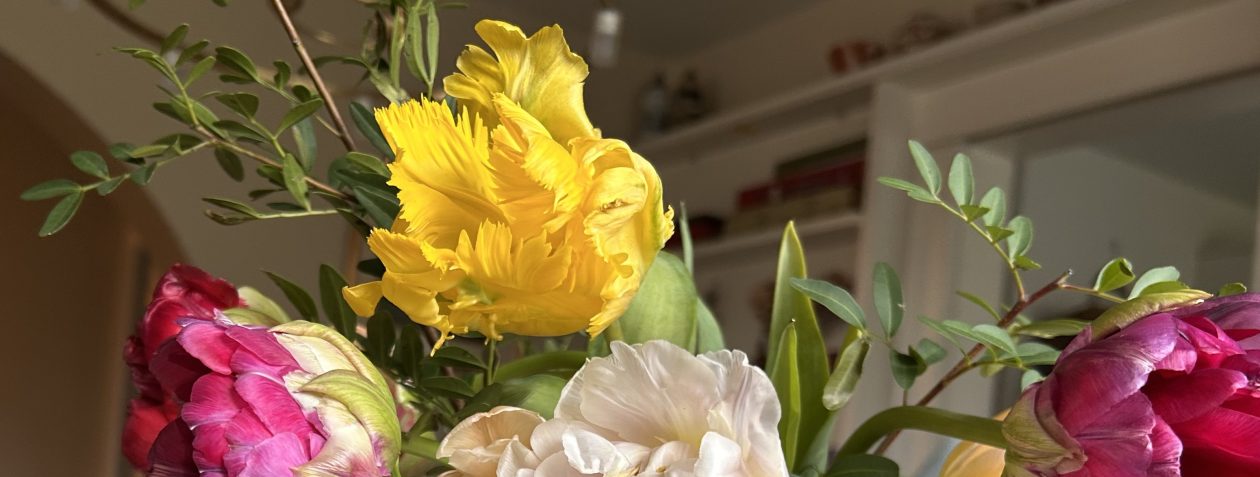
hawthorn blossom –
the thorny issues no longer
matter
.
NaHaiWriMo prompt: blossom
.
hawthorn blossom –
the thorny issues no longer
matter
.
NaHaiWriMo prompt: blossom
April rain –
this year too the water butt
half full
.
NaHaiWriMo prompt: rain
Well, April, the cruelest month, is upon us! Thank God we have poetry to help us survive it. Poetry, Poetry, Poetry, Poetry!
The Haiku Foundation, the Poetry Foundation, Poets.org, brim with wonderful poetry to feed the soul – and the senses! Visit them and forget about April; or at least enjoy it! There is also Per Diem, the Daily haiku offered by The Haiku Foundation on their home page (bottom right-hand corner); Couplets, the multi-author poetry blog, coordinated by Joanne Merriam of Upper Rubber Boot Books, the Facebook pages of NaHaiWriMo, and numerous other projects, workshops, readings, and poetry-related events.
On this first day of Poetry Month, I am very happy to host Margaret Dornaus, ‘writer, a teacher, wife, traveler . . . as well as a haiku-doodler.’ Margaret says about herself, ‘I live in a beautiful woodland setting, surrounded by native oak forests, that inspires me to record haiku snapshots of luna moths and our resident roadrunner, and even an occasional black bear as it hightails it across the top of my road, my mongrel dog barking at its heels as I watch with wonder’.
In her post hosted here, Margaret kindly states, ‘I’m thrilled to exchange places with Stella for the day in observance of National Poetry Month and to have her wonderful work featured on my blog, Haiku-doodle (http://www.haikudoodle.wordpress.com).
Margaret herself chose to offer three poems (see below). This is how she reflects on her offering:
‘After we decided to share three of our poems on each other’s site, I contemplated whether I should contribute haiku or tanka. I began writing both about a year and a half ago, and, although I was already familiar with haiku, I knew nothing about tanka until I accidentally stumbled upon a call for submissions to Pamela A. Babusci’s journal Moonbathing. When I started studying this ancient lyrical form and reading the work of other tanka poets, I knew I’d found a home . . . . And so I’ve chosen three tanka to feature here today.’
you remind me
how it felt that night we met . . .
our universe
filled with possibilities
and the soft hum of tree frogs
.
Simply Haiku, vol. 9, no. 1, Spring 2011
.
years from now
I promise to remember
how you looked that night
alone on the verandah
holding moonlight in your hands
.
First place, Tanka Society of America
2011 International Tanka Contest
.
in darkness
we forget our anger . . .
suddenly
the sound of wild geese
piercing the starless night
.
Ribbons: Tanka Society of America Journal,
vol. 7, no. 1, Spring 2011
.
This blog post exchange is part of the Couplets project, a multi-author poetry blog tour coordinated by Joanne Merriam of Upper Rubber Boot Books “to help promote poetry and poets for National Poetry Month“.
.
running scared –
April fool catches
his shadow
.
NaHaiWriMo Prompt: April fools
.
rice paper –
how often do I eat
my words
.
NaHaiWriMo prompt: writing
In honour of International Women’s Month, Michelle Elvy produced a great mini-blog fest ‘March on, Women‘, featuring women from around the globe.
You can visit and enjoy the writing Here
In this collection, Michelle included the link to my haibun ‘The Tree’! Thank you Michelle, and well done!
.
growing old –
I get to know the back
of my eye
‘
NaHaiWriMo prompt: growing
.
theater night
my dress the same color
as the seats
NaHaiWriMo prompt: Theater
.
hanami
a girl asks
for cherries
.
NaHaiWriMo prompt: cherry tree (viewing)
.
Epitaphios
in the procession
he gives her lilacs
.
NaHaiWriMo prompt: religious ceremony
 The Munich Readery, Augustenstr 104, is my favorite bookshop in Munich. I enjoy walking around the shop and discovering the amazing books that crop-up on its shelves. Lisa and John, the proprietors, are friendly and book wizards, so I know and can rely on their knowing! I love taking part in their author readings, coordinated by Lisa. Today’s reading (21.03.12) must be my fifth at this venue, though the first to be documented The other readers read excellent poetry and prose. And there was wine, water and cookies afterwards!
.
morning walk
sweet song of a bird
I don’t know
.
NaHaiWriMo prompt: sweet
.
gloaming
after gathering leaves
an early night
.
NaHaiWriMo prompt: weather
.
sweating the neck of the clay water pot
.
NaHaiWriMo prompt: water
April is not only the cruelest month. It is also National Poetry Month – for some of the world, anyway. Let’s not split hairs. We all want to celebrate poetry, so let’s do it. Poets, writers, publishers, readers, poetry lovers are planning get-togethers for poetry-related events: fests, readings, workshops, write-ins, stay-in-bed for poetry, day-dreaming…this kind of thing.
This is what I will be doing: I’ll be celebrating at ‘Couplets,’ a multi-author blog tour for April, to help promote poetry and poets for National Poetry Month. Co-ordinated by Joanne Merriam of Upper Rubber Boot Books it is going to be a fe(a)st. I am taking part and will be posting, besides my daily haiku, poetry-laden posts during the month. Come over to my web home and we’ll eat poetry words together!
Meanwhile, here are a few links to keep us going till then:
The Haiku Foundation: They say: “April 17, National Haiku Poetry Day, is a celebration of the genre of haiku, a kind of poetry whose origins date back a millennium in Japan; and more specifically, of English-language haiku, which has now been written for more than a century”. But you don’t have to wait till the 17th! You can explore this wonderful site, founded by Jim Kacian, and enjoy the best haiku and haiku poets in the world.
While visiting THF, check out their Per Diem: Daily Haiku series. In March they post my selection of haiku of the senses: haiku by some of the best poets highlighting the interconnectedness of sensory experience (Per Diem can be found on the front homepage of the Foundation, at the bottom right-hand corner). In April they post “Poems from Aotearoa, New Zealand haiku, featuring flora and fauna specific to those favored isles, and human activities, such as Anzac Day (April 25).” Editor: Sandra Simpson.
The Facebook page of National Haiku Poetry Month, or NaHaiWriMo, moderated by Michael Dylan Welch, has been running since February 2011. Although their haiku ‘month’ is February, they ‘haiku’ the whole year round. You can read or indeed “write at least one haiku a day, inspired by daily writing prompts”. The community is friendly and warm, encouraging…join them and surprise yourself! I have!
Poets.org has a page listing events and poetry resources here
Feel free to add/share any other events you may know of.
.
equinox
standing on my own
two feet
.
NaHaiWriMo prompt: nature/equinox/earth
Every year on the 21st of March UNESCO celebrates World Poetry Day. A decision to proclaim 21 March as World Poetry Day was adopted during the UNESCO’s 30th session held in Paris in 1999.
For UNESCO, “the main objective of this action is to support linguistic diversity through poetic expression and to offer endangered languages the opportunity to be heard within their communities. Moreover, this Day is meant to support poetry, return to the oral tradition of poetry recitals, promote teaching poetry, restore a dialogue between poetry and the other arts such as theatre, dance, music, painting and so on, support small publishers and create an attractive image of poetry in the media so that the art of poetry will no longer be considered an outdated form of art…” Link here
So, Happy World Poetry Day everyone!
.
change of heart
on the back seat a single
rose
.
NaHaiWriMo prompt: change
 According to scientists, we humans have receptors for between nine and twenty one senses available to us. Imagine! Up to twenty one points of entry to the world! I say imagine, because we do not appear to be aware of most of those senses. Beyond the five well-known ones, who thinks of their sense of equilibrioception (the sense of balance) or proprioception (the sense of the body’s position in space) – unless they go wrong, of course. What is more interesting is the use we make of these ‘inputs’! The emotional, geographical, cultural, historical worlds we build around them.
In this issue, twenty one contributors explore the senses – the primary but also some of the secondary ones – and the ways these interact to create a sense of place, rootedness, memory, history, and cultural identity. Using the taste and feel of words, the images captured on camera and in paint, their own individual experiences and associations, the artists reflect on the senses in diverse, entertaining, fascinating, remarkable ways and create the world of the senses anew for us to savour and celebrate. It has been a pleasure to host their contributions to the theme of edition #14: Locating the Senses in Language/Place!
 Alegria Imperial, originally from the Philippines, now writing from Vancouver (Canada), explores in her haibun, “the tiresome coldness of winter, the longing for spring and its blossoms to spark again, a self-consoling reflection on what eventually awaits yet for now ‘this longing/at moonrise/the only star’”. See here
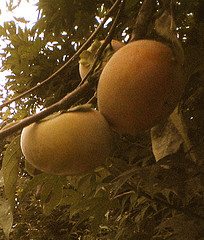
Elizabeth Kate Switaj, writing from Ireland, in her ‘Memories of Place: Fruit’ considers the way the taste and sight of two different kinds of fruit, persimmons and mangoes, can bring back memories of place. A slight difference in the variety of fruit means a different experience of memory entirely… here

Kristina shares with us a walk among the ruins of Paestum, an incredibly peaceful place, and draws our attention to the neighboring museum and the ways it imbues the ruins with a sense of place and time. And after the sights and the history, pizza with mozzarella and courgette flowers! What a treat! Here
Penn Kemp, writing from London (Canada) says, the “two poems in ‘A Carnival of Senses’ celebrate the senses, celebrate language, celebrate place, in this case my bedroom”. Here
Brigita Orel writes: “Senses are the inciting sparks of stories and poems and the places and times at which I became aware of them shape how I use them, maybe even how I interpret them.” In her essay, she reflects on the difficulties and challenges of writing in a foreign language rather than her mother tongue, and what it means to think, feel, or sense in a language other than your own. See here

Maria Pierides, Kent (UK), explores her sense of landscape using a non-verbal medium, painting. In her blog, she speaks in the language of color, image, movement, shape, density, contrast… In Gallery 3, Time and Tide, she explores the seascapes and landscapes of Kent and their relationship to time, culture, and history. Here
Martin Willitts Jr, writing from upstate New York (USA), in his poem ‘Dear Diary’ interprets the story of Hansel and Gretel; and he knows a trap when he smells one! Here
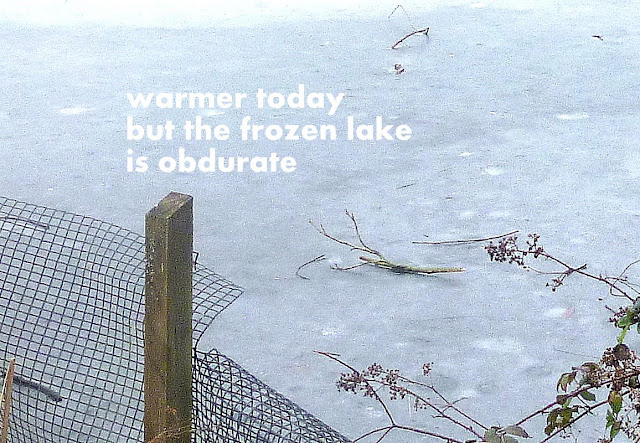
Jean Morris (UK), in her haiku/haiga reflects on her experience: it “has been lingering as a taste and texture of
icy cold in my mouth since the moment I saw/wrote it, last month before the weather changed.” Here
 Steve Wing, a visual artist and writer living in Florida (USA), in his work reflects his appreciation for the extraordinary in ordinary days and places. In this contribution, he writes about the unique cultural texture that some fragrances like copal acquire. Here
Abha Iyengar, writing from New Delhi (India), in ‘The Senses: Diverse Renderings’ immerses herself in sensations – she has jasmine under her pillow – in poetry written for this theme. Here

Fiona Robyn, from the UK, whose ‘mission is to help people connect with the world through writing’ writes: “To prepare yourself for nourishment, you need to allow your eyes, ears, nose, fingers, mouth, head & heart to open.” A true feast in ‘Feed your Head’ Here

Jim Martin, writing from Munich (Germany), in his ‘The Visitors’ takes us on a fascinating and mysterious journey, beginning and ending in a Tuscan farmhouse. Here
 Cathy Douglas, writing from the US, says: “In my adopted home state of Wisconsin, winter is a big part of our image. As the snow melts and the lakes thaw, we experience a brief, muddy identity crisis known as March”. Here
 Karyn Eisler, Vancouver (Canada), in her blog ‘Living ?s’ reconnects with her senses in Heviz. Where is Heviz? More important: what is Heviz for Karyn? Read Karyn’s post and see! Here
Michelle Elvy, writing from New Zealand, in ‘Close your Eyes’ explores the body and its history as a landscape, or rather an open book… Here
Dora, of ‘turns of endearment’, finds sanctuary in immersing herself in the experience of color… “an almost religious, aesthetic experience”. Here

Sherry O’Keeffe writes: “The Shoshoni Indians had made the river valley their home long before I showed up on the gravel bars, looking for the sound of a crow. I learn from their language to see the world as never belonging to any one, not even to the crows”. Here
Nine’s memoir piece is filled with emotion, color, images. Looking back, now in New Zealand, she tells us how she said goodbye to Berlin. Even now, she says, “it’s still largely what I think of when I think about Berlin” in a blog entry, which “I wrote almost about year and a half ago” Here
Siddartha Beth Pierce contributes 6 poems, each covering sensitively and thoughtfully one of the six senses… “making angels on the ground”. Enjoy here
 Steve Wing and Dorothee Lang, in an e-logue that moves back 35.000 years in time, reflect on neolithic art and modern works that reach back in time to capture the past in film, in image, and in story: “A sense of place in time” Here
Stella Pierides, writing from Germany and UK, in her haibun ‘Other Worlds’ explores the sometimes hallucinatory qualities of the senses. Here
A huge thank you to everyone who contributed to this edition. I enjoyed reading your entries and getting to know your blogs – do let me know of any mistakes in your entries and I will try to correct them. I am going to be a more regular reader and contributor from now on! A huge thanks you to Dorothee Lang, too, the founder of this blog carnival, and the ever-present support and inspiration to the changing guest editors.
Edition #14, this edition, was put together by Stella Pierides. She is a poet and writer and blogs here. She tweets @stellapierides. She also has a facebook page and would like more friends! Apart from that, she looks forward to the next edition #15.
Edition #15 will be hosted by writer and poet Abha Iyengar, who lives in New Delhi (India) and blogs at abhaencounter.blogspot.in and tweets at @abhaiyengar. The feature theme of Abha’s edition is “Encountering the Other in Language/Place“. Contributions are invited from writers, poets, and anyone with an interest in this topic. As always, we welcome a wide variety of posts. Guidelines here
.
spring tides
the clay at the centre
of my being
.
NaHaiWriMo prompt: arts and crafts
.
lazy Sunday
a choir boy misses
the bus
.
NaHaiWriMo prompt: Sunday
diamond jubilee—
a girl practices
her curtsies
.
conflict diamonds—
boy soldiers sharpen
machetes
.
diamonds—
the glaze on this girl’s
eyes
.
In Sketchbook 7 Jan/feb 2012, Haiku Thread ( in John Daleiden’s Touchstone Perspectives)
.
fortune telling –
I study the flight patterns
of doves
.
NaHaiWriMo prompt: luck
.
in my neighbors’ yard-
a blue tit pecks
his wisteria buds
.
NaHaiWriMo prompt: hidden
.
Ides of March-
I cross the road
halfway
.
NaHaiWriMo prompt: Ides of March
Delighted and honoured that my tanka was shortlisted for the Take Five: Best Contemporary Tanka, Vol 4.
The anthology series founded by tanka poet and editor, M. Kei, announced the short list for the fourth annual volume (2011) in March 2012. The nine editors headed by M. Kei (USA), Patricia Prime (NZ), Magdalena Dale (RO), Amelia Fielden (AUS), Claire Everett (UK), Owen Bullock (NZ), David Terelinck (AUS), Janick Belleau (CAN), and David Rice (USA), embarked on the amazing feat of reading all tanka published in English during 2011 with the goal of selecting the best individual tanka, kyoka, waka, gogyohka, gogyoshi, tanka sequences, tanka prose, and responsive tanka for inclusion in the annual anthology. The team read approximately eighteen thousand poems to choose about three hundred for inclusion in this, the fourth and final volume in the Take Five series. Well done to the editors and to the poets among us who got selected! I for one am thrilled and hugely encouraged!
The announcement can be read here
.
your touch
in the shape of this bowl –
Raku
.
NaHaiWriMo prompt: gift; Joys of Japan: Raku
.
Cassiopeia –
in her laughing mouth
sparkle of a star
.
NaHaiWriMo prompt: star
.
Fukushima moon
wave after wave
of prayers
.
.
Fukushima sky
waiting for the first signs
of spring
.
