selfie flash of my dissolving ha ha
Happy to see my wee ku, monoku, in today’s dadakuku, journal of microdadaism, minisurrealism, and other weird and wonderful things. Grateful thanks to editor Petro c. k.

selfie flash of my dissolving ha ha
Happy to see my wee ku, monoku, in today’s dadakuku, journal of microdadaism, minisurrealism, and other weird and wonderful things. Grateful thanks to editor Petro c. k.
Pleased to have 2 #senryu appear in horror senryu journal!
sweet smell drifting out
of the hospice window…
long nights
.
And
.
still dark…
blood seeps into
the mattress
.
In horror senryu journal, 30 January 2026
Many thanks to editor Thomas Tilton
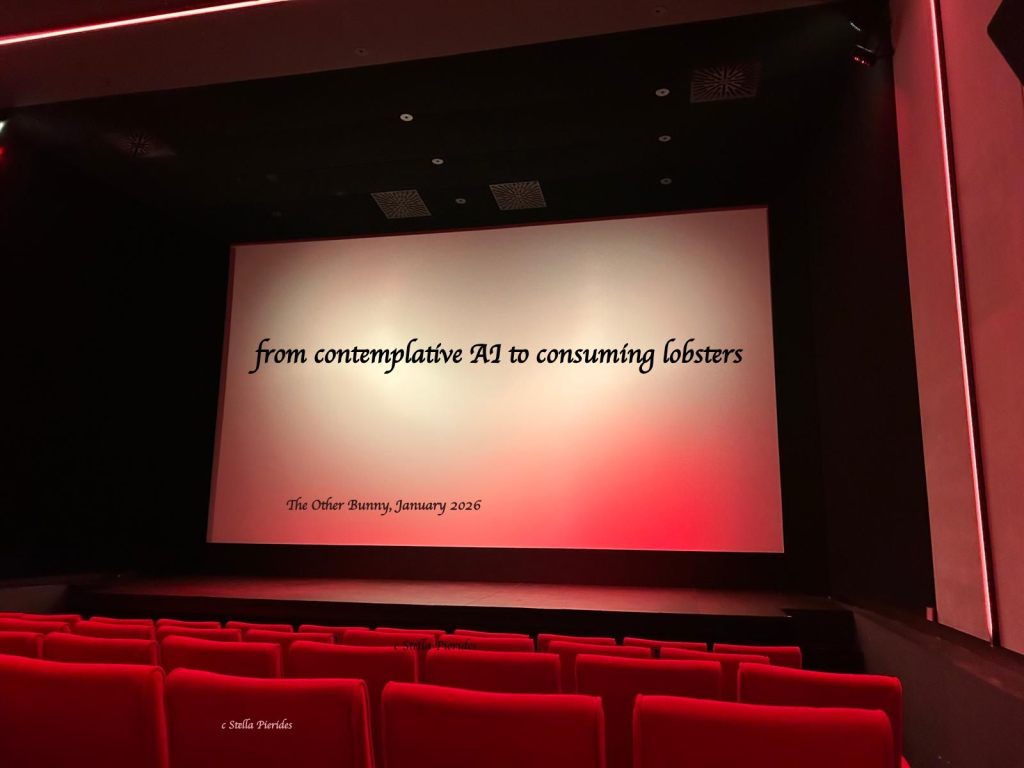
Delighted to see three of my one line poems in The Other Bunny, 29 June 2026 (see one of the three poems included with image below)
Grateful thanks to editor Johannes S. H. Bjerg!
.
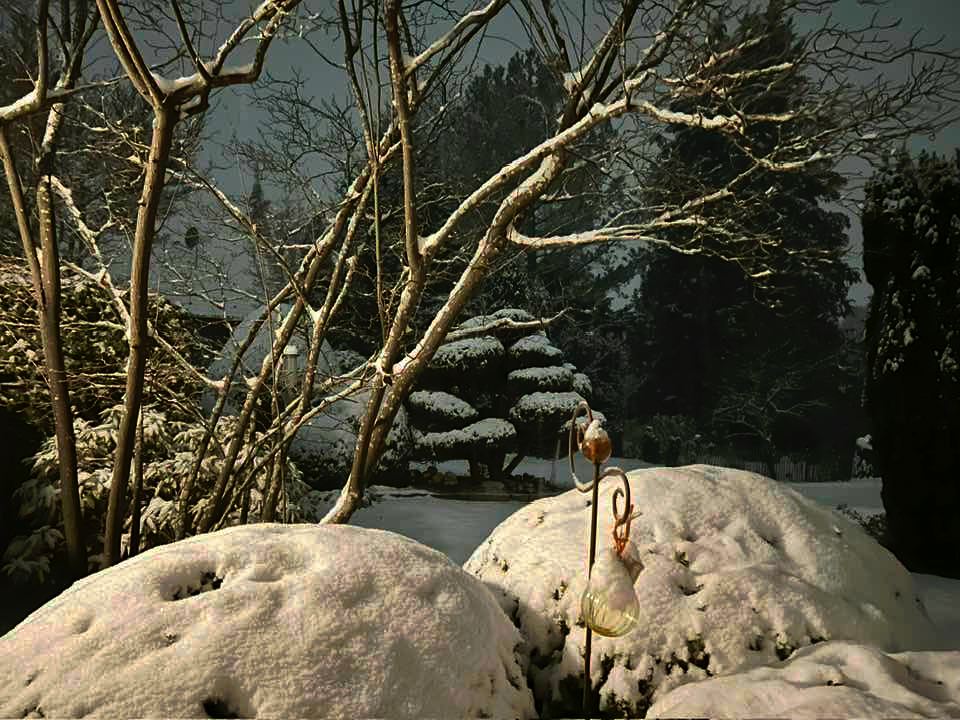
hushed sounds…
snowflakes soaking up
the light
Today, the 4th of December, is Rainer Maria Rilke’s birthday. Honoring the poet, three biographies appeared in 2025, which I am about to read: Sandra Richter’s “Rilke or The Open Life”, Manfred Koch’s “Rilke – Poet of Anxiety” and Ruediger Shaper’s Rainer Maria Rilke: The Prophet of the Avant-Garde.
All three in the German Language. In the biogaphy by Manfred Koch, Rilke’s traumatic experiences are shown to be pivotal in forming his psychological make-up and artistic drive. Several reviews confirm that Koch presents Rilke’s anxieties not as much as an obstacle but as the very creative engine for his poetry.
Being interested in ways in which art and literature are utilized to cope with pain, and trauma, I will be reading eagerly…

Advent…
logs becoming flame
becoming heat
.
.
breaking through the grey…
rays of hope

time reflections
the quiet flow
of water
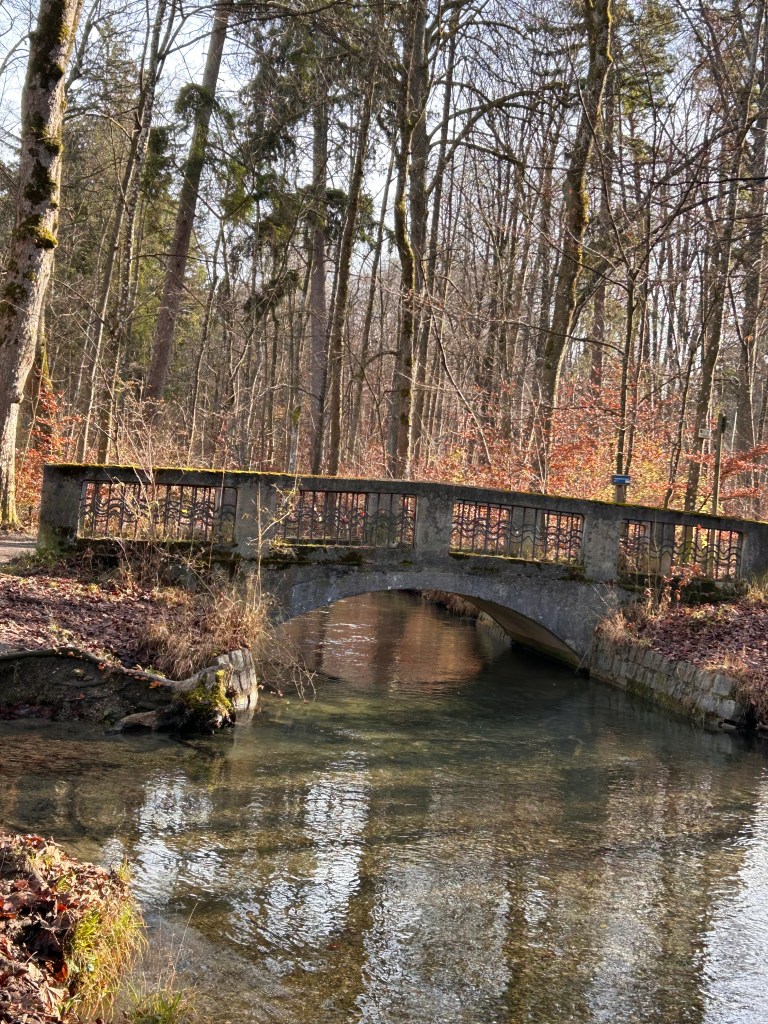
evening light ...
using AI to give it
warmth
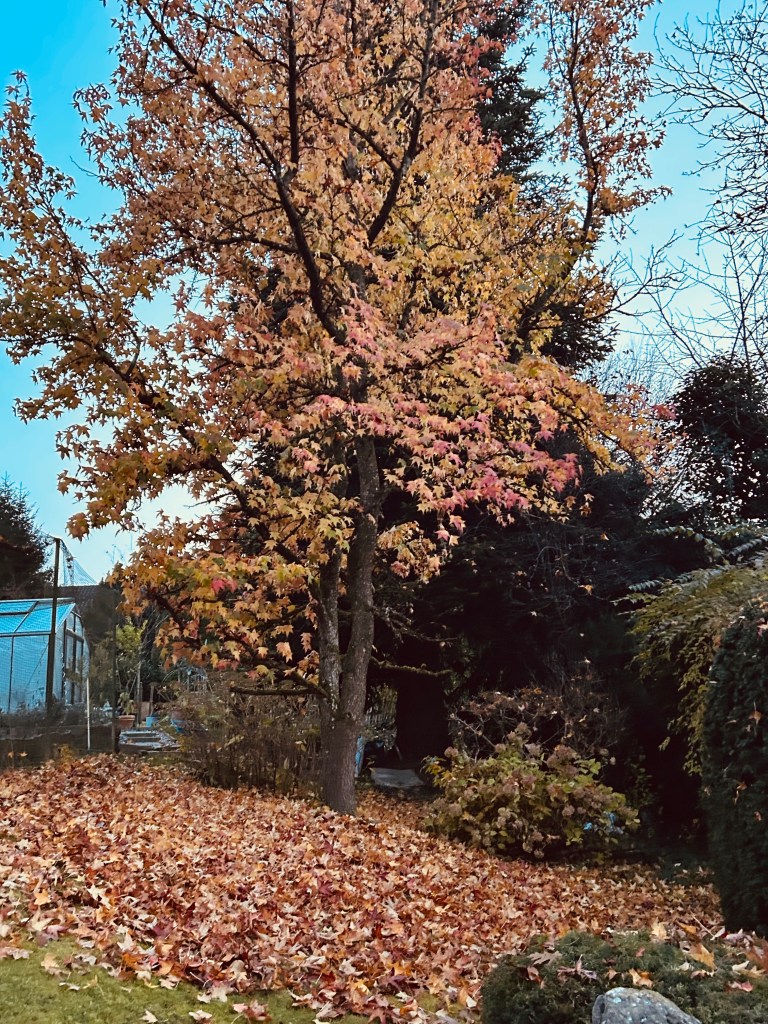
Interesting! After I posted the haiku, above, I checked AI for its opinion. AI came back with the following poem:
AI enhances the scene,
Evening light gains warmth and glow,
Human eye still guides.
In its poetic response, AI addressing the question about ownership in collaboration, tryies to reassure me about any concerns I might have regarding authorship. In the interplay between human creativity and AI enhancement, I am told, I still have the rights to my vision!
Yes, but for how long?
Honored and thrilled that my haiga series “Felt World” is featured this November 2025 at The Haiku Foundation website.
Haiga Galleries.
“Felt World in the title of this Gallery alludes both to the world as experienced through our senses and emotions, in the immediate, embodied understanding of it; and the world of those interested in felting, in transforming mainly wool fibres to the matted material referred to as felt, through a process involving heat, moisture, pressure, and elbow grease.
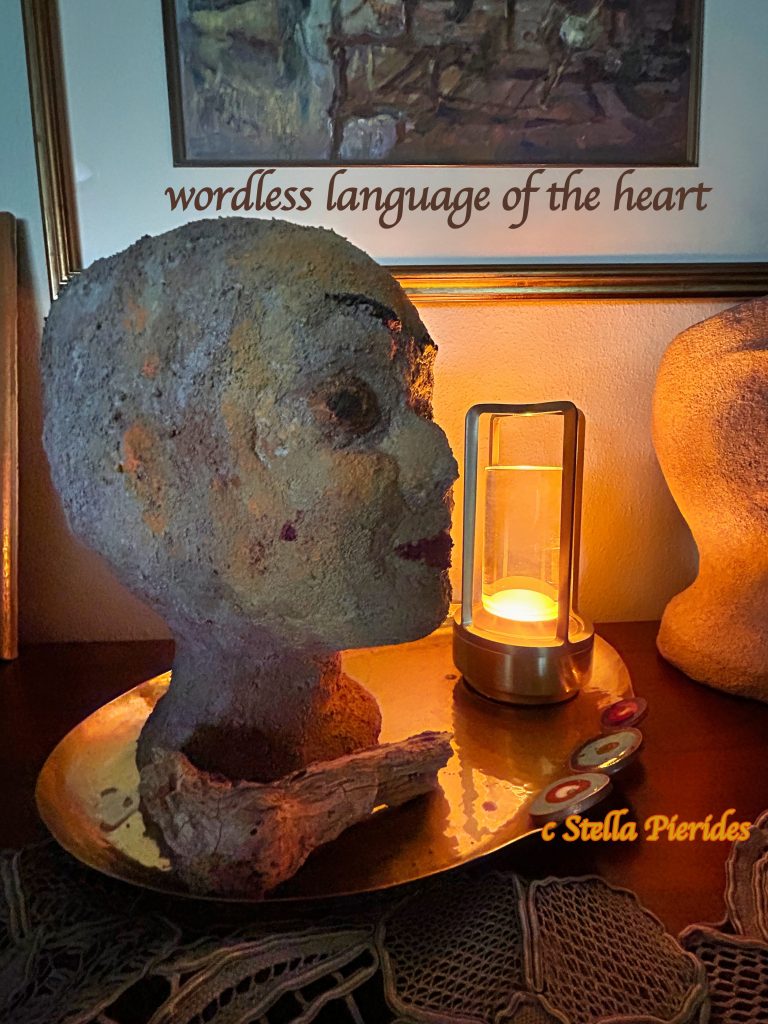
Take a look here
For background information on how I came to felting and haikufelting, you may find this essay interesting: Felting Haiga [or, Hairballs to Haiga: The Evolution of a New Hybrid, “Haikufelting” here
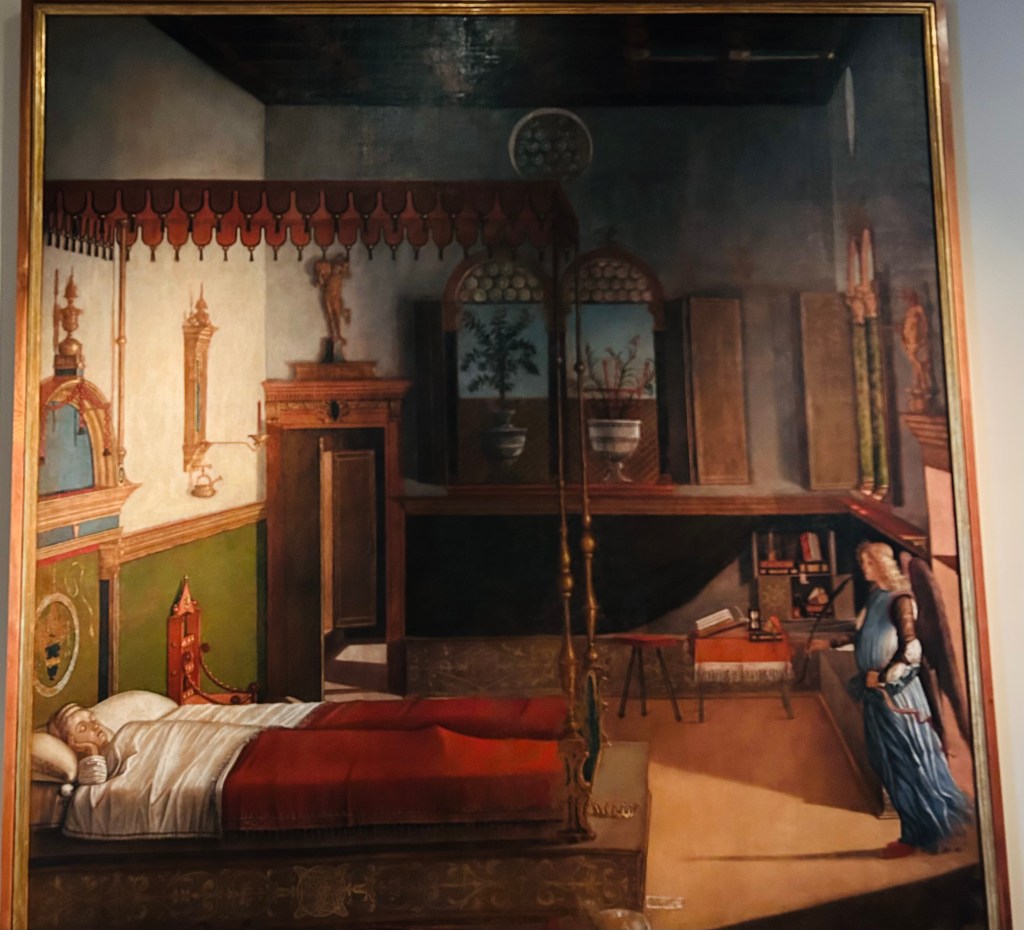
Lapping against
the walls of her dream
Venetian tide
.
Dream of St. Ursula
Vittore Carpaccio
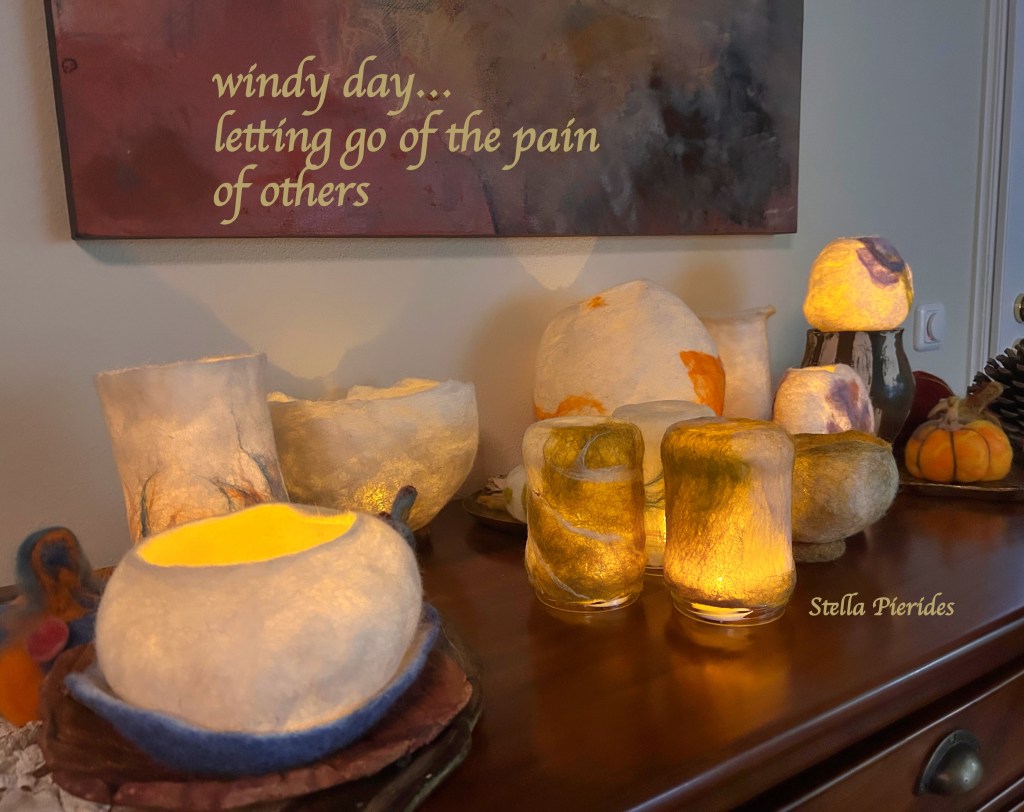
windy day…
letting go of the pain
of others
homeward bound
a sudden pull towards
the light

Every Wednesday morning, seven of us serving the life sentence of Parkinson’s, tear through Mering Heath, in the south of Germany. Brushing against coarse grass and heather, stabbing the ground with our walking sticks, thrusting ourselves forward, we fill our lungs with the heather-scented air.
During today’s cooling-down session – swinging upper body left and right, extended arms loosely following, slowly catching our breath – the leader of our group relates the history of the place. In the 1700s, a building housing the Court of Justice stood exactly here by the Galgenbach, the Gallows stream. It was here that executions ordered by the Court were carried out. Crowds gathered, watched and cheered with the tightening of each noose, with each trap door opening. They watched the 15 minute-dance of the hanged, and then walked home.
hangman’s elm
the ancient tree creaks
and groans
.
In Blithe Spirit 35. 2 p. 70

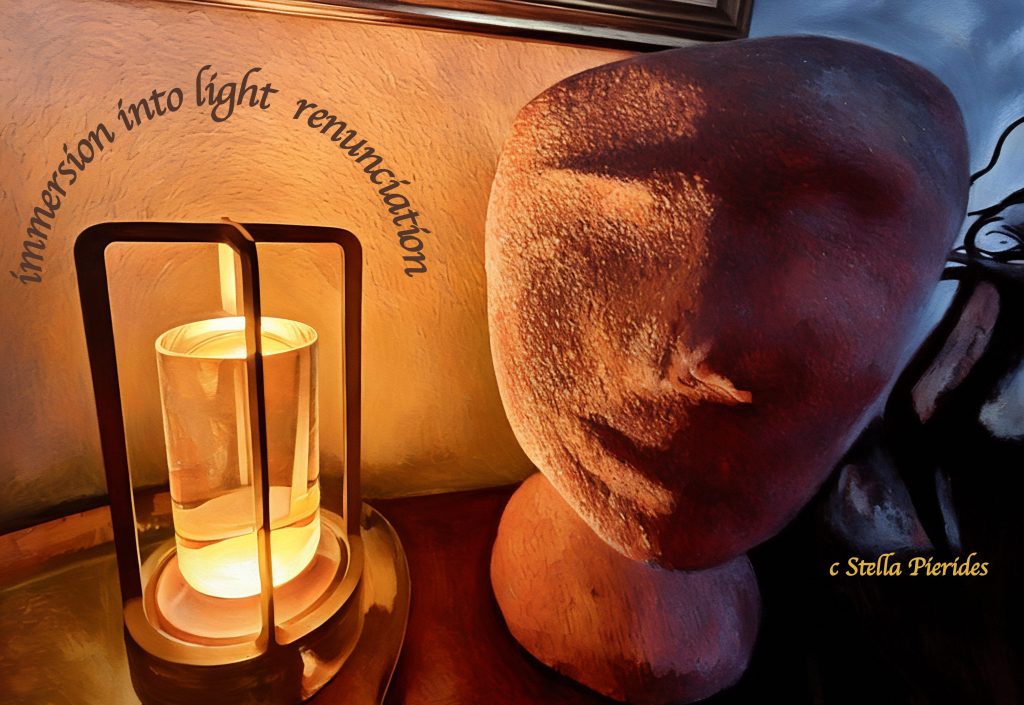
immersion into light renunciation
morning light
a scattering of birds
punctuates the sky

April is World #parkinson ’s Month! A month to increase awareness about this complex neurological disease, and support those impacted by it.

While scientists race to find a cure, there is a lot that can be done to help with quality of life.
Take a look at Parkinson’s Europe, the section on Self-help and Living Well:
https://parkinsonseurope.org/…/self-help-and-living-well/
The Davis Phinney Foundation is a good resource to explore: https://davisphinneyfoundation.org/resources/
The podcast series Two Parkies in a Pod offers advice and tips on how to cope with chronic illness, and the specific challenges of Parkinson’s: https://www.2parkiesinapod.com/
The Haiku Foundation year-long (2024-2025) series ‘Haiku for Parkinson’s’ features #haiku as a tool that may help calm, reframe problem(s), and generally improve the quality of life for those living with disease and the psychosocial entanglements it involves:
See, e.g., ‘My Dyskinesia’: https://thehaikufoundation.org/haiku-for-parkinsons-my…/
Interview of ‘Tim Roberts living with PD’: https://thehaikufoundation.org/haiku-for-parkinsons…/
‘From Haiku for Parkinson’s to Haiku for Healing’: https://thehaikufoundation.org/haiku-for-parkinsons-from…/
‘Through the Lens of Positive Psychology’: https://thehaikufoundation.org/haiku-for-parkinsons…/
And a song by Birdie Belgium, tribute to her mother who lives with Parkinson’s Disease: https://www.google.com/search?q=birdie%20belgium%20song…
https://parkinsonseurope.org/2025/04/07/birdie-belgium-releases-new-song-for-parkinsons/
What do I find helpful in my own journey of the disease? My family and friends; the ‘Betreutes Laufen‘ walking for Parkinson’s group in Augsburg, the Ping Pong Parkinson (PPP) group in Augsburg and the dedicated PPP Course in Koenigsbrunn (see also the nationwide PPP Association https://www.pingpongparkinson.de/); being part of the international online community, writing and reading haiku; felting, gardening…
wildflowers
the lightness of hope
and renewal
Happy to see 3 of my haiga included on pages 35 and 36 of the online Romanian Journal of contemporary art, Arta! See here
Grateful thanks to Andi Dumitrache for including them.

Camera obscura
For the last hour
My old poems
scaffolding for
her childhood memories…
first day of spring

returning ...
brushing against coarse grass
and heather

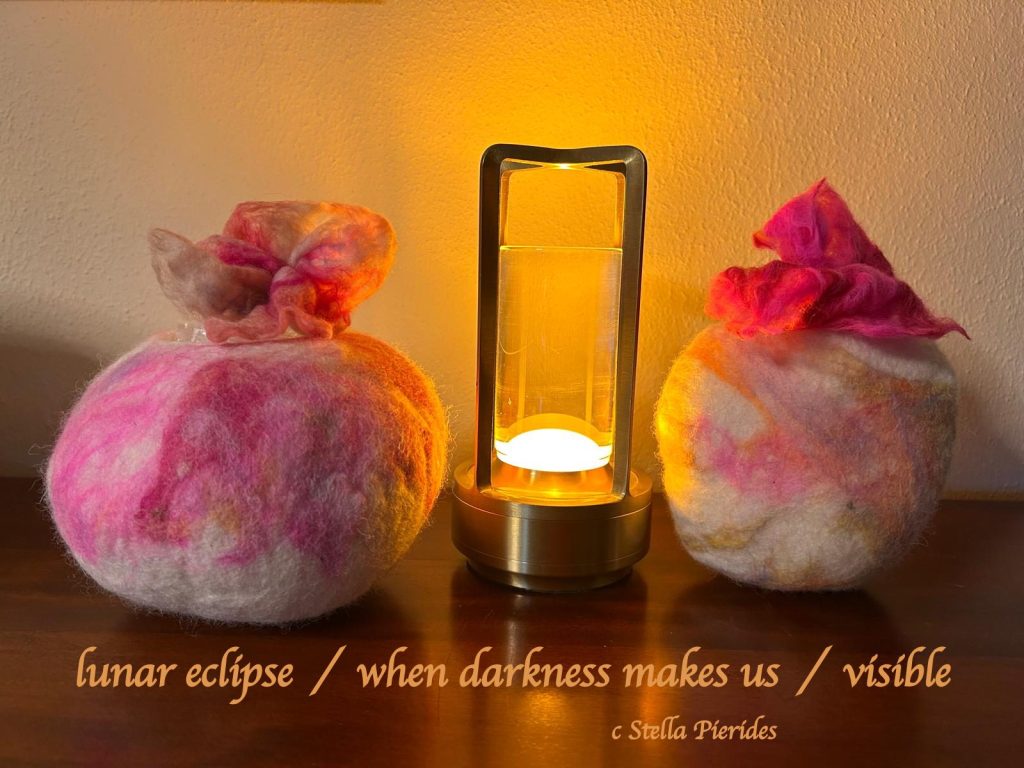
lunar eclipse …
when darkness makes us
visible
.
days growing longer...
painting over the brown leaves
with fresh green

.
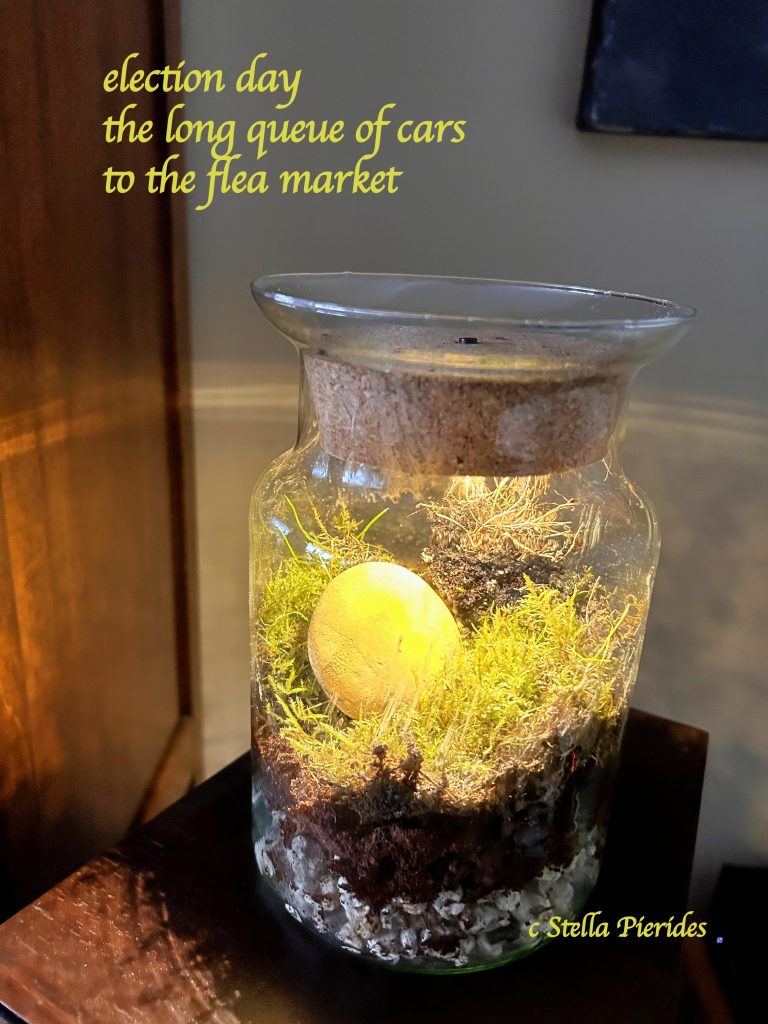
election day
the long queue of cars
to the flea market
.
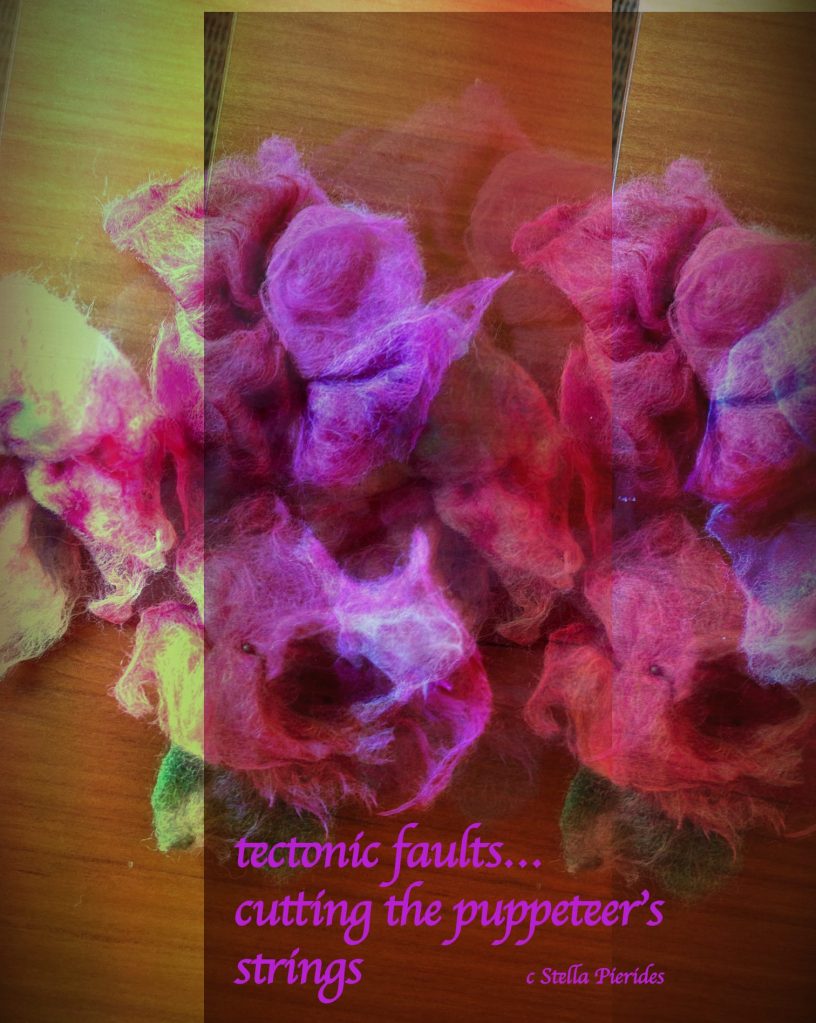
tectonic faults
cutting the puppeteer's
strings

the time it takes
to become immortal
em dash
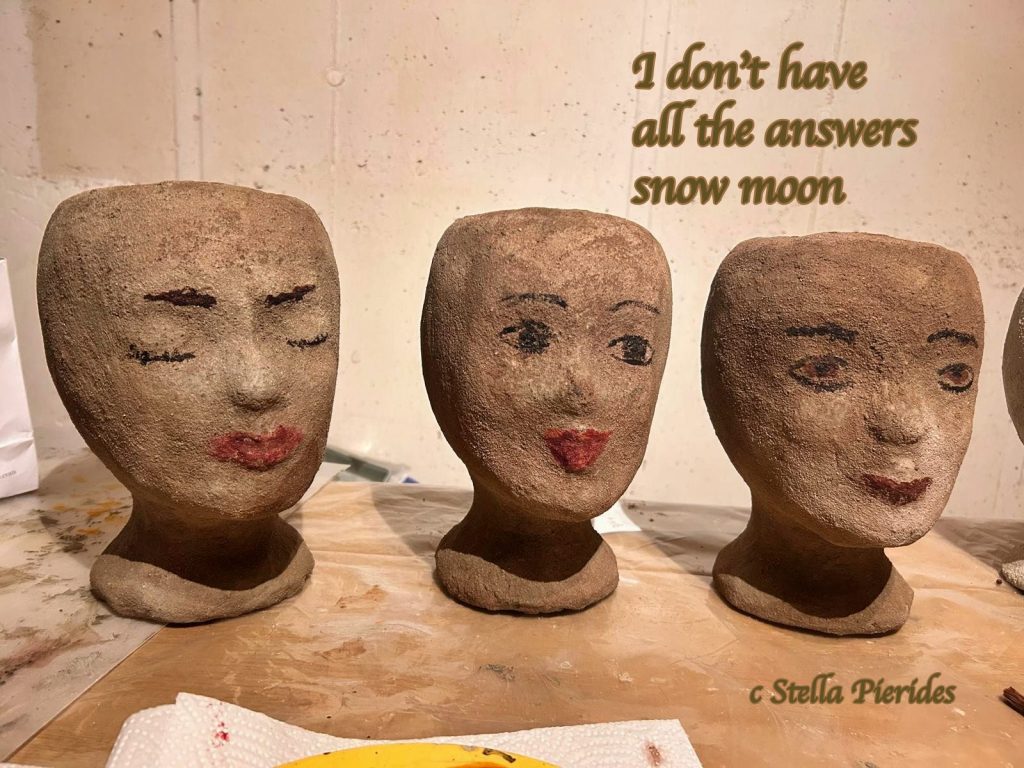
I don't have
all the answers
snow moon

wool, soap, water
I name my first pot
Adam

far side of the moon
the things you never
tell me
seaquakes…
cracks appear on the walls
of Hozoviotissa
.
Hozoviotissa is the iconic monastery on the island of Amorgos. It is built on the steep south coast of the island at an altitude of 300 meters.


