cracks in the snow –
sprouting from her book
the old house
.
NaHaiWriMo prompt: family
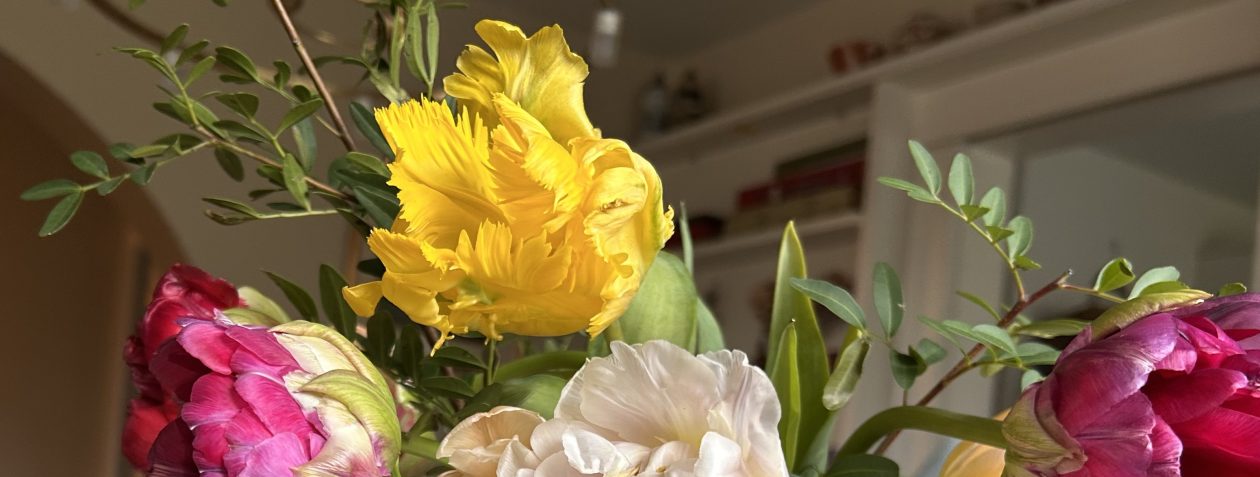
cracks in the snow –
sprouting from her book
the old house
.
NaHaiWriMo prompt: family
remembering
mean acts –
eyes of an owl
.
NaHaiWriMo prompt: owl
icy wind –
huddling round the roasted
chestnuts stall
.
NaHaiWriMo prompt: warmth
.
quill scratching a poem where it hurts
.
NaHaiWriMo prompt: feather
A new downloadable book was made available on the 16th of November 2012 by Michael Dylan Welch, writer and poet, and founder of the NaHaiWriMo site and FB community. Titled “With Cherries on Top: 31 Flavors of NaHaiWriMo,” it is a sparkler of haiku, senryu, and micropoetry. It is excellently designed and presented, with fantastic photography, and also well-proof-read by Christina Nguyen. A haiku fireworks to enjoy on many a winter evening.

This is how Michael Dylan Welch introduces it:
“In August of 2012, the NaHaiWriMo page on Facebook featured daily writing prompts from 31 different prompters. Each prompter selected at least five of his or her favourite poems written in response. Michael Dylan Welch selected from these poems to produce the online PDF book, With Cherries on Top: 31 Flavors from NaHaiWriMo”
This book is available for free download, from www.nahaiwrimo.com
I am honored to have a few haiku of my own included, and to have been one of the 31 prompters of the month!
last leaf —
she closes
her eyes
.
NaHaiWriMo prompt: last leaf
.
lightning she swallows the pit in her stomach
.
NaHaiWriMo prompt: children
Syntagma Square
a marble head rolls
off its plinth
.
NaHaiWriMo prompt: landmark
.
For Syntagma Square see here
.
This poem alludes to G. Seferis’ lines (see below) about the ‘Greek problem’ of ‘having’ to live up to their
ancient ancestors…and not knowing how to, of course.
I woke with this marble head in my hands;
It exhausts my elbows and I don’t know where to put it down.
It was falling into the dream as I was coming out of the dream.
So our life became one and it will be very difficult for it to separate again
.
From Mythistorema, copied from wiki
The link here
While my first book of poetry, “In the Garden of Absence” is at the printers, being fitted into its paper dress, smoothed, sewn, and shaped physically into a book I can hold in my hands, I’d like to say
a huge thank you to Michael Dylan Welch for his generous Afterword “Presence in Absence.”
Also a huge thank you to my daughter Maria Pierides for her permission to use one of her paintings, “Welsh Hill,” for the book cover, Maria Pierides and Rubin Eynon for designing the cover, and Thomas Geyer for his help with formatting the print edition.
Special thanks to the members of the nurturing NaHaiWriMo Facebook community (now over 1000 people!) for their continuing inspiration, warm support, and encouragement.
crumbling stucco
an angel in gold leaf
ready to fall
1
winter grass
feeding the lost pigeons
2
winter reeds
a dove becomes
my friend
.
NaHaiWriMo prompt: peace
Interesting to be reminded today that doves and pigeons,
together with the olive branch have been used as
symbols for peace, love, lust as well as the human and Holy spirit since
antiquity, and featured widely in ancient Greek
mythology, Judaism, Christianity, Hinduism and other religions
and cultures.
.
On another note, haiku #1 is a two-liner. I did try to twist it
into the more usual three- and one- line shapes, but
it wouldn’t listen to me.
poacher’s moon
a crocus knows how
to wait
.
NaHaiWriMo prompt: crescent (old) moon. My response to this prompt is off-key!
mistaking
angel moths for angels
misted glass…
.
NaHaiWriMo prompt: insects
My haiku in the Haiku News, Vol. 1 No.43 (8 November 2012)
.
“Haiku News is a weekly poetry journal which publishes socially engaged haiku, senryu, tanka and kyoka, pairing each poem with a news article to forge links between the poetic, the personal and the political.”
.
I paired the following article from The Independent newspaper “Teen spirit: What’s it really like to be a teenager?”
with the follwoing haiku:
.
eating rhubarb
faster than it grows
young love
.
.
storming all night –
I get to see the other
side of the leaf
.
NaHaiWriMo prompt: storm
.
reflected in the doe’s eye full hunter’s moon
.
Received one of the 3 Dottie Dot Awards in the October 2012 Haiku Bandit Society Moon party.
Thank you, Dottie Dot!
Now my scarecrow has a wife! At least in the poem “Autumn loneliness”! Thrilled that my poem is included in the Asahi Haikuist Network, edition 2 November 2012, From the Notebook section! Scroll down slowly, enjoy great poems by poets you know on the way! Click here
I have copied the absolutely wonderful illustration from the Asahi Haikuist Network page in the Asahi Shimbun below, assuming it is OK to do so (I’d be more than happy to remove it immediately, if it infringes any copyright or other rights).

And here is David McMurray‘s reading of the poem:
“Hardworking farmhands in Germany sometimes need help finding partners…”
*
Autumn loneliness
a farmer makes a wife
for his scarecrow
the shadows
left by your absence —
November
cemetery pines
whispering among the needles
the gentlest of songs
Margaret Dornaus, poet, writer, and teacher, as well as haiku-doodler in her own words, has put together for the third year running a wonderfully moving collection celebrating the Day of the Dead, also known in Catholic circles as All Saints’ Day. It is a privilege and a treat to be included in it, as well as to read poems by several poet friends from all over the world who answered Margaret’s call.
Visit her post and read the poems. There is a tanka I particularly like, written by Margaret for Hortensia Anderson. I love the thought in it: now Hortensia is dead, Margaret can only know her through the scent of her blooms, her poems.
Happy Halloween!
 This coming Thursday, the 1st of November, is the first ever Mindful Writing Day, organised by Kaspa & Fiona at their blog ‘Writing Our Way Home.’
To join-in, simply slow down, pay attention to one thing and write down a few words from this experience (thus producing what is called a ‘small stone’).
Fiona and Kaspa claim that ‘small stones’ are easy to write, and that they will help you connect to the world. Once you’ve started, you might not want to stop… I concur! You might want to polish your little ones too, expand them into a longer poem, or shrink them, prune them and polish them into a micropoem or haiku. It is up to you!
As an additional bonus, if you visit ‘Writing Our Way Home’ on Thursday you’ll find out how to download your free kindle copy of the new anthology, ‘A Blackbird Sings: a book of short poems‘. This is a lovely, richly-textured book of poetry and prose by several contributors who have been writing small stones this year. Two of my own poems are included in this book.
If you do write, you can submit your small stone and see it published on the blog, and be entered into a competition to win one of five paperback copies of the book.
I will be taking part. In fact, taking part in the Facebook community NaHaiWriMo (National Haiku Writing Month) which is on-going all through the year, I have been writing ‘smalls stones’ every day, several of them haiku, and have been posting at least one a day every day. For me to do something different on this Mindful Writing Day, may amount to not writing at all! Just joking, I couldn’t stop, if I tried!
But if, say if, you do not feel like putting pen to paper, or fingertips to laptop keys, you might visit the blog anyway, and read what the others have written; or start visiting the site of the The Haiku Foundation, in order to read one haiku a day, every day, expertly chosen for you by monthly poetry editors. You will find this feature in the Per Diem: Daily Haiku panel, at the right hand lower corner of the Foundation Homepage. For the link click here
Whatever you decide to do, don’t forget to look at the sky. It is always there…
spring morning
she presses her palm against
the wall
.
The Wall (Die Wand), is a film directed by Julian Roman Pölsler (Austria/Germany, 2011)
and based on Marlen Haushofer’s (1963) best-selling eponymous novel. I have not read the
novel, though now that I saw the film, I am going to.
.
I mention it here, not only because it is a great film I just watched, but also because it connects
with my own interests and forthcoming collection “In the Garden of Absence.”
It is on the same theme of loneliness and the development(or not) of the capacity to be creatively
alone.
.
In the story, right from the beginning, a woman on a trip to the Alps and shortly after she is
separated from the couple she is travelling with, is mysteriously trapped inside a transparent
wall surrounding her hunter’s lodge. While there is a big and beautiful area inside this wall –
including mountain peaks, meadows, a lake, forests – there is no contact with the outside
world and no way of knowing whether it still exists.
.
Without human companionship and with only her own resources to survive, her will to live
is tested. Through her sense of responsibility and, I would say, inner strength, she is able to
move towards a realization of the nature of her predicament and acceptance of loneliness,
to an understanding of the human condition in general and the role love plays in it.
.
A Robinson Crusoe without happy endings, but with an insight that goes to the heart
of the human condition. I look forward to the book.
.
The film’s slow-moving, original and atmospheric cinematography enhances the story
and provides the right background for the perfect performance by Martina Gedeck.
A thought-provoking, emotionally demanding as well as rewarding film.
.
For a summary of the book see here
and film review here
.
spring morning
she presses her palm against
the wall
.
What difference a week makes…

.
blood moon landscape painting with angels
.
NaHaiWriMo prompt: stranger
.
Blood moon, or Hunter’s moon, refer to the first full moon after the Harvest moon, in October. The light of the moon was used by hunters to track and kill their prey, stockpiling food before the winter cold set in. The link between Blood moon and angels is for my reader to make…
.
..
.
.
..
Do you ever wonder about the difference between loneliness and the capacity to be alone? Between the soul-destroying feeling of utter despondency, emptiness and despair, on the one hand, and on the other, the capacity to be creatively alone, to enjoy the space and freedom aloneness gives and to be productive? I do, often. I have been putting together a small collection of micropoetry, haiku, and senryu on this theme. Titled “In the Garden of Absence,” the collection aims to reflect on this difference, without, I hope, rushing to answer any questions. Even if I had the answers…
Interested? D. W. Winnicott, the British psychoanalyst and paediatrician originally introduced this concept. If you have access to his work, fine. If not, Jean-Bertrand Pontalis provides the best explanatory note of Winnicott’s concept (on this capacity to be alone) in the online Gale Dictionary of Psychoanalysis.
Risking oversimplification, I would say here that the capacity to be alone is not the capacity to simply bear being alone until the other person returns, but a capacity to feel and creatively use the space and freedom which being separate from the other person offers. In terms of the child, Winnicott argues, it is the capacity to disentangle herself from ‘mother’s madness’ or the most primitive needs of the mother’s attachment to her own offspring. It is in this sense, I believe, that this capacity, paradoxically, is compatible with the other’s or, in that case, mother’s presence.
I quote from Pontalis here:
“To be able to tell oneself “I am alone” without feeling forsaken—such is the prerequisite for what Winnicott considers an essential achievement: to be assured of a sense of continuity as between oneself and the other person, or, better still, to perceive discontinuity in a permanent bond, or even its rupture, as the very precondition of that’s bond’s survival.”
Buffling? Visit the whole Pontalis entry when you have a moment… of solitude! Click here
harvest moon
the poet’s tea
getting cold
.
lune des moissons
le thé du poète
refroidit
.
NaHaiWriMo prompt: poet
.
Transl. Vincent Hoarau – thank you, Vincent!
Vincent’s blog, La Calebasse, in French, with several poems in English, can be read here
first
heart tattoo on her arm
rest home
.
NaHaiWriMo prompt: tattoo
radio silence
I dead-head
the Busy Lizzies
.
(Busy Lizzie: flower Impatiens)
NaHaiWriMo prompt: non-verbal communication

daily grind
the river makes its way
to the horizon
.
NaHaiWriMo prompt: horizon
bonfire
the bare bones
of our argument
.
NaHaiWriMo prompt:bones
