after all the fuss
and flutter…
the space between us
.

.
NaHaiWriMo prompt: loss
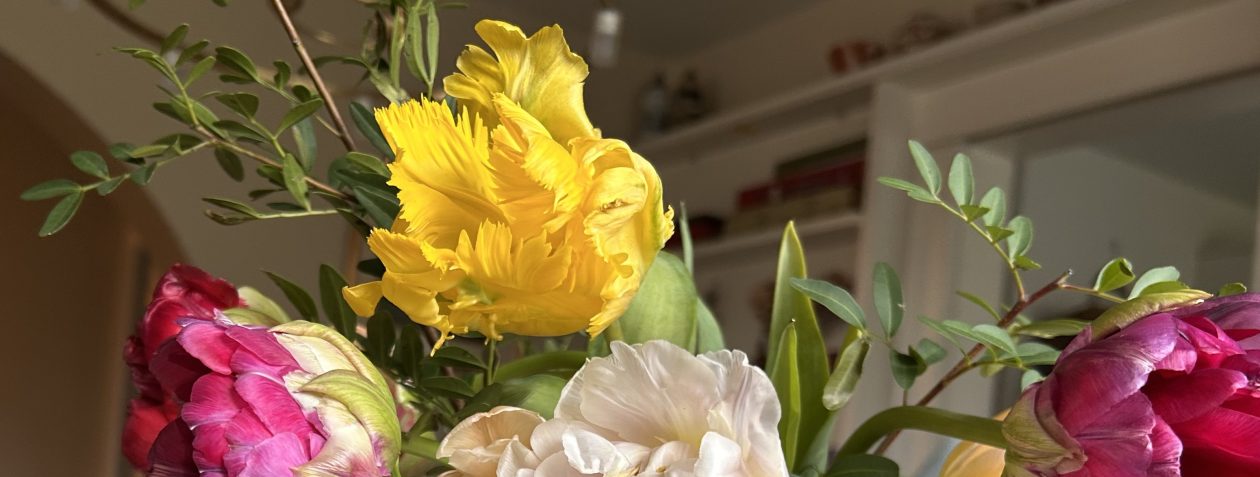
after all the fuss
and flutter…
the space between us
.
.
NaHaiWriMo prompt: loss
October 16th is Blog Action Day, an annual online day of action when bloggers (actually anyone with a public platform) from all over the world blog on one particular theme: This year, on Human Rights! 
Human Rights Day, commemorating the day in 1948 the United Nations General Assembly adopted the Universal Declaration of Human Rights, is observed by the international community every year on 10 December. This year, the blogging lot contributes from its own unique angle, its multitude of voices, and perspectives, an additional opportunity for observance of this most sacred of human achievements on the 16th of October.

Thanks to the adoption of the Declaration of Human Rights, whatever our nationality, place of residence, gender, origin, colour, religion, language, or other status, we can ‘rely’ on the international community to uphold dignity and justice for us.
Despite many accomplishments in the field of human rights, sadly, there are still huge challenges lying ahead. In the words of the UN,
“The world is still plagued with incidents of ethnic hatred and acts of genocide. People are still victims of xenophobic attitudes, are subjected to discrimination because of religion or gender and suffer from exclusion. Around the world, millions of people are still denied food, shelter, access to medical care, education and work, and too many live in extreme poverty. Their inherent humanity and dignity are not recognized.”
The way forward: “The future of human rights lies in our hands.”
I committed to posting a blog post on the day. It may or may not be a short story on one of the articles of the Declaration of Human Rights. We’ll see.
Starting to think about what my post/story could be about, I asked myself, and Google, my constant companion, the obvious question: How many articles does the The Universal Declaration of Human Rights contain?
How many do I actually know of? Here is the Declaration if you are interested in checking this out yourself. It includes a simplified, plain English version. See how many you know, and weep!
There is a video about the Blog Action Day theme
as well as a Home page
a Facebook page https://www.facebook.com/blogactionday
and a Twitter account @blogactionday12
The United Nations Home Page for Human Rights here
.
for no reason at all
fall apples
.
NaHaiWriMo prompt: reason
.
1
stuffed vine leaves
unwrapping granny’s
secrets
2
stuffed vine leaves
stories from granny’s
kitchen cupboard
.
NaHaiWriMo prompt: rice
Gabi Greve’s Joys of Japan, and WKD note the 15th of September to be Senior Citizen’s Day, kigo for India
.
milky way
a herd of cows
heading home
.
NaHaiWriMo prompt: collage
.
endless rain
a scarecrow points
to heaven
.
http://www.nahaiwrimo.com prompt: scarecrow
.
ants carrying crumbs…
the weight of a day
.
http://www.nahaiwrimo.com prompt: crumbs
.
seeds in the wind
how my thoughts
defeat me
.

chalk butterfly
the girl adds
a crown
.
NaHaiWriMo prompt: Chalk
.
cobalt jar –
fragrance of a thousand springs
behind glass
.
NaHaiWriMo prompt: Blue
.
the newborn doesn’t notice…
first autumn leaves
.
NaHaiWrimo prompt: birth
.
scarecrows…
yet the child on his shoulders
smiles
.
NaHaiWriMo prompt: Honour
.
dappled shade
the worry
in your eyes
.
NaHaiWriMo prompt: mosaic
Over at the The Haiku Foundation blog, Troutswirl, Gene Myers asked “What do surrealists and haiku poets have in common?” A number of haiku poets contributed very interesting and varied responses. Spurned into action myself, I responded with the following comment:
“Thank you for sharing this, Gene. I have been thinking about connections between the arts and haiku poetry and so find it interesting to read people’s thoughts here.Re. your question: I understand (most) surrealists to have tried to bypass conscious mind and to make contact with the unconscious through dreams, word association, automatic writing, hypnosis, mind-altering substances… This aim to go beyond and beneath the conscious/reasoning mind and pull out a fresh, writhing, alive experience may be one of the things that surrealists and haiku poets share (though not all the means!).
Regarding two-part haiku, I like to see the juxtaposition of the two elements as displaying side by side, literally, unconsciously associated content. In a successful juxtaposition, a sense of strangeness, an uncanny feeling is being set up. Isn’t this central to the attraction for both reader and writer: looking at the seemingly disparate elements/parts of the poem, experiencing the tensions generated and their resolution in a moment of recognition in which the unseen / unconscious connections emerge?
In this sense, surrealists (at least those of the more constructive strand) and haiku poets may be said to use juxtaposition of the seemingly disparate as a means to reach underneath and beyond the well-trodden tracks of our conscious landscape; to (to use your words) ‘jar’ and encourage filling in the gaps/holes between the elements through reconnecting with deeper/hidden levels of the mind. Of course, this is only one of several commonalities; there’s also choice of words, images, form of presentation, and so on.
Happily, we have this month’s Per Diem, Kirsten Cliff’s collection “Dream Speak,” to help us explore this matter further.”
Noticed the last sentence? Why not keep me company, visit the THF Per Diem site, and pull out of the Per Diem box the daily poem; fresh, and only for a day, the daily poem can be found by clicking here.
.
under the tall pine dove feathers
.
.
NaHaiWriMo prompt: Peace?
Dear Friends,
I’ve listed my book “Feeding the Doves” in Goodreads Book Giveaways! There are 12 free copies (print) available to win. Giveaway dates for entering: Aug 25-Sep 25, 2013.
This is how it works:
1: The easy way: See the Goodreads badge on the right side of this Homepage, click to enter!
2: The slightly less convenient way: Find the book in Goodreads (here) and click the enter to win button there.
Either way, Goodreads will do the rest! After the 25th of September they will notify me the list of winners and I will post the books to them!
Good luck to all who enter!
grapevine
the flowering
of a thread vein
.

This photo is of a painting by Anselm Kiefer, one of several wonderful pieces to be found hanging in the Walter Art Museum in Augsburg. Well worth a visit if you are in or around Augsburg.
.
NaHaiWriMo prompt: life
brave new world
how the trees
glow…
.
Inspired by: http://www.bbc.co.uk/news/technology-23524249
(First posted in FB group Scifaiku)
.
autumn bee?
one foot in front
of the other
.
NaHaiWriMo prompt: favourite sport
between
now and then
bridge of sighs

.
NaHaiWriMo prompt: emotions
.
The photo: Meersburg, medieval town on the shores of Lake Constance
For the Bridge of Sighs, I had fun reading the Wiki article here
last night’s sunset
the way home
in my bones
.
NaHaiWriMo prompt: intuition
.
Hagnau vineyards
tasting the sun
in the wine
.
Hagnau is a small wine growing town on the shores of Lake Constance
NaHaiWriMo prompt: taste
dappled shade
the crunch
of pine needles
.
NaHaiWriMo prompt: smell
 is a small resort on the shores of Lake Bodensee (also known as Lake Constance). Hoedingen, a northern part of the district and town of Ueberlingen, is a quiet, beautiful place, where you can hear the sound of the wind, the grapes expand and fill with mouthwatering juice, the sound of the grass growing…
.
Hoedingen
between skies and water
cicada songs
.
http://en.wikipedia.org/wiki/%C3%9Cberlingen
http://www.hoedingen.de/
Feeding the Doves Now available to order from amazon.co.uk, amazon.de and Kindle

“Unique and surprising, tight and passionate language”
“Every once in a while, I get a book in the mail that is unique from anything else I’ve ever read. As a collection of short stories, Stella Pieride’s Feeding the Doves has given me a new definition of what short means, not to mention how quickly a story can be told… ”
“… I found her writing a refreshing and unique collection.”
Read Daniel Burton’s review here: Attack of the Books!
The review is also available on Amazon.com
***
Extract from Mia Avramut’s review on Amazon.co.uk:
“From a symbol of the divine (“A Life-Changing Story), to an object of meditation and near-worship in Syntagma Square (as in the title story), to their possible end in a soup kitchen destined to feed hungry children (“Pigeons”), doves’ journey functions as a counterpoint to the human sacrifice and quest for nourishing truths. Several glimpses into silent, sometimes tortured lives, end in haiku. It serves to deepen the reader’s understanding, and add new dimensions to the prose. And it’s a treat, as Pierides is both an archeologist of experiences, and a mistress of haibun.
Since Yourcenar and Kazantzakis, nobody has illuminated with such wisdom and compassion the often unseen lives that make the humanity what it is: a traveling, travailing organism with feet of myth.”Mia Avramut is a Romanian- born writer, physician, researcher, and poetry editor at Connotation Press.
***
Having left Greece in her youth, the author of “Feeding the Doves” returns to the country of her birth through a collection of stories that lie at the heart of Greek identity.
About the Book: Greece has been in the headlines for a very long time. Recently, the headlines have been gloomy and negative, the country facing some of its most difficult years. Against this background, “Feeding the Doves” explores recurrent elements of the Greek psyche, tracing them back to challenges posed by the country’s history, culture, and environment.
The widow, the old loner, the refugee, the immigrant, the young, the writer, the expatriate, tell us their stories, touching upon themes at the heart of Greek being: Love and loss, civil war, immigration and diaspora, emigration, poverty, religion, history and catastrophe, and above all, the will to survive.
“What I admire here are the shining moments of revelation, of truths large and small bursting through the lives and memories of these characters. So many characters, and so rich!”
—John Wentworth Chapin
Founding Editor, 52|250 and A Baker’s Dozen
“Stories to surprise and entertain, to wake and calm, to wrench and elate, to tell the Greek story, past and present, and everyone’s story.”
-—Michael Dylan Welch, poet, writer,
and editor/publisher of Press Here books
Email: admin@fruitdovepress.com
http://www.fruitdovepress.com
Perfect softbound
87 pages, 90gm cream interior paper
Full-color laminated cover
129 mm x 198 mm trim size
ISBN: 978-3-944155-03-6
Price: £8.00 UK
Available from August 2013 through Amazon.co.uk and Amazon.de.
.
.
dry spell solace in your lips
.

.
Photograph: Japanese Garden, in the Botanic Gardens, Augsburg.
“Fate” and “destiny” are often used interchangeably to refer to the notion of predetermination; of future events following a predetermined plan or path.
 Yet, implicitly, we also make a distinction between the two in terms of the degree to which each is allowing for alterations in the course of events to which it is applied. Fate is usually associated with unalterable events; we are in the hands of the ancient Fates, Gods, or cosmic forces; our lives, and actions, are out of our control. There is a belief in a prescribed future: a higher/supernatural authority (or authorities) has the future laid out for us.
Destiny, on the other hand, involves a course of events where we have a say, or a hand, in preparing or making our future. We may be destined in one sense to higher or lower things, but we can underachieve or push ourselves hard to achieve better than expected.
This month’s The Haiku Foundation Per Diem: Daily Haiku reflects on both of these concepts. Deb Baker, this month’s guest editor, using “Kismet” as the title of her splendid collection, invites us to reflect on the “hinge” moments” or forked paths we encounter and the outcomes that result when we follow one or the other road, believing in fate, in destiny, or a choice we made. She writes,
Poems like these can make a reader feel a sense of momentum, a possible turning or smoothing path. Perhaps such a poem helps a reader discern something happening in the present moment in his or her own life. Or to see a new possibility, a different way forward, through someone else’s hinge moment.
.I’ll be reading with an extra eye for the different ways Kismet appears in the poems. I’ll be having fun too! Join me? You can find the daily poem here
.
The photo is of a path taken, crossing the river Schmutter, near Neusaess, Germany.
botanic garden –
seniors in white, practice
Crane Spreads its Wings
.
NaHaiWriMo prompt: garden
.
who is to say it took the wrong turn passion flower
.
NaHaiWriMo prompt: passion

