Category Archives: Short stories

It’s over! The Muenchner Buecherschau 2014 is now closed.

Well, the Munich Buecherschau 2014 is now closed. I am very happy I took part and would like to thank the readers who visited, wrote, commented on the books, and wished me well. Not forgetting those who bought my books! A big thank you!

Did you miss this year’s Buecherschau? Don’t worry. It is on again next year. Same time, same place; same procedure!

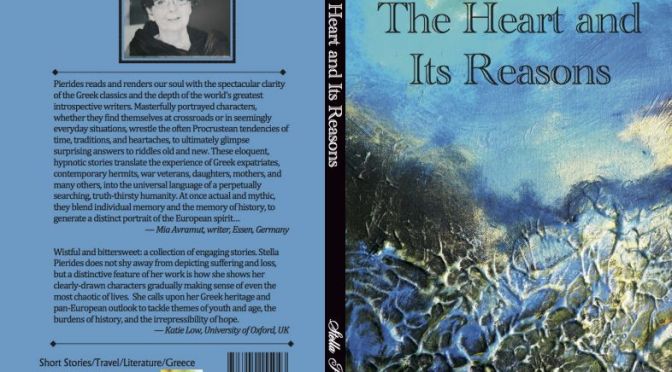
Several people have commented on the lovely painting on the cover of my new book of short stories, The Heart and Its Reasons. It is from a painting by Maria Pierides: “Port Isaac: Golden Light.” Maria is a great artist. I am really greatful to her for allowing me to use this painting for my cover. You can make out the heart arteries in the image, as well as the blues of the Aegean sea.

For more details about The Heart and Its Reasons, where to get a copy, and for reviews and articles, please see here

If you like the book please consider leaving a review on Goodreads, or Amazon. Or even if you don’t like it, say so. Please say so on GoodreadsAmazon.co.uk, or Amazon.de. It will be very much appreciated.

Thank you for your interest in my work.

At the Muenchner Buecherschau (pics)

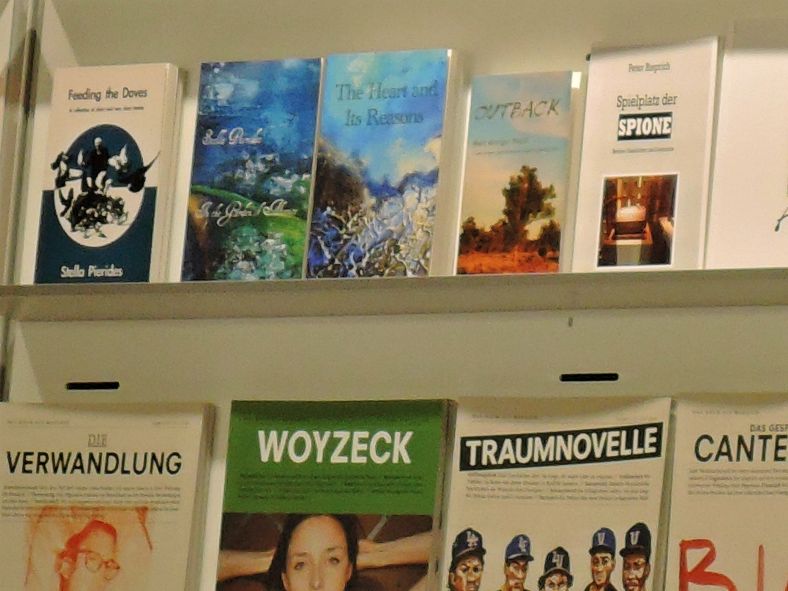
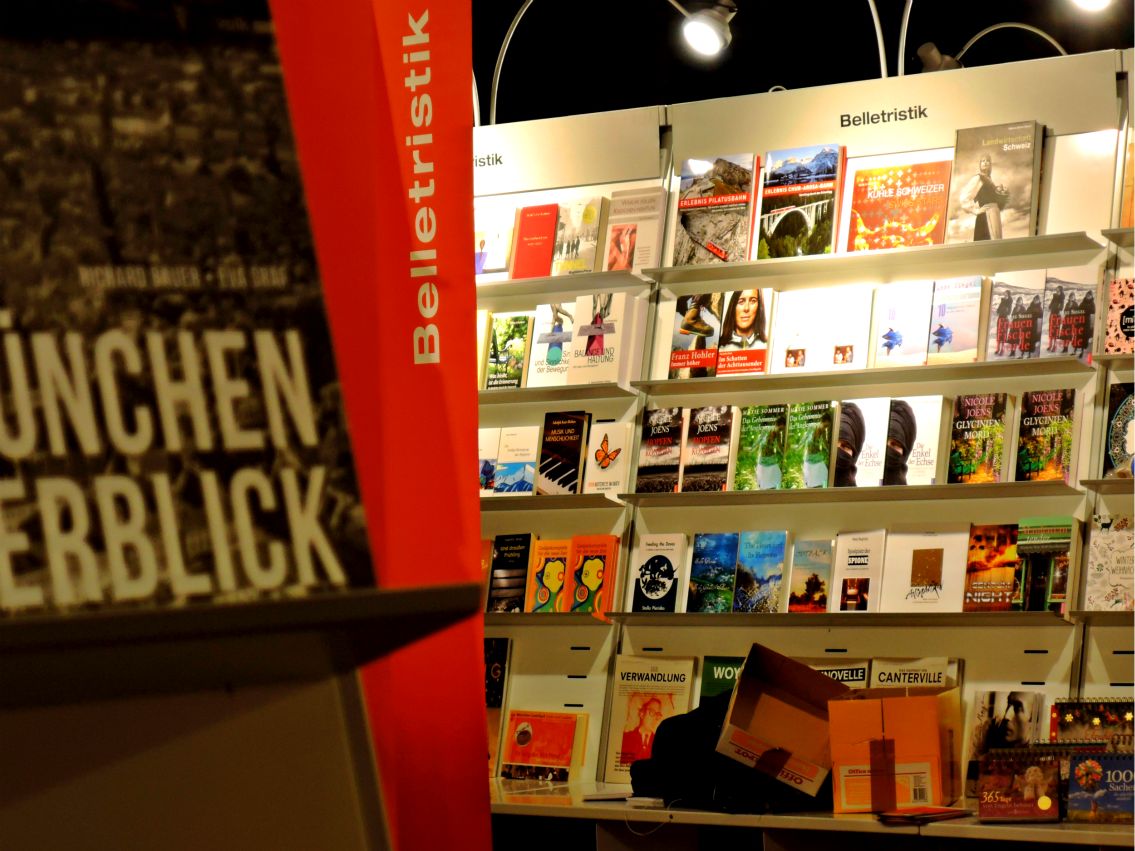
Münchner Bücherschau 2014,Sharing photos from the evening before the opening of the Muenchner Buecherschau 2014. Delighted to be taking part this year. Can you spot my books? (Tip: Look for the colour blue on the covers!)

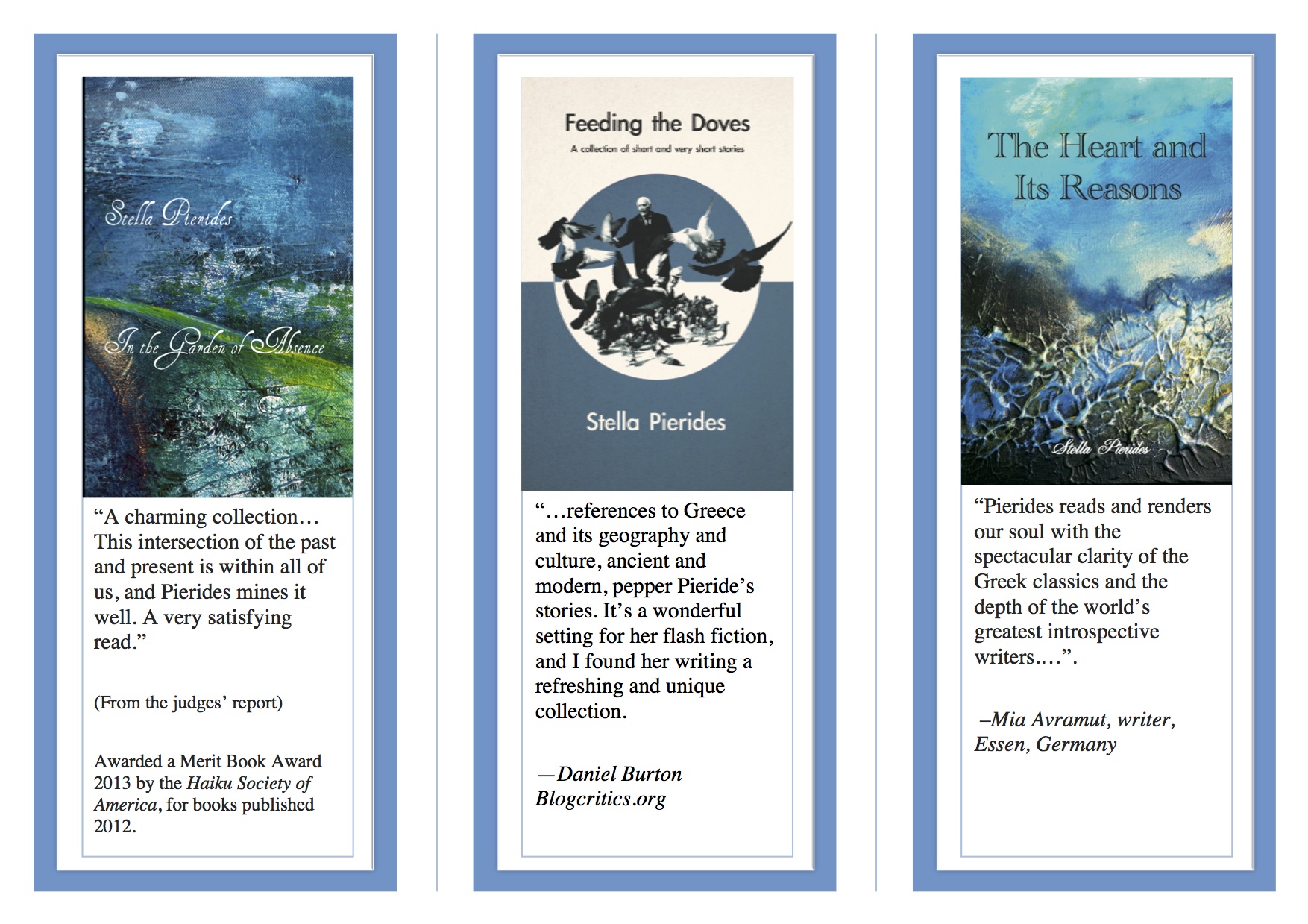
Münchner Bücherschau 2014,Gasteig,The Heart and Its Reasons,In the Garden of Absence (Fruit Dove Press, 2012)

Feeding the Doves (Fruit Dove Press, 2013)

The Heart and Its Reasons (Fruit Dove Press, 2014).

Münchner Bücherschau 2014,Gasteig,

I’ll be taking more pics in the next few days, hopefully with people in them, so watch this space…


Congratulations to the three ‘giveaway’ winners

The Goodreads giveaway is now closed. Goodreads has announced the three lucky winners of three free, signed copies of my new book: The Heart and Its Reasons (Fruit Dove Press, 2014). I’m happy to say that the winners include two readers from the United States and one from Latvia. Congratulations to the three lucky winners. And many thanks to the 1102 readers who entered the giveaway for a copy of the book.

The names of the three winners can be seen by clicking here

But don’t worry if you missed out! I’ll be holding another Goodreads giveaway in the near future. Several autographed copies will be up to be won.

On the other hand, why wait? You can visit Amazon.de or Amazon.co.uk and place an order for your copy right now!

Enter to Win!

book cover,The Heart and Its reasons, Exciting news! I’ve listed my new book The Heart and Its Reasons in the Goodreads Book Giveaways programme! There are 3 copies (print) available. Giveaway dates for entering: Oct 23-Nov 18, 2014.

This is how it works: Find the book in Goodreads here. Scroll down the page, and click the enter to win button there. Goodreads will do the rest! After the 18th of November they will notify me the list of winners and I will post the books directly to the lucky three!

Good luck to all who enter!

The Heart and Its Reasons

 The Heart and Its Reasons  — 

Available from Amazon.co.uk and Amazon.de

Steering a path around islands of the past and the present, mythology and history, locals and expatriates, refugees and emigrants, loneliness and aloneness, the fragrance of herbs and the stink of prejudices, the stories in this book traverse the multifarious landscapes of the heart. Setting course by Greece – a country filled with the light and darkness of its past, with wounds still oozing from its wars – the stories explore a space that is both familiar, unfamiliar, and uncannily universal: the haunted, multilayered, enticing, and bewitching chambers of the heart. The sutures keeping it together are pride and longing: for mother, for father, for home; for recognition, for acceptance, for love, for truth; for a better world.

From the Back Cover

“Pierides reads and renders our soul with the spectacular clarity of the Greek classics and the depth of the world’s greatest introspective writers. Masterfully portrayed characters, whether they find themselves at crossroads or in seemingly everyday situations, wrestle the often Procrustean tendencies of time, traditions, and heartaches, to ultimately glimpse surprising answers to riddles old and new. These eloquent, hypnotic stories translate the experience of Greek expatriates, contemporary hermits, war veterans, daughters, mothers, and many others, into the universal language of a perpetually searching, truth-thirsty humanity. At once actual and mythic, they blend individual memory and the memory of history, to generate a distinct portrait of the European spirit…”

—Mia Avramut, writer, Essen, Germany

*

“Wistful and bittersweet: a collection of engaging stories. Stella Pierides does not shy away from depicting suffering and loss, but a distinctive feature of her work is how she shows her clearly-drawn characters gradually making sense of even the most chaotic of lives. She calls upon her Greek heritage and pan-European outlook to tackle themes of youth and age, the burdens of history, and the irrepressibility of hope.”

Katie Low, University of Oxford, Oxford, UK

.

Available from Amazon.co.uk and Amazon.de

Cover painting: ‘Port Isaac: Golden Light’ by Maria Pierides
.
Fruit Dove Press / http://www.fruitdovepress.com
Email: admin@fruitdovepress.com
.
Perfect softbound / 104 pages, 90gm cream interior paper / Full-color laminated cover / 129 mm x 198 mm trim size / ISBN: 978-3-944155-04-3

Feeding the Doves

Feeding the Doves: 31 short and very short stories, and haibun
Available through Amazon.co.uk and Amazon.de and Kindle
Patty Apostolides on Amazon.com:

“Lyrical and Concise”: “…well written and full of beautiful, touching, and sometimes haunting, melodic stories.”

Read the review by author of Greek Novels Patty Apostolides here 
*
Dr. Joseph Berke on Amazon.co.uk:

“Feedings the Doves = feeding the soul”: “This is a wonderful, evocative book, rich in imagery…”

The review by author and psychotherapist  Dr. Joseph Berke on Amazon.co.uk
*
Katie Low in Sabotage Reviews:

“…characters recall how that sad event shaped their own histories, but the tone is one of hopefulness, of looking to the future and making the best of situations that will always be imperfect.”
“This sparseness extends to the stories individually, which do not waste their limited word-count on scene-setting or extraneous characterisation; each one evokes a mood, makes a point, or charts a phase in an individual’s development without telling us anything more than we need to know.“

Read the whole of what Katie Low has to say here
*
Marjory McGinn on Amazon.co.uk:

“Stunning insight into the Greek experience”
“… each story is poet gem, offering … moments of revelation and introspection”

Read the whole of Marjory McGinn’s review here
Marjory McGinn is the author of “Things Can only Get Feta
*
Blogcritics: Daniel Burton:

“Unique and surprising, tight and passionate language”
“Every once in a while, I get a book in the mail that is unique from anything else I’ve ever read. As a collection of short stories, Stella Pieride’s Feeding the Doves has given me a new definition of what short means, not to mention how quickly a story can be told… ”
“…references to Greece and its geography and culture, ancient and modern, pepper Pieride’s stories. It’s a wonderful setting for her flash fiction, and I found her writing a refreshing and unique collection.
“Each feels like an intimate glimpse into someone’s life, a brief moment in time. And given that each is so quick, so fast, and yet so personal, it’s saying something that Pieride is able to levy language to create this impact in such sort space.”

*
Neos Kosmos Review (Australia’s leading Greek community news source) by Helen Velissaris:

“These stories manage to show universal themes entwined with the Greek psyche to give a new perspective on the Greece in the media’s headlines.
Above all, these stories show Greece isn’t defined by its current bank account, but rather the people that inhabit it.”

*
Mia Avramut‘s review on Amazon.co.uk:

“From a symbol of the divine (“A Life-Changing Story), to an object of meditation and near-worship in Syntagma Square (as in the title story), to their possible end in a soup kitchen destined to feed hungry children (“Pigeons”), doves’ journey functions as a counterpoint to the human sacrifice and quest for nourishing truths. Several glimpses into silent, sometimes tortured lives, end in haiku. It serves to deepen the reader’s understanding, and add new dimensions to the prose. And it’s a treat, as Pierides is both an archeologist of experiences, and a mistress of haibun.
Since Yourcenar and Kazantzakis, nobody has illuminated with such wisdom and compassion the often unseen lives that make the humanity what it is: a traveling, travailing organism with feet of myth.”
.

Mia Avramut is a Romanian-born writer, physician, researcher, and poetry editor at Connotation Press.
***
About
Having left Greece in her youth, Stella Pierides, the author of “Feeding the Doves”, returns to the country of her birth through a collection of stories that lie at the heart of Greek identity.
About the Book:
Greece has been in the headlines for a very long time. Recently, the headlines have been gloomy and negative, the country facing some of its most difficult years. Against this background, “Feeding the Doves” explores recurrent elements of the Greek psyche, tracing them back to challenges posed by the country’s history, culture, and environment.
The widow, the old loner, the refugee, the immigrant, the young, the writer, the expatriate, tell us their stories, touching upon themes at the heart of Greek being: Love and loss, civil war, immigration and diaspora, emigration, poverty, religion, history and catastrophe, and above all, the will to survive.

“What I admire here are the shining moments of revelation, of truths large and small bursting through the lives and memories of these characters. So many characters, and so rich!”
—John Wentworth Chapin
Founding Editor, 52|250 and A Baker’s Dozen

“Stories to surprise and entertain, to wake and calm, to wrench and elate, to tell the Greek story, past and present, and everyone’s story.”
-—Michael Dylan Welch, poet, writer,
and editor/publisher of Press Here books
*
Fruit Dove Press
Email: admin@fruitdovepress.com
http://www.fruitdovepress.com
Perfect softbound
87 pages, 90gm cream interior paper
Full-color laminated cover
129 mm x 198 mm trim size

ISBN: 978-3-944155-03-6

Price: £8.00 UK and EUR 9,00

Available through Amazon.co.uk and Amazon.de

Review of “Feeding the Doves” by Daniel Burton on “Attack of the Books!”


Feeding the Doves
Feeding the Doves


“Unique and surprising, tight and passionate language”

“Every once in a while, I get a book in the mail that is unique from anything else I’ve ever read. As a collection of short stories, Stella Pieride’s Feeding the Doves has given me a new definition of what short means, not to mention how quickly a story can be told… ”

“… I found her writing a refreshing and unique collection.”

Read the whole review here: Attack of the Books! 

The review is also available on Amazon.com 


Article about “Feeding the Doves” in Neos Kosmos

An article about my book of short stories “Feeding the Doves“ appeared today in the Australian newspaper “Neos Kosmos,” Australia’s leading Greek community news source. I am thrilled, as many of its readers are of Greek descent, and know, remember, or wish to know about the themes of this book.

Helen Velissaris writes: “These stories manage to show universal themes entwined with the Greek psyche to give a new perspective on the Greece in the media’s headlines.

Above all, these stories show Greece isn’t defined by its current bank account, but rather the people that inhabit it.”

Read the whole article here. A very interesting take on my book.

.

Human Rights and Wrongs (Blog Action Day 2013)

Every year, thousands of people try to enter Europe without permission. The last two years the numbers have increased. War, civil war, terrorism, famine, drought make their livelihoods untenable, their lives precarious. One of the major routes to the continent used to be via Evros, the river boundary between Greece and Turkey. Since 2012, however, when a fence was erected to block this entry point and after Frontex police increased their presence, new routes were followed: sea routes to Italy and Spain that are even more dangerous and deadly.
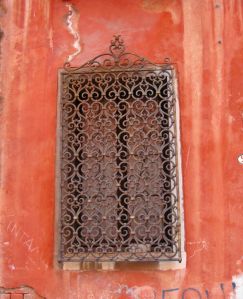
BeFunky_keeping out.jpgThe rickety boats these refugees use to come in often sink; the borders they try to cross get more hazardous than the journeys. The European countries they enter, ignore or criminalize them, and often send them to holding centers where they are subjected to demeaning, abusive situations, torture, or worse; or sent back to the countries they fled from. And yet, they keep coming.

I saw some of those who made it. In Venice, Italy, without support, they bend down hiding their faces, and beg.

city of masks
the beggar hides
her face
.
They hide and live in fear, yet they find this preferable to staying in countries where torture or death awaits them. Unlike those chosen to enter in one of the rare legal, though miniscule, programs of some European countries, these people exist in dire and life-threatening circumstances.

promising the earth
lone star
.
This odyssey is acted out all over the world, sometimes by people seeking work to improve their situation in places where they would not normally be entitled to work; most often by people fleeing conflict and persecution. In the Mediterranean countries, the recent conflicts have multiplied the magnitude of this problem.

Lately, hundreds of people arrived in Lampedusa and the Italian shores:* alive or dead, they reached this other country where those who survived the journey would have at least the opportunity to fight for a chance of a better life. Wouldn’t you too, in their position?
BeFunky_Ve Chains.jpg
Wouldn’t you? If chance or circumstance placed you in such a predicament? The European Union, though, would not look favorably on your efforts to enter its borders with need and despair as the only passport. For instance, while the talk of new urgent measures is all about increasing funding towards detection of people in flight, as well as (allegedly) improved rescue at sea,* there is also the urge to repatriate and keep the refugees in the place they come from. An out of sight out of mind approach. Except that the situation in their home countries is so desperate that repatriated people try crossing the sea again, and again.
.

.
promising sign?
clouds part
for hunter’s moon
.

A lot more is needed for the nations that make up Europe to acknowledge and accept the plight of the people affected by extreme poverty and poverty-driven wars, often the result of our aggressive policies, economic exploitation, and environmental abuse.

Out of this awareness, the Europeans themselves would be able to develop better policies than this drive to isolate, separate, and remove the perceived problem: a concerted European asylum seeker and immigration policy, grounded on the Universal Declaration of Human Rights (and the full United Nations Charter), with a budget and facilities for care and integration (rather than just border control) to back it up.

BeFunky_flower colours.jpgThe first models to help us think and plan are already here: A tiny Italian village opened its doors to migrants who braved the sea offering them jobs and homes, creating in the process jobs for the entire village. Even though there is no ideal solution, and new problems arise in new situations, the will, the means, the examples, the aspiration are already here.

……………………………………………………………………………………………

– This post is written for Blog Action Day, 2013 on 16 October 2013. Bloggers from different countries, languages, and interests will have a global conversation about Human Rights. I have published elsewhere a number of stories featuring refugees and their plight – including stories from refugees crossing the Aegean in 1922 – some of which are included in my short story collection: Feeding the Doves, Neusaess, Fruit Dove Press, 2013.

.
*Gazmend Kapplani, Albanian-born journalist, poet, and writer, in one of his FB posts suggests the least the EU could do would be to erect a Monument of the Unknown Refugee. Kapplani’s excellent book, A Short Border Handbook, relates the experiences of Albanian people crossing the border to Greece.

.
**Frontex, the European Agency for external border control, according to a statement of its site, “promotes, coordinates and develops European border management in line with the EU fundamental rights charter applying the concept of Integrated Border Management.” Unfortunately, what this comes down to is that the management of borders takes precedence over human rights.

Frontex has expanded the number of countries where it can send the people it ‘rescues’. “Nobody, however, is monitoring what exactly Frontex is doing in these countries of transit and origin with the goal of “stemming migration”. There is a serious risk of human rights simply being breached or refugees dying in places that are farther away from our attention.”

.

See also Spiegel online
.

GoodReads winners!

The GoodReads giveaway has ended. I’m delighted that 608 readers entered to win a copy of my short story book “Feeding the Doves”! Thank you so much to everyone who entered!

My heartfelt congratulations to the 12 winners! You can see the winners here. I will be posting copies of the book on the 26th of September.

And to everyone else: Thank you so much for participating in the giveaway. If you did not win this time, please know there will be another giveaway in a couple of months’ time. I hope you will try again.

I will keep you posted on other giveaways, discounts, and fun stuff. Meanwhile, if you are interested in Greece, its people and history, the economic and existential crisis it is going through, my Pinterest board “Feeding the Doves” is updated regularly with news, articles, photos, and other related material: click here

Human Rights: Blog Action Day 2013

October 16th is Blog Action Day, an annual online day of action when bloggers (actually anyone with a public platform) from all over the world blog on one particular theme: This year, on Human Rights

Human Rights Day, commemorating the day in 1948 the United Nations General Assembly adopted the Universal Declaration of Human Rights, is observed by the international community every year on 10 December. This year, the blogging lot contributes from its own unique angle, its multitude of voices, and perspectives, an additional opportunity for observance of this most sacred of human achievements on the 16th of October.


Thanks to the adoption of the Declaration of Human Rights, whatever our nationality, place of residence, gender, origin, colour, religion, language, or other status, we can ‘rely’ on the international community to uphold dignity and justice for us.

Despite many accomplishments in the field of human rights, sadly, there are still huge challenges lying ahead. In the words of the UN,

“The world is still plagued with incidents of ethnic hatred and acts of genocide. People are still victims of xenophobic attitudes, are subjected to discrimination because of religion or gender and suffer from exclusion. Around the world, millions of people are still denied food, shelter, access to medical care, education and work, and too many live in extreme poverty. Their inherent humanity and dignity are not recognized.”

The way forward: “The future of human rights lies in our hands.”

I committed to posting a blog post on the day. It may or may not be a short story on one of the articles of the Declaration of Human Rights. We’ll see.

Starting to think about what my post/story could be about, I asked myself, and Google, my constant companion, the obvious question: How many articles does the The Universal Declaration of Human Rights contain?

How many do I actually know of? Here is the Declaration if you are interested in checking this out yourself. It includes a simplified, plain English version. See how many you know, and weep!

There is a video about the Blog Action Day theme

as well as a Home page 

a Facebook page https://www.facebook.com/blogactionday

and a Twitter account @blogactionday12

The United Nations Home Page for Human Rights here

Feeding the Doves: 31 Short and Very Short Stories, and Haibun

Feeding the Doves  Now available to order from amazon.co.uk, amazon.de and Kindle

FeedingtheDoves.jpg

“Unique and surprising, tight and passionate language”

“Every once in a while, I get a book in the mail that is unique from anything else I’ve ever read. As a collection of short stories, Stella Pieride’s Feeding the Doves has given me a new definition of what short means, not to mention how quickly a story can be told… ”

“… I found her writing a refreshing and unique collection.”

Read Daniel Burton’s review here: Attack of the Books!

The review is also available on Amazon.com

***

Extract from Mia Avramut’s review on Amazon.co.uk:

“From a symbol of the divine (“A Life-Changing Story), to an object of meditation and near-worship in Syntagma Square (as in the title story), to their possible end in a soup kitchen destined to feed hungry children (“Pigeons”), doves’ journey functions as a counterpoint to the human sacrifice and quest for nourishing truths. Several glimpses into silent, sometimes tortured lives, end in haiku. It serves to deepen the reader’s understanding, and add new dimensions to the prose. And it’s a treat, as Pierides is both an archeologist of experiences, and a mistress of haibun.
Since Yourcenar and Kazantzakis, nobody has illuminated with such wisdom and compassion the often unseen lives that make the humanity what it is: a traveling, travailing organism with feet of myth.”

Mia Avramut is a Romanian- born writer, physician, researcher, and poetry editor at Connotation Press.

***

Having left Greece in her youth, the author of “Feeding the Doves” returns to the country of her birth through a collection of stories that lie at the heart of Greek identity.

About the Book: Greece has been in the headlines for a very long time. Recently, the headlines have been gloomy and negative, the country facing some of its most difficult years. Against this background, “Feeding the Doves” explores recurrent elements of the Greek psyche, tracing them back to challenges posed by the country’s history, culture, and environment.

The widow, the old loner, the refugee, the immigrant, the young, the writer, the expatriate, tell us their stories, touching upon themes at the heart of Greek being: Love and loss, civil war, immigration and diaspora, emigration, poverty, religion, history and catastrophe, and above all, the will to survive.

 “What I admire here are the shining moments of revelation, of truths large and small bursting through the lives and memories of these characters. So many characters, and so rich!”

—John Wentworth Chapin
Founding Editor, 52|250 and A Baker’s Dozen

“Stories to surprise and entertain, to wake and calm, to wrench and elate, to tell the Greek story, past and present, and everyone’s story.”

-—Michael Dylan Welch, poet, writer,
and editor/publisher of Press Here books

Fruit Dove Press

Email: admin@fruitdovepress.com
http://www.fruitdovepress.com
Perfect softbound
87 pages, 90gm cream interior paper
Full-color laminated cover
129 mm x 198 mm trim size

ISBN: 978-3-944155-03-6

Price: £8.00 UK

Available from August 2013 through Amazon.co.uk and Amazon.de.

.

Feeding the Doves

Forthcoming

Feeding the Doves
31 Short and Very Short Stories, and Haibun

Greece has been in the headlines for a very long time. Since ancient times, her  philosophers, historians, mathematicians, shipbuilders, traders, and artisans have been making the news – and, indeed, history. So, amidst the country’s most difficult  years in recent times, many people believe that they know Greece and the Greeks.

.
Against this backdrop, the stories – short and very short – collected in “Feeding the  Doves” explore recurrent elements of the Greek psyche, tracing them back to challenges posed by the country’s history and environment. The widow, the old loner,  the refugee, the immigrant, the writer, the expatriate tell us their stories, touching  upon themes at the heart of Greek being, as well as our common humanity: love and l  loss, war, civil war, immigration and diaspora, emigration, poverty, religion, history,  and above all, the will to survive.


Cover Design:
Rob Ward, Freelance Animator

Fruit Dove Press
Email: admin@fruitdovepress.com
.
[The title story “Feeding the Doves” and the cover image were inspired by a photo taken by Robert Geiss, titled “Feeding Doves” and posted on his (sadly, no longer active) blog “Daily Athens Photo.”]

FLASH MOB 2013

I am taking part in the flash story event, FLASH MOB 2013, celebrating International Flash fiction Day. A sort of literary carnival and international competition in one, with over a hundred writers of flash from around the world taking part by posting short stories in their blogs.

 If you love flash fiction, then this is the best place to browse for stories – and if you don’t know anything about flash, this is the place to start! Click here

My own story is in the European writers section here 

Home Truths (Flash Mob 2013)

Home Truths

“Spoon sweets are the best. Have you ever had spoon sweets?” She looks at her customer with such intensity from behind the counter that I am surprised to hear the woman find the strength to answer.

“Pardon, spoon sweets?” she replies in her phrasebook Greek.

The shop owner reaches for a jar from a bulging shelf – the cherries preserved in syrup clearly visible.

“Here, this is it; this is a cherry spoon sweet. Here, present for you,” she says, sliding the jar across the counter.

The woman receives it with both hands and a big smile.

I try to decipher the patisserie owner’s expression. She is not smiling, her face pulled into what I read as contempt. I could be wrong, of course. So many years away from this country, I can no longer claim insider knowledge. Still, witnessing the scene the day after my return home, I shudder from shame and envy, in equal measure. The directness of the shop owner embarrasses me; she shows the worst of herself to a stranger: the impetuousness, the loud, gestural arrogance that goes with this kind of self-assurance. I blush on her behalf. At the same time, I envy her unselfconscious manner of being. She’ll never know how she comes across, while I am forever stepping back for fear of appearing wrong, or appearing confident about the wrong things. Something inside me snaps,

“I hate spoon sweets!” I say, “hate them!” Both women turn, their eyes wide.

“Mind your business, Kyria,” the proprietor says. “I’ll be with you in a minute.”

I know she will. But I have made up my mind, and turning swiftly, I walk out. In my head, the lines of a haiku appear:
……………………………spoon sweets / tangy taste of a song / long forgotten

‘The Price of Youth’ in Contemporary Haibun Online, April 2013

‘The Price of Youth’ appears in Contemporary Haibun Online, April 2013, vol 9, no 1 and can be read by clicking here

The text is also copied below:

The Price of Youth

The hairdresser swirls and swings her ample hips to the music, her flesh quivering. I catch my reflection in the mirror, lips hanging downwards, and shocked, I make a conscious effort to lift the corners of my mouth. She swipes a hand-held mirror like a credit card behind my head, beaming, proud of her work. I smile back spontaneously, pleased with her work too.

young again
this old seed-head approaches
a new year

‘Seasons’ in Contemporary Haibun Online, April 2013

‘Seasons’ appears in Contemporary Haibun Online, April 2013, vol 9, no 1 and can be read by clicking here 

It can also be read below:

Seasons

His eyes sweep the coffee table, taking in the piles of books, the envelopes, the dust. For a moment, I regret I didn’t put them away earlier, didn’t polish the surfaces.

His gaze returns to rest on me calmly, as if he hadn’t been collecting information for our younger colleagues to talk about. I recall one of the others telling me he’d noticed I kept an atlas on my desk for seven years. What of it? What else could I do before Google maps?

We, the older generation, have become something to be observed, monitored, talked about. She writes haiku, they say, raising their eyebrows knowingly, exchanging glances. She’s aged…

I remember how we watched our children and our friends’ children, amused ourselves with their quirkiness, their funny ways, we mimicked their manner of speech; we wondered at the milk teeth, marvelled at their rate of growth. Now they amuse themselves observing us. We meant well, and so do they, I am sure.

the Earth revolves
round its axis –
rhododendrons again

‘Homewards’ in Haibun Today, March 2013 (the text)

My haibun “Homewards” appears in Haibun Today and can be read by clicking here 

Vol.7, No. 1, March 2013

It can also be found below:

Magnolia
Magnolia Exmouth

Homewards

The garden at the back of the Edwardian terrace which is my London home is small but compact. A Magnolia Grandiflora Exmouth grows in its middle, a variety that keeps its glossy, oblong leaves in winter and blossoms in summer. White, deliciously fragrant flowers grace the tree unfailingly, giving me hours of pleasure upon my return from my European excursions. But the neighbor complains about the tree shading her garden. Each year I chop off branches to keep her happy. Each year I dread hearing from her.

sunlight
a dove crosses
the border

.

For Journal publications in 2012 and earlier, please click in the drop-down menu.

.

Haibun Today, March 2013

My haibun “Homewards” appears in Haibun Today and can be read by clicking here 

Vol.7, No. 1, March 2013

It can also be read below:

Homewards

The garden at the back of the Edwardian terrace which is my London home is small but compact. A Magnolia Grandiflora Exmouth grows in its middle, a variety that keeps its glossy, oblong leaves in winter and blossoms in summer. White, deliciously fragrant flowers grace the tree unfailingly, giving me hours of pleasure upon my return from my European excursions. But the neighbor complains about the tree shading her garden. Each year I chop off branches to keep her happy. Each year I dread hearing from her.

sunlight
a dove crosses
the border


SOAS Rebetiko

Rebetiko, the blues of the Greek refugees from Asia Minor, and of Turkey, is alive and well. A “Byzantine blend of the Turkish rhythms brought by the immigrant Greeks uprooted from their homes in Asia Minor with the contemporary Greek music of the twenties and thirties,” it can be heard Monday nights haunting the corridors and the JCR (Junior Common Room) of SOAS, the School of Oriental and African Studies, in London. I went to listen to the Rebetiko band this week and was amazed at the quality of sound and soulful singing.

SOAS Rebetiko
SOAS Rebetiko

The band SOAS Rebetiko describe themselves as follows:

“The Famous SOAS Rebetiko Band plays Rebetiko music of Greece, a broad genre of urban songs and instrumental music which developed in and around the major port areas of Eastern Mediterranean — Smyrna/Izmir, Istanbul, Syros, Piraeus and Thessaloniki.” 

I listened to this music growing up in a community of first- and second-generation refugees from Asia Minor, in Athens, and hearing it being played again, reminded me of the depth of feeling expressed through it; through the songs of loss and mourning, but also resistance, survival and life affirmation sang by the refugees.

“Feeding the Doves” and “The Haircut”

I am very pleased to report that two of my haibun set in Athens, Greece, have been published by Contemporary Haibun Online: Feeding the Doves, a story inspired by a photograph on Robert Geiss’ wonderful blog “daily Athens photo”; and “The Haircut”, exploring the hardships Greek people are facing in the current economic crisis.

The actual photograph of the man feeding the doves that inspired this story can be seen hereIn fact, visiting the site to look for the link, I realise that a version I’d sent Robert thanking him for the photograph, had been posted on his blog! So, let us keep feeding the doves!


‘The Silence in my Cell’ and ‘Tin Mug’

I am thrilled to report that:

my short story/flash ‘The Silence in my Cell’ is now online in the May edition of Tuck Magazine. They say it is a MUST read! See what you think. It can be read here

my tanka ‘Tin Mug’ now appears in ‘ars poetica 2′ – newest poems of Poets Online. It can be found on their site here  (This is a bit more complicated to find: go to Archive, click newest poems/ ars poetica 2)

Writers’ reading


Reading at the Munic Reader March 2012The Munich Readery, Augustenstr 104, is my favorite bookshop in Munich. I enjoy walking around the shop and discovering the amazing books that crop-up on its shelves. Lisa and John, the proprietors, are friendly and book wizards, so I know and can rely on their knowing! I love taking part in their author readings, coordinated by Lisa. Today’s reading (21.03.12) must be my fifth at this venue, though the first to be documented The other readers read excellent poetry and prose. And there was wine, water and cookies afterwards!

Other Worlds (haibun)

Other Worlds

I had been walking for hours. Hungry, thirsty, sweat dripping down my face, I was hardly capable of thinking, or imagining, my usual pastimes. Yet, here it was, in front of me, an impossible sight, a mirage. What else could this door-frame be in the middle of fields, in the center of the Peloponnese?

The air around me was hot, suffocating, as if half of the baked earth had floated upwards and was now swimming in it; it resonated thick with the sound of cicadas. The relentless sun had been plaguing me all morning. And it was the sun – more than anything else – that made me sit under that frame; on the thin band of shade it provided.

Resting my head on my knees, I lost consciousness. I don’t know how long I was out, but when I came to the frame was casting an elongated shadow.

Getting up, I felt my knees stiffen. I took a closer look. I could now see this ‘thing’ was not really a door frame. It was carved out of a kind of wood I had not seen before, of a tree I’d never encountered in my life.

Puzzled I touched it lightly. It moved! Alarmed, I jumped back. It stopped moving. I started feeling the frame for clues.

At the top right hand corner I traced something protruding, something like a splinter or a thin nail. I pulled gently. A slight breeze brushed my face, as if a door had been opened. I could smell jasmine, lemon and tar all mixed up; I could taste the salt of the Aegean sea! I heard the cries of sea-gulls and the flutter of their wings. A door had really been opened to another world.

doors –
butterflies
on wild thyme

.

A version of this haibun was published in Contemporary Haibun OnlineJan 1, 2012, vol 7 no 4

The Tree (Haibun)

The Tree

Sitting under a mulberry tree by the sea, in Alexandroupolis, Greece, near the border with Turkey, I stare across the sparkling water. A melancholy mood is sapping my energy. The ferry to Samothraki makes me wish to travel further on, but I know I’ve come far enough. This place, at the intersection of continents, symbolizes the crossroads in my own life, leaving behind my youth and entering middle age. I need a push, something to give me strength to take the next step.

I must have fallen asleep because when I come to dusk is falling like rain. I rub my eyes. The town lights flicker simultaneously with their reflections on the water. The notes of a flute pierce the air.

I muse about the times this town has passed between the Bulgarians, the Greeks, the Turks, the Russians; shudder at the thought of how much blood has been spilled. And yet humanity continues, the spirit survives whoever the ruler, whatever the belief. I realize the smallness of my own problem, the disease of vanity and self-preoccupation.

A crow lands next to me. We eye each other for a minute or two, then he flies away. Feeling a sense of acceptance wash over me, I walk to my Pension. The hostess noticing the lifting of my mood offers me a theory about what happened.

“It must have been the dervish, the Holy man of the fifteenth century,” she says. “He spent his days under a tree… he is buried there…”

“They buried him under his tree?”

“They say he still heals those who go to sit under it.”

“Is that the Mulberry tree…?” I start, trying to locate ‘my’ tree for her.

She shrugs, and then I know it does not matter.

.

in the salty air

a single leaf from his book –

dove with crow

In Contemporary Haibun Online, January 2012

Stone story

Although Kareem is eight, he looks more like twelve. This is neither due to his hairstyle, nor to the long trousers and T-shirt he is wearing; rather the serious expression on his face, and the way he looks at you, straight in the eye. He sells stones.

He picked them himself carefully: not too big, for they will not travel far; not too small, for they will impress no one. He arranged them on his wooden tray and priced them accordingly: regular, one piastra; medium, two.

By the time the protesters wake up, he is standing in the furthest corner of the square, holding his tray for them to buy his stones. He pockets the notes and coins, and by the end of the first day of business he has enough money to buy his mother flatbread and tahina; and to pay off the loan to Aziz for the trip on the felucca he didn’t want his mother to know about.

On the second day though, the protest turns violent and few buy his stones; many grab them and run. Kareem ties his money in his handkerchief, puts it in his trouser pocket and starts for home.

Hours later, when he comes to, long after the van that knocked him unconscious sped away, he feels for his bundle. It is no longer there. His strength gone, he falls back to the ground and closes his eyes. He now looks the boy of eight he is.

This story first appeared on the writers’ challenge site 52|250 A Year of Flash

Deathmatch: News from the Underworld

Deathmatch, a competition for the best short story, is on at the Broken Pencil, Canada’s long running magazine for “zine culture and the independent arts.”

Deathmatch pits two stories against each other and invites readers to vote for their favourite one. The winner of the round goes forward to semi-finals and so on. It is a bit like the world cup games, only with short stories instead of football! In addition, there is interesting discussion about the merits and problems of the stories, which help the readers and writers reflect and consider them from different perspectives (Not easy to find: you need to scroll to the end of the second story).

So now you know, please go over to Broken Pencil and read the stories: Field Guide to Kleptoparasitism, by Braydon Beaulieu and Floppy Discs, by Madeline Masters. And vote! I did, I voted for Field Guide to Kleptoparasitism. Why? Because it is an excellent story, well written, and with rich layers of meaning.

I will not attempt an analysis of the story here. Only a point that resonated with me. I liked the creation of the main character; Tony; to me a product of a marriage between Kafka’s Metamorphosis with Conrad’s Heart of Darkness. I like the nod to these writers, as I believe in literary genealogy and influence. We are nothing without parents!

While in both books there is a conscience and moral compass somewhere, in the Field Guide the character is skilfully pushed to a moral abyss, with no attempts at redemption.

“…The compound eyes or mandibles”, the predominance of the olfactory sense and consistent use of other animal features in the character’s make-up, not visible to others, such as his neighbour, suggest “animal” morality. Tony does not know better. He has reached the depths of the true heart of darkness. He exploits every single opportunity to his ends and so in the end, the reader is left with an ‘insect.’  Breathtaking!

The development is clear and linear. To me, Tony embodies modern man and woman at their worst: insatiable greed, contempt for others, random acts of envious and mindless destruction. We see flashes of this aspect of humanity in our newspapers every day. A  Field Guide is a complex and memorable story, not drawing back from the abyss. For a better understanding of ourselves, we do need stories that illuminate and explore the underworld of the human mind, “the social patterns of ants.”

I also liked Madeline Masters’ Floppy Disks. A very good story, exploring issues of personal boundaries, privacy and gender. The idea of making artworks of disks containing personal information is interesting, especially at a time of real concerns about personal privacy. Where Floppy Discs fails for me is in the character of Mridula not being fully explored; and in the changes of perspective in the story: jarring.

Visit Broken Pencil’s Deathmatch, read, comment and vote! And enjoy!

The bird’s eye view

Leaves and branches rushed past, a spade, buckets, a car, crates, tyres, a barrel. She clung to the rough, furrowed bark of the Eucalyptus, terrified that it might not hold on to its place for long.

She felt the torrential rain lashing her and the waters indiscriminately, feeding the swollen rivers. A desolate water land covered fields and low-lying areas. Out of the corner of her eye, she caught sight of a book floating past, opened upside-down, then another, then several specimens, as if the entire Amerold town library was being carried away by the flood. Her heart tightened. She had spent her youth in the library, growing up through its books. She used to wash her hands before opening them. She had become Miss Bell’s preferred reader, and she had even been allowed to stay on reading during lunchtime.

Scrunching up her eyes, she tried to make out the titles floating past, as if her life depended on it. The water kept rising. Brushing past, a raven flew to perch on the tree’s highest branch. She felt her hold loosening.

Feeling the bark for a better grip, she remembered the story of Noah’s Ark, the raven and the dove sent out to see if the flood waters subsided; and the book she’d read about ravens’ intelligence. She sensed the storm lessening. The bird was scanning the vast expanse; she was not alone. She sighed with relief and dug her nails into the tree bark.

This story was first published on 52|250 A Year of flash here