next to
the Book of Genesis…
The Descent of Man
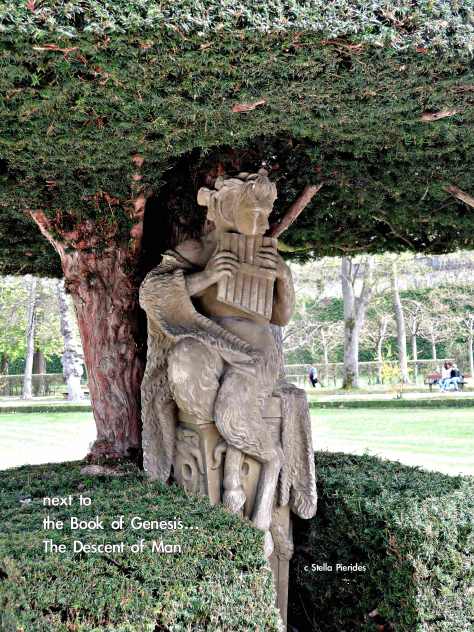
13/100 #The100DayProject #100daysnewthings
Statue of a Satyr in the garden of the Residenz, Würzburg, Lower Franconia, Bavaria, Germany

next to
the Book of Genesis…
The Descent of Man
13/100 #The100DayProject #100daysnewthings
Statue of a Satyr in the garden of the Residenz, Würzburg, Lower Franconia, Bavaria, Germany
.
where angels rest their weary wings

12/100 #The100DayProject #100daysnewthings
memories
the scent of white
on white
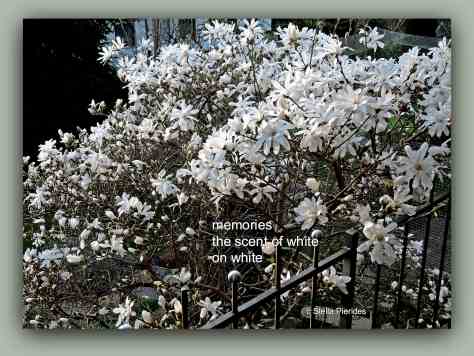
10/100
#The100DayProject #100daysnewthings #poetsofinstagram
#followme #poetry #poems #haiku #stories #dailycreativity
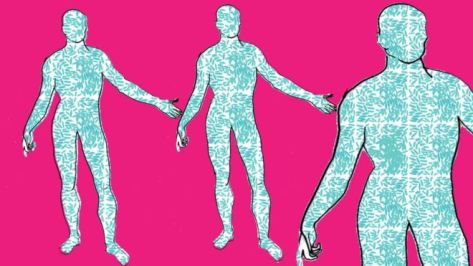
at last…
birdsong spilling out
of dawn
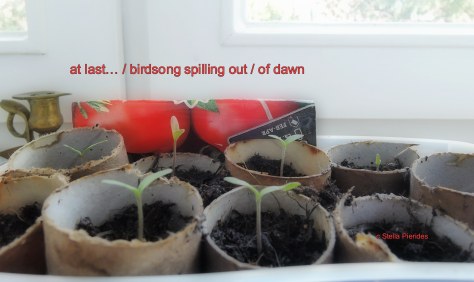
7/100
#The100DayProject #100daysnewthings #poetsofinstagram
#followme #poetry #poems #haiku #stories #dailycreativity #tomato
there is no end to us no beginning
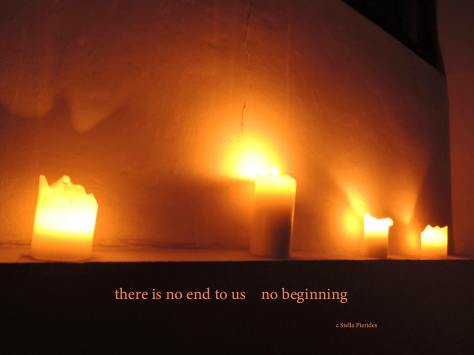
.
#The100DayProject #100daysnewthings
#followme #poetry #poems #haiku #stories #dailycreativity #light #monoku
It’s at its loudest in the early morning hours. Before light dissolves darkness, before the neighbour leaves for work, before the birds start singing, his laboured breathing comes over the baby monitor whispering, gurgling, rattling, spluttering…
I lie awake listening to the crack of thunder, the roaring waterfall, the sounds of the sea emitted from his chest. A car starting, the exhaust backfiring, the train leaving station. The boat reversing in the harbour. Light rain. A soft mieow. His breathing renders a whole world. In this soundscape, I make out the stories he told me when years ago he put me to bed.
Soon, light dispels the apparitions, and his breath comes over the monitor soft, steady, regular, lulling me to sleep.
music of the spheres
how we became
human
*
In the inaugural issue of Wales Haiku Journal, Spring 2018
cherry blossom —
from flowering to fall
our short lives
Congratulations to the winners! The results of the British Haiku Society Awards 2017 are out!

I am honoured to have been asked to serve as a judge in the ‘Ken and Noragh Jones Haibun Awards.’ And very much enjoyed reading all the wonderful entries.
The results and reports by all sections’ judges can be viewed at the Society’s website (for haibun, please scroll down), and will also be published in Blithe Spirit, the Society’s Journal.
A big thank you to the Society for entrusting me with this task, and to all those who sent in their entries.
Honoured to be included in ‘old song,’ The Red Moon Anthology of English-Language Haiku 2017, edited by Jim Kacian and the Red Moon Press Editorial Staff:
The Red Moon Anthology of English-Language Haiku assembles each year the finest haiku and related forms published around the world in English into a single book. old song, the twenty-second volume in the most honored series in the history of English-Language haiku, includes 151 poems (haiku & senryu), 17 linked forms (haibun, renku, rengay and sequences), and 5 critical pieces on the reading, writing and study of the genre.
refugee child—
folding and unfolding
his paper boat
p.54
(This poem had received First Prize in the Sharpening The Green Pencil Haiku Contest 2017)
Delighted to have two poems featured on Jennifer Hambrick’s blog Inner Voices, for a second year hosting the International Women’s Haiku Festival 2018! This is how Jennifer introduces them in her blog:
Two laser-sharp senryu by poet Stella Pierides explore women’s age dynamics and the eternal question of women’s dress and sexuality.
dressed to kill
she asks
if I’m retired
Jennifer says:
Well. Why not just ask about her final wishes? The picture is this senryu is crystal clear: a younger woman, in full heat of professional and/or personal ambition and wearing the clothes to prove it, asks the poetic speaker, whom I read to be an older woman, if she’s retired – read: no longer competition, no longer someone to be concerned with. To be charitable, maybe it’s just an observation: the older woman looks older, looks perhaps comfortable in her own skin, and the younger woman just doesn’t get a) that retired doesn’t equal out to pasture, and b) that remarking, even obliquely, on someone’s age is at best insensitive. And what if the poetic speaker actually is retired? Picasso said it best: “It takes a very long time to become young.”
 and:
and:
knee-length skirt
the extent
of her rebellion
.
Jennifer writes:
This little senryu is situated perfectly between the rock and the hard place that, eventually, every woman encounters. Look sexy, be sexy, the world instructs. But not too sexy. In this poem, rebellion against the social expectations that a girl or woman be prim and proper results in a shorter skirt. But rebellion against social expectations doesn’t necessarily eliminate the expectations. There is potentially a price to pay – the demise of one’s reputation – for breaking the rules, hence the “extent of her rebellion” is defined by the knees. It could be fear from social pressure that keeps everything north of the knees covered, or it could just be the poem subject’s authentic assessment of her own comfort.
Many thanks to Jennifer Hambrick for including my poems!
I am very much looking forward to reading and enjoying the rest of the month’s contributions with Jennifer’s insightful commentaries.
.
.
.
.
.
.
Monoku ‘white light’ appeared as part of my haibun
Modern Haiku, 49:1, 2018
beyond Mars
all wars fought
in silence
*
alpha centauri. . .
reaching for a cup
of tea
*
no matter what
roses
on Venus
*
small wonders
the cosmic dust particles
on my roof

In Scifaikuest (print version only), February 2018, p.13 (ed. t.santitoro)
Available from:
http://store.albanlake.com/
We die alone. We disembark on the Isle of the Dead with our heads filled with illusions. Vague memories of loves and hurts, envy and resentments. Perhaps holding hands with those who still can bear us, but alone with our regrets. Turning around for a last look, our eyes, swimming with sadness, rest on the ramshackle boats we leave behind.
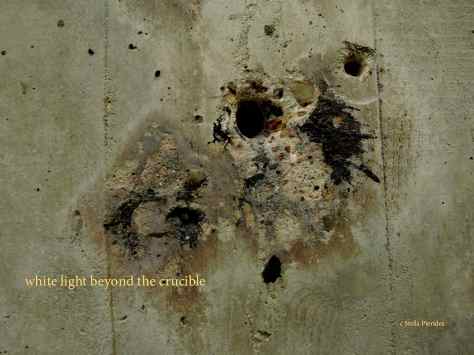
white light beyond the crucible
*
In Modern Haiku, 49:1, 2018
 On its 50th anniversary, the Museum received a gift towards establishing a Collection of Lost Words. The three curators entrusted with this project, feeling an overwhelming sense of responsibility and apprehension, set about their work immediately. At their first meeting, the youngest of the three suggested they might place an ad in the national press, or even tweet about it asking for submissions. The oldest suggested they go on a retreat together with hand-picked etymologists, philosophers, and linguists, in other words experts, to brain-storm. The woman on the team suggested they search online catalogues for words no longer in use. Words written on tablets and papyri, words from extinct languages. For weeks they discussed the relationship between words and the worlds they described; words and the worlds they gave rise to. Forbidden words, or overused words that lost their meaning. As a result of intense deliberations, a special linguistic search engine was built capable of scouring for lost words. It didn’t take long for results to start coming in. The first word to be returned was ‘love’.
cracked earth
last year’s seedling
yet to sprout
Frogpond 40:3, p.63, 2017
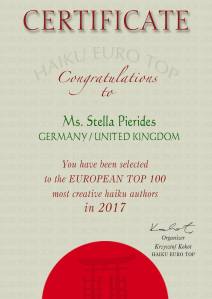 Happy to be included in the Haiku Eurotop once again!
Grateful to Krzysztof Kokot for including me in his annual list of ‘The European Top 100 haiku authors in 2017!’
Congratulations to all my fellow haiku poets selected.
A Happy and Creative New Year 2018 everyone!
gathering moss…
small mercies of
the quiet life
.
My entry to the EUROPEAN QUARTERLY KUKAI #20 – Winter 2017 Edition received 9 pts.
Congratulations to the winners and a big thank you to the organizers!
Happy New Year 2018 everyone!

squares with circles –
listening to the colours
sing
.
After the painting Color Study. Squares with Concentric Circles, 1913, by Wassily Kandinsky.
Poem appears on p. 51 of Ekphrasis, The British Haiku Society Members’ Anthology 2017.
 One of Kandinsky’s favourite descriptions of his work had been ‘making the colours sing.’ It is said that Kandinsky’s synesthesia — a condition in which one sense such as vision, triggers another, for instance, hearing — allowed him to hear the colours he worked with and . . . make them sing. In this poem, I admit hearing them!
Photo: copied from FB image posted by Shrikaanth Murthy.
halloween…
I feel the pumpkin
for soft spots
.
plastic fibres
the process of becoming
eternal
.
besides poetry the weight of the now
.
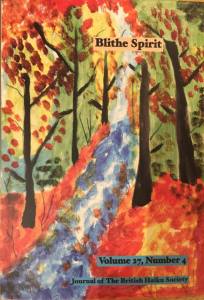
In Blithe Spirit, vol 27, no 4
.
 The handwritten letter is long, the paper creased, stained. The stamps on the envelope, though, are glued perfectly straight, indicating help with the posting. It takes me time to decipher the spidery handwriting infested with blank spaces, as if the sender had taken breaks in between. I stumble repeatedly, especially after the first couple of sentences, when the handwriting grows smaller.
What are you trying to say, I want to ask him. Why didn’t you phone me? I reach for the phone, then stop myself. He wanted me to read this letter. I take off my glasses and bring the paper close to my face. I see better now, and I can smell the paper. A sweet fragrance mixed with acetone.
day lilies
at the hospice . . .
wilting
 Once a year, The Haiku Foundation asks for our help to meet the financial challenges it faces to continue its work. It does so during the period from Thanksgiving through St. Nicholas Day, the time set aside by many to think about our blessings and give thanks. Each day between the 23rd of November and the 6th of December, a blog post on the Foundation site highlights one of its many features, presents a video, offers a sale item from the Gift Shop, and more!
Do visit the blog every day, find out what the Foundation offers, what the people involved with it do, celebrate the offerings, and help in whatever way you can to support the Foundation continue to promote the cause of haiku.
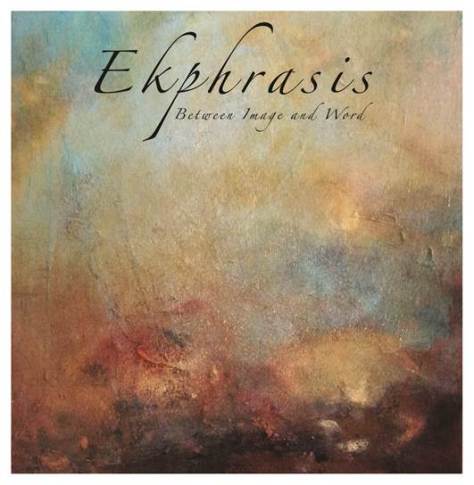
Looking back on 2017 I am very pleased with these two books: ‘Of This World: 48 Haibun’ (Red Moon Press, 2017), and ‘Ekphrasis: Between Image and Word’ in collaboration with Maria Pierides (Fruit Dove Press, 2017).
If you have liked any of the books please think of adding a review or a few stars on Amazon.
If you haven’t read them and you’d like to purchase a copy, please contact me via the contact form here, or Fruit Dove Press for ‘Ekphrasis’.
For copies ‘Of This World’: Amazon UK
USA: Red Moon Press

winter wind
the last leaf now
on top of the pile
.

.

.
.
.
.
.
.
.
.
.
.
.
.
.
.
In NaHaiWriMo anthology Jumble Box (ed. Michael Dylan Welch, artwork Ron C. Moss, Press Here, 2017)
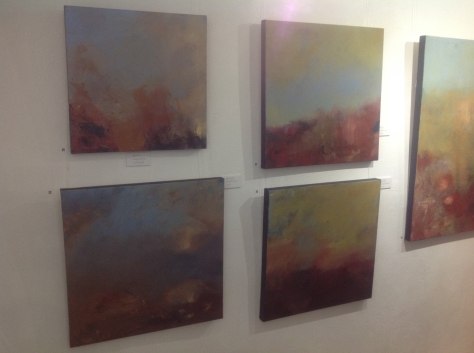
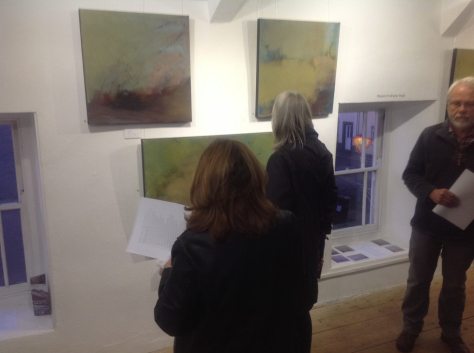
Thank you all for coming to the private view of ‘Ekphrasis: Between Image and Word,’ an exciting show of new paintings by Maria Pierides, with a response to each of those paintings with haiku by yours truly! We were delighted and grateful for your warm and appreciative presence at the show’s launch.

.
.
.
.
.
.
.
.
.
.
.
.
.
.
.
.
.
.
.
.
.
.
(Photos from the King Street Gallery Facebook post)
The exhibition runs in the Chate Room, King Street Gallery, Carmarthen for your viewing pleasure until 15th Nov – don’t miss it! Copies of the exhibition book, postcards, and of course, paintings, are available for purchase from the Gallery, and from pieridesmaria@me.com
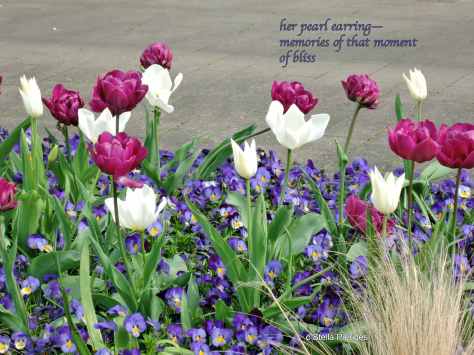
her pearl earring–
memories of that moment
of bliss

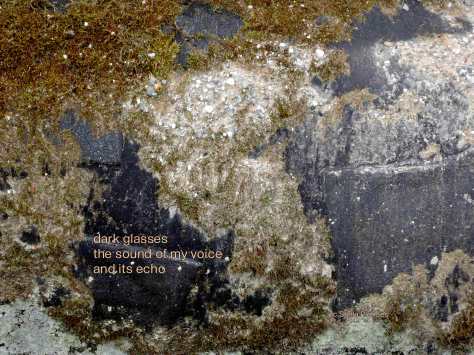
sitting quietly
the fullness of the world
and its emptiness
Over the past few months, I have been collaborating with artist and painter Maria Pierides on an ekphrastic project. The result is Ekphrasis, the forthcoming exhibition at King Street Gallery, featuring 24 of Maria’s marvellous paintings together with my haiku responses to each of her paintings. A book of the exhibition will be available at the show.
King Street Gallery, Carmarthen, Wales, announced the forthcoming event in Welsh Country Magazine:
M Pierides & S Pierides exhibition of paintings & poetry
A new exhibition which opens on 27th October in the Chate Room, King Street Gallery, showcases a dynamic new collaboration between painter Maria Pierides and poet Stella Pierides.
Delighted! So much looking forward to it! I copy below the full notice:
“Ekphrasis: Between image and word” presents new paintings by Maria Pierides – and a response to each of those paintings by Stella Pierides with haiku, the shortest of poetic forms. Maria Pierides’work is inspired by her surrounding landscape, cultural identity, history, myth, time – and poetry. Maria’s visual abstractions are the outcome of conversations with the artist’s being in a particular place at a given time, shortcuts of her lived experience in colour, in texture, in paint. The collaboration with Stella Pierides, who responds to the paintings with haiku, adds layers of meaning that expand in ever widening circles and offer new and unexpected inroads to the paintings. Between image and word; between substance, imagination, and reflection; and between the past and the present, a world resonates, inviting us to engage with the whole of our being. To coincide with her solo show at King Street Gallery, Maria is working on a book featuring a selection of paintings with the haiku written in response to them. King Street Gallery artist Matt Pearce said:
“Despite having been showing at KSG for less than a year, Maria’s work already has an extraordinary following at the Gallery because of its unique emotional impact.
We are very excited about Maria’s forthcoming exhibition which adds to her paintings a response – in poetry – by Stella Pierides,
which will inspire a new dialogue around the paintings.”
A private view takes place at King Street Gallery on Friday, the 27th of October from 5:30 to 7:30 pm. Maria and I would be pleased to see you there. The exhibition runs until 16th Nov.
For more information about King Street Gallery please visit: http://www.kingstreetgallery.co.uk
The British Haiku Society has just announced the opening of their annual Haiku, Tanka and Haibun Awards 2017! And with this, the judges for the different categories. I am honoured and excited to be invited to judge the Haibun category.
This year, the award for this category is named the “Ken and Noragh Jones Haibun Award”, honouring the two great poets and long-standing members of the BHS.
The competition is open to both members of the Society and non-members, from all over the world. Please click here for details. Deadline for submissions 31st January 2018.
I’d stopped writing haibun for a while. It was that moment thing. Every time I tried to write in the moment I found it difficult—nay, impossible—to stay in it. All sorts of ideas bubbled up: memories, associations, judgments; my need to appear clever. I wrote about the past, about objects, about regrets that sat in the heart like stones. Too much luggage, too much heaviness, too much of this world. Weighed down I stopped. I hoped for a prompt, a muse who would give me the push I needed.
Then one day, in Finsbury Park, sharing a bench with a woman talking to herself, my wish was granted. Dishevelled, wild-eyed, looking at all directions at once, thin as if she never ate, muscle fibers moving all at once, mumbling continuously. She turned and took a quick look at me, fell silent for what must have been a whole minute, and then started again. I tried to make out what she was saying. I realized she was reciting Homer’s Odyssey. In ancient Greek! I tried to follow. I could not make out whole passages, got lost in translation then caught up with her again. The holes in the recitation made by my absences did not matter. I sat with her for a long time. Darkness fell without me realising. A chill crept up from the soil. The sounds of the city surrounding the Park changed to an indeterminate, persistent buzz. Dark figures approached and slank away. Every now and then she wiped her nose, rubbed her forehead, played with her earring. I followed her recital long into the night. Long after the guards locked the Park gates and the full moon bathed us in silver.
deeper than the wine-dark sea urchins
.
Haibun Today, Volume 11, Number 3, September 2017