Ruth’s wonderfully touching, and humorous collection is “Hands-On.” Hands? Yes, hands. This is what she offers by way of an introduction:
“We are a species heavily dependent on our eyes, especially for connection with others and world around us. But our hands also connect, and that connection often reaches the heart. Right now my beloved mother-in-law, who doesn’t see well, is dying, and when you approach her, she reaches out her thin hand to connect. These haiku about hands touch emotion. They range from humor, as in Randy Brooks’ hand in the cookie jar, to sadness, as in Cherie Hunter Day feeling the weight and warmth of her dying dog’s collar. They include fear, as in John Stevenson’s shiver at a warm hand before diagnosis, sex, as in Sari Grandstaff’s total attention to the hand on her thigh, and even exasperation or anger, as in Kenneth Elba Carrier’s deaf man grabbing at the other’s hands.”
Female Science Professor (FSP) posted an article last month entitled “The
Hate Stage of Writing“. She discusses the ups and downs of attachment to your
work while writing scientific papers, including a brightly-colored graph showing her
attachment to the papers she’s written (ranging from hate to love) as a function of
the writing lifetime of the paper. I was struck by the similarities and differences
between her commentary and that in Diane Lockward’s thoughtful
discussion of when a poem is finished.
FSP’s article explores the idea that you know the paper is finished when you hate
it. And while Diane’s article doesn’t address that directly, her advice about
letting the poem sit while you “get uninvolved with it” is, to me, a similar stance.
Anger can make you objective. (It can also make you completely subjective, so
apply it to your writing process with caution.) Anger can give you a distance like
the one Diane is discussing but I’m intrigued that I don’t see poets blogging about
hating a poem and knowing it’s ready to go out, while a scientist does. Undoubtedly
my sampling technique needs improvement.
It is the graph in FSP’s post that catches at me. I would like to see similar ones
for poems, especially some that include the impact of the publishing process on our
attachment to our own work. We should all take to heart FSP’s comment that she
“certainly [doesn’t] submit or finish any of [her] papers in the hate stage.”
Diane, perhaps, might add that we shouldn’t submit our poems in the love stage
either, when you are too close to the work to be objective.
It should not surprise you, this many words into my own commentary, that I enjoy
crossing the boundaries between science and literature, two cultures that have never
seemed that different to me, even after all the energy expended to display how far
apart they are. All the poems in my newest book, The
Scientific Method, came to me as a guilty pleasure, bridging that gap and making
art out of what I was told was not possible. And the majority of them finished the
revision process with a resounding thump, excepting “Jump the Chromosome”
which I fear I revised away into too little, mostly based on some kind commentary by
an editor (who did not publish the poem). My graph, for the book as a whole, was one
flat line up between “like” and “love”. The only thing that kept my spirits up,
waiting to hear back from publishers, was that the poems continued to ring true for
me year after year. And that, rather than the objectivity of hate, is what allows
me to keep offering poems to editors for publication.
.
You can read a really scientific poem of Mary’s here
.
This post is part of the multi-author poetry blog tour Couplets, the brain-child of Joanne Merriam, of Upper Rubber Boot Books.
Aubrie Cox’s PDF collection of poetry on the theme of Fox Dreams is now ready and up on her blog, yaywords, to be downloaded, shared and above all, enjoyed.
My own poem is on page 10, together with a number of really great haiku. To read them all, click here
.
stealing away
from my yard again, little fox!
first blossoms
Don’t you sometimes wonder where poets and writers’ characters come from? I do! Several times a day! Especially when I am waiting for mine to appear. Well, Lisa J. Cihlar, celebrating National Poetry Month with me today, is posting here exactly about this matter. And about the gestation, birth and life of her books. Fascinating … Enjoy!
I. A Character Emerges From the Swamp
Somewhere around a year and a half ago I wrote a poem and there was a character in it called Swampy Woman. Who knows where she came from? It happens that I grew up on a farmette in the middle of a swampy area in Door County WI, so I had wetlands always in my psyche, but I didn’t intentionally bring the swamp to my poem. Besides, that was just one poem and I had no design to write any more. But then, months later, who shows up but Swampy Woman. I was hooked after that. At that time I was writing a poem-a-day with a group of online poet friends and I took off with the character and wrote one poem after another. When I had about 25 of them, they just stopped coming.
Now that I had them, I wondered what to do. With the help of my wonderful teacher/mentor Terri Brown Davidson, I revised the poems and shaped the whole bunch of them into a chapbook titled The Insomniac’s House, from a line in one of the poems. I sent them out to a half dozen contests, and had no nibbles. Plus it was expensive. The book was now languishing in a computer file. Then I saw that “Dancing Girl Press” was accepting submissions—no money involved—and I sent the manuscript off and forgot about it.
A couple of months later I got an email saying that Kristy Bowen of DGP loved the book and wanted to publish it. I was over the moon. Kristy hand-makes chapbooks and she does lovely work. When I asked if she would mind if I got my own cover artist she was happy to let me do that. I knew Siolo Thompson through Facebook and thought her artwork fit Swampy Woman perfectly. Siolo read the manuscript and went to work. When I saw the cover design, I knew I had picked the right artist. I love the deconstructing bear on the cover and the woman in red; weird and haughty enough to be Swampy.
I got the first of the books in my greedy hands in January 2012 and it was wonderful holding something I had made from nothing but the thoughts in my head.
The thing about this character is that she seems to have caught the imagination of a lot of folks. Women especially are intrigued. I think it is because the character has sass. She is not Mother Nature as we typically see her, all gauzy and pastel. Rather she is sexy and pushy and apologizes for nothing. Because of this, the book has sold very well.
As a post script to this story of the genesis of a character, I can add that I have written a couple more Swampy Woman poems. She just pops up now and then, kind of showing me that she is still stomping around in the cattails. I’m always excited when she does.
II. A Character Who Remains Unnamed
After The Insomniac’s House poems were done I went back to writing poems on disparate topics. Then I became interested in prose poems. I bought a copy of The Rose Metal Press Field Guide to Prose Poetry and devoured it. After that I wrote some pretty bad prose poems.
Luckily practice makes better. I was writing a lot of poems and themes were emerging. When going back over the work I noticed I had a bunch of poems written about a character that had no name. They were all about She. And She was losing parts—her voice, her ears, her scream. I didn’t want to look into the psychology of this too deeply, so I just kept writing.
One day I was noodling around on Facebook and John Burroughs who runs Crisis Chronicles Press announced that he was doing a 24 hour chapbook contest. He would publish his favorite chapbook that was sent to him in the next 24 hours. That was too fun to pass up so I threw a book together and sent it in. I expected nothing so when I got an email from John telling me he loved the book and wanted to publish it, I was amazed. After I digested the news, I asked if I could have some time to edit and put the book in better order. John graciously gave me the time I needed. Again I worked with Terri Brown Davidson and made some huge changes to the chapbook: swapped out some poems, wrote new ones, changed the title, and gave the whole thing a loose storyline.
I sent the changed manuscript to John and kept my fingers crossed for two days until he wrote back that he liked the new version better than the first one. Huge sigh of relief on my part. He will publish the chapbook this year under the title “This is How She Fails.” Again I got an artist friend of mine, Lisa Marie Peaslee, to design the cover and I can’t wait to see the final product.
For me there is something special about following a character through a collection of poems. I feel like I know these people like I know my best friends.
….
Lisa J. Cihlar‘spoems have been published in The South Dakota Review, Green Mountains Review, In Posse Review, Bluestem, and The Prose-Poem Project. One of her poems was nominated for a Pushcart Prize. Her chapbook, “The Insomniac’s House,” is available from Dancing Girl Press and a second chapbook “This is How She Fails,” will be publishedbyCrisis Chronicles Press in 2012. She lives in rural southern Wisconsin.
This blog post is part of the Couplets project, a multi-author poetry blog tour coordinated by Joanne Merriam of Upper Rubber Boot Books “to help promote poetry and poets for National Poetry Month”.
Well, April, the cruelest month, is upon us! Thank God we have poetry to help us survive it. Poetry, Poetry, Poetry, Poetry!
The Haiku Foundation, the Poetry Foundation, Poets.org, brim with wonderful poetry to feed the soul – and the senses! Visit them and forget about April; or at least enjoy it! There is also Per Diem, the Daily haiku offered by The Haiku Foundation on their home page (bottom right-hand corner); Couplets, the multi-author poetry blog, coordinated by Joanne Merriam of Upper Rubber Boot Books, the Facebook pages of NaHaiWriMo, and numerous other projects, workshops, readings, and poetry-related events.
On this first day of Poetry Month, I am very happy to host Margaret Dornaus, ‘writer, a teacher, wife, traveler . . . as well as a haiku-doodler.’ Margaret says about herself, ‘I live in a beautiful woodland setting, surrounded by native oak forests, that inspires me to record haiku snapshots of luna moths and our resident roadrunner, and even an occasional black bear as it hightails it across the top of my road, my mongrel dog barking at its heels as I watch with wonder’.
In her post hosted here, Margaret kindly states, ‘I’m thrilled to exchange places with Stella for the day in observance of National Poetry Month and to have her wonderful work featured on my blog, Haiku-doodle (http://www.haikudoodle.wordpress.com).
Margaret herself chose to offer three poems (see below). This is how she reflects on her offering:
‘After we decided to share three of our poems on each other’s site, I contemplated whether I should contribute haiku or tanka. I began writing both about a year and a half ago, and, although I was already familiar with haiku, I knew nothing about tanka until I accidentally stumbled upon a call for submissions to Pamela A. Babusci’s journal Moonbathing. When I started studying this ancient lyrical form and reading the work of other tanka poets, I knew I’d found a home . . . . And so I’ve chosen three tanka to feature here today.’
you remind me
how it felt that night we met . . .
our universe
filled with possibilities
and the soft hum of tree frogs
.
Simply Haiku, vol. 9, no. 1, Spring 2011
.
years from now
I promise to remember
how you looked that night
alone on the verandah
holding moonlight in your hands
.
First place, Tanka Society of America
2011 International Tanka Contest
.
in darkness
we forget our anger . . .
suddenly
the sound of wild geese
piercing the starless night
.
Ribbons: Tanka Society of America Journal,
vol. 7, no. 1, Spring 2011
.
This blog post exchange is part of the Couplets project, a multi-author poetry blog tour coordinated by Joanne Merriam of Upper Rubber BootBooks “to help promote poetry and poets for National Poetry Month“.
In honour of International Women’s Month, Michelle Elvy produced a great mini-blog fest ‘March on, Women‘, featuring women from around the globe.
You can visit and enjoy the writing Here
In this collection, Michelle included the link to my haibun ‘The Tree’! Thank you Michelle, and well done!
According to scientists, we humans have receptors for between nine and twenty one senses available to us. Imagine! Up to twenty one points of entry to the world! I say imagine, because we do not appear to be aware of most of those senses. Beyond the five well-known ones, who thinks of their sense of equilibrioception (the sense of balance) or proprioception (the sense of the body’s position in space) – unless they go wrong, of course. What is more interesting is the use we make of these ‘inputs’! The emotional, geographical, cultural, historical worlds we build around them.
In this issue, twenty one contributors explore the senses – the primary but also some of the secondary ones – and the ways these interact to create a sense of place, rootedness, memory, history, and cultural identity. Using the taste and feel of words, the images captured on camera and in paint, their own individual experiences and associations, the artists reflect on the senses in diverse, entertaining, fascinating, remarkable ways and create the world of the senses anew for us to savour and celebrate. It has been a pleasure to host their contributions to the theme of edition #14: Locating the Senses in Language/Place!
Alegria Imperial, originally from the Philippines, now writing from Vancouver (Canada), explores in her haibun, “the tiresome coldness of winter, the longing for spring and its blossoms to spark again, a self-consoling reflection on what eventually awaits yet for now ‘this longing/at moonrise/the only star’”. See here
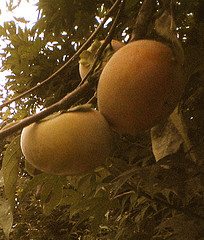
Elizabeth Kate Switaj, writing from Ireland, in her ‘Memories of Place: Fruit’ considers the way the taste and sight of two different kinds of fruit, persimmons and mangoes, can bring back memories of place. A slight difference in the variety of fruit means a different experience of memory entirely… here
Kristina shares with us a walk among the ruins of Paestum, an incredibly peaceful place, and draws our attention to the neighboring museum and the ways it imbues the ruins with a sense of place and time. And after the sights and the history, pizza with mozzarella and courgette flowers! What a treat! Here
Penn Kemp, writing from London (Canada) says, the “two poems in ‘A Carnival of Senses’ celebrate the senses, celebrate language, celebrate place, in this case my bedroom”. Here
Brigita Orel writes: “Senses are the inciting sparks of stories and poems and the places and times at which I became aware of them shape how I use them, maybe even how I interpret them.” In her essay, she reflects on the difficulties and challenges of writing in a foreign language rather than her mother tongue, and what it means to think, feel, or sense in a language other than your own. Seehere
Driving Rain
Maria Pierides, Kent (UK), explores her sense of landscape using a non-verbal medium, painting. In her blog, she speaks in the language of color, image, movement, shape, density, contrast… In Gallery 3, Time and Tide, she explores the seascapes and landscapes of Kent and their relationship to time, culture, and history. Here
Martin Willitts Jr, writing from upstate New York (USA), in his poem ‘Dear Diary’ interprets the story of Hansel and Gretel; and he knows a trap when he smells one! Here
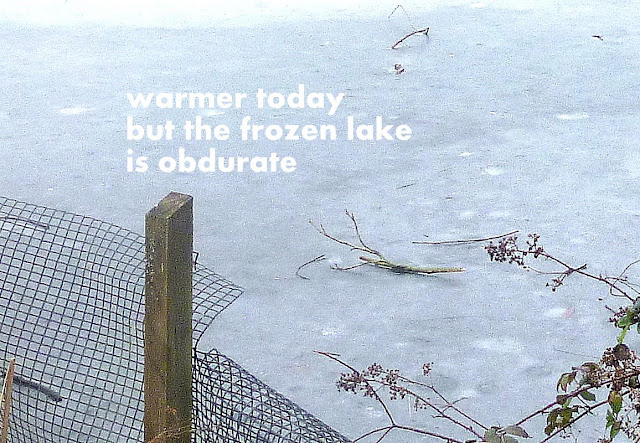
Jean Morris (UK), in her haiku/haiga reflects on her experience: it “has been lingering as a taste and texture of
icy cold in my mouth since the moment I saw/wrote it, last month before the weather changed.” Here
Steve Wing, a visual artist and writer living in Florida (USA), in his work reflects his appreciation for the extraordinary in ordinary days and places. In this contribution, he writes about the unique cultural texture that some fragrances like copal acquire. Here
Abha Iyengar, writing from New Delhi (India), in ‘The Senses: Diverse Renderings’ immerses herself in sensations – she has jasmine under her pillow – in poetry written for this theme. Here
Fiona Robyn, from the UK, whose ‘mission is to help people connect with the world through writing’ writes: “To prepare yourself for nourishment, you need to allow your eyes, ears, nose, fingers, mouth, head & heart to open.” A true feast in ‘Feed your Head’ Here
Jim Martin, writing from Munich (Germany), in his ‘The Visitors’ takes us on a fascinating and mysterious journey, beginning and ending in a Tuscan farmhouse. Here
Cathy Douglas, writing from the US, says: “In my adopted home state of Wisconsin, winter is a big part of our image. As the snow melts and the lakes thaw, we experience a brief, muddy identity crisis known as March”. Here
Karyn Eisler, Vancouver (Canada), in her blog ‘Living ?s’ reconnects with her senses in Heviz. Where is Heviz? More important: what is Heviz for Karyn? Read Karyn’s post and see! Here
Michelle Elvy, writing from New Zealand, in ‘Close your Eyes’ explores the body and its history as a landscape, or rather an open book… Here
Dora, of ‘turns of endearment’, finds sanctuary in immersing herself in the experience of color… “an almost religious, aesthetic experience”. Here
Sherry O’Keeffe writes: “The Shoshoni Indians had made the river valley their home long before I showed up on the gravel bars, looking for the sound of a crow. I learn from their language to see the world as never belonging to any one, not even to the crows”. Here
Nine’s memoir piece is filled with emotion, color, images. Looking back, now in New Zealand, she tells us how she said goodbye to Berlin. Even now, she says, “it’s still largely what I think of when I think about Berlin” in a blog entry, which “I wrote almost about year and a half ago” Here
Siddartha Beth Pierce contributes 6 poems, each covering sensitively and thoughtfully one of the six senses… “making angels on the ground”. Enjoy here
Steve Wing and Dorothee Lang, in an e-logue that moves back 35.000 years in time, reflect on neolithic art and modern works that reach back in time to capture the past in film, in image, and in story: “A sense of place in time” Here
Stella Pierides, writing from Germany and UK, in her haibun ‘Other Worlds’ explores the sometimes hallucinatory qualities of the senses. Here
A huge thank you to everyone who contributed to this edition. I enjoyed reading your entries and getting to know your blogs – do let me know of any mistakes in your entries and I will try to correct them. I am going to be a more regular reader and contributor from now on! A huge thanks you to Dorothee Lang, too, the founder of this blog carnival, and the ever-present support and inspiration to the changing guest editors.
Edition #14, this edition, was put together by Stella Pierides. She is a poet and writer and blogs here. She tweets @stellapierides. She also has a facebook page and would like more friends! Apart from that, she looks forward to the next edition #15.
Edition #15 will be hosted by writer and poet Abha Iyengar, who lives in New Delhi (India) and blogs at abhaencounter.blogspot.in and tweets at @abhaiyengar. The feature theme of Abha’s edition is “Encountering the Other in Language/Place“. Contributions are invited from writers, poets, and anyone with an interest in this topic. As always, we welcome a wide variety of posts. Guidelines here
Kaspa & Fiona have taken over my blog for today, because they need our help.
They are both on a mission to help the world connect with the world through writing. They are also getting married on Saturday the 18th of June.
For their fantasy wedding present, they are asking people across the world to write them a ‘small stone’ and post it on their blogs or on Facebook or Twitter.
A small stone is a short piece of observational writing – simply pay attention to something properly and then write it down. Find out more about small stones here.
Whether or not you have a blog, write them a small stone on their wedding day whilst they are saying their vows and eating cake, post it on your blog, and send it to them.
Deathmatch, a competition for the best short story, is on at the Broken Pencil, Canada’s long running magazine for “zine culture and the independent arts.”
Deathmatch pits two stories against each other and invites readers to vote for their favourite one. The winner of the round goes forward to semi-finals and so on. It is a bit like the world cup games, only with short stories instead of football! In addition, there is interesting discussion about the merits and problems of the stories, which help the readers and writers reflect and consider them from different perspectives (Not easy to find: you need to scroll to the end of the second story).
So now you know, please go over to Broken Pencil and read the stories: Field Guide to Kleptoparasitism, by Braydon Beaulieu and Floppy Discs, by Madeline Masters. And vote! I did, I voted for Field Guide to Kleptoparasitism. Why? Because it is an excellent story, well written, and with rich layers of meaning.
I will not attempt an analysis of the story here. Only a point that resonated with me. I liked the creation of the main character; Tony; to me a product of a marriage between Kafka’s Metamorphosis with Conrad’s Heart of Darkness. I like the nod to these writers, as I believe in literary genealogy and influence. We are nothing without parents!
While in both books there is a conscience and moral compass somewhere, in the Field Guide the character is skilfully pushed to a moral abyss, with no attempts at redemption.
“…The compound eyes or mandibles”, the predominance of the olfactory sense and consistent use of other animal features in the character’s make-up, not visible to others, such as his neighbour, suggest “animal” morality. Tony does not know better. He has reached the depths of the true heart of darkness. He exploits every single opportunity to his ends and so in the end, the reader is left with an ‘insect.’ Breathtaking!
The development is clear and linear. To me, Tony embodies modern man and woman at their worst: insatiable greed, contempt for others, random acts of envious and mindless destruction. We see flashes of this aspect of humanity in our newspapers every day. A Field Guide is a complex and memorable story, not drawing back from the abyss. For a better understanding of ourselves, we do need stories that illuminate and explore the underworld of the human mind, “the social patterns of ants.”
I also liked Madeline Masters’ Floppy Disks. A very good story, exploring issues of personal boundaries, privacy and gender. The idea of making artworks of disks containing personal information is interesting, especially at a time of real concerns about personal privacy. Where Floppy Discs fails for me is in the character of Mridula not being fully explored; and in the changes of perspective in the story: jarring.
Visit Broken Pencil’s Deathmatch, read, comment and vote! And enjoy!
Congratulations to poet Tania van Schalkwyk on winning the Ingrid Jonker Prize for English poetry!
She is a favourite of mine and I am so pleased her work is gaining the recognition it deserves.
2010 INGRID JONKER PRIZE AWARDED TO UNEMBELLISHED INCANDESCENCE
“Tania van Schalkwyk’s debut collection, Hyphen, is the winner of this year’s Ingrid Jonker prize for English poetry. The judging panel consisted of the poets Prof. Leon de Kock, Prof. Sally-Ann Murray and Charl J.F. Cilliers.
Van Schalkwyk’s poetic voice was declared ‘a rich addition to English South African writing’ and her collection Hyphen ‘a very significant volume indeed’.
The panel admired the ‘quiet humour’, the delicate capturing of ‘human strangeness’, and the refusal to embellish, all of which characterise Hyphen.”
The Ingrid Jonker Prize for debut poetry collections is awarded every year, and it will be presented at the 2011 Franschhoek Literary Festival.
Well done Tania! I am looking forward to many more poems and prizes!
The first edition of the Language/Place blog carnival is out. Why not visit here.
I quote from “virtualnotes,” where this particular blog carnival originated:
“The idea of “> Language > Place” is to create a collaborate virtual journey through different places, in different formats, and with different languages included – the main language is english, yet the idea is that every post also includes snippets or terms of other languages, and refers to a specific place, country, region or city.”
For more information and how to join this monthly event, here
I just watched a short youtube video trailer of a fantastic video poetry project, City Breath, bringing the poetry and art of South African cities to life! The link to this trailer is here
.
I was sent the following information about the City Breath project:
.
“Through their common city theme, these short video ‘gasps’ or ‘breaths’ of South African cities give voice to the private dreams and nightmares of local poets, dancers, performance artists and filmmakers. They interrogate, with or against rational logic, the way South Africans understand their cities and urban life. Rebellious in their nature, under 4 minutes each, the films represent a genre seldom seen in South African film and television.
“Inspiring, sometimes beautiful, sometimes challenging, and over-all very impressive.” (Trevor Steele-Taylor, Director of the National Arts Festival Film Programme)
The City Breath video poetry project was shown in several cities round the world – Johannesburg being the most recent, after Berlin, London, Cape Town, and Vancouver. Curator Kai Lossgott is looking for more venues and festivals around the world interested in showing the project. She can be contacted directly at info@kailossgott.com
Apart from selecting existing works, the CITY BREATH project has initiated and developed new collaborations in the areas of the video poem, screen dance and experimental film.”
I happen to know the work of one of the poets quite well: the immensely talented Tanya van Schalkwyk’s work, fusing imagination with sensitive observation and dynamic expression.
But watching the trailer (a few times!) made me want to see the whole thing!
Tania’s contribution to the video project is her poem “The Electrician” included in her book Hyphen. It can be seen here
What is a blog carnival? And do you have to wear carnival costume?
You can tell I am a late learner. I found out about blog carnivals yesterday! I immediately liked the idea. I learnt that a blog carnival is the regular appearance of a central post containing links to other blog posts on a previously specified theme. This post is written by the blogger who hosts the carnival. Hosts rotate. I quote from the originator of this particular blog carnival:
“there’s a given theme, and to join, you put up a relating blog post in your blog, and then send the link to the host of the carnival – who then puts a central page with links to all participating blogs / posts together.”
The > Language > Place Carnival will be of particular interest to bilingual authors living outside the country of their birth, or learning another language. There are so many of us… I take this to mean emigrants, immigrants, expats, exiles, also refugees of all kinds…all those finding refuge, or asylum, or arbour in a second language/place … travellers… after the Fall wanderers…
Visit the site for the full details.
Finally, no, you don’t have to wear carnival costume, though respecting the dress code of others is essential. And no, you don’t have to worry about eating/avoiding meat (carne). http://en.wikipedia.org/wiki/Carnival Though the idea is to beef up your content!
For a succinct definition of “blog carnival” and festival have a look here
Papa Osmubal’s poem “A Bum’s Demise,” published in Asian Cha, is nominated for a Pushcart. You can read the poem here. A very perceptive and thorough analysis of this poem is also published by Asia Cha, in their section A Cup of Fine Cha, here
I felt both moved and haunted by this poem; compelled to comment on it. It kept me thinking. It is a powerful poem, with many levels and even more twists of meaning. Verlaine is implicated. His liver also, though I was more interested in the state of his heart. Read my own comment in the comments section of A Cup of Fine Cha. You can also find it copied in my own Scrapbook.
The poet Constantine P. Cavafy, or Konstantinos Petrou Kavafis, one of my favorite poets, wrote the following about his origins:
.
“I am from Constantinople by descent, but I was born in Alexandria—at a house on Seriph Street; I left very young, and spent much of my childhood in England. Subsequently I visited this country as an adult, but for a short period of time. I have also lived in France. During my adolescence I lived over two years in Constantinople. It has been many years since I last visited Greece. My last employment was as a clerk at a government office under the Ministry of Public Works of Egypt.”
.
I have pasted his poem Ithaca below – he knew what he was talking about. For more of his poetry and resources on the web, see the Cavafy Archive
The poem, quotation, and Wikipedia url can be found here
Ithaca
English Translation
When you set sail for Ithaca,
wish for the road to be long,
full of adventures, full of knowledge.
The Lestrygonians and the Cyclops,
an angry Poseidon — do not fear.
You will never find such on your path,
if your thoughts remain lofty, and your spirit
and body are touched by a fine emotion.
The Lestrygonians and the Cyclops,
a savage Poseidon you will not encounter,
if you do not carry them within your spirit,
if your spirit does not place them before you.
.
Wish for the road to be long.
Many the summer mornings to be which with
pleasure, with joy
you will enter ports seen for the first time;
stop at Phoenician markets,
and purchase the fine goods,
nacre and coral, amber and ebony,
and exquisite perfumes of all sorts,
the most delicate fragances you can find,
to many Egyptian cities you must go,
to learn and learn from the cultivated.
.
Always keep Ithaca in your mind.
To arrive there is your final destination.
But do not hurry the voyage at all.
It is better for it to last many years,
and when old to rest in the island,
rich with all you have gained on the way,
not expecting Ithaca to offer you wealth.
.
Ithaca has given you the beautiful journey.
Without her you would not have set out on the road.
Nothing more has she got to give you.
.
And if you find her threadbare, Ithaca has not deceived you.
Wise as you have become, with so much experience,
you must already have understood what Ithacas mean.
It is a brilliant self-reflective poem, based on experiencing the human body as a thinking as well as a feeling person.
Winner of the 2010 Poetry Foundation’s Ruth Lilly award, she made the news at a time when she was almost forgotten. Poetry magazine editor Christian Wiman, commented on her “sober and clear-eyed serenity,” and her strong reserve. “We live in a time when poetic styles seem to become more antic and frantic by the day, and Taylor’s voice has been muted from the start,” The Guardianreported. Others, commenting on her award, made strong references to her age.
Her poetry, though, speaks for her talent and originality; her making us see the world anew – in this case, our own body.
The level that hooked me was the one hinting at the hunger for home and the wish to return to it. Real or imagined, a literal home or a metaphorical one, the womb or country of origin, it is always there, calling. Going round the world, we carry that hunger, that need, hear the siren’s call, knowing at the same time, the impossibility of returning…
Iris Law speaks of the pain of this recognition, the moment “the spear hit home.”
Kavafis knew this problem and wrote about it in his Ithaca.
Odysseus had to find out for himself. Tellingly, he set out again, soon after he returned home.
Here I collect notes, poems, articles, pictures, news I find interesting, exciting, thought-provoking – without necessarily agreeing with them.
New Poetry Book, Hyphen, by Tania van Schalkwyk
A wonderful meditation on origins, place and the spaces in between. Tania has the gift of writing poems that refresh the soul. Here is a link to her book:
Carol Ann Duffy’s poem 12 Days of Christmas makes my day, everyday. What an alive, current, all-encompassing ode to reality! Thank you Carol Ann Duffy!