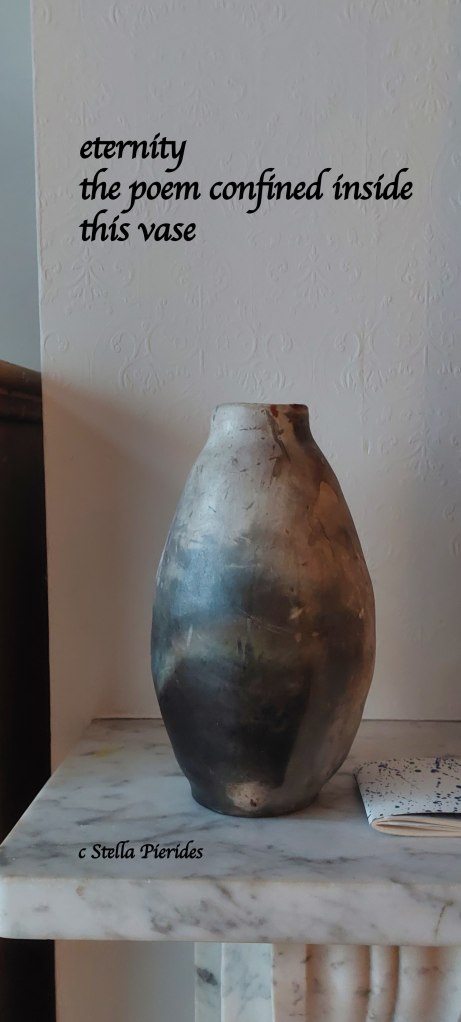
eternity


January floods
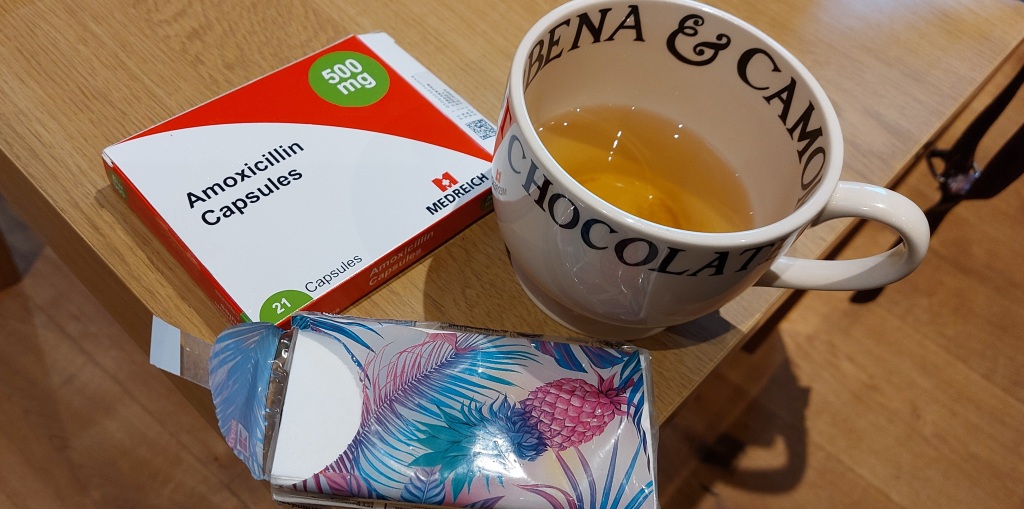
rattling of the bronchial tubes
all night
The second installment of Haiku for Parkinson’s is the interview of a British poet, now living in New Zealand, Tim Roberts.

Tim describes his haiku practice and the ways it helps him with his Parkinson’s symptoms. It has not been an easy ride. He says:
I had to stop work shortly after being diagnosed. I was adrift. I didn’t have any real hobbies and lost my identity. I felt rudderless and scared. I didn’t know who I was anymore – perhaps that means I never had. I had confused who I was with what I did. Now, having developed such a rooted haiku practice, I have a solid sense of who I am and an exciting sense of purpose. I love poetry and I like to use it to connect to others. I see it as my vocation – and a part of my spiritual practice. Now, thanks to the challenges of PD, I am much more me than the person who was a leadership coach, or any of my previous personas, the university teacher and the detective.
Take a look here for Tim’s informative, inspiring, and from-the-heart account of his journey with Parkinson’s Disease.
waiting room
the dehumidifier
set on high

A poem about one of Parkinson’s symptoms: extreme sweating! Not every person living with this disease has this symptom, but if you have it, you will understand…
Happy to see two of my haiku appear in The Pan Haiku Review, issue 2, Winter 2023, Kigo edition, p.98. Editor: Alan Summers.


just as
the snowdrops wither
cherry blossom


snowdrops...
breaking through
this sadness

My haibun “Full Disclosure” appears in Drifting Sands issue 24, 2023, p. 91. This fictional account of an encounter between two people in a highly embarrassing situation, and their ways of coping with it, can be accessed by clicking here.
Alternatively, “Full Disclosure” may be enjoyed below.
Full Disclosure
It’s getting dark early. The yellow light seeping from the lamp on the mantelpiece dissolves before reaching the corners of the room. He is sitting opposite me, tall and dark-haired, an air of confident irony hanging from his lips. Leaning forward, and looking straight into my eyes,
he asks:
“Are you incontinent?”
I shift in my chair and, clearing my throat, I reply. He jots down something in his notebook.
“Do you wear these things that women . . .” his voice trails off.
“Eh, you see . . .” I cough and cough.
While he records my answer, I manage to find my bearings. I know he does this all day, every day, it’s his job. He visits people with disabilities to assess
the level of care they need. Can you cook, can you dress unaided. Can you leave the house on your own. All the practical details that together amount to an identity that is meant to be you.
He is staring at the darkness spreading outside. It must be getting to him. Rumor has it that after work, he leaps into his red Boxster and drives on the autobahn for hours at high speed.
hovering
the kestrel observes
its prey
