Tag Archives: Poems

“A Blackbird Sings: a book of short poems”

Thrilling news: A new book brimming with wonderful poetry is out this month. The even more thrilling news: it includes two of my own short poems!

A Blackbird Sings: a book of short poems” edited by Kaspalita and Fiona Robyn, is now available on Kindle and will be available in print from the 1st of November 2012.

This book is the second anthology of  ‘small stones.’ What is a small stone?  “A small stone is a short piece of writing that precisely captures a fully-engaged moment.” It may or may not be a haiku, tanka, or other form.

The editors say:

“This is a book you can dip into and be nourished by again and again. It will surprise you, shock you, move you and delight you. It’ll remind you of the important sparkling details in your own life, and inspire you to pay more attention to what’s around you.”

Well, I can only say I am very excited to be part of this project! Buy the book! You will find yourself coming back to it again and again!


The party is over…

The National Poetry Month is now over. What a month it has been! Such wonderful celebrations!

The big, month-long party at ‘Couplets,’ the multi-author poetry blog tour, organized by Joanne Merriam of Upper Rubber Boot Books, has now finished. If you are already missing the buzz, missing seeing more of the new poet friends you’ve made, then you can at least look back and reminisce; leaf through the posts again: the whole month is summed up (posts and links, names and titles of posts) here

See if you can find my entries there!

A big THANK YOU to Joanne Merriam; and a big WELL-DONE!

NaPoMonth Guest: Mary Alexandra Agner

In the continuing  celebrations of National Poetry Month I am thrilled to host

Mary Alexandra Agner, whose wonderful poetry I have been recently savoring.

She can be found online at: www.pantoum.org

Mary writes:

Female Science Professor (FSP) posted an article last month entitled “The
Hate Stage of Writing
“. She discusses the ups and downs of attachment to your
work while writing scientific papers, including a brightly-colored graph showing her
attachment to the papers she’s written (ranging from hate to love) as a function of
the writing lifetime of the paper. I was struck by the similarities and differences
between her commentary and that in Diane Lockward’s thoughtful
discussion of when a poem is finished
.

FSP’s article explores the idea that you know the paper is finished when you hate
it. And while Diane’s article doesn’t address that directly, her advice about
letting the poem sit while you “get uninvolved with it” is, to me, a similar stance.
Anger can make you objective. (It can also make you completely subjective, so
apply it to your writing process with caution.) Anger can give you a distance like
the one Diane is discussing but I’m intrigued that I don’t see poets blogging about
hating a poem and knowing it’s ready to go out, while a scientist does. Undoubtedly
my sampling technique needs improvement.

It is the graph in FSP’s post that catches at me. I would like to see similar ones
for poems, especially some that include the impact of the publishing process on our
attachment to our own work. We should all take to heart FSP’s comment that she
“certainly [doesn’t] submit or finish any of [her] papers in the hate stage.”
Diane, perhaps, might add that we shouldn’t submit our poems in the love stage
either, when you are too close to the work to be objective.

It should not surprise you, this many words into my own commentary, that I enjoy
crossing the boundaries between science and literature, two cultures that have never
seemed that different to me, even after all the energy expended to display how far
apart they are. All the poems in my newest book, The
Scientific Method
, came to me as a guilty pleasure, bridging that gap and making
art out of what I was told was not possible. And the majority of them finished the
revision process with a resounding thump, excepting “Jump the Chromosome”
which I fear I revised away into too little, mostly based on some kind commentary by
an editor (who did not publish the poem). My graph, for the book as a whole, was one
flat line up between “like” and “love”. The only thing that kept my spirits up,
waiting to hear back from publishers, was that the poems continued to ring true for
me year after year. And that, rather than the objectivity of hate, is what allows
me to keep offering poems to editors for publication.

.

You can read a really scientific poem of Mary’s here

.

This post is part of the multi-author poetry blog tour  Couplets, the brain-child of Joanne Merriam, of Upper Rubber Boot Books.

National Poetry Month: Lisa J. Cihlar

Don’t you sometimes wonder where poets and writers’ characters come from? I do! Several times a day! Especially when I am waiting for mine to appear. Well, Lisa J. Cihlar, celebrating National Poetry Month with me today, is posting here exactly about this matter.  And about the gestation, birth and life of her books. Fascinating … Enjoy! 
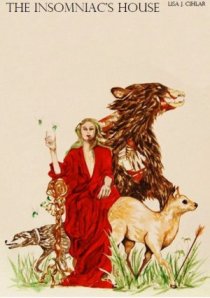
Cihlar I.   A Character Emerges From the Swamp

Somewhere around a year and a half ago I wrote a poem and there was a character in it called Swampy Woman.  Who knows where she came from?  It happens that I grew up on a farmette in the middle of a swampy area in Door County WI, so I had wetlands always in my psyche, but I didn’t intentionally bring the swamp to my poem.  Besides, that was just one poem and I had no design to write any more.  But then, months later, who shows up but Swampy Woman.  I was hooked after that.  At that time I was writing a poem-a-day with a group of online poet friends and I took off with the character and wrote one poem after another.  When I had about 25 of them, they just stopped coming.

Now that I had them, I wondered what to do.  With the help of my wonderful teacher/mentor Terri Brown Davidson, I revised the poems and shaped the whole bunch of them into a chapbook titled The Insomniac’s House, from a line in one of the poems.  I sent them out to a half dozen contests, and had no nibbles.  Plus it was expensive.  The book was now languishing in a computer file.  Then I saw that “Dancing Girl Press” was accepting submissions—no money involved—and I sent the manuscript off and forgot about it.

A couple of months later I got an email saying that Kristy Bowen of DGP loved the book and wanted to publish it.  I was over the moon.  Kristy hand-makes chapbooks and she does lovely work.  When I asked if she would mind if I got my own cover artist she was happy to let me do that.  I knew Siolo Thompson through Facebook and thought her artwork fit Swampy Woman perfectly.  Siolo read the manuscript and went to work.  When I saw the cover design, I knew I had picked the right artist.  I love the deconstructing bear on the cover and the woman in red; weird and haughty enough to be Swampy.

I got the first of the books in my greedy hands in January 2012 and it was wonderful holding something I had made from nothing but the thoughts in my head.

The thing about this character is that she seems to have caught the imagination of a lot of folks.  Women especially are intrigued.  I think it is because the character has sass.  She is not Mother Nature as we typically see her, all gauzy and pastel.  Rather she is sexy and pushy and apologizes for nothing.  Because of this, the book has sold very well.

As a post script to this story of the genesis of a character, I can add that I have written a couple more Swampy Woman poems.  She just pops up now and then, kind of showing me that she is still stomping around in the cattails.  I’m always excited when she does.

II. A Character Who Remains Unnamed

After The Insomniac’s House poems were done I went back to writing poems on disparate topics.  Then I became interested in prose poems.  I bought a copy of The Rose Metal Press Field Guide to Prose Poetry and devoured it.  After that I wrote some pretty bad prose poems.

Luckily practice makes better.  I was writing a lot of poems and themes were emerging.  When going back over the work I noticed I had a bunch of poems written about a character that had no name.  They were all about She.  And She was losing parts—her voice, her ears, her scream.  I didn’t want to look into the psychology of this too deeply, so I just kept writing.

One day I was noodling around on Facebook and John Burroughs who runs Crisis Chronicles Press announced that he was doing a 24 hour chapbook contest.  He would publish his favorite chapbook that was sent to him in the next 24 hours.  That was too fun to pass up so I threw a book together and sent it in.  I expected nothing so when I got an email from John telling me he loved the book and wanted to publish it, I was amazed.  After I digested the news, I asked if I could have some time to edit and put the book in better order.  John graciously gave me the time I needed.  Again I worked with Terri Brown Davidson and made some huge changes to the chapbook:  swapped out some poems, wrote new ones, changed the title, and gave the whole thing a loose storyline.

I sent the changed manuscript to John and kept my fingers crossed for two days until he wrote back that he liked the new version better than the first one.  Huge sigh of relief on my part.  He will publish the chapbook this year under the title “This is How She Fails.”  Again I got an artist friend of mine, Lisa Marie Peaslee, to design the cover and I can’t wait to see the final product.

For me there is something special about following a character through a collection of poems.  I feel like I know these people like I know my best friends.

….

Lisa J. Cihlar‘s poems have been published in The South Dakota Review, Green Mountains Review, In Posse Review, Bluestem, and The Prose-Poem Project. One of her poems was nominated for a Pushcart Prize.  Her chapbook, “The Insomniac’s House,” is available from Dancing Girl Press and a second chapbook “This is How She Fails,” will be published by Crisis Chronicles Press in 2012.  She lives in rural southern Wisconsin.

This blog post is part of the Couplets project, a multi-author poetry blog tour coordinated by Joanne Merriam of Upper Rubber Boot Books “to help promote poetry and poets for National Poetry Month”.

National Poetry Month: Margaret Dornaus

Well, April, the cruelest month, is upon us! Thank God we have poetry to help us survive it. Poetry, Poetry, Poetry, Poetry!

The Haiku Foundation, the Poetry Foundation, Poets.org, brim with wonderful poetry to feed the soul – and the senses! Visit them and forget about April; or at least enjoy it! There is also Per Diem, the Daily haiku offered by The Haiku Foundation on their home page (bottom right-hand corner); Couplets, the multi-author poetry blog, coordinated by Joanne Merriam of Upper Rubber Boot Books, the Facebook pages of NaHaiWriMo,  and numerous other projects, workshops, readings, and poetry-related events.

On this first day of Poetry Month, I am very happy to host Margaret Dornaus, ‘writer, a teacher, wife, traveler . . . as well as a haiku-doodler.’  Margaret says about herself, ‘I live in a beautiful woodland setting, surrounded by native oak forests, that inspires me to record haiku snapshots of luna moths and our resident roadrunner, and even an occasional black bear as it hightails it across the top of my road, my mongrel dog barking at its heels as I watch with wonder’.

In her post hosted here, Margaret  kindly states, ‘I’m thrilled to exchange places with Stella for the day in observance of National Poetry Month and to have her wonderful work featured on my blog, Haiku-doodle (http://www.haikudoodle.wordpress.com).

Margaret herself chose to offer three poems (see below).  This is how she reflects on her offering:

‘After we decided to share three of our poems on each other’s site, I contemplated whether I should contribute haiku or tanka.  I    began writing both about a year and a half ago, and, although I was already familiar with haiku, I knew nothing about tanka until I accidentally stumbled upon a call for submissions to Pamela A. Babusci’s journal Moonbathing.  When I started studying this ancient lyrical form and reading the work of other tanka poets, I knew I’d found a home . . . .  And so I’ve chosen three tanka to feature here today.’


you remind me

how it felt that night we met . . .

our universe

filled with possibilities

and the soft hum of tree frogs

 .

Simply Haiku, vol. 9, no. 1, Spring 2011

.

years from now

I promise to remember

how you looked that night

alone on the verandah

holding moonlight in your hands

.

First place, Tanka Society of America

2011 International Tanka Contest 

.

in darkness

we forget our anger . . .

suddenly

the sound of wild geese

piercing the starless night

.

Ribbons: Tanka Society of America Journal,

vol. 7, no. 1, Spring 2011

.

This blog post exchange is part of the Couplets project, a multi-author poetry blog tour coordinated by Joanne Merriam of Upper Rubber Boot Books “to help promote poetry and poets for National Poetry Month“.

Something about April

April is not only the cruelest month. It is also National Poetry Month – for some of the world, anyway. Let’s not split hairs. We all want to celebrate poetry, so let’s do it. Poets, writers, publishers, readers, poetry lovers are planning get-togethers for poetry-related events: fests, readings, workshops, write-ins, stay-in-bed for poetry, day-dreaming…this kind of thing.

This is what I will be doing: I’ll be celebrating at ‘Couplets,’ a multi-author blog tour for April, to help promote poetry and poets for National Poetry Month. Co-ordinated by Joanne Merriam of Upper Rubber Boot Books  it is going to be a fe(a)st.  I am taking part and will be posting, besides my daily haiku, poetry-laden posts during the month. Come over to my web home and we’ll eat poetry words together!

Meanwhile, here are a few links to keep us going till then:

The Haiku Foundation: They say: “April 17, National Haiku Poetry Day, is a celebration of the genre of haiku, a kind of poetry whose origins date back a millennium in Japan; and more specifically, of English-language haiku, which has now been written for more than a century”. But you don’t have to wait till the 17th! You can explore this wonderful site, founded by Jim Kacian, and enjoy the best haiku and haiku poets in the world.

While visiting THF, check out their Per Diem: Daily Haiku series. In March they post my selection of haiku of the senses: haiku by some of the best poets highlighting the interconnectedness of sensory experience (Per Diem can be found on the front homepage of the Foundation, at the bottom right-hand corner). In April they post  “Poems from Aotearoa, New Zealand haiku, featuring flora and fauna specific to those favored isles, and human activities, such as Anzac Day (April 25).” Editor: Sandra Simpson.

The Facebook page of National Haiku Poetry Month, or NaHaiWriMo, moderated by Michael Dylan Welch, has been running since February 2011. Although their haiku ‘month’ is February, they ‘haiku’ the whole year round. You can read or indeed “write at least one haiku a day, inspired by daily writing prompts”. The community is friendly and warm, encouraging…join them and surprise yourself! I have!

Poets.org has a page listing events and poetry resources here

Feel free to add/share any other events you may know of.


Happy World Poetry Day!

Every year on the 21st of March UNESCO  celebrates World Poetry Day. A decision to proclaim 21 March as World Poetry Day was adopted during the UNESCO’s 30th session held in Paris in 1999.

For UNESCO, “the main objective of this action is to support linguistic diversity through poetic expression and to offer endangered languages the opportunity to be heard within their communities. Moreover, this Day is meant to support poetry, return to the oral tradition of poetry recitals, promote teaching poetry, restore a dialogue between poetry and the other arts such as theatre, dance, music, painting and so on, support small publishers and create an attractive image of poetry in the media so that the art of poetry will no longer be considered an outdated form of art…” Link here

So, Happy World Poetry Day everyone!

Festival of the Trees

Olive
Olive

The Festival of the Trees is “a periodical collection of links to blog posts and other online sites, hosted each month on a different blog.” Bloggers, poets, writers with an interest in arboreal matters post related material on their own blogs and submit the links to the host of each month’s co-coordinator. This month’s host was Arati, of the Bangalore-based blog Trees, Plants and More.

My own contribution to this month’s Festival of the Trees, I wrote some time ago. In “If Trees, then Olive Trees,” I use the olive tree, a precious, almost sacred tree in the Mediterranean, western Asia, and northern Africa countries; a symbol of peace and hope, connecting to the “olive branch,” and the sighting of land after the biblical flood.

Short, gnarled and twisted, the olive tree even looks appropriately old. It is said to live for hundreds of years, as its roots are capable of regeneration even if the trunk above ground is destroyed. Radiocarbon dating has confirmed 2000 year old trees in several countries! A tree known to be situated in the grounds of Plato’s Academy, in Athens, lived till the 1970s. An olive believed to have been planted by Peisistratus, the tyrant of Athens in the 6th century BC, is still to be found in Athens. Even older trees have been found in Israel and Arab lands, dating from 3000 and 4000 years ago. The trees of the Garden of Gethsemane are said to be dating from the time of Jesus.

In literature too, we know of several millenary trees: Homer featured olive trees in his poetry. Remember Odysseus bed?

My own poem is about putting down roots, both literally and metaphorically. You can read it here.

My novel “Alexandrias 40: In the Shade of the Lemon Tree” is also set around a tree, and it includes a number of surprising uses for its fruit. Not long now till the book is out. Watch this space.

For instructions on how to submit to the next Festival of Trees here.


Comment on “Suicide Note”

Anuradha Vijayakrishnan’s poem “Suicide Note” was published in Cha: An Asian Literary Journal

This poem is a suicide note addressed to a number of unusual addressees, leaving the content of the note to the reader’s imagination. It puzzled and haunted me for the last few weeks: its exquisite, lyrical tone, its mysteries and the ways it brings nature alive through its lines.

A Critical analysis by Tammy Ho Laiming and Jarno Jakonen appeared recently in A Cup of Fine Cha. I thoroughly enjoyed reading both, poem and analysis, and kept them with me for weeks, chewing on words, mulling over the subtle allusions.

Tammy Ho Laiming and Jarno Jakonen’s analysis of the poem, as well as the comments, provide a beautiful and multi-faceted context to the poem. There is whole list of addressees in this “Suicide Note”: “frog, cicadas, rain clouds, gardens, worms, grass, deer, curtains, noise, lights, glass trails, heart, hands, ink, bruises, rivers, summers, monsoons and thunderbolts,” which the analysis and the comments fully and thoroughly explore.

I have nothing to add, except one question: Where are the people? Where are the relationships with people? The nature described in the poem is giving, generous – though providing what is usually offered by humans: warmth is offered by glow worms, for instance. And as if to emphasize the point, neighbours and strangers appear only impersonally as in “the shining lights of the neighbours and their last ashen cigarettes.”

So, for me, there is so much loneliness and sadness in the persona pouring out every time nature stands in for the human touch: friends, family, acquaintances, colleagues, or even kind strangers. What could be more indicative of sadness, and indeed despair, than the need to use “broken glass trails that will show the way to strangers”?

From this perspective, what if, in a well-encrypted way, we are led to ask: does the poem take the line of praising nature instead of criticizing fatal failings of the human heart?

Szirtes defends Poetry

George Szirtes defends poetry: Poetry conjures the presence of things, their physicality… it is experienced through the body as much as the mind. “…but the chief use of poetry to sense the presence of the toad in language, without which sense nothing happens, without which the language enterprise is all imaginary gardens in which only ghosts can live.” Read it by clicking here: George Szirtes blog Then, go find that toad, say, by reading one of his poems: “Say

History is on His Side

This poem was written on the tenth anniversary of Ken Saro-Wiwa’s death. It  is included in the anthology Dance the Guns to Silence, edited by nii ayikwei Parkes and Kadija Sesay, London: Flipped Eye Publishing, 2005.

History is on His Side

‘No,’ he said, No to oppression, No to injustice,
No to violence. Even as he stood before the guards.
The sun was rising proper in the East, blushing the soil scarlet.

Sozaboy was with soldiers, arguing with the heart
of darkness. We all stand before history, he thought, and
‘No,’ he murmured through cracked lips. ‘No.’

He could not wipe his sweat mimicking sorrow’s tears.
His tied hands tried. His crowded heart pounding with the fear
of the unknowable. He mouthed ‘No,’ just before
their fifth attempt to hang him. Who will claim
the corpse of free speech, but those with a pen
to their name? History is on his side. And ours. Yes.