how to be…
eating the prickly pear
blossoms


how to be…
eating the prickly pear
blossoms
nature’s numbers
the infinite sweetness
of cup-shaped blooms
What do Pattern, Poetry, and Polemics have in common? The Arts and Crafts Movement’s poet, novelist, publisher, translator, architect, designer, craftsman, retailer, environmentalist, and social activist William Morris! I was delighted to be able to visit the William Morris Gallery, in Walthamstow, which tells the story of William Morris and his multiple achievements: the elaborate, detailed, inspirational designs and their manufacture/production/application; the poetry and prose; the perfectly hand-crafted books; the politics, speeches and support for the Victorian poor… Morris applied himself with awe-inspiring energy and dedication to an astonishing array of disciplines.
There’s an organic unity in his work, each piece containing seeds from whatever he’d been working on, in whatever field. Despite this connectivity and continuation in his work, Morris has often been strongly and unfortunately linked with mere wallpaper design. I found this contradiction interesting in itself, as if the critics and the viewers, the consumers of his work, could not cope with someone different to themselves, someone excelling in many fields, rather than just one, if at that. It is not the only contradiction. The critical assessment of his work rests on this ground of contradictory perception, for example, when it is pointed out that Morris decorated the houses of the rich while campaigning for the rights of the poor.
Yet, Morris himself was aware of the connections between disciplines and the depth achieved when we become conscious of them. Lecturing on design, in 1881, he claimed,
‘any decoration is futile … when it does not remind you of something beyond itself’.
Beyond Morris’ decorations, patterns, and wallpapers lie references to the medieval world, history and myth, nature and society, beauty, and above all the assertion that we are all made of the same stuff. Although referring back to a pre-industrial age, his is a utopian vision of humans fulfilling their creativity, and themselves, in self-determined, non-alienated work, within an egalitarian society that supports them in this endeavour. In those terms, in addition to his role in the Arts and Crafts movement, he comes across as a social thinker and moral visionary working towards a better world.
tenements
the heart of a soft
berry
Here is a link to the amazing William Morris Gallery collection
The wikipedia link here
neo-classical
the delicate beauty
of snowdrops
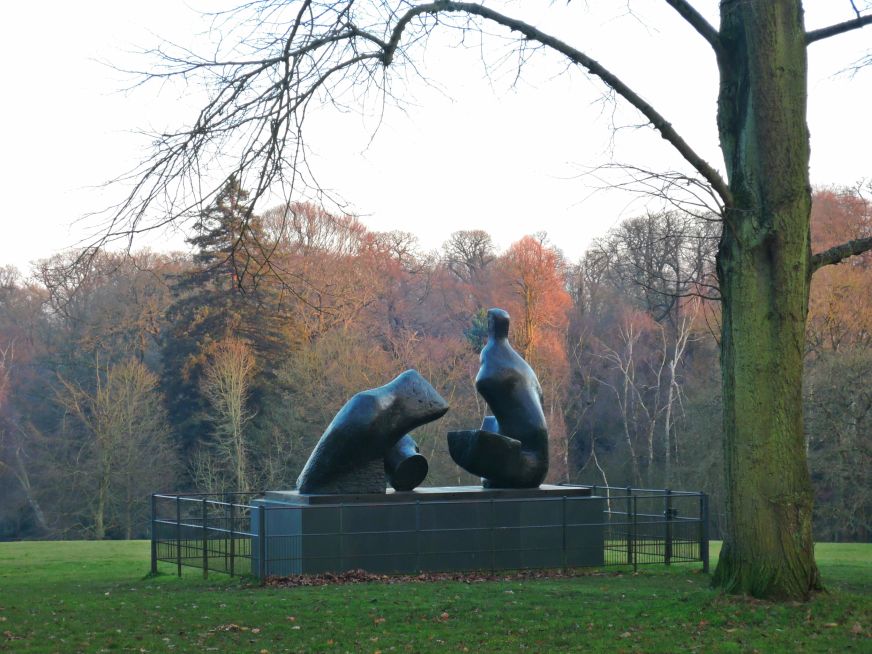
Photo: of a Henry Moore sculpture on Hampstead Heath
Between 1958 and 1973 Kettle’s Yard was the place Jim and Helen Ede called home. In 1966, while still living there, they gave it to Cambridge University. It is now a living museum and gallery, showing the Edes’ collection as arranged by them. Artworks alongside furniture, glass, ceramics and natural objects such as pebbles and wood, with the aim of creating a harmonious whole. Jim Ede’s vision was of a space that should not be
an art gallery or museum, nor … simply a collection of works of art reflecting my taste or the taste of a given period. It is, rather, a continuing way of life from these last fifty years, in which stray objects, stones, glass, pictures, sculpture, in light and in space, have been used to make manifest the underlying stability.
Today each afternoon (apart from Mondays) visitors can ring the bell and ask to look around (there is no entry fee). The house is said to be a work of art in itself. Warm, generous, and well-informed guides are available to help visitors ’see’ and understand the spirit and history of the house.
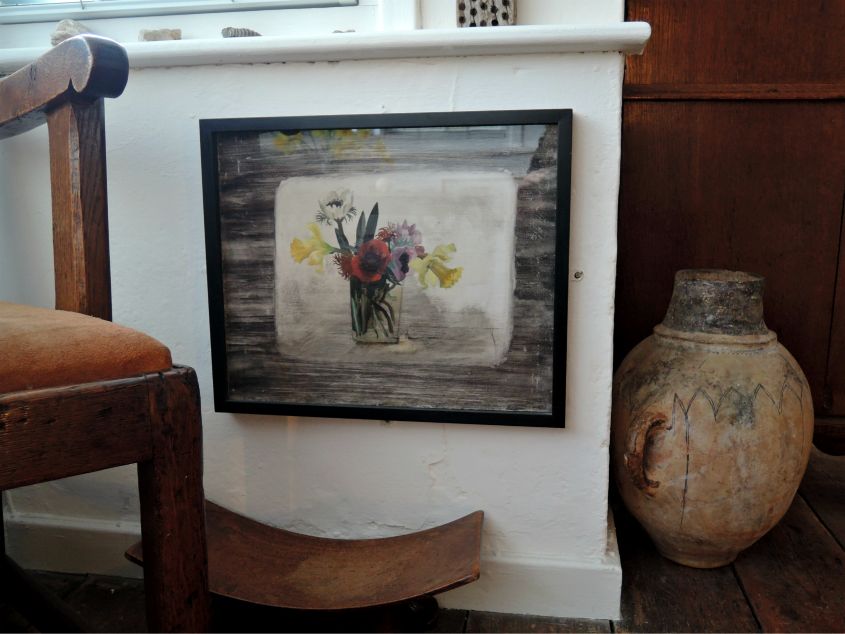
Christopher Wood, Flowers, 1930
A wonderful slideshow with Wood’s paintings can be found here
More paintings: Kettle’s Yard
across the years
the quiet breathing
of anemones
.
(And yes, in case you are wondering, I did visit again)!
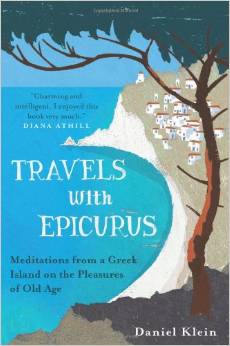 I’ve been reading Daniel Klein’s ‘Travels with Epicurus‘, and reflecting on the concept of play in relation to the life stages we all go through.
Epicurus was an ancient Greek philosopher and the founder of the school of philosophy called Epicureanism. Born on Samos, he lived in Athens and Asia-Minor. Epicurus is known for teaching that the purpose of philosophy is to attain a happy, tranquil life.
Answering the question “How does one make the most of one’s life?” Epicurus’s answer, according to Klein, was that
the best possible life one could live is a happy one, a life filled with pleasure. At first look, this conclusion seems like a no-brainer, the sort of wisdom found in a horoscope. But Epicurus knew this was only a starting point because it raised the more troublesome and perplexing questions of what constitutes a happy life, which pleasures are truly gratifying and enduring, and which are fleeting and lead to pain, plus the monumental questions of why and how we often thwart ourselves from attaining happiness.
I have to admit that I experienced a pang of disillusionment when I first realized that Epicurus was not an epicurean… i.e. a sensualist with gourmet appetites. Let me put it this way: Epicurus preferred a bowl of plain boiled lentils to a plate of roasted pheasant infused with mastiha (a reduction painstakingly made from the sap of a nut tree), a delicacy slaves prepared for noblemen in ancient Greece. This was … Epicurus’s hankering for personal comfort, which clearly included comfort foods. The pheasant dish titillated the taste buds, but Epicurus was not a sensualist in that sense: he was not looking for dazzling sensory excitement. No, bring on those boiled lentils! For one thing, he took great pleasure in food he had grown himself—that was part of the gratification of eating the lentils. For another, he had a Zen-like attitude about his senses: if he fully engaged in tasting the lentils, he would experience all the subtle delights of their flavor, delights that rival those of more extravagantly spiced fare. And another of this dish’s virtues was that it was a snap to prepare.
(From Waterstones, Non-Fiction Book of the Month)
The defining concepts of such a happy life, according to Epicurus, are ataraxia — i.e. peace and freedom from the disturbances of anxiety and greed — and aponia — the absence of pain — achieved through living a non-demanding, humble life surrounded by friends.
Klein’s book, taking its cue from this philosophy, is asking how best to think about growing into old age, and how best to live through this stage of life. The tendency nowadays, Klein points out, is to escape ageing, by spending our lives trying to remain forever young: sport, transplants and implants, botox, diets, all means to prolong and promote youthful looks. But are we missing out on an important stage of our lives, Klein asks.

To look into this question, the author packed a number of books, and staying on Hydra, Greece — where travel is restricted to going on foot, cycling, or riding a donkey — meditated on the issue. The answer he came up with in this book is playful, but I have no intention of reproducing it here. Suffice to say that with all the turmoil of this week’s Greek elections and heated debates, a calm book on growing older, set on a Greek island, juxtaposing the old with the new, matching island life with world-renowned philosophers, provides a much needed good, as well as romantic, counter-balance.
In his unhurried pace, watching a group of friends playing a game of cards, walking the hilly paths of the island, discussing beauty and youth, Klein takes us on his Epicurean journey, savouring the moments of insight, the juxtapositions of beautiful descriptions of nature and human nature with philosophical descriptions of ‘lived time’.
I enjoyed this quirky book, slowed down, looked up references to this and that… thought of acquaintances in Greece who, troubled by their country’s misfortunes, contrary to the Hydriotes observed by Klein, have all but forgotten their ‘ataraxia’; have meditated on the notions of austerity vs growth, and their effects on the mind, long enough.
A timely reminder of Epicurean notions then, a needed breath of fresh air? A New Year’s resolution? Even for those who may not be lacking in material resources, but may be short of (perceived) time?
The language in the book is simple, the images memorable, the light clear… So, keep calm, keep thinking, experiencing… it’s not that difficult to be authentically old… one day… eventually! Alternatively, one can always become a Stoic!
full snow moon
the tightrope bathed
in light
.
You can read the first chapter of this book here
after the rain…
squelching across
winter lawns

Photo from my walk in Hampstead Heath.
 The pre-Socratic Greek philosopher Thales of Miletus (624 – 546 BC), is credited with the saying,
A sound mind in a sound body,’
pointing to the close relationship between physical exercise, mental equilibrium and the ability to enjoy life. It seems a good incentive to incorporate in the New Year’s resolution to improve our health, whatever the state we are in.
So, partly in the spirit of this, on the 15th of January each year, a global event takes place: Greek Dinner Around the World. The main goal is to celebrate Greek culinary culture, Greek cuisine as it is known in every part of the globe, and promote the people, authors, chefs, businesses who are connected to Greece. Everyone is invited for a Greek dinner with friends and family. Partners to this initiative host a dinner using Greek products and Greek dishes. Afterwards, they share a photo of their endeavors and experiences, and tweet using the hashtags #GreekDinner and #EatGreek.
This year, for the second time, I took part in the global celebration of Greek culinary culture, by sharing a delicious Greek meal with friends and family. And books, of course. We met at Lemonia, the old favourite in Primrose Hill. The food was good – especially the fish, which was a ‘miracle,’ to use a Greek expression – the company excellent, and well, the evening a treat. Only problem: we all ate a little too much. We discovered the limits to Thales’ saying. After a point, the amount of food, and drink, interfere with both mind and body! Which led us to resolve next year to follow another Greek saying: the Aristotelian
Παν μέτρον άριστον, i.e., Everything in moderation
Many thanks to Keri Douglas for her tireless efforts in promoting this event.
There was also food for thought. I brought two of my books –collections of short stories on Greek themes — to the table: Feeding the Doves, and The Heart and Its Reasons
και του χρονου
machine song
the plug-in maker’s
baritone voice
.
#scifaiku #sciencepoetry
 I’ve loved Alfred Wallis’s paintings for a long time, having encountered them only in books and postcards. Now, on Sunday January 11, 2015, I had the good fortune to see a number of them in real life, as part of Jim and Helen Ede’s collection, at Kettle’s Yard House, Cambridge. The compelling immediacy, directness and force of the paintings astonished me, and started me musing about the reasons for this appeal.
Alfred Wallis (1855-1942) was a fisherman from the age of nine, turned painter at nearly seventy. Born in Devonport, Wallis later moved to Penzance and St Ives. He only started painting after his wife died, at the suggestion of his neighbour, a grocer who gave him cardboard from his shop to paint on. Painting was his company, he said.
He was ‘discovered’ by Ben Nicholson and Christopher Wood who arranged for his work to be included in London exhibitions and to become known in the art world. Wallis’s career took off, with some critics considering him to be the most original and inspiring British naive painter of the twentieth century. Wallis himself remained the person he’d always been, and kept living the simple life he had always lived by the sea. His work speaks of the sea and the boats, the lighthouses, the marine life he knew and remembered.
Jim Ede, quoted in ‘Kettle’s Yard and Its Artists’ (Kettle’s Yard Publications), noted that about Wallis:
“Though he is always drawing the same ships, the same houses, the same water, each of his paintings is a new experience… He does not set about to enclose his vision, his thought, into some preconceived scheme of colour or design… with Wallis design comes, with its subtly variant lines and spaces, not with experience of drawing or painting, but from closeness, almost identification with the thing he is drawing.”
Similarly, Ben Nicholson wrote that, to Wallis,
“paintings were never paintings, but actual events” —
and this it seems is what Wallis himself was attempting to do. He had a directness of approach; he eschewed perspective, and an object’s scale was often based on its relative importance to him in the painting – some of his fish, for instance, are larger than the fishing boats; some birds bigger than the tree branches on which they perch. Houses slide perilously down slopes, ready to fall into each other, and the waves appear the way he might have seen them as a teenager when on board ship to Newfoundland. Wallis’s perspective is emotional, is experiential, certainly not a draughtsman’s perspective.
 A viewer’s dip into the moment as experienced by the painter… a resonance with the thing depicted—which is ‘other’ because we are different, and, at the same time, ‘familiar’ because we are human, sharing the same world, the same reality—a willingness to share the painter’s focus of attention, through which selected objects (fish, birds, houses) are foregrounded and magnified… Are we not getting closer to the experience of haiku? Isn’t this a link to the interplay between Wallis’s style of painting and haiku? Instead of paint as the medium, in haiku, language expresses the experience. Without embellishment, linguistic trickery, and without, or only minimal punctuation, haiku in its brevity sets the stage for an experience by the reader resonating with the moment the writer captures.
Kettle’s Yard in Cambridge has the largest collection of Wallis’s paintings, thanks to Jim and Helen Ede, who over a period of ten years bought Wallis’s work. They donated their collection, together with their wonderful house, to Cambridge University.
You best explore all the works by Alfred Wallis at Kettle’s Yard, in the context of the collections in the house the Ede’s put lovingly together. Alternatively, if you are not able to visit, you can take a look at his work online
Well worth a real or virtual visit. Or both, as I am now doing.
regardless
of sunrise or sunset
day moon
.
Prompt: seize the poem: day moon
marmelada
my tongue savours
the word
.
Prompt: marmalade
prime meridian
the appeal of parallel
lives
.
Prompt: mirror
how light the weight of the skies

not alone hunting for evidence

The photo for this haiga was taken in Diessen am Ammersee, December 2014.
keel-laying
the Douglas fir’s
lemony scent
.
Prompt: bare branch/log… beam… keel
holy-days
ripples of laughter
throughout the year
.
Prompt: laughter

speed of light the liquidity of our dreams
.

Prompts:
seize the poem: ripples
NaHaiWriMo: liquid
Photo: From the Augsburger Christkindlesmarkt.
winter sun
piling kindling
for the fire
.
in hedgerow: journal of small poems #12
Well, the Munich Buecherschau 2014 is now closed. I am very happy I took part and would like to thank the readers who visited, wrote, commented on the books, and wished me well. Not forgetting those who bought my books! A big thank you!
Did you miss this year’s Buecherschau? Don’t worry. It is on again next year. Same time, same place; same procedure!
Several people have commented on the lovely painting on the cover of my new book of short stories, The Heart and Its Reasons. It is from a painting by Maria Pierides: “Port Isaac: Golden Light.” Maria is a great artist. I am really greatful to her for allowing me to use this painting for my cover. You can make out the heart arteries in the image, as well as the blues of the Aegean sea.
For more details about The Heart and Its Reasons, where to get a copy, and for reviews and articles, please see here
If you like the book please consider leaving a review on Goodreads, or Amazon. Or even if you don’t like it, say so. Please say so on Goodreads, Amazon.co.uk, or Amazon.de. It will be very much appreciated.
Thank you for your interest in my work.
cold days
the snowy egret’s feather
in her hat
.
Seize the poem prompt: cold days
icy stare
light bends
the wrong way
.
seize the poem prompt: pond reflections
lighthouse
one cold wave
after another
.
Prompt: liquid
Great news! The Haiku Foundation’s Per Diem: Daily Haiku feature for December 2014 is on the theme of “Light and Dark,” and the shades in between. I had the pleasure of assembling this collection, drawing on haiku across the range from dark to light.
A seasonal topic. By way of an introduction, I quote from The Haiku Foundation blog post:
“Winter is the par excellence season where this duality comes to a head. For some, the long nights come with festivals of light, religious or secular holidays. For others, winter is a season of slowing down, of depression, loneliness, low spirits, spirits… For some poets, light is the source of inspiration; for others, darkness, against light, the essential element spicing their writing. Either way, wherever poets are, whatever their experience, tradition, or culture, poetry of light flows from their pen.This month’s Per Diem draws on haiku exploring this dichotomy of light and dark, and reflects on our dependence on and appreciation of this duality.“
I am really grateful to the poets who kindly gave permission to include their work in this project.
Do you have a poem on this theme? Please share it in the comment box here
And don’t forget to check out the Per Diem: Daily Haiku here
head in the clouds?
still waiting for the voice
from heaven
.

Prompt: kickbacks
Photo: 29 November 2014 in Augsburg. First Advent, the Engelspiel, at the marketplace.
There is a video of this event (Engelspiel) from previous years here
Also a description of the Christmas market, or Christkindlesmarkt, as it is called, here
winter stew…
releasing the gist
of the story
.
NaHaiWriMo prompt: kitchen
self-healing pain(t)
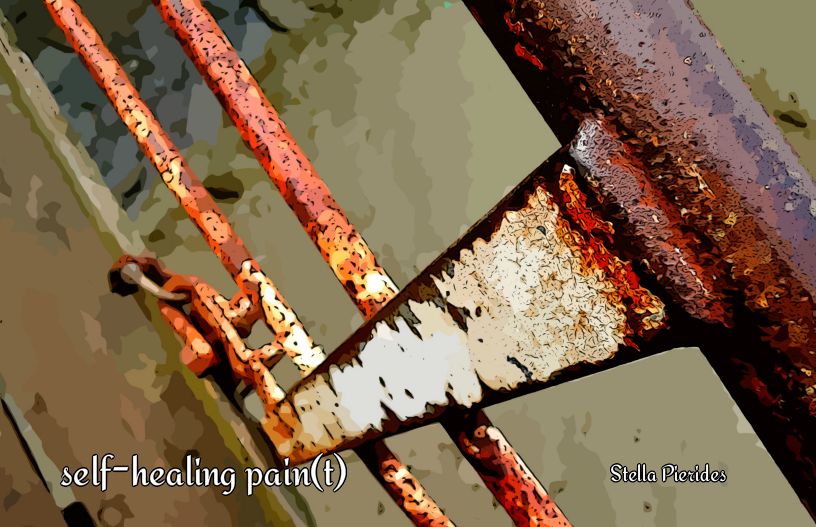
Haiga
Photo: rusting footbridge in Kent (autumn 2014).
 More photos from the Buecherschau, as promised. The event has been well attended, with visitors browsing the book stalls, relaxing in the chairs provided, and reading into the late hours! It looks like everyone feels at home here, eager to get to know books and authors, touch and feel the texture of book covers and pages.
One of the free events I attended was a daily half-hour interview (part of series) for a radio book magazine, the Bayern 2 Diwan. The interviewee, French author Hélène Grémillon, spoke about her new book, In the Time of Love and Lies (German distributors’ title; in French the title is La Garçonnière), set in Buenos Aires in the late 1980s. Very interesting book, with a thrilling plot (a love/crime thriller) and characters (such as a psychoanalyst, and his wife, a tango teacher and murder victim), in addition to the wonderful setting…
Grémillon claimed that in Buenos Aires, there are, and have been, great numbers of psychoanalysts per capita. Imagine that! Even at the time of the Junta, she pointed out! While I am aware of the important connection between Argentina and psychoanalysis, I have not thought of it in terms of numbers. You can understand that, though it is a few years since I last worked as a psychotherapist, my curiosity peaked. So, addicted as I am to checking, I looked it up.
An article on CNN said so too. Indeed, the country has the unusual distinction of being home to more psychologists (i.e. when we include psychanalysts and psychiatrists) per capita than anywhere else in the world. While there are no WHO statistics for 2011, psychologist Modesto Alonso and colleagues estimated 202 psychologists per 100,000 for Argentina in a 2012 study. Compare that with WHO’s 2011 numbers for Austria being 80 per 100,000! And, as it happens, almost half the country’s psychologists are concentrated in the capital city of Buenos Aires.
 But why this interest in the vicissitudess of the psyche? Theories abound. From the influence of the European immigrants, bringing with them the particular culture and society values of twentieth century Europe, through the interest in exploring the psyche of suffering, to the interest in the expression of the self – after all the tango is seen in these terms too – it seems that psychoanalysis not only flourishes in Argentina, but the country is a torchbearer for it. Particularly surprising that this continues to be the case, at a time when most of the other countries fall for the lures of the short and quick approaches to psychological healing.
I read in The New York Times:
“And in a sign of its wide acceptance, President Cristina Fernández de Kirchner and her cabinet chief took time out in April to meet with leaders of the World Psychoanalysis Association, which was convening then in Buenos Aires.” (2012).
In this context, Grémillon might be taking too bold a step in her novel: the main character, the psychoanalyst Vittorio, is also the main suspect in the murder of his wife…
I am reminded of a description of magical realism I found on Wikipedia relating to the Colombian writer Gabriel García Márquez’s style, by literary critic Michael Bell, as involving:
“a psychological suppleness which is able to inhabit unsentimentally the daytime world while remaining open to the promptings of those domains which modern culture has, by its own inner logic, necessarily marginalised or repressed.”
Holding in mind and in the text both, the rational and the shadows… Might this acceptance and celebration of reality and (i)magi(c)nation as parts of one and the same world, be at the root of this society’s welcoming attitude toward the psychological exploration of the human mind?
In any case, I am looking forward to reading this book.
.
birds in and out of sunday noon rain
.
NaHaiWriMo prompt: knack