Category Archives: blog items

Human Rights and Wrongs (Blog Action Day 2013)

Every year, thousands of people try to enter Europe without permission. The last two years the numbers have increased. War, civil war, terrorism, famine, drought make their livelihoods untenable, their lives precarious. One of the major routes to the continent used to be via Evros, the river boundary between Greece and Turkey. Since 2012, however, when a fence was erected to block this entry point and after Frontex police increased their presence, new routes were followed: sea routes to Italy and Spain that are even more dangerous and deadly.
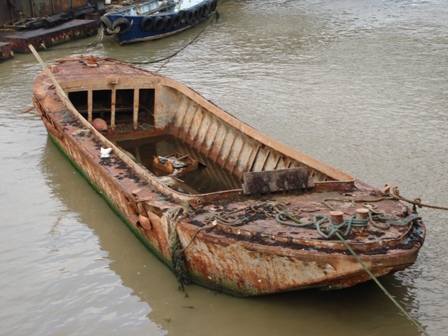
BeFunky_keeping out.jpgThe rickety boats these refugees use to come in often sink; the borders they try to cross get more hazardous than the journeys. The European countries they enter, ignore or criminalize them, and often send them to holding centers where they are subjected to demeaning, abusive situations, torture, or worse; or sent back to the countries they fled from. And yet, they keep coming.

I saw some of those who made it. In Venice, Italy, without support, they bend down hiding their faces, and beg.

city of masks
the beggar hides
her face
.
They hide and live in fear, yet they find this preferable to staying in countries where torture or death awaits them. Unlike those chosen to enter in one of the rare legal, though miniscule, programs of some European countries, these people exist in dire and life-threatening circumstances.

promising the earth
lone star
.
This odyssey is acted out all over the world, sometimes by people seeking work to improve their situation in places where they would not normally be entitled to work; most often by people fleeing conflict and persecution. In the Mediterranean countries, the recent conflicts have multiplied the magnitude of this problem.

Lately, hundreds of people arrived in Lampedusa and the Italian shores:* alive or dead, they reached this other country where those who survived the journey would have at least the opportunity to fight for a chance of a better life. Wouldn’t you too, in their position?
BeFunky_Ve Chains.jpg
Wouldn’t you? If chance or circumstance placed you in such a predicament? The European Union, though, would not look favorably on your efforts to enter its borders with need and despair as the only passport. For instance, while the talk of new urgent measures is all about increasing funding towards detection of people in flight, as well as (allegedly) improved rescue at sea,* there is also the urge to repatriate and keep the refugees in the place they come from. An out of sight out of mind approach. Except that the situation in their home countries is so desperate that repatriated people try crossing the sea again, and again.
.

.
promising sign?
clouds part
for hunter’s moon
.

A lot more is needed for the nations that make up Europe to acknowledge and accept the plight of the people affected by extreme poverty and poverty-driven wars, often the result of our aggressive policies, economic exploitation, and environmental abuse.

Out of this awareness, the Europeans themselves would be able to develop better policies than this drive to isolate, separate, and remove the perceived problem: a concerted European asylum seeker and immigration policy, grounded on the Universal Declaration of Human Rights (and the full United Nations Charter), with a budget and facilities for care and integration (rather than just border control) to back it up.

BeFunky_flower colours.jpgThe first models to help us think and plan are already here: A tiny Italian village opened its doors to migrants who braved the sea offering them jobs and homes, creating in the process jobs for the entire village. Even though there is no ideal solution, and new problems arise in new situations, the will, the means, the examples, the aspiration are already here.

……………………………………………………………………………………………

– This post is written for Blog Action Day, 2013 on 16 October 2013. Bloggers from different countries, languages, and interests will have a global conversation about Human Rights. I have published elsewhere a number of stories featuring refugees and their plight – including stories from refugees crossing the Aegean in 1922 – some of which are included in my short story collection: Feeding the Doves, Neusaess, Fruit Dove Press, 2013.

.
*Gazmend Kapplani, Albanian-born journalist, poet, and writer, in one of his FB posts suggests the least the EU could do would be to erect a Monument of the Unknown Refugee. Kapplani’s excellent book, A Short Border Handbook, relates the experiences of Albanian people crossing the border to Greece.

.
**Frontex, the European Agency for external border control, according to a statement of its site, “promotes, coordinates and develops European border management in line with the EU fundamental rights charter applying the concept of Integrated Border Management.” Unfortunately, what this comes down to is that the management of borders takes precedence over human rights.

Frontex has expanded the number of countries where it can send the people it ‘rescues’. “Nobody, however, is monitoring what exactly Frontex is doing in these countries of transit and origin with the goal of “stemming migration”. There is a serious risk of human rights simply being breached or refugees dying in places that are farther away from our attention.”

.

See also Spiegel online
.

GoodReads winners!

The GoodReads giveaway has ended. I’m delighted that 608 readers entered to win a copy of my short story book “Feeding the Doves”! Thank you so much to everyone who entered!

My heartfelt congratulations to the 12 winners! You can see the winners here. I will be posting copies of the book on the 26th of September.

And to everyone else: Thank you so much for participating in the giveaway. If you did not win this time, please know there will be another giveaway in a couple of months’ time. I hope you will try again.

I will keep you posted on other giveaways, discounts, and fun stuff. Meanwhile, if you are interested in Greece, its people and history, the economic and existential crisis it is going through, my Pinterest board “Feeding the Doves” is updated regularly with news, articles, photos, and other related material: click here

Human Rights: Blog Action Day 2013

October 16th is Blog Action Day, an annual online day of action when bloggers (actually anyone with a public platform) from all over the world blog on one particular theme: This year, on Human Rights

Human Rights Day, commemorating the day in 1948 the United Nations General Assembly adopted the Universal Declaration of Human Rights, is observed by the international community every year on 10 December. This year, the blogging lot contributes from its own unique angle, its multitude of voices, and perspectives, an additional opportunity for observance of this most sacred of human achievements on the 16th of October.


Thanks to the adoption of the Declaration of Human Rights, whatever our nationality, place of residence, gender, origin, colour, religion, language, or other status, we can ‘rely’ on the international community to uphold dignity and justice for us.

Despite many accomplishments in the field of human rights, sadly, there are still huge challenges lying ahead. In the words of the UN,

“The world is still plagued with incidents of ethnic hatred and acts of genocide. People are still victims of xenophobic attitudes, are subjected to discrimination because of religion or gender and suffer from exclusion. Around the world, millions of people are still denied food, shelter, access to medical care, education and work, and too many live in extreme poverty. Their inherent humanity and dignity are not recognized.”

The way forward: “The future of human rights lies in our hands.”

I committed to posting a blog post on the day. It may or may not be a short story on one of the articles of the Declaration of Human Rights. We’ll see.

Starting to think about what my post/story could be about, I asked myself, and Google, my constant companion, the obvious question: How many articles does the The Universal Declaration of Human Rights contain?

How many do I actually know of? Here is the Declaration if you are interested in checking this out yourself. It includes a simplified, plain English version. See how many you know, and weep!

There is a video about the Blog Action Day theme

as well as a Home page 

a Facebook page https://www.facebook.com/blogactionday

and a Twitter account @blogactionday12

The United Nations Home Page for Human Rights here

Feeding the Doves: 31 Short and Very Short Stories, and Haibun

Feeding the Doves  Now available to order from amazon.co.uk, amazon.de and Kindle

FeedingtheDoves.jpg

“Unique and surprising, tight and passionate language”

“Every once in a while, I get a book in the mail that is unique from anything else I’ve ever read. As a collection of short stories, Stella Pieride’s Feeding the Doves has given me a new definition of what short means, not to mention how quickly a story can be told… ”

“… I found her writing a refreshing and unique collection.”

Read Daniel Burton’s review here: Attack of the Books!

The review is also available on Amazon.com

***

Extract from Mia Avramut’s review on Amazon.co.uk:

“From a symbol of the divine (“A Life-Changing Story), to an object of meditation and near-worship in Syntagma Square (as in the title story), to their possible end in a soup kitchen destined to feed hungry children (“Pigeons”), doves’ journey functions as a counterpoint to the human sacrifice and quest for nourishing truths. Several glimpses into silent, sometimes tortured lives, end in haiku. It serves to deepen the reader’s understanding, and add new dimensions to the prose. And it’s a treat, as Pierides is both an archeologist of experiences, and a mistress of haibun.
Since Yourcenar and Kazantzakis, nobody has illuminated with such wisdom and compassion the often unseen lives that make the humanity what it is: a traveling, travailing organism with feet of myth.”

Mia Avramut is a Romanian- born writer, physician, researcher, and poetry editor at Connotation Press.

***

Having left Greece in her youth, the author of “Feeding the Doves” returns to the country of her birth through a collection of stories that lie at the heart of Greek identity.

About the Book: Greece has been in the headlines for a very long time. Recently, the headlines have been gloomy and negative, the country facing some of its most difficult years. Against this background, “Feeding the Doves” explores recurrent elements of the Greek psyche, tracing them back to challenges posed by the country’s history, culture, and environment.

The widow, the old loner, the refugee, the immigrant, the young, the writer, the expatriate, tell us their stories, touching upon themes at the heart of Greek being: Love and loss, civil war, immigration and diaspora, emigration, poverty, religion, history and catastrophe, and above all, the will to survive.

 “What I admire here are the shining moments of revelation, of truths large and small bursting through the lives and memories of these characters. So many characters, and so rich!”

—John Wentworth Chapin
Founding Editor, 52|250 and A Baker’s Dozen

“Stories to surprise and entertain, to wake and calm, to wrench and elate, to tell the Greek story, past and present, and everyone’s story.”

-—Michael Dylan Welch, poet, writer,
and editor/publisher of Press Here books

Fruit Dove Press

Email: admin@fruitdovepress.com
http://www.fruitdovepress.com
Perfect softbound
87 pages, 90gm cream interior paper
Full-color laminated cover
129 mm x 198 mm trim size

ISBN: 978-3-944155-03-6

Price: £8.00 UK

Available from August 2013 through Amazon.co.uk and Amazon.de.

.

Feeding the Doves

Forthcoming

Feeding the Doves
31 Short and Very Short Stories, and Haibun

Greece has been in the headlines for a very long time. Since ancient times, her  philosophers, historians, mathematicians, shipbuilders, traders, and artisans have been making the news – and, indeed, history. So, amidst the country’s most difficult  years in recent times, many people believe that they know Greece and the Greeks.

.
Against this backdrop, the stories – short and very short – collected in “Feeding the  Doves” explore recurrent elements of the Greek psyche, tracing them back to challenges posed by the country’s history and environment. The widow, the old loner,  the refugee, the immigrant, the writer, the expatriate tell us their stories, touching  upon themes at the heart of Greek being, as well as our common humanity: love and l  loss, war, civil war, immigration and diaspora, emigration, poverty, religion, history,  and above all, the will to survive.


Cover Design:
Rob Ward, Freelance Animator

Fruit Dove Press
Email: admin@fruitdovepress.com
.
[The title story “Feeding the Doves” and the cover image were inspired by a photo taken by Robert Geiss, titled “Feeding Doves” and posted on his (sadly, no longer active) blog “Daily Athens Photo.”]

‘The Silence in my Cell’ and ‘Tin Mug’

I am thrilled to report that:

my short story/flash ‘The Silence in my Cell’ is now online in the May edition of Tuck Magazine. They say it is a MUST read! See what you think. It can be read here

my tanka ‘Tin Mug’ now appears in ‘ars poetica 2′ – newest poems of Poets Online. It can be found on their site here  (This is a bit more complicated to find: go to Archive, click newest poems/ ars poetica 2)

Deathmatch: News from the Underworld

Deathmatch, a competition for the best short story, is on at the Broken Pencil, Canada’s long running magazine for “zine culture and the independent arts.”

Deathmatch pits two stories against each other and invites readers to vote for their favourite one. The winner of the round goes forward to semi-finals and so on. It is a bit like the world cup games, only with short stories instead of football! In addition, there is interesting discussion about the merits and problems of the stories, which help the readers and writers reflect and consider them from different perspectives (Not easy to find: you need to scroll to the end of the second story).

So now you know, please go over to Broken Pencil and read the stories: Field Guide to Kleptoparasitism, by Braydon Beaulieu and Floppy Discs, by Madeline Masters. And vote! I did, I voted for Field Guide to Kleptoparasitism. Why? Because it is an excellent story, well written, and with rich layers of meaning.

I will not attempt an analysis of the story here. Only a point that resonated with me. I liked the creation of the main character; Tony; to me a product of a marriage between Kafka’s Metamorphosis with Conrad’s Heart of Darkness. I like the nod to these writers, as I believe in literary genealogy and influence. We are nothing without parents!

While in both books there is a conscience and moral compass somewhere, in the Field Guide the character is skilfully pushed to a moral abyss, with no attempts at redemption.

“…The compound eyes or mandibles”, the predominance of the olfactory sense and consistent use of other animal features in the character’s make-up, not visible to others, such as his neighbour, suggest “animal” morality. Tony does not know better. He has reached the depths of the true heart of darkness. He exploits every single opportunity to his ends and so in the end, the reader is left with an ‘insect.’  Breathtaking!

The development is clear and linear. To me, Tony embodies modern man and woman at their worst: insatiable greed, contempt for others, random acts of envious and mindless destruction. We see flashes of this aspect of humanity in our newspapers every day. A  Field Guide is a complex and memorable story, not drawing back from the abyss. For a better understanding of ourselves, we do need stories that illuminate and explore the underworld of the human mind, “the social patterns of ants.”

I also liked Madeline Masters’ Floppy Disks. A very good story, exploring issues of personal boundaries, privacy and gender. The idea of making artworks of disks containing personal information is interesting, especially at a time of real concerns about personal privacy. Where Floppy Discs fails for me is in the character of Mridula not being fully explored; and in the changes of perspective in the story: jarring.

Visit Broken Pencil’s Deathmatch, read, comment and vote! And enjoy!

The Pick and Place Robotic Arm

My very short, twitter-sized story appeared online in trapeze magazine. Read it here

This short story springs from my interest in robotic arms, dexterity, perception, and intelligence in artificial systems: what robots can and cannot do.

In any case, I am glad they cannot do what the robot in my story does – though as a fantasy it is frightening! Anyway, let us say the moral of the story is, whenever near a robotic arm, it is wise to try not to appear lost for words…

Language, Trauma, and Silence

Old Boat

In the years after World War II, a Civil War raged in Greece until 1949 which proved to be one of the worst disasters that befell Greece. Greek against Greek, the Right fought with the Left a war of the utmost cruelty.

This war left many wounds in Greek society. Memories of it still scar the Greek psyche, even across several generations, influencing the current social and political climate.

An important aspect of this war, and the horrendous atrocities inflicted during it, often by members of the same family fighting each other, has been the silence it generated. The trauma robbed people of the words to describe what happened to them, or what they did to others. Whole families stopped communicating; individuals refrained from speaking about the period of the war; history books omitted important events that took place as if they never had happened.

Over the years, the situation slowly changed, especially after the fall of the military Junta and the opening up of the political system in Greece – though even now sections of Greek society insist that there are still many unspoken matters that need to be talked about and worked through.

In my story Postcards, I allude to the period of the Greek Civil War, and to this silence, symbolized by the fighter/husband: he stops using words/language when writing to his wife and instead communicates through drawings in his postcards.

You can read the short story “Postcards” here 

New Flash

My flash fiction story “A Private Person,” appears in the 52/250 flash fiction project, week 25.

52/250 is a project involving around eighty writers from all over the world who made the commitment to write and publish weekly, flash fiction stories for a whole year: 52 weeks, 250 words max! There is a theme for each week, and contributors can suggest themes to the editors.

I joined during week number 25, and my first flash appeared on Friday 5 November 2010. It is a short story about two individuals who see themselves as “private” persons. You can read it here.

The 52/250 project feels like a very encouraging, inspiring and warm place to be. I am going to hang out there… so, watch this space!