Night
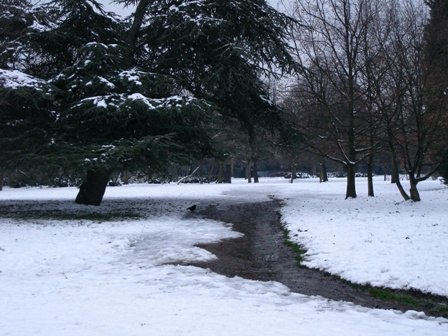
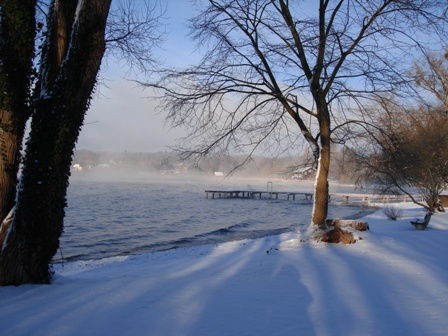
As darkness falls over the Thames,
a liquid haze swims in from the sea
and the city steels its heart for the night.
.
This post can be found in Stella’s Stones here
.

Night
As darkness falls over the Thames,
a liquid haze swims in from the sea
and the city steels its heart for the night.
.
This post can be found in Stella’s Stones here
.
In sun-bleached deserts, in mountain caves, on sea-sculpted rocks
the hermit slept, forgetting that the essence of being can be found in a single drop of rain.
.
This post is also in Stella’s Stones
.
When I started learning to crochet I thought of it as a relaxing, stress-reducing act, like counting the amber beads of a komboloi.
Now, looking at my hand holding the crochet hook, the wool, at the next stitch to pick up, the stitches I travelled and the one I have to travel to next, I think it is more than that. It is a process like meditation, without however the religious connotations and significance often associated with it: like counting prayer beads, but without the religion.
I was interested to see that, according to Wikipedia, there are two ways of counting the komboloi beads: “a quiet method, for indoors, and a noisier method that is acceptable in public places.” While crochet is quiet, knitting with two needles is not! I wonder whether there is a way(s) of knitting indoors that keeps the noise down!
Festival of the Trees, issue 55, on the theme of 2011 UN International Year of the Forests, has been published by Jasmine, of Nature’s Whispers. It is an informative, as well as entertaining post, rich in text, visuals, and creative energy. The links are well worth exploring too, covering a plethora of work about nature, trees, forests, gardening, art, and other fascinating topics!
It also includes an alert about the UK coalition government’s plan to sell off many of the best-loved ancient forests and woodlands, and a link to an online petition to save the UK forests.
Jasmine writes:
“In the United Kingdom, the Conservative Party plan on selling ALL of our ancient forests. Once they are gone, they cannot be redeemed. In order to carry out these environmentally unpopular sales, the government is rewriting laws written in The Magna Carta that have protected woodlands and ancient forests since 1215”
For more information about this issue please see The Guardian here, here and the campaign site here
If you enjoy walking in the forests as much as I do, if you care about the environment and the preservation of woodland, then this is the time to voice your concern and support the petition.
You can sign the petition online here
My short story and post appear here
“twentysix,” the second anthology highlighting short stories from a quarter of “52|250 A year of Flash,” is out. The editors of this writing project, Michelle Elvy, John Wentworth Chapin and Walter Bjorkman, challenge writers to produce a short flash of 250 words every week for one year. They provide a different theme each week and the resulting creative work is amazing: wonderful stories, and poems, of high quality from a prolific, creative, friendly, and excellent community of writers.
Each quarter, the editors pick and highlight in an anthology the best of the stories written on each week’s theme. The current edition also includes art work, readings, and reflections by some of the writers on their creating a particular piece and the ways they went about developing their take on the theme.
Beautifully and professionally edited, assembled and illustrated, it is well worth visiting, and reading. As you will see, the editors have put an incredible amount of work into “twentysix.”
I am honored to have two of my short stories included: on theme #25 “A private person” and on theme #26 “A hair raising story.”
.
You can read the anthology here
My stories in 52|250 can be read here

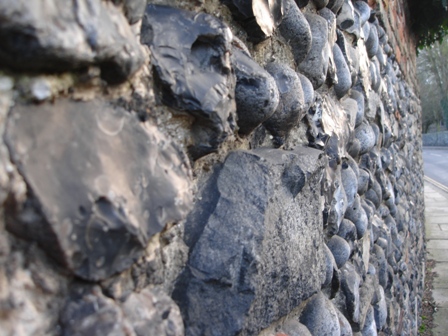
behind the stonework
a spiritual space filled with
calm and stillness
.
Isn’t this exactly what we are trying to achieve with our stones?
Photo: St. Nicholas Church, Blakeney, North Norfolk.
This post can be found on Stella’s Stones
For more pictures of the area see here
Happy New Year’s Day!
Remember though …
.
a river flows
into a new year
every day
.
In a sense this micropoem plays on the theme of Heraclitus‘ Fragment 41: “You cannot step twice into the same river”
Δεν γίνεται να μπει κανείς στο ίδιο νερό του ποταμού που κυλάει δύο φορές.
From today on, though, I, along with others, will be entering the river of stones every single day for a month.
For Heraclitus the appearance of stability is an illusion, “for as you are stepping in [the river], other waters are ever flowing on to you.” However, consider the possibility of re-entering the river of stones: on the one hand, the river consists of the flowing moments of experience as represented by stones; on the other hand, each time we polish and share a stone, we ourselves change, grow through our attending to and encapsulating the moment of experience.
Happy New Year 2011!
This post also appears here
The UN declared 2011 as the International Year of Forests “to raise awareness on sustainable management, conservation and sustainable development of all types of forests.”
Forests are vital to the lives and livelihoods of the people of this planet, to our planet’s existence. Yet, according to UN figures, deforestation continues at the rate of 50.000 square miles per year.
A number of activities have been planned for the year, including high-level panel discussions, film screenings, a United Nations commemorative stamp series, competitions, art and other public events. Look out for them here
While the launch of the Year of Forests will be taking place later, I am posting a short story grown out of the combination of the theme of the Year of Forests with that of “Silence,” a writing prompt set by participants of the “52/250 A Year of Flash.” It was first published there
I copy my short story below:
.
The Weeping of the Trees
Last spring, I hiked up Mount Olympus. The valleys surrounding its peaks are covered in black pine, beech, yew and tall conifers. On its slopes, vineyards spread precariously; olive trees anchor deep with their roots. Streams cascade to thirsty plateaus. No wonder the ancient Gods lived there.
I stayed in refuges, drank from the streams and breathed the pine-scented air. Cicadas serenaded me; butterflies I did not know existed covered my arms. Wolves lusted after me.
Magical. Yet, I dared not return, fearing the strange sightings and the silence: ghostly shadows appearing through the trees, gathering near water, rushing through the meadows, with a heavy, voluminous silence falling all round. At first, I did not believe my senses. Gradually, I came to expect and even look for the shadows.
Whenever I tried to touch a diaphanous apparition – as if made of smoke – it pulled back, avoiding my hand. I thought I saw it sigh, more as a gesture rather than sound, and glide away.
It was recently that I understood – and felt freed to return. The shadows are the souls of trees haunting the Olympian home of their Gods. Felled unjustly, burned in war, famine, and in ruthless profiteering, or carelessness, they return to plead with them.
Next time you visit Olympus, look for the shadows; seek this silence: If it is not disrupted by a leaf falling, a stream’s gurgle or an animal’s light footstep, know you are listening to the silent weeping of the trees.
.
You can find the story in 52/250, together with a number of other excellent stories on the theme of “Silence” here.
He scours streets, bus and tube stations for newspapers. Two years since he arrived in London and he is still amazed at how many newspapers lie discarded around. Although he cannot decipher the writing, they are ideal for keeping warm.
He stuffs them inside his pullover and feels like a king: he needs for nothing. He is warm and fed: the city overflows with leftovers. He beds down whenever he is tired, wherever he finds a warm doorway from where he can look at the sky.
He loves summer best. At night, sneaking into Finsbury Park, he heads for his favourite bench, near the lake. It is cool and the sky is full of stars. Not as spectacular as the sky in his village, in the floodplains of the Mesopotamian Iraqi marshes, where the stars shine like diamonds on black velvet, but it works.
It illuminates the memories that follow him like his shadow: the rice fields and the boat he made himself from reeds, the water buffalo; his father, punting through narrow channels. The Garden of Eden.
Then he counts the stars, looks for patterns, for directions; for a sign that it is safe to return home. His heart, filled with nostalgia, trembles like a bird. Often though, he counts his blessings: here, among the floods of people filling the channels of this city, he can blend in and feel safer than in the marshes of his homeland – till it is time to return.
The End
Hot from my computer keyboard, this new short story written for the 52/250 A Year of Flash project, was first posted on their website. A story about a war-savaged, homeless man sleeping rough in Finsbury Park, North London, and the cruel strands of present-day displacement and identity.
10 December 2010
Where is your home?
Marshes in Iraq, photo here and here
For photos of Finsbury Park I took myself, see here
http://52250flash.wordpress.com/2010/12/08/where-home-is-by-stella-pierides/
My very short, twitter-sized story appeared online in trapeze magazine. Read it here
This short story springs from my interest in robotic arms, dexterity, perception, and intelligence in artificial systems: what robots can and cannot do.
In any case, I am glad they cannot do what the robot in my story does – though as a fantasy it is frightening! Anyway, let us say the moral of the story is, whenever near a robotic arm, it is wise to try not to appear lost for words…
In the years after World War II, a Civil War raged in Greece until 1949 which proved to be one of the worst disasters that befell Greece. Greek against Greek, the Right fought with the Left a war of the utmost cruelty.
This war left many wounds in Greek society. Memories of it still scar the Greek psyche, even across several generations, influencing the current social and political climate.
An important aspect of this war, and the horrendous atrocities inflicted during it, often by members of the same family fighting each other, has been the silence it generated. The trauma robbed people of the words to describe what happened to them, or what they did to others. Whole families stopped communicating; individuals refrained from speaking about the period of the war; history books omitted important events that took place as if they never had happened.
Over the years, the situation slowly changed, especially after the fall of the military Junta and the opening up of the political system in Greece – though even now sections of Greek society insist that there are still many unspoken matters that need to be talked about and worked through.
In my story Postcards, I allude to the period of the Greek Civil War, and to this silence, symbolized by the fighter/husband: he stops using words/language when writing to his wife and instead communicates through drawings in his postcards.
You can read the short story “Postcards” here
Drawing his knees to his chest, he felt the rock with his hand. The air stunk of campfire. A suffocating fog was rising from the rugged hills below.
Alerted by a stir in the scrub, he made out a wounded bird beside him, limping. A pigeon. The bird looked him in the eye as if trying to pass on a message, then scampered away.
After years of war, first against the Italians, then the Germans, now their fellow Greeks, even the fertile valleys in the Grammos mountain range below had been exhausted. The fighters had eaten everything that could be eaten, even the homing pigeons that they used as messengers when they had to maintain radio silence. Hunger drives men mad.
His eyes searched for the bird, absurdly worrying that it might be shot.
His hand caressed his breast pocket, where he kept his postcards to his wife. Poor Eirini, he thought. She didn’t even know he was still alive; still fighting.
He had been “writing” to her without words since they retreated to the top. The silence, the isolation and above all the awareness of approaching defeat robbed him of words. He drew on the rough paper the hills, the scrub, rocks that looked as if made by God, scree; the few cypresses, plane trees, and pines he remembered from his village. Recently, the faces of men who died in his arms.
One day, he thought, his postcards to his wife would be found – these drawings would be his last words to her.
———-
I am fond of this short story, as it touches on themes from my forthcoming novel, Alexandrias 40: In the Shade of the Lemon Tree.
A version of this short sotry appeared in 52/250 A Year of Flash, on the 26th of November 2010.

This month’s theme of the Festival of the Trees is “The Magic of Faerie Trees.” Hosted by Salix of Windy Willow, it is an interesting if bewitching topic. If you are into magic and fairies, fine. If you are not, what can you say about mystery or magic in a tree?
On the other hand, how is it that the olive tree is capable of living thousands of years? Is there magic involved? With its strong roots surviving underground, even when the trunk looks dead, the olive tree can make a claim to magic – though less so to mystery, if the strong roots explain its longevity! Then there is its outstanding beauty: its silvery foliage, almost like a whispering cloud, fused with its ragged, gnarled, twisted trunk, providing a unique image. This tree has so many associations for me that I decided to find a space for it in my second novel, When the Colours Sing. An olive tree in pre-alpine Bavaria! We’ll see how this strand is going to develop. But first things first.
There is the lemon tree (for which I made space in my first novel, Alexandrias 40: In the Shade of the Lemon Tree) to talk about. Glossy foliage, waxy, white-purple flowers, divine fragrance, fruit to grace any table, book or poem!
Lemon trees are said to have originated in Asia and spread in the Mediterranean regions after Alexander the Great’s soldiers brought them back from India. They are treasured trees in the Mediterranean lands. They are as important as olive trees and vines. They are vital to the health and well-being of the people living in those lands, as they have numerous medicinal, hygienic, cooking and culinary uses. From the abundant vitamin C, to the taste-enhancing addition to salads, soups, and various dishes, to decorative and aesthetic uses, to the perfume industry, lemons are most versatile.
In Northern Europe and America, there are additional associations which emphasize the lemon’s bitter taste, as in the expression “when life gives you lemons,” or the “lemon car,” referring to a defective, multi-flaw car. In a painting by Paolo Morando, The Virgin and Child, Saint John the Baptists and an Angel, Christ as a child is being offered a lemon, an act frequently associated with learning a variety of tastes and therefore being weaned off baby food.
In this sense, the lemon bridges opposites in taste (bitter-sweet), between cultural perceptions, and generations (weaning the baby off baby food). Is that a clue for interpreting the Italian, unknown artist’s painting Man and Wife, in the National Gallery of London, which has a lemon tree as a background?
Readers’ Digest lists 34 uses for the lemon. In Alexandrias 40: In the Shade of the Lemon Tree, there is a whole number of other uses – some surprising ones – for the lemon. But please note: try them at your own risk!
(Forthcoming: Alexandrias 40: In the Shade of the Lemon Tree: www.voxhumana-books.com)
18 November 2010
My haiku made it to the top five in the Iron Horse Literary Review haiku competition! I am delighted, especially since I wrote this haiku prompted by the name of the Journal and in response to their asking for haiku with either the word iron or horse.
I am particularly pleased because the competition caught me in the middle of writing my second novel, When the Colours Sing, set around the Blue Rider movement – it fitted so well.
The five winners: Marty Smith, Lauren Tamraz, Sarah Spencer Pokla, Benjamin Vogt, and Stella Pierides.
The IHLR is a review of poetry and literary non-fiction published six times per year by Texas Tech University. I am going to follow them and read what they are getting up to from now on!
You can find the results of the competition together with my poem here
New short story on 52/250 A Year of Flash Week #26: A hair-raising story. You can read it here
The more one thinks about this story, the couple in it, and the twist at the end, the worse it gets … so, perhaps, it may be best if you don’t read this story!
My flash fiction story “A Private Person,” appears in the 52/250 flash fiction project, week 25.
52/250 is a project involving around eighty writers from all over the world who made the commitment to write and publish weekly, flash fiction stories for a whole year: 52 weeks, 250 words max! There is a theme for each week, and contributors can suggest themes to the editors.
I joined during week number 25, and my first flash appeared on Friday 5 November 2010. It is a short story about two individuals who see themselves as “private” persons. You can read it here.
The 52/250 project feels like a very encouraging, inspiring and warm place to be. I am going to hang out there… so, watch this space!
Three of my poems have now been published by Vox Humana Literary Journal, “a literary journal focused on international writing, with a sub-focus on works from Israel and Palestine”
Winter Picture started its life at the North London writers’ workshop Word for Word, after a writer circulated photographs she had taken of a snow sculpture: two human-like figures made of snow on a Hampstead Heath bench. In my poem, the sculpture became a war-torn couple… read it and see.
Mystery Train was inspired by a photograph used as a writing prompt in the Tuesday poetry group of Word for Word. The photograph was of Elvis, on a train platform at the beginning of his career in the 1950s… so soon after the War…
The refugee grew out of a scene in my novel “Alexandrias 40: In the Shade of the Lemon Tree.” A refugee from Smyrni lies in her hospital bed in Athens, unable to join the other patients; she is forever caught in her own private despair.
Check out this link. And feel free to comment!
5 October 2010

The Festival of the Trees is “a periodical collection of links to blog posts and other online sites, hosted each month on a different blog.” Bloggers, poets, writers with an interest in arboreal matters post related material on their own blogs and submit the links to the host of each month’s co-coordinator. This month’s host was Arati, of the Bangalore-based blog Trees, Plants and More.
My own contribution to this month’s Festival of the Trees, I wrote some time ago. In “If Trees, then Olive Trees,” I use the olive tree, a precious, almost sacred tree in the Mediterranean, western Asia, and northern Africa countries; a symbol of peace and hope, connecting to the “olive branch,” and the sighting of land after the biblical flood.
Short, gnarled and twisted, the olive tree even looks appropriately old. It is said to live for hundreds of years, as its roots are capable of regeneration even if the trunk above ground is destroyed. Radiocarbon dating has confirmed 2000 year old trees in several countries! A tree known to be situated in the grounds of Plato’s Academy, in Athens, lived till the 1970s. An olive believed to have been planted by Peisistratus, the tyrant of Athens in the 6th century BC, is still to be found in Athens. Even older trees have been found in Israel and Arab lands, dating from 3000 and 4000 years ago. The trees of the Garden of Gethsemane are said to be dating from the time of Jesus.
In literature too, we know of several millenary trees: Homer featured olive trees in his poetry. Remember Odysseus bed?
My own poem is about putting down roots, both literally and metaphorically. You can read it here.
My novel “Alexandrias 40: In the Shade of the Lemon Tree” is also set around a tree, and it includes a number of surprising uses for its fruit. Not long now till the book is out. Watch this space.
For instructions on how to submit to the next Festival of Trees here.
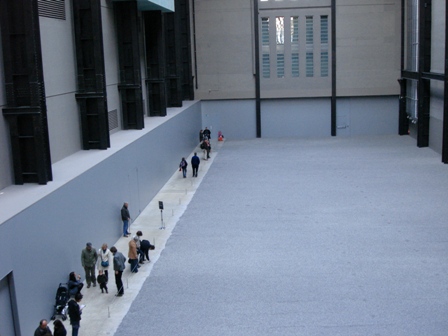
Following the enormous disappointment at the Tate’s stopping the public from walking on Ai Weiwei’s seed landscape, Tate Modern had a better idea: for all those wishing to at least touch the seeds, there is now a narrow corridor to the side of the sunflower seed installation. Now, we can walk on the edge, and we can touch.
Thank you Tate!
Guardian article about the Tate rethink (and the guards offering seeds in mugs for people to feel!), here
My own post on the Sunflower Seeds show, here
27 October 2010
I visited Ai Weiwei’s sculptural installation Sunflower Seeds at Tate Modern just after they stopped the public walking through the field of seeds at the Turbine Hall. Like many others, I found myself feeling disappointed. The seeds looked beyond my reach (I had looked forward to walking on them, listening to their crunching sound), and pale compared to those in the pictures I had seen. A message in front of the installation explained that Tate had been advised that interaction with the installation (such as visitors walking on the seeds) could cause dust to be emitted which could be dangerous to health.
I stood in front of the pale mass of more than one hundred million seeds on the floor feeling lost, thinking that had they glazed the seeds, I would now be walking on them! At the same time, knowing something about clay, I could understand the concern. So there I was, standing perplexed and disapointed, being faced with a case of dust to dust, or rather, dust, clay, ceramic seed, dust, with a short interval in between.
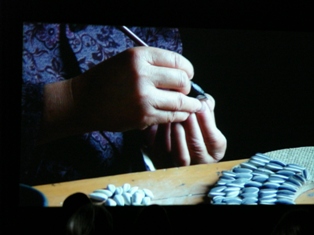
Then my eye caught the video screens right next to the seeds, and my whole experience took another turn! A fab-fun-fantastic video tracing the creation of the seeds – from the mixing of the clay to the forming of the seeds, the painting and firing and selecting the best seeds – the stories of the craftspeople in it were engaging and the colors, the scenes both breathtaking and remarkably informative.
I loved the idea of the amount of co-operative work that went into producing the installation. A whole community – more than 1600 people of Jingdezhen, a Chinese city with 1700-year-old history of porcelain manufacturing: it is known as the Porcelain capital – was involved in creating something together (the porcelain seeds), something that gave them employment, as well as purpose and community spirit. If the sunflower seeds symbolize the people of China, as suggested, then these symbols have been lovingly created and treated with respect.
 Standing there, in front of the video images, next to the seeds and the playing of the visitors’ videos, it occurred to me that the Tate installation consisted of the seeds and the video together. That they were inseparable. No, more than that. That the seeds, the video, the dust, the message about the danger from clay dust (after all, which potter/ceramic artist has not heard of this hazard?), even the interactive videos made by visitors to the Gallery addressing the artist Ai Weiwei, all were part of the same installation! After all, Ai Weiwei is an interactive performance artist, merging life and art. I still believe that this is the case. Even if unintended, unconscious, a chance happening, I think even retrospectively, the lot belongs together.
In an article “From Seeds to Dust” Ulara Nakagawa alluded to the dust possibly belonging to the installation. I consider the Seeds installation as offering the possibility of a total/comprehensive/whole art work, where the art object consists of multiple layers: tangible visible object(s), sound, video, text, interaction with the artist, and an ongoing archiving of the viewers’ experience and thinking in their communication with the artist. After all, the Tate tells us: “…what you see is not what you see, and what you see is not what it means.” Well done, Ai Weiwei!
What is a blog carnival? And do you have to wear carnival costume?
You can tell I am a late learner. I found out about blog carnivals yesterday! I immediately liked the idea. I learnt that a blog carnival is the regular appearance of a central post containing links to other blog posts on a previously specified theme. This post is written by the blogger who hosts the carnival. Hosts rotate. I quote from the originator of this particular blog carnival:
“there’s a given theme, and to join, you put up a relating blog post in your blog, and then send the link to the host of the carnival – who then puts a central page with links to all participating blogs / posts together.”
The > Language > Place Carnival will be of particular interest to bilingual authors living outside the country of their birth, or learning another language. There are so many of us… I take this to mean emigrants, immigrants, expats, exiles, also refugees of all kinds…all those finding refuge, or asylum, or arbour in a second language/place … travellers… after the Fall wanderers…
Visit the site for the full details.
Finally, no, you don’t have to wear carnival costume, though respecting the dress code of others is essential. And no, you don’t have to worry about eating/avoiding meat (carne). http://en.wikipedia.org/wiki/Carnival Though the idea is to beef up your content!
For a succinct definition of “blog carnival” and festival have a look here
Join the fun here.
21 October 2010