dream ivy
clinging without
clinging
.
NaHaiWriMo prompt: ivy

dream ivy
clinging without
clinging
.
NaHaiWriMo prompt: ivy
Impossible not to be surprised by this monumental presence at the Duveen Galleries, Tate Britain! Phyllida Barlow’s installation, ‘dock’, makes quite an impression on the unsuspecting visitor walking into the Tate.
Yet taking a few steps through the artwork, and a deep breath, the mind starts working.  Isn’t this… err, fragile… recycling materials… momentous… look, plastic bags, cartons… How interesting, that the Tate too (see Kader Attia, Whitechapel), in commissioning Phyllida Barlow’s work in 2014, ends up with a piece that reflects on fragility, transformation, repair, re-appropriation… Though these are not words or concepts I saw used in the descriptions of this work.
Adrian Searle, in The Guardian review, sees,
“All kinds of things happen over our heads. Here’s something like a fungus or a virus hanging in space, and nearby, there’s some sort of blanket-swathed chrysalis or grub. One sees echoes, here and there, of the many artists Barlow has taught in her distinguished career as an educator.”
A different kind of inequality is being noticed here: disparate, different objects and materials, producing a different kind of vision: a different ‘eye’. Yet this difference might also be seen as one of materials ‘unequal’ to those usually seen at the Tate. In fact, marble and gilded frames, the austere, classical beauty of the Galleries contrast with the used cartons and plastic that hold this work — seven pieces in total — together.
Are the latter unequal to the task? My answer would be: no, they fit Barlow’s work perfectly, by way of bringing out the juxtaposition of the two extremes. Her fascination with the grand Tate Britain sitting majestically next to the Thames, and its docks, has produced a fitting installation. Loading and unloading goods that came and went irrespective of their worth associate with this mass, and mess of materials, producing a work seemingly in the process of collapsing.
 After all it is the Thames that connected Imperial Britain to its colonies and the world… a ‘stage’ for playing out inequalities, so perceptively linked by Joseph Conrad to the Empire’s Heart of Darkness.
Barlow, in a Guardian interview, reminds us of how our age has been marked by the iconic fall of many things: the twin towers and all they represented for the whole world, for instance; the markets; the fall of dictatorships and idols too. So the pull of gravity and precariousness, ever present in our age, and in Barlow’s work, are vital to this specific project. Interestingly, she says that, until recently, she used to dismantle and then recycle her previous exhibits at the end of her shows.
.
wide flowing river
the tall orders we left
behind
.
This post is part of a series of articles written for Blog Action Day 2014, held on the 16th of October 2014, on the theme of Inequality.
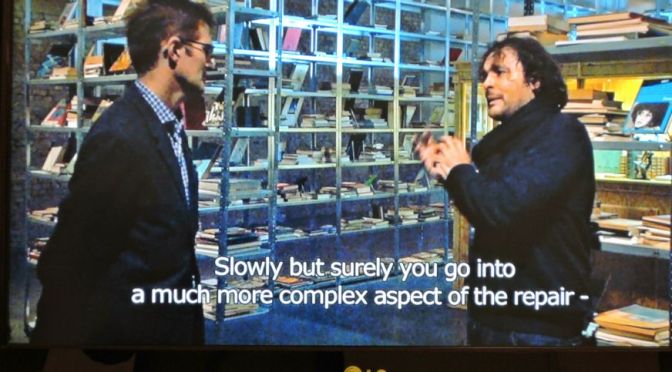
Near Brick Lane and Spitalfields Markets, and amidst the hustle and bustle of a Saturday afternoon crowd, I discovered Kader Attia’s (b. 1970, Paris) new work of art at the Whitechapel Gallery, “Continuum of Repair: The Light of Jacob’s Ladder.” No photographs were allowed, but I took a picture of his taped interview that was shown at the Gallery, which gives you a good idea of the installation visible in the background.
Said to be inspired by the religious story of Jacob’s ladder (specifically Jacob’s vision of angels ascending to heaven), as well as by the history of the room of the installation itself (it was the reading room of a former library), it is a work that engages, questions, moves and, well, speaks volumes!
The leaflet of the exhibit describes,
“a warmly lit cabinet of curiosities above which a vast mirror reflects a beam of light, transforming it into rungs of a ladder to infinity. A series of marble busts of wounded soldiers from World War I and repaired North African wooden learning boards (ketab) observe this towering structure of bookshelves filled with centuries of accumulated human knowledge.”
It is in this context of knowledge overseen and underlined by war and destruction, that Attia’s concept of repair acquires extra layers of meaning, adding depth to our quest for ever increasing heights of aspiration. This work is a detailed and serious reflection on our Faustian search for knowledge and certainty, for ever new ideas and creativity to define our identity, and the illusions, and disillusionment this effort entails. Our ‘new’ creations, placed within the context of history of science, of art, of humanity, are shown to be, on some level, ‘appropriations’, or ‘partial repairs’ of what has come before, what has been previously discovered, then forgotten/destroyed, and lost; on another level, this rediscovery serves as a prompt to humility: our ideas, our achievements are but a part of a greater whole and not so much new, as rediscoveries, archaeological specimens in the cabinet of a wider, richer, and vast cosmos.
It is in this sense that Attia sees himself not as an artist, but as a researcher, looking into the meeting points as well as shifts of meaning between ideas and cultures, appropriation and reappropriation, and repair between East and West. Attracted by the fragility, malleability, and ultimate instability of meaning, understanding, and materials, Attia builds his castles out of all sorts of objects, including plastic bags, foil, couscous. We are all part of this process, he says:
“I like the way it (material) gradually loses its substance. The artist is the shadow of the art work.”
inspiring
the sands of time
in a bottle
.
This post is part of a series written for Blog Action Day, to be held on the 16th of October 2014, on the theme of Inequality.
Attia contributes to a body of work that reflects on the effects of human ambition — First and Second World Wars, and their aftermath, of colonial and imperial ambitions — and the attempts to rebuild, repair, and re-appropriate its objects.
.
The Guardian review
Independent review
Recently I visited the Frank Auerbach display of 15 paintings and 29 drawings at the Tate Britain, selected by his fellow painter and friend, Lucian Freud. The collection was offered by the Lucian Freud estate, and accepted by the British Government, in lieu of inheritance tax.
The group of paintings is of international artistic importance and a good ’teaser,’ anticipating a major Tate retrospective planned for 2015.
A fine group of works, including one of my favorites, Rebuilding the Empire Cinema, Leicester Square, 1962.
What a fantastic, bold show of both, imagination and brushwork, deep feeling and insightful depiction of psychologically layered scenes. The same subjects — Julia, his wife; Estella, his mistress; Jake, his son; Mornington Crescent — visited again and again, let the viewer get intimately acquainted with, as well as intrigued by them. Born in 1931 in Berlin, Auerbach came to England in 1939 and has lived and painted in London since. A London painter, and a painter of London, Auerbach has gone under the skin of the capital, making it the prime set of his work. If not Auerbach, then who else captures the energy and multifarious burdens carried by London’s inhabitants so realistically?
In an interview by Hannah Rothschild, Auerbach, from what has been his tiny home and studio since 1954, opens up about his work and life. Surprisingly, a sparse and spare studio and frugal life are juxtaposed to and contrasted with his many-layered, rich encrustations of paint in his work. The charcoal paintings are also ‘rich’ in depth and insight that feels both, inquiring and haunting. I left the room intrigued by his work, troubled, and at the same time, strangely satisfied by his profound achievement. Reading Rothschild’s interview later, I found this which rang true:
“So why does Auerbach paint the same face, the same view over and over again? Wouldn’t it be interesting to try a new landscape or a different nose? Auerbach shakes his head. ‘The closer one is to something, the more likely it is to be beautiful,’ he says. ‘The whole business of painting is very much to do with forgetting oneself and being able to act instinctively. I find myself simply more engaged when I know the people. They get older and change; there is something touching about that, about recording something that’s getting on.’ Amid the frenzy of paint and energy it can be hard to spot the person in an Auerbach portrait. ‘Likeness is a very complicated business indeed,’ he says. ‘If something looks like a painting it does not look like an experience; if something looks like a portrait it doesn’t really look like a person’.”
Well, here’s food for thought.
peas in a pod —
thick brushwork layers
the light
.
The interview can be found here
harvest trail
the iridescent properties
of hope

.
NaHaiWriMo prompt: iris
.
Photo taken in Faversham, Kent.

St Martin-in-the-Fields lunchtime concerts are a treat! Check them out here
NaHaiWriMo prompt: incognito
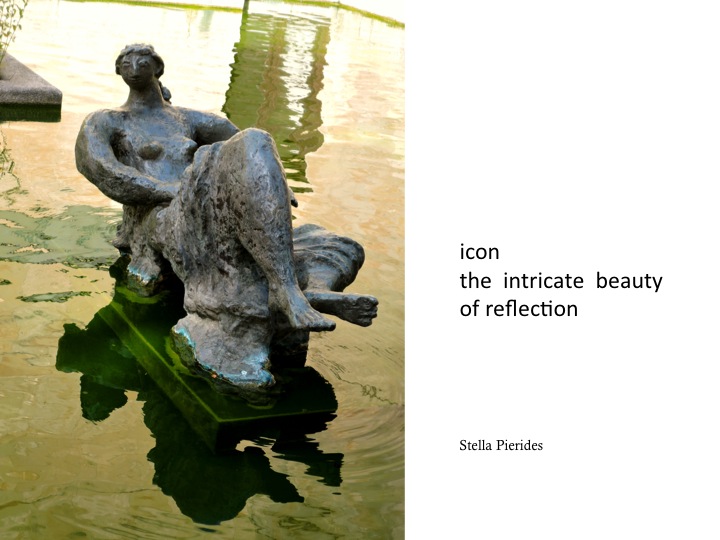
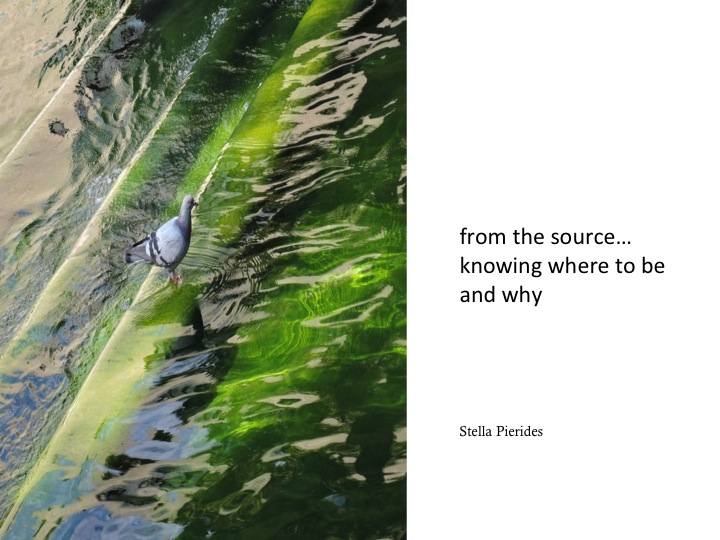
Photo: In front of the Neue Pinakothek, Munich.
Prompt: NaHaiWriMo, hint.

Photo: At Lake Woerthsee, near Seefeld, Bavaria.
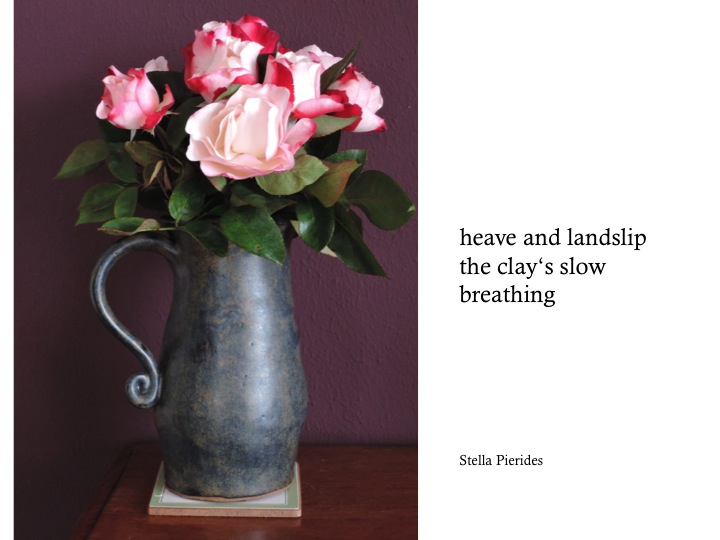
heave an landslip
the clay’s slow
breathing
.
NaHaiWriMo prompt: landslip
joined at the hip
the red currants I forgot
to harvest

.
Photo taken summer 2014 in a quiet corner of Augsburg.
Prompt: NaHaiWriMo, hyphenate.
birthday girl…
each year
a little blunter
.
Photo: In the Public Gardens, Bad Woerishofen, ‘the secret capital of Health.’
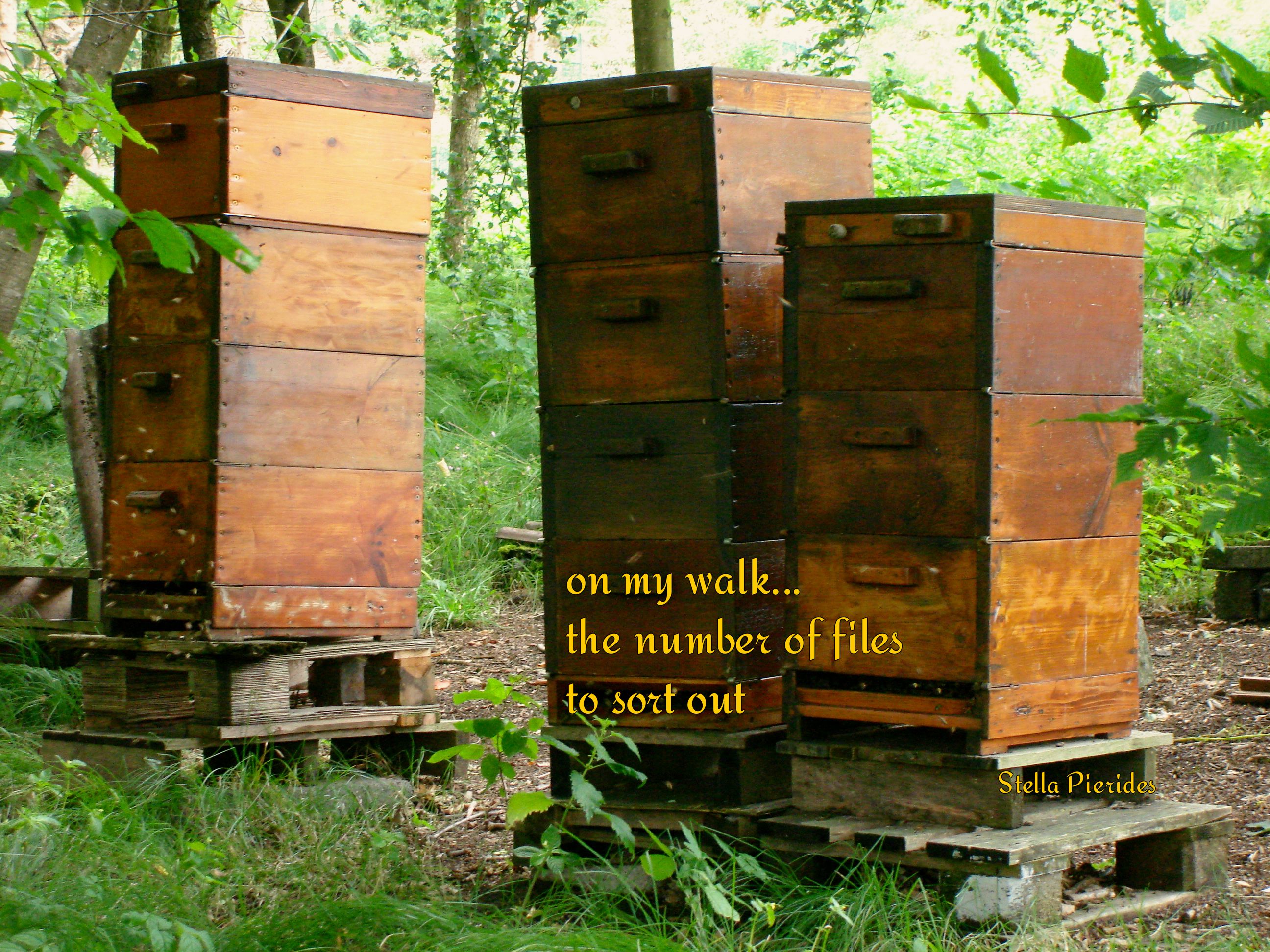
on my walk…
the number of files
to sort out
.
winding road to nowhere rituals
.
Originally published in Blithe Spirit 23:2, 2013 is now included in
Haiku 2014. Edited by Scott Metz & Lee Gurga, Modern Haiku Press, 2014.
100 notable haiku from 2013 selected by the editors of the award-winning Haiku 21. With an introduction by the editors.
hiking —
for a moment the door
swings open
.
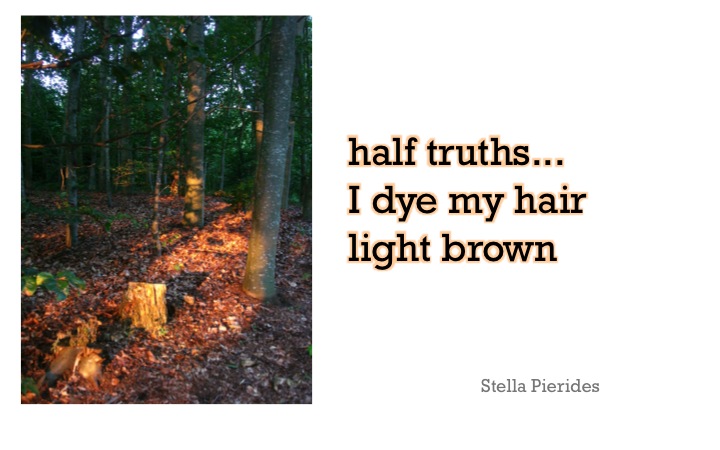
I took this photo on a walk round Lake Schliersee, in the Bavarian Alps. Beautiful lake!
swollen river —
another deep
regret
plum blossoms
a handbag mirror
on the garden bench
.
In Frogpond, the Journal of the Haiku Society of America, 37 : 2, summer 2014

.
the cut and thrust of space travel agency
.
.
Inspired by an article in the news section of The Independent newspaper about engineers from the space agency NASA managing to produce tiny amounts of thrust using a microwave engine design that could turn space travel on its head.
evening cool
the meadow’s breath
condensing
.
NaHaiWriMo prompt: heap

server problems…
the meadow’s hot and wild
colours
.
 NaHaiWriMo prompt: heat up
Photo: walking by the Schmutter in Fischach, Schwabia.
golden ratio –
songs and salvia wafting
through the cool air
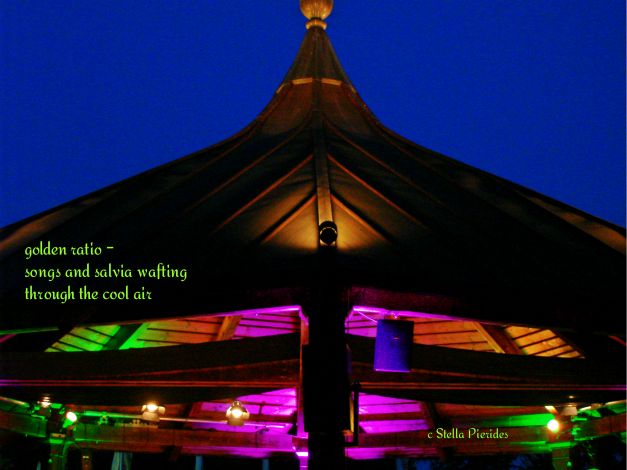
NaHaiWriMo prompt: golden
Photo: International Augsburg Jazz Summer, Botanic Gardens, Augsburg, 2014.
raining stars
the glow-in-the-dark set
peeling off
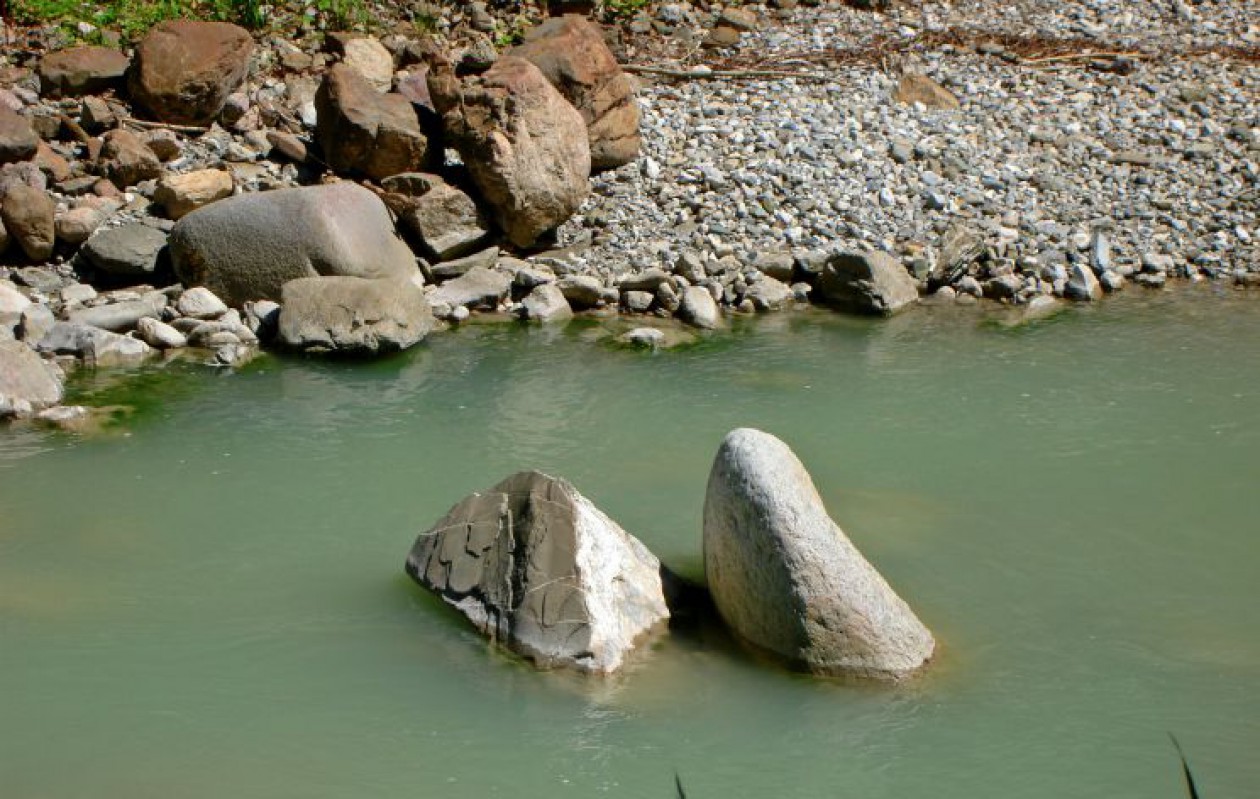 NaHaiWriMo prompt: Glow
.
Photo taken during a recent walk up the Lainbach, Benediktbeuern.
calm in the morning
my new short story
full of gusts
.
NaHaiWriMo prompt: Gust
perigee moon –
making the wine glass
sing
.
NaHaiWriMo prompt: glass
.
mind game gondola on the Danube
.
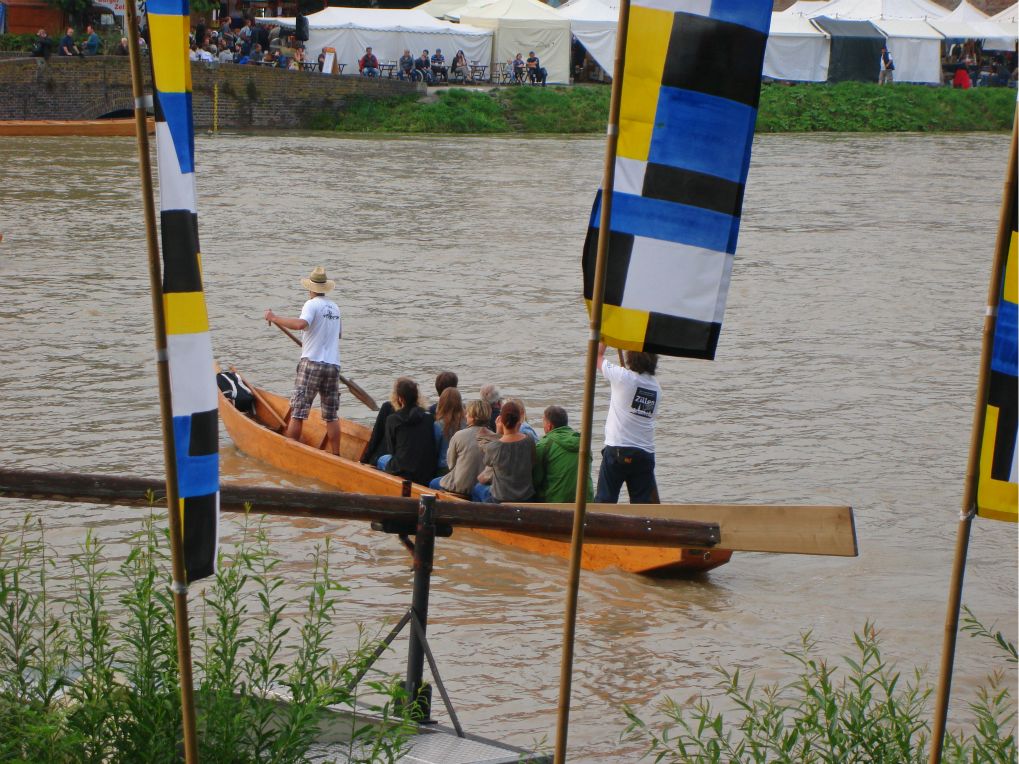
Prompt: Game
From the International Danube Festival 2014. Won’t miss this next year!
offerings…
inside the clam shell
a hermit crab
.
NaHaiWriMo prompt: gift