Category Archives: Short stories

A Case of Mistaken Identity

Diamond doves are small, beautiful birds, which can be kept as pets, ‘Wiki-Marion’ told me once. Since I knew she enjoys dispensing information, I did not think more about it, until she invited me to see her new pet, “Love”.

A bird of beauty! Light blue-grey head, neck, and breast; dark bill, spotted wings fringed in black; orange eyes. I fell in love with Love. He kept bow-cooing, fluffing his wings, strutting, kissing Marion’s hand. I felt jealous, knowing I could not compete with my friend for the bird’s affections.

Walking back home, I stopped at the park, looking for doves, ducks and this winter’s migratory birds. None had the exquisite and delicate beauty of the diamond dove. I was heartbroken by the time I arrived home, vowing to stop visiting Marion to avoid the pain.

A few weeks later, she phoned me. “Love died,” she announced.

“What?”

“These birds seem to fall in love with their owner if they don’t have a bird partner. I encouraged his bonding to me. But that was all I could do – I could not let him mate with my hand as if it were a female! He felt rejected and died of love.”

“It was only an animal. Animals behave differently,” I said, breaking into hysterical laughter.

I put the phone down struck by an acute pang of unease. Who are the animals here, I asked myself, my face burning with shame.

.

This short story was first published on 52|250 A Year of Flash, January 2011. It can be found here.

For information about the diamond dove, including the dangers of it becoming over-dependent on its owner see here.

Ariadne’s Thread

Recently, I started wanting to learn to knit. My mother knitted, her mother crocheted and they both embroidered. For the first half century of my life, I bluntly refused to touch a needle. Then, out of nowhere, I felt the urge. I googled immediately.

I learnt that once a week, knitters, stitchers, and crocheters from all over London meet and knit together. Stitch by stitch, loop by loop, they aim to take over the world and turn it into a warm, benign, woolly place, where humans knit together, refreshed by cups of tea, glasses of wine, cream cakes, and scones.

Rich and poor ladies, ordinary women, Oxbridge blue-stockings, illiterates, persons of various religious persuasions, and origins gather under one roof to knit and teach the learners. For free! Is that for real? I asked. Come and see, they replied.

Armed with wool and needles, I went. The Festival Hall, bathed in sparkling lights lit up the river; it overflowed with good-natured crowds. The knitters sat clutching their instruments, fingering the wool. Wine flowed, fairy cup-cakes, scones flew into mouths to the tune of clicking needles. I felt lost to alpaca, mohair, merino, cashmere.

I am a beginner, I said. Welcome, they replied. Feeling a huge grin mark my face, I picked up my needles. At last, I had found my way home. Afterwards, it dawned on me: had Penelope really wanted Odysseus back, wouldn’t she have given him a thread to find his way home?

.

This short story first appeared on 52|250 A Year of Flash

International Year of Forests

The UN declared 2011 as the International Year of Forests “to raise awareness on sustainable management, conservation and sustainable development of all types of forests.”

Forests are vital to the lives and livelihoods of the people of this planet, to our planet’s existence. Yet, according to UN figures, deforestation continues at the rate of 50.000 square miles per year.

A number of activities have been planned for the year, including high-level panel discussions, film screenings, a United Nations commemorative stamp series, competitions, art and other public events. Look out for them here

While the launch of the Year of Forests will be taking place later, I am posting a short story grown out of the combination of the theme of the Year of Forests with that of “Silence,” a writing prompt set by participants of the “52/250 A Year of Flash.” It was first published there

I copy my short story below:

.

The Weeping of the Trees

Last spring, I hiked up Mount Olympus. The valleys surrounding its peaks are covered in black pine, beech, yew and tall conifers. On its slopes, vineyards spread precariously; olive trees anchor deep with their roots. Streams cascade to thirsty plateaus. No wonder the ancient Gods lived there.

I stayed in refuges, drank from the streams and breathed the pine-scented air. Cicadas serenaded me; butterflies I did not know existed covered my arms. Wolves lusted after me.

Magical. Yet, I dared not return, fearing the strange sightings and the silence: ghostly shadows appearing through the trees, gathering near water, rushing through the meadows, with a heavy, voluminous silence falling all round. At first, I did not believe my senses. Gradually, I came to expect and even look for the shadows.

Whenever I tried to touch a diaphanous apparition – as if made of smoke – it pulled back, avoiding my hand. I thought I saw it sigh, more as a gesture rather than sound, and glide away.

It was recently that I understood – and felt freed to return. The shadows are the souls of trees haunting the Olympian home of their Gods. Felled unjustly, burned in war, famine, and in ruthless profiteering, or carelessness, they return to plead with them.

Next time you visit Olympus, look for the shadows; seek this silence: If it is not disrupted by a leaf falling, a stream’s gurgle or an animal’s light footstep, know you are listening to the silent weeping of the trees.

.

 
You can find the story in 52/250, together with a number of other excellent stories on the theme of “Silence” here.

She missed many boats

Have you heard the expression “missed the boat?” It is pertinent to
where I live, because there are no cars, no buses to “miss” on my
island. Only boats. There is the boat to the nearest town, and the
ferry-boat to Athens, once a week. No one misses those, as they are
the only contact we have with the outside world. No one, that is,
except Meropi.

After her husband’s boat went down in heavy seas, she never made it on
time to a boat: she missed the boat to her daughter’s wedding, to her
giving birth; to the christening, and then the marriage of her only
grandchild. To the doctor’s office on Naxos, after several days of
suffering the big pressure on her chest.

She was afraid of the sea, you see. A woman born and bred on an
island! Terrified of the Aegean waves crushing on the huge rocks, she
avoided even looking at them. No wonder she missed many boats.

But, no one misses the boat to Hades. So, today Meropi is on time. She
is being carried in her coffin on board, as we speak. The local priest
performed the service already – while, curiously, numerous doves
collected on the belfry – and she is braving the meltemi to reach her
place of rest, on the mainland. I can hear her only goat’s bell
ringing, as if already missing her. God bless her soul; I am not one
for travelling either.

The End

This story appeared on 52/250 A Year of Flash

Where home is

He scours streets, bus and tube stations for newspapers. Two years since he arrived in London and he is still amazed at how many newspapers lie discarded around. Although he cannot decipher the writing, they are ideal for keeping warm.

He stuffs them inside his pullover and feels like a king: he needs for nothing. He is warm and fed: the city overflows with leftovers. He beds down whenever he is tired, wherever he finds a warm doorway from where he can look at the sky.

He loves summer best. At night, sneaking into Finsbury Park, he heads for his favourite bench, near the lake. It is cool and the sky is full of stars. Not as spectacular as the sky in his village, in the floodplains of the Mesopotamian Iraqi marshes, where the stars shine like diamonds on black velvet, but it works.

It illuminates the memories that follow him like his shadow: the rice fields and the boat he made himself from reeds, the water buffalo; his father, punting through narrow channels. The Garden of Eden.

Then he counts the stars, looks for patterns, for directions; for a sign that it is safe to return home. His heart, filled with nostalgia, trembles like a bird. Often though, he counts his blessings: here, among the floods of people filling the channels of this city, he can blend in and feel safer than in the marshes of his homeland – till it is time to return.

The End

Hot from my computer keyboard, this new short story written for the 52/250 A Year of Flash project, was first posted on their website. A story about a war-savaged, homeless man sleeping rough in Finsbury Park, North London, and the cruel strands of present-day displacement and identity.

10 December 2010 

Where is your home?

Marshes in Iraq, photo here and  here 

For photos of Finsbury Park I took myself, see here


http://52250flash.wordpress.com/2010/12/08/where-home-is-by-stella-pierides/

The Pick and Place Robotic Arm

My very short, twitter-sized story appeared online in trapeze magazine. Read it here

This short story springs from my interest in robotic arms, dexterity, perception, and intelligence in artificial systems: what robots can and cannot do.

In any case, I am glad they cannot do what the robot in my story does – though as a fantasy it is frightening! Anyway, let us say the moral of the story is, whenever near a robotic arm, it is wise to try not to appear lost for words…

Language, Trauma, and Silence

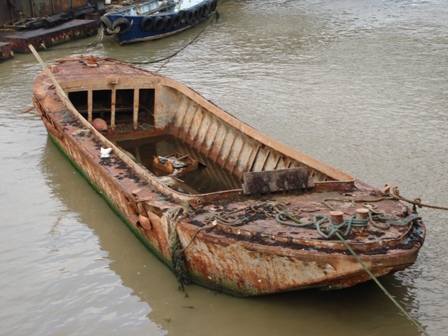
Old Boat

In the years after World War II, a Civil War raged in Greece until 1949 which proved to be one of the worst disasters that befell Greece. Greek against Greek, the Right fought with the Left a war of the utmost cruelty.

This war left many wounds in Greek society. Memories of it still scar the Greek psyche, even across several generations, influencing the current social and political climate.

An important aspect of this war, and the horrendous atrocities inflicted during it, often by members of the same family fighting each other, has been the silence it generated. The trauma robbed people of the words to describe what happened to them, or what they did to others. Whole families stopped communicating; individuals refrained from speaking about the period of the war; history books omitted important events that took place as if they never had happened.

Over the years, the situation slowly changed, especially after the fall of the military Junta and the opening up of the political system in Greece – though even now sections of Greek society insist that there are still many unspoken matters that need to be talked about and worked through.

In my story Postcards, I allude to the period of the Greek Civil War, and to this silence, symbolized by the fighter/husband: he stops using words/language when writing to his wife and instead communicates through drawings in his postcards.

You can read the short story “Postcards” here 

A Robot Angel

Can a story be told in a sentence? How much can one say in a sentence?  Will it touch the reader emotionally?

Here is one of my one sentence shorts:

11 // Textofiction

December 1, 2010 //
 
.
A luminous robot angel picked her up from her place in the queue at the Supermarket checkout and placed her back in her bed.
 
.
 This short story was published in Textofiction, 1st of December 2010.
.
You can find it online here 

4 December 2010

Postcards

Drawing his knees to his chest, he felt the rock with his hand. The air stunk of campfire. A suffocating fog was rising from the rugged hills below.

Alerted by a stir in the scrub, he made out a wounded bird beside him, limping. A pigeon. The bird looked him in the eye as if trying to pass on a message, then scampered away.

After years of war, first against the Italians, then the Germans, now their fellow Greeks, even the fertile valleys in the Grammos mountain range below had been exhausted. The fighters had eaten everything that could be eaten, even the homing pigeons that they used as messengers when they had to maintain radio silence. Hunger drives men mad.

His eyes searched for the bird, absurdly worrying that it might be shot.

His hand caressed his breast pocket, where he kept his postcards to his wife. Poor Eirini, he thought. She didn’t even know he was still alive; still fighting.

He had been “writing” to her without words since they retreated to the top. The silence, the isolation and above all the awareness of approaching defeat robbed him of words. He drew on the rough paper the hills, the scrub, rocks that looked as if made by God, scree; the few cypresses, plane trees, and pines he remembered from his village. Recently, the faces of men who died in his arms.

One day, he thought, his postcards to his wife would be found – these drawings would be his last words to her.

———-

I am fond of this short story, as it touches on themes from my forthcoming novel, Alexandrias 40: In the Shade of the Lemon Tree. 

A version of this short sotry appeared in 52/250 A Year of Flash, on the 26th of November 2010.

A Private Person

 A Private Person

I’d dreaded meeting him since I heard his news from an acquaintance.

Now he was standing behind me at the checkout.

Hugging me, he asked the usual questions he always rolls out at school

reunions. I am fine, I answered; I am also fine, he told me; his

company was booming – picking up more clients than he could manage.

Fiddling with his shirt button and looking me in the eye, presumably

not realising I’d heard about his terminal illness,

“I am not coming this year to the class get-together,” he said, “I’m

having my house redecorated.” He cleared his throat, “so much to be

done, I’ve got to be there.”

I nodded, and as we parted, I clasped his hand with a feeling of

relief, and held it longer than I should have.

Published in 52|250 A Year of Flash (November 1st, 2010)

New Flash

My flash fiction story “A Private Person,” appears in the 52/250 flash fiction project, week 25.

52/250 is a project involving around eighty writers from all over the world who made the commitment to write and publish weekly, flash fiction stories for a whole year: 52 weeks, 250 words max! There is a theme for each week, and contributors can suggest themes to the editors.

I joined during week number 25, and my first flash appeared on Friday 5 November 2010. It is a short story about two individuals who see themselves as “private” persons. You can read it here.

The 52/250 project feels like a very encouraging, inspiring and warm place to be. I am going to hang out there… so, watch this space!

Of Love and Fish

IMG_0762.jpgIt might be true to say that Lakis, the seventeen year old new arrival to Athens, was born with an innate distrust of women. That, or it was his mother who influenced him. Without indulging in cheap psychology, let us give the idea a try. His history provides more than enough evidence. Lakis often goes over it, again and again. Do not be deceived by his job, and its meagre demands on his intellect. Crying daily “Sardines. Lovely sardines!” at the fish market may be simple enough, but it is what hides behind it that informs his character.

The weak muscle of his eye was the first thing his mother disliked. Born of a good family, her father a sea captain, she had always lusted after his men. She admired strong muscles in every form. She fell pregnant by one of them. Her father beat her with a chair and then locked her in a room overlooking the sea.

“He is an old-fashioned, hard-headed Greek,” her mother told her. “What can we do? You should have kept your skirts down, my girl.”

Out she pressed her tongue, in defiance. But there was no defying the will of her father. “I will show him, I will,” she repeated day and night, greeting her teeth, biting the insides of her cheeks. “I will show him.” And when her “muscle” man did not show up, when she heard he had sailed to Africa, the saying changed to, “I will show them!” Which she did. She “showed” everyone, including her son Lakis, of the weak eye muscle, by depriving them of her presence. By hiding away in her head.

The boy was starved of love. His mother was bent on revenge, his grandmother on mourning her absent captain of a husband. The boy played on his own and spoke to himself. All day, every day, in that lonely room, on top of the sad house overlooking the sea, overlooking the abode of his father. Sometimes he drew lines on the wooden floorboards. With his little finger. Invisible lines, like the lines ships draw on the surface of the sea. Sometimes he hummed songs he never heard in reality, rubbing with his index finger his favourite nail on the window frame. Sometimes he looked out of the window, like his own mother had looked at the sea, when she was longing for love herself and lost her mind to revenge. A ship passed every now and then. Clouds passed often. Boats passed every day. Boats with solitary men, escaping their pregnant wives. He tried to see if one of them was his father. But no one looked up at his window. No one seemed to look for him. Some boats were laden with catch. Fish that shone and trembled. Lakis felt sorry for the fish. Each one outside the water it loved. Each one like him, lonely, frightened, not knowing where it would end up. His grandmother, who never knew the names of fish, told him they were sardines. She brought him the food that someone from downstairs cooked. She stayed with him for a few minutes, by the window, looking out to sea.

“You have the best view, you lucky one!” she told him. “What do I need a view of the sea. My husband sees it in his travels all day.” His mother never came. Not once after she was allowed out of that room. She scoured the four corners of their house, she haunted its creaky staircases, its corridors, speaking to the walls and their ceilings. But she never spoke to Lakis or anybody else.

When it was time for him to go to school, he simply did not go. He did not know anything about schools. How was he to know? Nobody told him. Nobody saw him. Nobody knew of him. Except a few close family members and they pretended not to know. They turned a blind eye to his existence, because it meant shame. So he grew up on his own, unschooled. With the sea, the silence and the sad, dying fish for company. Until, just around ten, he ran away.

It was so simple. He could have done it years ago had he known how simple it was! He just did not let his grandmother go out and lock the door behind her. He pushed past her and ran and ran till he could no longer breath. There he stopped and stood. He looked around him. It was a big opening of the sea with many boats standing still. Men were sitting on the ground, like he sat in his room, mending their nets. He went and sat next to one of them. The quietest one, the one sitting furthest apart from the others. Neither of them spoke. Much later, the man turned to him:

“You are a quiet boy. What is your name?”

“Lakis.” And that was the beginning of the love story that kept the boy alive. He answered the questions well enough for Kyrios Nikos, a refugee himself, to understand the tragedy of the situation.

“My name is Nikos,” he said and shook hands with the boy. “You can stay with me.”

Lakis stayed with Kyrios Nikos for a few years, helping with the fishing and the mending. Helping with the loneliness and the desolation of an uprooted life. It was during those years that he learnt about the world.

“Another capital, Kyrie Niko? How many capitals has the world got?”

“Many, Laki mou. Many. The world is a big place.”

“How do you remember them all?”

“I remember the important ones. Smyrni, the Paris of Anatolia.”

However, despite the best intentions, Kyrios Nikos was not that good a teacher for Laki. The problem was he kept mixing metaphors with facts.

“So, was Smyrni a capital? Your Smyrni?” Lakis tried to clarify things in his mind.

“Yes!” Kyrios Nikos exclaimed. “The capital of my heart!”

Eventually, Kyrios Nikos, with the extra pair of hands that Lakis provided, managed to get enough savings together for both of them to travel to the undisputed capital of hearts and Greece, Athens. There, they opened shop, or stall – it is a matter of perspective – and sold their wares. How proud Lakis was of their achievement. “Sardines, lovely Sardines!” he could shout for days, if it had not been for the limitations of his throat.

“Boss?” he had started calling Kyrios Nikos. “Boss? Another coffee? Water, Boss?”

Kyrios Nikos adored him. The son he never had. The family he had missed out on having. This is why he kept asking the boy about his lodgings at Alexandrias 40.

“They treat you well, my son? The women respect you? They lower their eyes?” he asked Laki a few days after he started lodging there. Worried that his boy would be mistreated once again. Kyrios Nikos had lost trust himself in the world, especially in its women, who seemed to respect money more than they respected a soul. “We are both refugees, my son. You from your family, I from the greed of Greeks and Turks. We have to support one another. At least your  landlords are refugees themselves, they know all about pain.”

“They treat me well, Boss. I don’t need anything.” Kyrios Nikos, unable to run a shop and pay an employee at the same time, not to mention paying the refugee mafia that plagues the market, sleeps in the shop. Which means he sleeps rough. But he does not mind. After all these years he is used to it. In addition, he has made some very good friends there. Poor, but honest and hard-working, and above all with hearts like his. Big.

So when it comes to questions of love, of trust, of loyalty, Lakis turns to Kyrios Nikos. He has not met his mother since he left home, anyway. He has only a confused sense of her presence, a craving for love fused with violent repulsion. Poor Lakis. Hard as he may try, he cannot see her in his mind’ eye, he cannot feel her on his skin. “Mother,” he tries speaking to her, at night, in his small room, his candle flickering from his rocking on the floor. “Mother,” he says louder. She never answers him. He never gives up.

Is it mistrust he suffers from? Is it withheld love? And if so, is it his mother’s or his father’s withholding? or is it him born mistrustful, his squinting eye not letting him get hold of the depth of the complexity of this world? We may never find out. Though we do know he has known love and, by now, he knows fish too.

A version of this story was published in Spiked, issue 15. It is an extract from the novel Alexandrias 40: In the Shade of the Lemon Tree.

It Could Have Been Love

Looking both ways, she crossed the road. Jeeps buzzed like insects. The brown earth sizzled.

“Don’t look around; keep your eyes lowered! Walk fast! Don’t speak to foreigners!” she heard her mother’s voice repeating in her head.

“Yes, Mother.”  Since her father’s death, she stopped arguing with her mother. Poor woman, she often thought. It’s no small thing she suffered – her husband blown to pieces! Rana hurried her step, pulling her headscarf to shield her face from the relentless sun.

“Miss, Miss,” she heard the foreign soldier’s call. Glancing sideways, she checked he was calling her. He was. Leaving the cover of the date palm grove, he walked towards her. Rana continued walking away, her heart pounding with fear and pleasure. In that instant, she thought him handsome! Underneath the heavy armour, behind the gun, she saw the young man he was.

“Miss,” he called urgently, and started running towards her.

“Don’t speak to foreigners,” her mother again.

“Miss, Stop!”

Out of the corner of her eye she saw him near her, his eyes cooling blue oases; and then a surprise. A stillness. She can remember nothing else.

The doctor at Rana’s bedside says the American was killed by a sniper.  He had been trying to warn her when he was hit. She was lucky he took the bullets.

She can only see the young man running towards her; she can feel the fluttering of her own heart.

This story was short-listed in the Fish publishing inaugural VERY Short Story Competition, 2004.

A version of it appears in the print issue of Another Country, A Journal of New Writing, 2005, Munich, Germany.

He threw down the gauntlet

He threw down the gauntlet. First he paraded his finery, he touted his wares, teased them and then, he set a competition and waited. High up on his guardian throne, youthful, confident, he looked down at them and waited. Well, to be precise, he wrote while he waited. He wrote his stories, he wrote his articles, he wrote his comments. While they sweated and trembled and sharpened pencils and de-wormed computers. While they looked round with desperate intensity, lifting objects with words, pulling feelings with metaphors. While they picked their brains, and chewed their nails. While they read his shorts and his not very shorts, his books and his articles, trying to copy his style. He waited. Continue reading He threw down the gauntlet