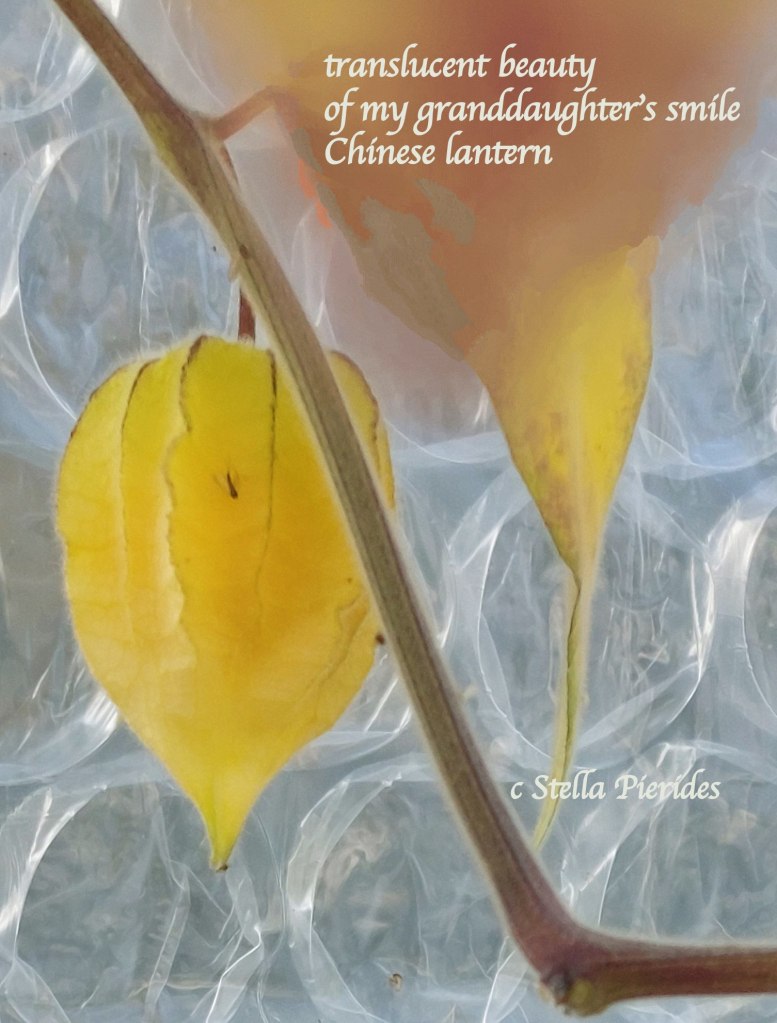
Chinese lantern
What is Dyskinesia? What does it feel like? How can haiku help? Reflecting on my attempts at using haiku to work through the ever-shifting challenges of Parkinson’s Disease.
“My Dyskinesia” is now part of the Haiku Foundation feature Haiku for Parkinson’s. Available to read here.

Remember the snow? The white stuff? Well, here it is in my photo from last December included in MacQueen’s Quinterly So happy to see it in this wonderful journal together with two of my haiku. Thank you to editor Clare MacQueen!
.winter wonderland
how many snowflakes
to magic

new snow...
the sound only silence
makes

What a nice surprise! My poem in The Mainichi was included in Haiku in English the Best of 2023! Many thanks to the Mainichi Team!
The Haiku Foundation is offering a new, free, email course “Introduction to Haiku” for people impacted by Parkinson’s Disease, including friends and family.
The course is being taught by Sonam Chhoki, editor of the online journal cattails. For more information about the course see here
Happy to see my four senryu make it to MacQueen’s Quinterly! Many thanks to the editor Clare MacQueen!

[Four Senryu]

January storm
my neighbor’s greenhouse
flying past


:::


Monday blues...
last week’s special offer
no longer special


:::


overcast day
the muted colors
of hope


:::


when the going gets tough
the feel of your hand
in mine
*
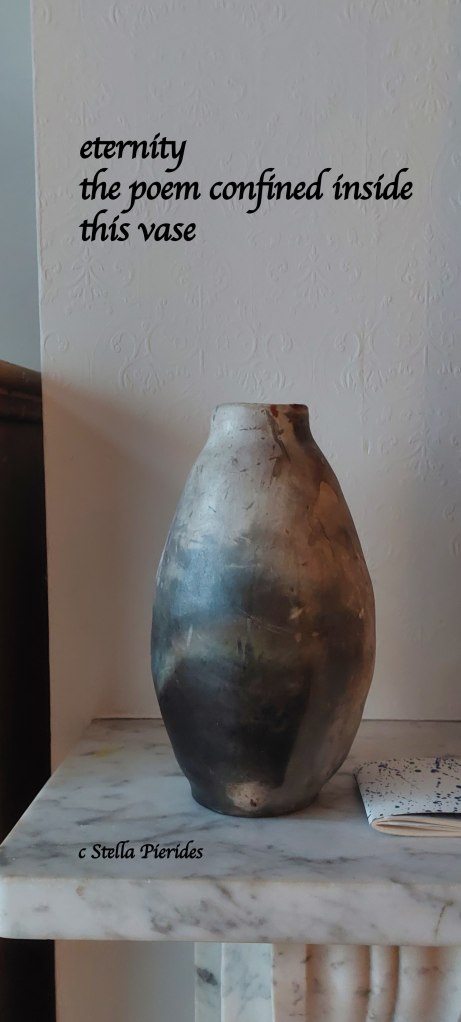
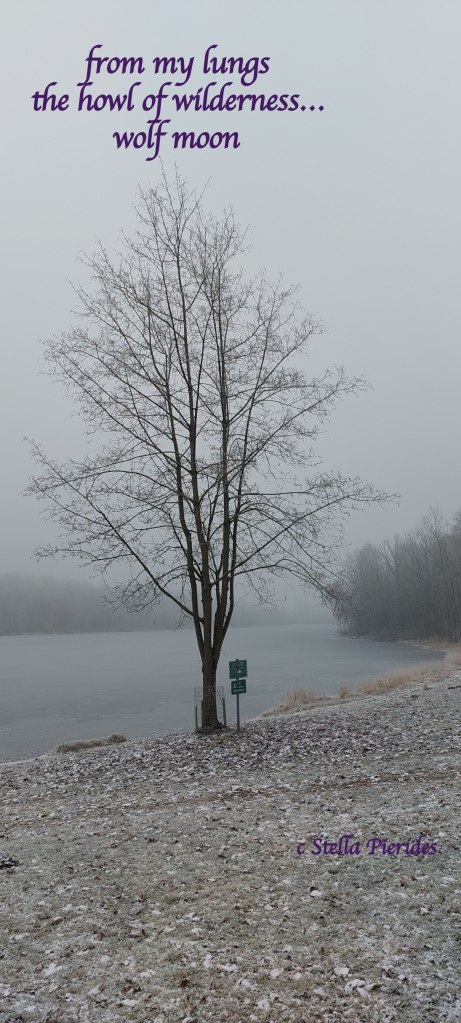
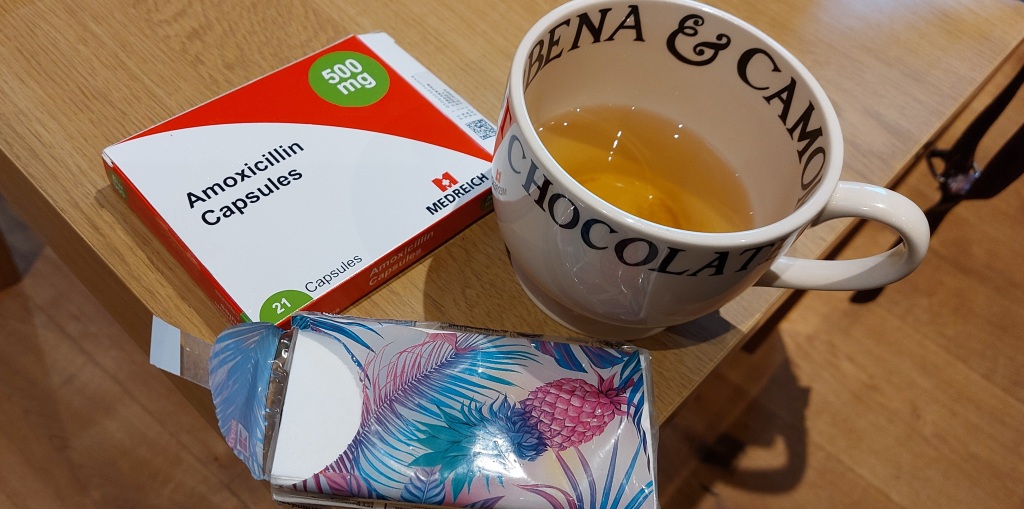
January floods
rattling of the bronchial tubes
all night
The second installment of Haiku for Parkinson’s is the interview of a British poet, now living in New Zealand, Tim Roberts.

Tim describes his haiku practice and the ways it helps him with his Parkinson’s symptoms. It has not been an easy ride. He says:
I had to stop work shortly after being diagnosed. I was adrift. I didn’t have any real hobbies and lost my identity. I felt rudderless and scared. I didn’t know who I was anymore – perhaps that means I never had. I had confused who I was with what I did. Now, having developed such a rooted haiku practice, I have a solid sense of who I am and an exciting sense of purpose. I love poetry and I like to use it to connect to others. I see it as my vocation – and a part of my spiritual practice. Now, thanks to the challenges of PD, I am much more me than the person who was a leadership coach, or any of my previous personas, the university teacher and the detective.
Take a look here for Tim’s informative, inspiring, and from-the-heart account of his journey with Parkinson’s Disease.
waiting room
the dehumidifier
set on high
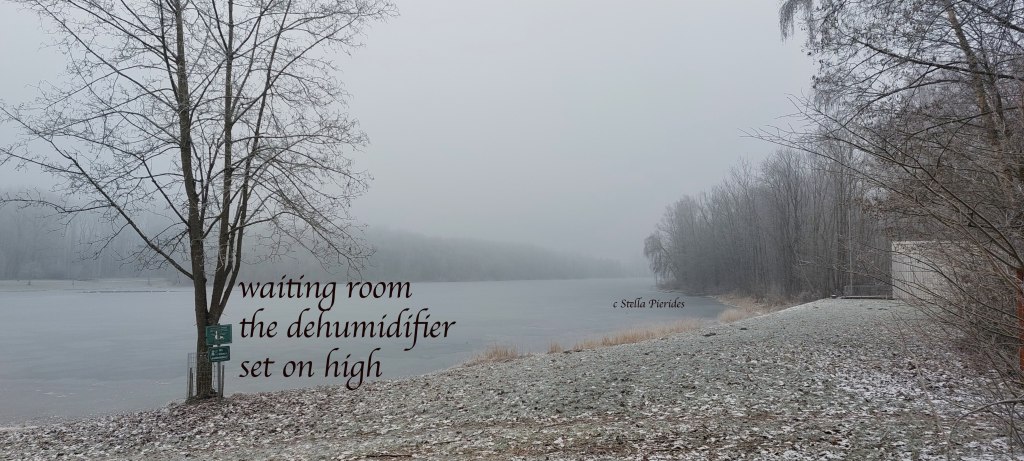
A poem about one of Parkinson’s symptoms: extreme sweating! Not every person living with this disease has this symptom, but if you have it, you will understand…
Happy to see two of my haiku appear in The Pan Haiku Review, issue 2, Winter 2023, Kigo edition, p.98. Editor: Alan Summers.


just as
the snowdrops wither
cherry blossom


snowdrops...
breaking through
this sadness
My haibun “Full Disclosure” appears in Drifting Sands issue 24, 2023, p. 91. This fictional account of an encounter between two people in a highly embarrassing situation, and their ways of coping with it, can be accessed by clicking here.
Alternatively, “Full Disclosure” may be enjoyed below.
Full Disclosure
It’s getting dark early. The yellow light seeping from the lamp on the mantelpiece dissolves before reaching the corners of the room. He is sitting opposite me, tall and dark-haired, an air of confident irony hanging from his lips. Leaning forward, and looking straight into my eyes,
he asks:
“Are you incontinent?”
I shift in my chair and, clearing my throat, I reply. He jots down something in his notebook.
“Do you wear these things that women . . .” his voice trails off.
“Eh, you see . . .” I cough and cough.
While he records my answer, I manage to find my bearings. I know he does this all day, every day, it’s his job. He visits people with disabilities to assess
the level of care they need. Can you cook, can you dress unaided. Can you leave the house on your own. All the practical details that together amount to an identity that is meant to be you.
He is staring at the darkness spreading outside. It must be getting to him. Rumor has it that after work, he leaps into his red Boxster and drives on the autobahn for hours at high speed.
hovering
the kestrel observes
its prey
carving a lamp
out of olive wood…
longest night
A new feature of The Haiku Foundation coming soon: Haiku for Parkinson’s!
Haiku for Parkinson’s is a feature of The Haiku Foundation, introducing haiku as a tool in the Parkinson’s toolbox, helping negotiate the challenges of the disease and improve quality of life. And, introducing Parkinson’s Disease (PD) to people living with haiku.
The first post will appear on Sunday 12/17/2023 and every few weeks thereafter.
lazy Sunday
waiting for the wind
to die down

In Frogpond 46.3, Autumn 2023
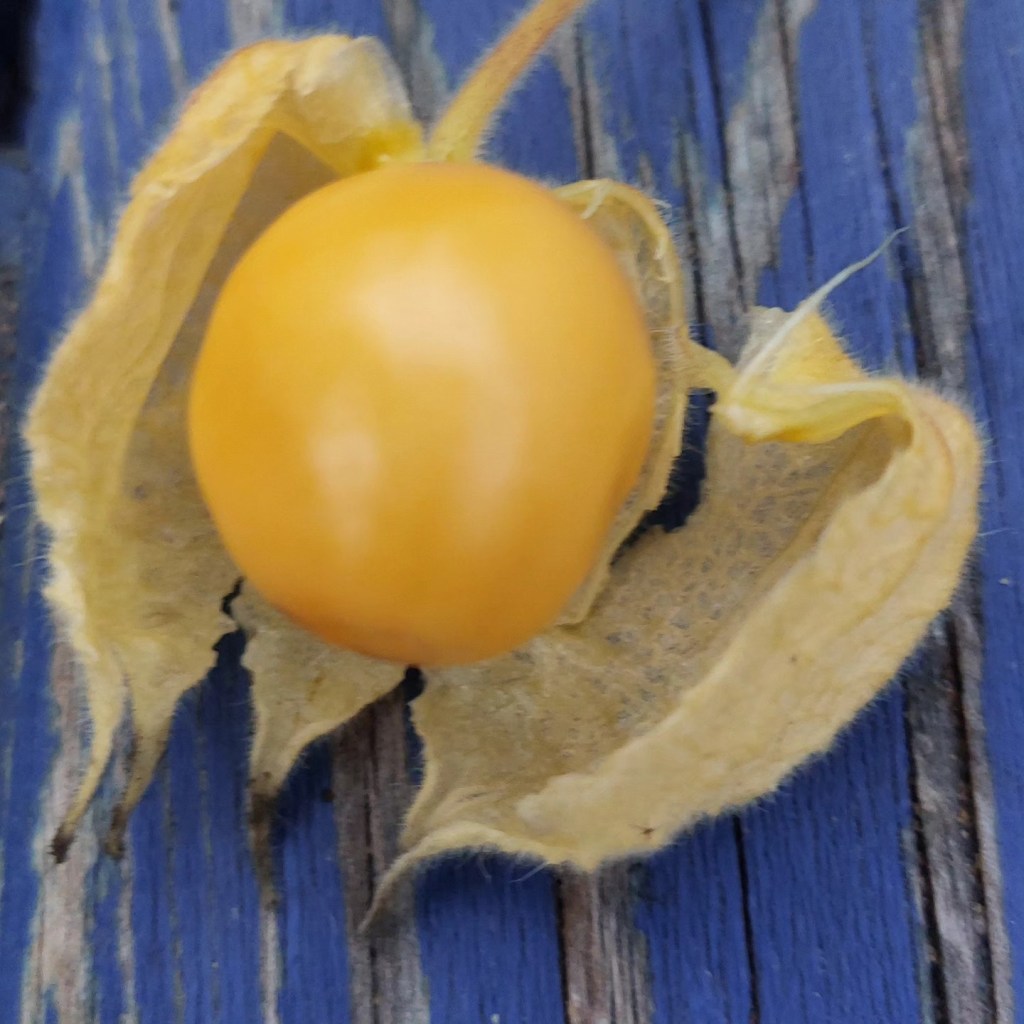
in the news
the tangy taste
of the nightshade

foghorn...
ships passing
in the night
matching outfits…
entry points to the ABC
of life

Happy to see that my poem was included in The Haiku Foundation Volunteer Anthology 2023 ‘The high lonesome.’ Thanks to jim kacian and Julie Kelsey for selecting the poem.


secrets of a life
lived underground…
harvest day
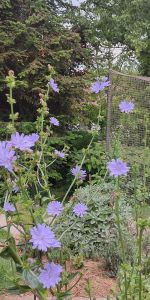
chicory blooming
the courage to be more

Happy to see my haibun “Sky Ponds-Himmelsweicher” appear in Contemporary Haibun Online 19.2
I found out about the bomb craters in the Augsburg city forest during a walk with my Parkinson’s walking group. Marvelous recovery of a wounded landscape, and people. And apt for our own situation of struggling with progressive disease.

The Siebentischwald, on the edge of Augsburg, acts as the lung of the city. Lush green vegetation crisscrossed by water channels and dotted by silent ponds makes this forest the life force of Augsburg. It turns out it is also the repository of an interesting piece of the city’s history: the forest floor bearing the scars of thousands of bombs that were dropped on it towards the end of World War II.
On my morning walk with my Parkinson’s group, in this peaceful, green oasis, pierced by high-pitched peacock cries from the adjacent Zoo, I come across oval ponds and other depressions filled with vegetation. I am told they are Bombenkrater, the remnants of craters formed by aerial bombing.
The proximity to the munitions manufacturer Messerschmitt meant that bombs often landed in the forest. However, the massive bombing raid in February 1944 literally dug up the forest floor, leaving numerous wounds on the landscape. In recent years, a public charity transformed some of these craters into ponds brimming with life.
cool forest shade. . .
lingering by the sky ponds
heat from the past
reflecting
on the sky's glorious depths...
sweet chicory
flying horse
the merry-go-round
of childhood


