Reading Room Blog
To suggest something for my Reading Room Blog, please email me and I will try my best to follow it up. Otherwise, pick an entry, sit back, and read!
Matina Stevis, in The Guardian, asks: Who are the real Greeks? Sparking a thought provoking debate, she discusses the proposed legislation offering citizenship to the children of immigrants: http://www.guardian.co.uk/commentisfree/2010/jan/20/greece-citizenship-immigrants-debate
I copy below my comment on Matina’s article from the Guardian website:
20 Jan 2010, 9:14PM
Greece is not an island. Unlike the UK, it is a country at the crossroads of the East with the West, at the intersection of three continents. It has a long history of wars of occupation and independence; of expansion, contraction, populations mixing, fleeing, persecution and exchange. In such an environment, the question ‘Who are the real Greeks?’ becomes either irrelevant or plays into the hands of those who try to manipulate history and race.
History helps us understand, though by no means justify or excuse, the state of a country and its people. Today, history is alive in Greece, and knowledge of the country’s past – the four hundred year Ottoman occupation, the Balkan wars, two World Wars, the war with Turkey and the resulting ‘Catastrophe’ of 1922, the treaty of Lausanne, the Civil War, the Junta – helps us trace the roots of the divisions in modern Greek society. Unfortunately, large chunks of this history are kept in different places because they are being disputed, not accepted as true by the still warring parties in this country, as well as Greece’s neighbours. A quick read through the responses to this blog will illustrate the diversity of histories, ethnic woes and, really, the whole problem.
The Greek fault line may nowadays be seen in the reactions of some Greeks to foreign workers; in a feature shown on Greek TV some time ago, one could see footage of Greek migrants to America in the early twentieth century and the negative reactions to them by Americans that paralleled Greeks’ reactions to Albanian immigrants. The schism is also expressed in Greece’s policies towards some neighbouring countries and now in the opposition of Greeks, thankfully not a majority, to the legislative proposal to allow citizenship to children born to immigrants.
Let us hope that those interested in Greece will feel encouraged by Matina’s article to trace the threads of this regrettable reaction to Greece’s history and the countless conflicts and migrations that made it a country and constructed its identity, and its fears of losing its recognizable format. At the same time, let us applaud the Greeks who, by proposing and supporting this progressive law, demonstrate their affinity with ideas of shared humanity and acceptance of the other.
STELLA’S STORY: BLUE NIGHT Thursday, 28 January 2010
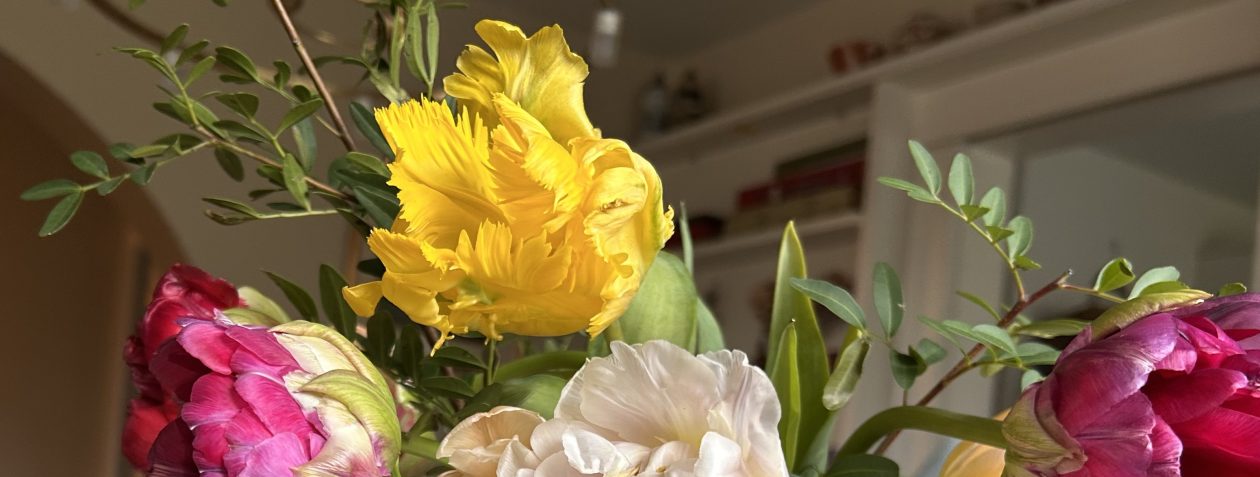
I have different poems to suit different occasions. Poems,fragments, even lines of poems I keep in my books, notice-board, notebook, iPod,in my heart and head. And I keep renewing them, thanks to the wonderful output of our poets.Last Christmas, I loved Carol Ann Duffy’s poem ‘The Twelve Days of Christmas’;last year, for rainy days, I carried Don Paterson’s ‘Rain’; the last few years,Mary Oliver’s ‘Wild Geese’, hearing their ‘harsh and exciting’ cries as a wakeup call to the world. For decades, I pondered over Giorgos Seferis’ ‘In the Manner of G.S.’. So many others… Whenever I need reminding of my place in nature, in the order of things, whenever my expectations become too great, I reach for Sean O’Brien’s‘Blue Night’. Downloaded from the Guardian, it lights up my computer screen. Therefore. Therefore, I become small, or tall. I draw strength and inspiration. Thank you Sean O’Brien. http://www.guardian.co.uk/books/2008/jan/14/tseliotprizeforpoetry.awardsandprizes1from Blue Night by Sean O’Brien Therefore. Therefore. Do not be weak. They have no time for pity or belief,